
Home loan pre-approval declined? What to do next
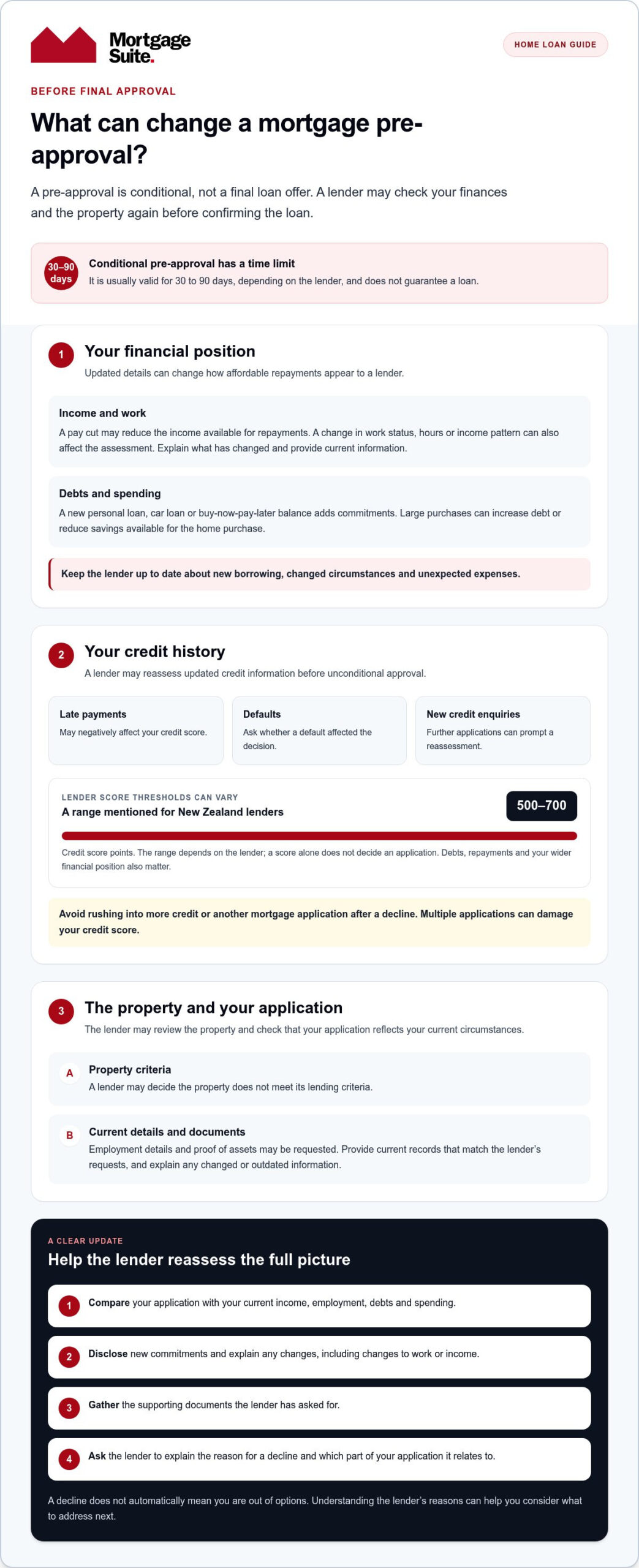
A pre-approval isn’t a final yes: a lender can still decline your home loan after reviewing your finances and the property. Conditional pre-approvals are usually valid for 30 to 90 days, depending on the lender, and don’t guarantee a loan. If your mortgage pre-approval is rejected, it doesn’t automatically mean you’re out of options.
It’s understandable to feel unsettled, especially if you thought the main hurdle was behind you. A lender may reassess your income, spending, debts or credit history, or decide the property doesn’t meet its lending criteria. This article explains why mortgage pre-approval can be rejected, what financial changes may affect your application, and how a mortgage broker may help you understand the decision and consider a suitable next step.
Key Takeaways
- Pre-approval is conditional, not a final loan offer. A lender may reassess your finances and the property before confirming the loan.
- Changes to your income, employment, debts or spending can affect how affordable the repayments appear to a lender.
- Late payments and new credit applications may affect your credit history, so avoid taking on extra debt while your application is being assessed.
- Ask the lender to explain the reason for a decline. The issue may relate to your finances, the property, or information in your application.
- A mortgage broker can help you understand the lender’s decision and consider whether a different loan approach may suit your circumstances.
Changes in income, employment, debt and spending
Pre-approval reflects the information assessed when you applied, not every change that follows. Before final approval, updated income, employment or spending details can affect how a lender views your ability to repay.
Income and debt changes
Income and debt changes are shifts in what you earn or owe after applying for a home loan. For example, a pay cut can reduce the income available for repayments, while a new personal loan adds another commitment. These changes can alter the picture the lender assessed at pre-approval, so tell the lender if your circumstances change instead of relying on figures that are no longer accurate.
Changes don’t always mean your application has to stop. A pay rise, reduced debt or change in regular work hours can affect the assessment differently, depending on the full picture. Give the lender current details and explain what changed. If your income varies, describe the pattern clearly. Leaving out a recent change can create a mismatch between your application and your current finances.
New debt matters because repayments reduce the money left for a mortgage. A car loan, personal loan or buy-now-pay-later balance can change your regular commitments, even if you’ve kept up with payments. Before taking on new debt during the home-loan process, consider how its repayments could affect your application. Tell the lender about any new borrowing instead of assuming it won’t appear in the assessment.
Employment details and supporting documents
Employment details describe your current work and income arrangements, while supporting documents show the financial information behind your application. A lender may require employment details and proof of assets for pre-approval. If you move from salaried work to contracting, for example, update your work status and provide the information requested to support the new arrangement.
Keep relevant records together, including documents that show your current income, employment and assets. The lender’s requests depend on your circumstances, so match each document to the information they ask for. If a record is out of date or a detail has changed, explain that clearly when you submit updated information. This helps avoid confusion between your original application and your current position.
Spending changes can also affect the lender’s view of affordability. A large purchase, such as new furniture bought on credit, can increase debt or reduce savings available for the home purchase. Avoid taking on more debt or making large purchases while seeking final approval. If an unexpected expense changes your finances, record what happened and update the lender with accurate details.
Before sending an update, compare your application with your current income, employment, debts and spending. Correct outdated details, disclose new commitments and gather the requested supporting documents. For example, if your work arrangement changed and you also opened a credit account, explain both changes together. A complete, up-to-date account gives the lender a clearer basis for reassessing your application.
Credit score changes and new credit applications
Your credit score can change between pre-approval and final assessment. Late payments, defaults and new credit enquiries may negatively affect your score before unconditional approval. That matters because a lender may reassess your application using updated credit information. If your score has changed since applying, ask what part of your credit history affected the decision and what information the lender considered.
There’s no single credit-score threshold for every New Zealand home loan. The minimum scores used by lenders can range from 500 to 700 credit score points, depending on the lender. A score within that range doesn’t decide the application by itself. The lender also considers your wider financial position, including debts and repayments, so a higher score alone may not resolve other concerns.
New credit applications can add uncertainty while a lender assesses your mortgage. For example, applying for a credit card and a car loan after receiving pre-approval may prompt the lender to reassess your commitments. Opening more lines of credit can also affect your application. Avoid rushing into another mortgage application after a decline: multiple applications can damage your credit score.
If a lender declines your application, first ask for a clear explanation. Find out whether the concern involved late payments, a default, a recent credit enquiry or another part of your application. Then review your credit records and compare them with your own payment history. If an entry appears incorrect, gather the relevant account information before discussing it with the organisation that recorded it.
For a New Zealand home loan, deposit requirements and Loan-to-Value restrictions depend on the lender’s criteria and property assessment. The Loan-to-Value ratio compares the loan with the property’s value, so a larger deposit means borrowing a smaller proportion of that value. Deposit size is one part of the assessment, alongside credit history, income and existing debts.
Before applying again, pause and make a clear record of any credit applications, repayments or missed payments since pre-approval. Avoid taking on new credit while the lender reviews your position. If you’ve recently applied for finance, explain why and whether the application led to a new debt. Accurate details help the lender assess your current commitments rather than an incomplete picture.
A decline doesn’t tell you which change mattered most unless you get the lender’s reasons. For example, a recent enquiry may be less significant than an unpaid default, depending on the lender’s assessment. Use the explanation to decide what to address first, then discuss another application once you understand how your credit history and deposit affect the overall picture.
Can I be denied after a pre-approval?
Yes. A lender can decline after pre-approval if updated financial checks or the specific property change its assessment. Ask for the lender’s reasons before deciding what to do next.
Reasons for decline after pre-approval
A decline after pre-approval means the lender’s final assessment no longer supports the loan. The lender may reassess your finances and the property, including its valuation. If the valuation is below the purchase price, the lender may decide the security does not support the requested amount. Changed credit information, incorrect application details or a property that fails a condition can also affect the decision.
The property itself can be the issue. A lender may view a flood-zone property, a home in a mining town or a property needing substantial renovation as higher risk. A rise in interest rates or a change to lending policy may also prompt reassessment. These factors mean pre-approval is not final approval for every home you might choose.
Steps after a loan decline
Start by asking the lender to explain the decline clearly. Identify whether the main concern was your finances, an application error, a property condition or its valuation. Then compare that explanation with your documents and purchase details. This gives you a specific issue to address, rather than guessing or sending another application with the same problem.
If the property is the obstacle, consider whether another property may meet the lender’s criteria. If a valuation came in below the purchase price, discuss how that figure affected the requested loan. If details were missing or incorrect, prepare accurate information before reapplying. Keep the lender’s explanation and supporting documents together so the next assessment addresses the actual concern.
Applying to another lender
You can consider another New Zealand lender after a decline, but first understand why the original application failed. There is no set waiting period in the available guidance. The practical next step is to address the reason before applying again. Rushing into several mortgage applications can damage your credit score, so avoid sending multiple applications at once.
A different lender may assess your circumstances or the property differently, but the same unresolved issue can still matter. For example, a lower valuation remains relevant if you apply for the same property and loan amount. Before approaching another lender, gather the decline explanation, update any incorrect details and decide whether the property or requested borrowing needs to change.
Use the lender’s decision as a guide to what needs attention. If your mortgage pre-approval is rejected because of a property condition, changing your finances alone may not solve it. If the concern relates to your application information, correct that first. A clear reason helps you decide whether to revisit the property, update your application or seek another assessment.
Conditional approval and approval in principle
Conditional approval, also called approval in principle, is an early indication that a lender may lend if its conditions are met. In New Zealand, it’s provisional, not a final loan offer, so the lender can still review your finances and the property before confirming the loan.
Pre-approval letters commonly include conditions that need to be satisfied before the lender proceeds. These may relate to information the lender still needs or to the property you intend to buy. For example, the lender may need to assess a specific home after you make an offer. Approval in principle therefore gives you an early guide, not confirmation that every property will qualify.
Check the letter carefully when it arrives. Note the date, the stated expiry and each condition that applies to your application. Home-loan pre-approvals are usually valid for 30 to 90 days, depending on the lender. If your search takes longer, the approval may expire, and the lender may need to reassess your circumstances before you rely on it.
That reassessment can matter if your finances change during the approval period. New debt, a change in employment or a credit-history change could affect the lender’s view of your application. Keep the information you provided accurate and current. If something changes, tell the lender rather than treating the original pre-approval as an unchanged decision.
The property is another part of the final assessment. A lender may assess the specific home and obtain a valuation before issuing unconditional approval. For example, if the valuation comes in below the agreed purchase price, the lender may reconsider the loan amount. Pre-approval for your finances does not mean the lender has accepted every property you might choose.
Unconditional approval is formal approval issued after all conditions are met and both you and the specific property have been assessed. Until then, don’t treat a conditional letter as confirmation that settlement funding is ready. Read the conditions, respond to requests for information and track the approval period. These steps help you understand what remains outstanding.
If a conditional approval expires or the lender changes its assessment, ask which condition remains unmet and what information is needed. For instance, clarify whether the issue concerns an updated financial detail or the property’s valuation. A precise explanation helps you decide whether to provide further information, revisit the property choice or discuss a revised application.
Approval in principle can help you understand your borrowing position while you look for a home, but it has limits. Treat the lender’s conditions and expiry date as part of your planning. Before making commitments based on the letter, understand that final approval depends on the lender completing its assessment of your finances and the particular property.
Using a mortgage broker
A mortgage adviser can review the lender’s reasons, help prepare a request for reconsideration and discuss other lending options. Their value lies in turning a decline into a clearer plan, not simply sending the same application again.
Broker support after rejection
A broker’s support after rejection means reviewing the decision and helping you present relevant information clearly. This matters when, for example, the lender misunderstood a change in income or overlooked a document. Share the decline explanation and application details so the adviser can identify the concern and help shape a focused response.
If the lender may reconsider, a broker can help organise supporting documents and explain how they address the issue. For example, an updated employment record may clarify a recent work change. If the property valuation is the concern, the response needs to address the property assessment, not rely only on documents about your income.
A broker can also discuss whether another lender’s criteria may better fit your circumstances. Start that comparison with the reason for the decline, not a fresh application sent everywhere. If the issue is an incorrect detail, correct it first. If the property is the obstacle, consider whether another property could change the assessment.
Working with a mortgage broker
Working with a mortgage broker means sharing your financial picture so they can help assess suitable lending options. Provide accurate information about income, existing debts, deposit and the property you’re considering. For instance, if you’re self-employed, explain how your income is recorded and supply the documents requested for assessment.
Use the lender’s decline explanation as the starting point for a practical discussion. Ask the broker to clarify which parts of your application need attention and what evidence could address them. A clear account of the issue helps avoid repeating an application without meaningful changes.
A broker can help communicate with lenders and present your circumstances in context. For example, if a mainstream bank’s criteria don’t suit your situation, discuss whether another lending approach may fit. The lender still assesses the application, so focus on a realistic plan, clear documents and loan terms that match your goals.
Before proceeding, agree on what the next application needs to show. That could mean correcting information, documenting a change or reconsidering the property. A mortgage adviser can help you weigh those options and prepare for the next conversation with a lender, rather than treating a decline as a final judgement on your borrowing plans.
Mortgage Suite: Home Loans to First Home Buyers
Mortgage Suite Ltd provides home loans to first home buyers, helping you consider your next move after a lender’s decision. If your pre-approval was declined, bring the lender’s explanation and your updated financial details to discuss possible lending options. Understanding whether the concern relates to your circumstances or the property can help shape a more suitable application.
Mortgage Suite Ltd also provides residential investment property loans, business loans and property development loans. For a first-home buyer, the focus is understanding your goals and borrowing situation, then considering a path that fits. A decline can be discouraging, but it isn’t a judgement on you as a borrower. Contact Mortgage Suite Ltd to talk through your circumstances and possible next steps.
Choose your next move with confidence
If your mortgage pre-approval has been rejected, take time to understand the lender’s reasons before deciding what to do next. You don’t need to treat the decline as a judgement on your plans. Focus on what you want to achieve, what needs to change and what information will help a lender assess your situation fairly.
A useful conversation can turn uncertainty into a practical direction. Mortgage Suite can talk through your circumstances and help you consider the next step, whether that means revisiting your application or exploring another lending path. You don’t need to have every answer ready before you start. A clear account of what happened is a helpful beginning.
Contact Mortgage Suite to discuss your next step. With a considered plan and the right support, you can keep moving towards your property goals.
Frequently Asked Questions
What is home loan pre-approval?
It’s an early indication of how much a lender may be willing to lend, based on the details you’ve supplied. Use it as a planning guide, not a spending target: consider whether the repayments and other homeownership commitments fit your budget. Before making an offer, read the lender’s letter closely and note what it says about the amount, property and any remaining conditions.
Why might a mortgage pre-approval be rejected in New Zealand?
A lender may decline if its assessment finds a concern it can’t accept or needs more evidence to resolve. Ask whether the decision reflects a lending policy, missing information or a specific part of your application. That distinction helps you work out whether to provide further documents, correct a detail or reconsider your plans, instead of making another application without knowing what needs to change.
What credit score and credit history issues can prevent mortgage pre-approval in NZ?
Review your credit history for accounts you don’t recognise, incorrect balances or payment entries that don’t match your records. If something looks wrong, gather statements or other relevant records and raise the specific entry with the organisation that recorded it. A lender can also explain whether its concern relates to your overall credit profile or a particular item, helping you focus on the right issue.
How do income, expenses, debt, and affordability affect NZ mortgage pre-approval?
Prepare a realistic household budget that captures regular bills as well as less frequent expenses, such as vehicle maintenance or annual charges. Compare that spending with the income you can reliably count on, then account for your existing financial commitments. This gives you a clearer view of what repayment level may fit your day-to-day life and helps you discuss your budget with the lender using specific figures from your own records.
Can a bank reject pre-approval because of the property, its valuation, or its location?
Yes. To clarify a property-related concern, keep the purchase documents and any available property reports together. Ask the lender which feature affected its assessment and whether the concern relates to value, condition or suitability. For example, if the issue is the valuation, ask how the lender’s assessed value affects the proposed loan, rather than assuming the purchase price will determine the amount it is prepared to lend.
What should I do after my NZ mortgage pre-approval is declined?
Keep the lender’s decision and related correspondence together, then ask what evidence could change the assessment. Find out whether the lender would reconsider the existing application with further information or expects a new application. If you’re working with a mortgage adviser, share the decision and your supporting records so they can help you consider the next approach without sending an application that leaves the original concern unanswered.
Does a rejected mortgage pre-approval affect my credit score in New Zealand?
The declined decision and a credit enquiry are different things. A lender’s enquiry may be recorded when it assesses an application, and new enquiries can negatively affect your score. Check your credit history for enquiries you don’t recognise, and keep track of applications you’ve made. If you’re unsure which enquiry relates to the declined application, ask the lender or the organisation holding your credit information for clarification.
What documents do NZ lenders require to assess a mortgage pre-approval?
New Zealand lenders may require employment details and proof of assets. They may also request supporting documents showing your current income and financial position.