
Compare NZ Second-Tier Mortgage Lenders in 2026
A mainstream bank’s decline is a setback, not a verdict on your ability to borrow. If you’re weighing up second tier mortgage lenders nz, it’s natural to feel unsure about what comes next, especially when lenders assess applications differently.
You may still have options. Second-tier lenders are non-bank lenders that can assess some applications differently from mainstream banks. That doesn’t mean every lender will suit your circumstances or approve a loan. A second-tier lender is also different from a second mortgage, which is a separate loan secured behind a first mortgage.
This guide explains how second-tier lending works in New Zealand and what to compare, including lender fit, loan terms, flexibility and your longer-term plans. It also covers what to organise before exploring options. Mortgage Suite helps borrowers compare possible lending pathways and negotiate with lenders, taking their circumstances and goals into account. A bank decline can make the road feel uncertain, but you deserve a fair go and a clear picture of what may be possible.
Key Takeaways
- A bank decline doesn’t define your options. Your income, commitments, property and plans can all affect which lending pathways may fit.
- When comparing second tier mortgage lenders nz, weigh lender fit, loan structure, repayment expectations, conditions and future flexibility alongside the interest rate.
- Clarify your goal and organise a straightforward summary of your finances and property details before exploring a loan.
- If anything has changed since a bank decision, explain what’s different so lenders can consider your current circumstances.
- Mortgage Suite helps you compare possible lender pathways and negotiate with bank and private lenders on your behalf.
What are second-tier mortgage lenders in NZ, and when might they fit?
A bank decline or a complex application can leave you wondering where to turn next. It’s a stressful position, but a lender’s decision isn’t a personal judgement on you. It reflects how that lender assessed your application against its criteria at the time.
Exploring another lending pathway can help you understand what may be considered. It doesn’t mean you have to accept a loan, and it doesn’t guarantee another lender will approve your application. Look at your circumstances and the terms on offer before deciding whether a pathway feels workable.
What does “second-tier mortgage lender” mean in New Zealand?
“Second-tier” is a common, informal label for lenders outside the mainstream banks. It often refers to non-bank lenders, which provide lending outside the traditional bank model. For a plain-English overview of how these organisations can differ, see this explanation of non-bank financial institutions.
The label doesn’t describe one standard loan or a single set of rules. Lenders set their own criteria and may assess income, existing commitments, property type and the purpose of borrowing differently. One lender may consider an application that another views differently. So, “second-tier” shouldn’t be taken to mean that rules are always looser or that an offer will necessarily suit you.
When might borrowers explore an alternative lender?
You might explore second tier mortgage lenders nz if your application doesn’t fit a mainstream bank’s usual criteria. Perhaps your income is harder to assess, your circumstances are more complex than a standard application, or the property you want to borrow against is considered non-standard. These are reasons to explore what different lenders may consider, not signs that an application will qualify.
It can help to understand what led to the bank’s decision. Was it the way your income was assessed, the property, the amount you wanted to borrow or another part of the application? Pinpointing the concern gives you a clearer starting point for discussing alternatives and working out what information could help explain your situation.
Take it one step at a time. Exploring an option is a chance to find out whether a different lender’s approach might fit your circumstances and plans. Before accepting an offer, make sure you understand its conditions, repayment expectations and how it fits your longer-term goals. Approval is never assured, and a decline doesn’t mean every other pathway is closed. A careful comparison can help you decide whether there’s a sensible next step.
How do second-tier mortgage lenders assess a borrower’s situation?
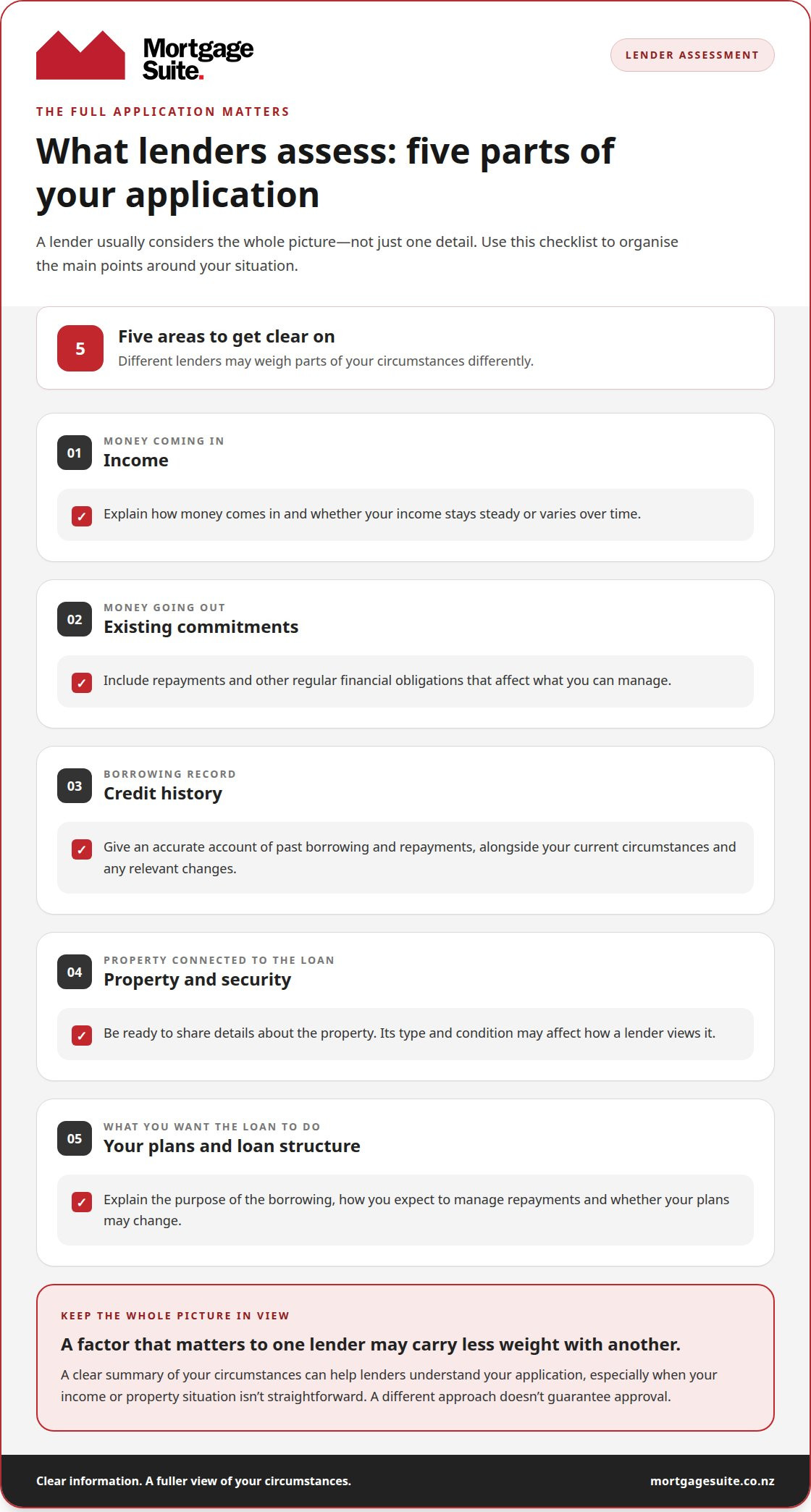
A lender’s decision usually reflects the whole application, not just one detail. To prepare for a lending conversation, organise the information around these five areas:
- Income: How money comes in and whether it stays steady or varies over time.
- Existing commitments: Repayments and other regular financial obligations that affect what you can manage.
- Credit history: Information about past borrowing and repayments, considered alongside the rest of your application.
- Property and security: The property connected with the loan and details that may affect how a lender views it.
- Your plans: What you want the loan to achieve and how the proposed structure fits your next steps.
Non-bank lenders don’t all use the same approach. One may focus on a different part of your circumstances than another, so a factor that matters to one lender may carry less weight with the next. A clear explanation can make your application easier to understand, especially if your income or property situation doesn’t follow a straightforward pattern.
How income, commitments and credit history shape the picture
Income helps a lender understand the money available to meet repayments. If your earnings vary, explain why and what you expect ahead. Existing repayments matter too, because they form part of the broader picture of what you’re already committed to paying.
Your credit history can describe previous borrowing, but it isn’t a complete judgement of who you are or what you can manage now. The Credit Contracts and Consumer Finance Act is part of New Zealand’s consumer credit framework. For your application, focus on giving an accurate account of your current circumstances and any relevant changes.
Why property security and loan structure can matter
Security means the property connected with a loan. For example, if you borrow against a home, that home is the security for the lending. Property type and condition may affect whether it fits a lender’s criteria. A standard home and an unusual property may be viewed differently, depending on the lender and the details.
The requested structure matters too. A loan arranged for one purpose may have different repayment expectations or conditions from a loan arranged for another. Be ready to explain what you need the funds for, how you expect to manage repayments and whether your plans may change. Mortgage School lending guides can help make common mortgage terms easier to follow.
Lender fit depends on how income, commitments, credit history, property and plans work together, not on one factor alone. Comparing second tier mortgage lenders nz means looking at the full application rather than assuming one detail will decide the outcome. A clear summary of your situation can make the comparison more focused.
How can you compare second-tier mortgage lenders beyond the headline rate?
A loan can look appealing at first glance and still be a poor fit for your plans. Compare the written offer as a whole: what the lender is willing to consider, how repayments work and what conditions apply. The interest rate matters, but it’s only one part of the arrangement.
Use the same questions for each option. That makes it easier to compare second tier mortgage lenders nz without assuming one headline feature tells the full story.
| What to compare | What to understand |
|---|---|
| Lender fit | Does the lender’s assessment take account of your circumstances, property and reason for borrowing? |
| Loan structure | How is the lending arranged, and does that structure suit the purpose of the loan? |
| Repayment expectations | How often are repayments due, and what does the offer say about meeting them over time? |
| Conditions | What requirements or limits are set out in the written offer? |
| Future flexibility | How well could the arrangement fit if your income, property or plans change? |
Which loan terms deserve a close read?
Read the stated purpose, repayment structure, loan term and conditions together. Check that you understand how repayments are expected to work and what the offer requires of you. The interest rate describes one part of the lending, not whether the structure suits your needs. Get any unclear terms explained before making a decision.
Compare the written terms, not just a short summary or a single headline. Two offers can differ in structure and conditions even if they appear to serve a similar purpose. Mortgage School’s lending guides can help you get familiar with common mortgage language as you review an offer.
How should a possible bank Refinance fit into the decision?
Refinance means replacing or restructuring existing lending, often with a different deal or lender. You may have a future bank option in mind, but treat it as a possibility to review, not a promised outcome. A bank’s decision later will depend on your circumstances and its criteria at that time.
Consider what might need to change for that pathway to be worth revisiting, such as a shift in your income, commitments or plans. Make sure the immediate loan is workable on its own, rather than relying on a future move that may not be available. Compare each offer with your current needs and longer-term direction. A careful read now can help you make an informed choice without assuming what a lender will decide later.
What should you prepare before exploring a second-tier mortgage?
A clear starting point can make a lending conversation easier to follow. You don’t need every answer before exploring an option. Start by setting out what you need, what your circumstances look like and what you want to understand before making a decision.
- Clarify your goal. Explain what you want the lending to help you do, such as buying a home or changing an existing loan.
- Summarise your circumstances. Describe your income, regular commitments and any details that may affect how your situation is understood.
- Organise property information. Note which property is involved and any relevant features that could shape the lending discussion.
- Write down your questions. Keep track of anything you want clarified about the proposed structure, repayments or conditions.
If a bank has already considered your application, explain what has changed since that decision, if anything. This might be a change in your income, commitments, property plans or available information. Keep the explanation factual and calm. The aim is to help a lender understand your current position, not to criticise the bank’s decision or assume another lender will reach a different one.
How to make your circumstances clear
Use plain language to describe how you earn income, what you already pay regularly and which property is connected with the request. If your income varies or your circumstances have shifted, explain what is different and why. There isn’t one document list that applies to every application, so start with a clear, accurate summary that helps someone follow your situation.
Questions to ask before choosing a pathway
Before deciding, ask how the proposed loan structure fits your plans and repayment capacity. Make sure you understand the written conditions, what you’re expected to do and what might affect a future change of lender. If you’re weighing up second tier mortgage lenders nz, Mortgage School’s mortgage guidance can help make unfamiliar terms easier to discuss and compare.
Keep the next step proportionate. You can first find out what pathway may be considered and what its terms involve, without treating that conversation as a commitment to accept a loan. A possible future Refinance is something to review if your circumstances change, not an outcome to rely on. Take time to understand the written offer and how it fits your plans before deciding.
Mortgage Suite can help you think through your borrowing goal and the questions you want answered, so you can approach the next conversation with a clearer sense of direction.
How Mortgage Suite helps you explore second-tier mortgage lenders in NZ
A bank decline can leave you with more questions than answers. Mortgage Suite helps borrowers across New Zealand explore Non-Bank Lending and compare possible pathways when a standard bank approach doesn’t fit their circumstances. The aim is to make the options clearer, not to rush you towards a decision.
Mortgage Suite can access a variety of bank and private lenders and negotiate on your behalf. Your borrowing goal, financial situation and property details can be presented to help a lender understand the full picture. Each lender makes its own assessment, and exploring an option is not a promise of approval.
A personal advocate when a standard bank path does not fit
Finding a suitable lender is about more than sending the same application everywhere. Mortgage Suite considers how your circumstances fit different lender criteria, then helps explain parts of your application that may need context. If your income varies or a property is less conventional, a clear explanation can help the lender understand what you’re asking for and why.
Founder and director Krish Krishna started Mortgage Suite in 2000 after 18 years in banking. That background informs the business’s practical approach to lender conversations and negotiation. Mortgage Suite reports arranging over a billion NZD in residential, commercial and business loans, with experience across different borrowing needs. This history supports informed guidance, but it can’t guarantee that a lender will approve a particular application.
If you’re comparing second tier mortgage lenders nz, Mortgage Suite can help you look beyond the initial response and consider which lender pathway may fit your situation. The focus is on clear information, tailored support and understanding the terms before you decide what to do next.
A clear next step for borrowers weighing up alternatives
Start with a straightforward conversation about what you want the lending to achieve and what has made the standard route difficult. Explain what has changed since a bank decision, if anything, and raise the questions that matter to you. From there, the discussion can focus on possible pathways, how lenders may view your circumstances and whether an option appears to fit your plans. There’s no guarantee of approval, and you remain in control of whether to proceed.
Krish Krishna’s banking background and Mortgage Suite’s approach to supporting borrowers are outlined on the About Us page. If you’re ready to talk through your circumstances, get in touch with Mortgage Suite for a considered discussion about possible next steps.
Choose a next step that feels right for you
You don’t have to solve every part of your borrowing plan at once. First, consider what a suitable outcome would mean for you and whether a proposed loan supports that goal without putting pressure on plans that matter later. This gives you a steady point of reference as you weigh your options.
Comparing second tier mortgage lenders nz is a way to explore possible pathways, not a commitment to take one. Give yourself room to understand an offer and decide whether it feels workable. If something doesn’t make sense, pause and get clarity before moving ahead.
If you’d value a sounding board for your next move, explore your lending options with Mortgage Suite. A thoughtful conversation can help you see what may be worth considering, without assuming approval or a particular outcome. Take it one step at a time and move forward with a clearer sense of direction.
Frequently Asked Questions
Is a second-tier mortgage lender a non-bank lender?
Often, the terms refer to similar lending pathways, but the label alone won’t tell you which lender is behind an offer or how a particular loan works. Compare the lender named in the offer and the product details. Describe the same borrowing goal and circumstances for each option, then note where the lenders’ responses differ. That gives you a more useful comparison than relying on the label.
Can I explore a mortgage after a bank has declined my application?
Yes, you can look into whether another application may be worth exploring. Start by reviewing the reason the bank gave for its decision and identifying which information or circumstances were relevant. For example, if the concern related to how your income was presented, prepare a clear explanation of how you earn it. Mortgage Suite can help you consider how to present your circumstances to another lender.
Does a second-tier mortgage automatically mean the loan is unsuitable?
No, the category name alone doesn’t tell you whether a loan fits your situation. Consider how the repayment pattern would work alongside your regular household or business commitments, and whether you could manage it if your circumstances changed. Ask for unfamiliar conditions to be explained in plain language. The aim is to understand the practical effect of the offer before deciding, rather than judging it by its label.
Can self-employed borrowers explore second-tier mortgage lenders in NZ?
Yes, self-employed people can discuss their circumstances with an adviser, though being self-employed doesn’t determine the outcome. A useful starting point is to explain how your work generates income, whether it changes across the year and what affects those changes. This helps frame a conversation about second tier mortgage lenders nz without assuming every lender will assess your income in the same way or ask for the same information.
Can a borrower move from a second-tier loan to a bank later?
It may be possible to apply to a bank later, depending on your circumstances and the bank’s requirements at that time. If this is part of your longer-term thinking, understand what the current loan says about changing or ending the arrangement, and keep your future plans flexible. A later review can take account of what has changed in your income, commitments or property needs, rather than relying on today’s assumptions.
Will applying to a second-tier lender guarantee mortgage approval?
No. Mortgage Suite can help organise and present your application, but only the lender can decide whether to make an offer. The lender may ask for more information, decline the application or propose terms for you to consider. If you’ve already had a decline, you don’t need to treat it as a personal judgement. Focus on understanding the lender’s response and what it means for your choices.