
Applying for a New Zealand home loan as a non-resident
A mainstream bank’s decline doesn’t necessarily close the door on a home loan for non-residents in NZ. Most lenders in New Zealand currently require a minimum deposit of 20% for a home loan, but that general threshold alone doesn’t determine whether you can borrow.
If you’re applying from overseas, it’s understandable to be unsure how your residency, finances and property plans may affect your options for a home loan for non-residents in NZ. The right lending route depends on how a lender assesses your circumstances, so it helps to present a clear picture of your application.
This article explains which eligibility details may shape your application and how a mortgage broker can help present them to lenders. You’ll also learn what the process involves and when specialist lending options may be worth exploring, so you can decide what to do next.
Key Takeaways
- A lender will assess your circumstances and finances, so prepare for questions about your income, deposit and borrowing commitments.
- Being able to apply for a mortgage and being eligible to buy a particular property are separate considerations for overseas buyers.
- Understand the tax, legal and foreign investment issues that could affect your purchase before committing to a property.
- Mortgage Suite can help you explore home loan options, including 2nd tier lending when your circumstances don’t fit mainstream bank criteria.
- A broker can help present your application to lenders and explain what information may shape their decision.
Eligibility information
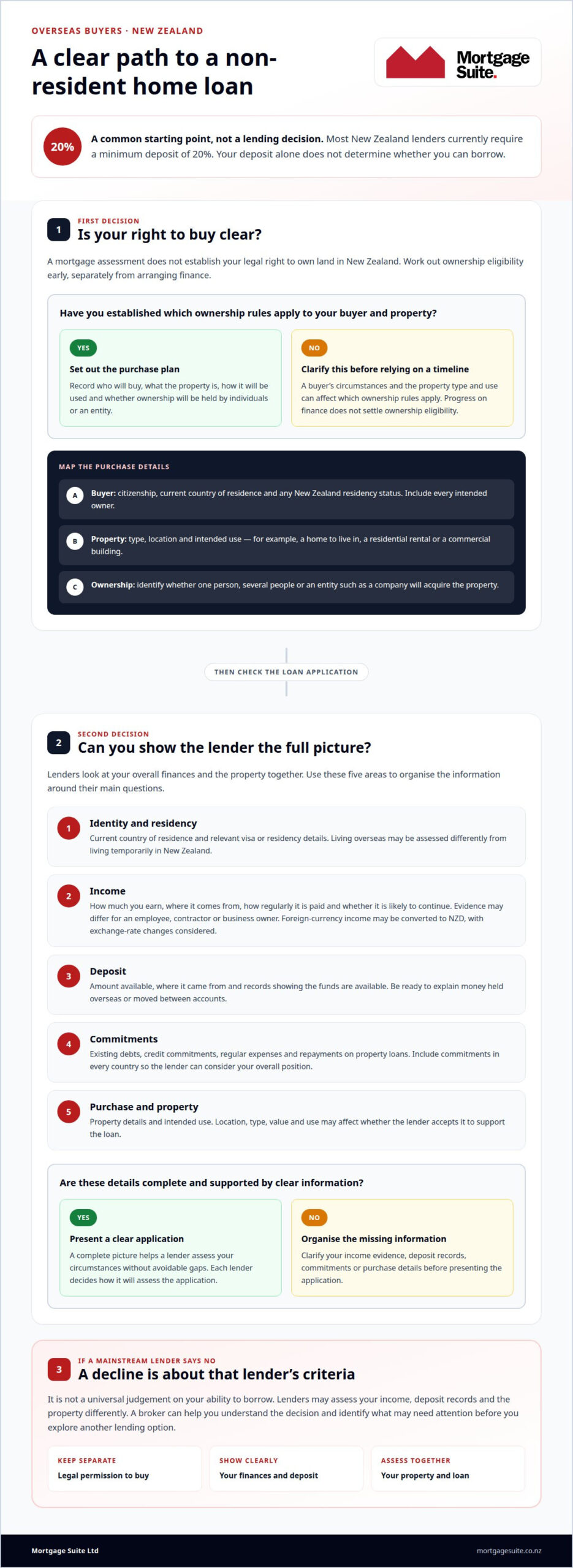
For a home loan for non-residents in NZ, a lender will assess your overall finances, not just your deposit. Most lenders in New Zealand currently require a minimum deposit of 20% for a home loan. That’s a general lending threshold, not a promise of approval or a complete test of eligibility.
Your residency and visa circumstances can affect which lenders consider your application. A lender may treat someone living overseas differently from someone temporarily living in New Zealand. It may also consider why you’re buying and how long you expect to own the property. These details help explain your application, but each lender decides how to assess them.
Your income needs to be clear and supported by evidence. Lenders consider how much you earn, where the income comes from, how regularly you receive it and whether it’s likely to continue. A salaried employee, for example, may need to provide different evidence from a contractor or business owner. If you earn in another currency, a lender may work out the NZD equivalent and consider how exchange-rate changes could affect your repayments.
Your deposit is another important part of the application. Lenders may consider its size, where it came from and whether you can show records of the funds. Money held in overseas accounts may need an explanation, particularly if it moved between accounts before you applied. Keep a clear record showing where your contribution came from and that the funds are available.
Existing commitments can affect how much you may be able to borrow. A lender may assess your debts, credit commitments, regular expenses and repayments on any property loans you already have. It considers these alongside your income to decide whether the repayments look manageable. If you have commitments in more than one country, show your overall financial position, not just your New Zealand obligations.
The property is also part of the lender’s assessment. Its location, type, value and intended use can affect whether the lender will accept it to support the loan. A home you plan to live in may be assessed differently from a rental property. Your finances and the property details are considered together.
To build a clear application, a broker can organise the information around the lender’s main questions:
- Identity and residency: your current country of residence and relevant visa or residency details.
- Income: employment or business income, how it’s paid, and evidence that it’s likely to continue.
- Deposit: the amount available and records showing where it came from.
- Commitments: existing loans, credit obligations and regular expenses.
- Purchase: the property’s details and how you plan to use it.
Complete information helps a lender assess your circumstances without avoidable gaps. If a mainstream lender declines your application, that reflects its criteria for your case, not a universal judgement on your ability to borrow. Lenders may assess income, deposit records and the property offered to support the loan differently. A broker can help you understand the reasons for the decision and identify what may need attention before exploring another lending option.
What New Zealand property ownership rules apply to overseas buyers?
Before arranging finance, separate two questions: whether you can buy the property and whether a lender will fund it. A mortgage assessment does not establish your legal right to own land in New Zealand. Address ownership eligibility early in your purchase planning, not after agreeing to buy.
Start by describing your circumstances accurately. “Non-resident” can refer to different situations, so note your citizenship, current country of residence and any New Zealand residency status. Include every intended owner. For example, a couple buying together may have different citizenship or residency details, and both people’s circumstances need to be considered.
Next, define the property and its intended use. A home to live in, a residential rental and a commercial building are different purchase plans. The property type and use can affect which ownership rules apply. A clear description helps avoid treating every overseas buyer or New Zealand property as the same case.
The proposed ownership structure matters too. Decide whether the buyer will be one person, several people or an entity such as a company. The arrangement determines who is named in the purchase documents and who holds the property. If two people intend to share ownership, identify both early in the purchase process. Buying through a company does not remove the need to assess the people behind it.
Keep legal permission and borrowing capacity as separate workstreams. A lender may assess your income, deposit and the property offered as security, while ownership eligibility depends on the buyer and purchase. Progress on one does not settle the other. This distinction can prevent a timing problem: you might be ready to apply for finance while still needing clarity on whether your intended purchase structure is permitted.
A practical sequence can keep those questions organised:
- Describe the buyer: record each purchaser’s citizenship, residence and New Zealand status.
- Describe the purchase: identify the property type, location, intended use and proposed owners.
- Settle the ownership plan: state whether individuals or an entity will acquire the property.
- Resolve ownership eligibility: establish which rules apply to that buyer and property before relying on a purchase timeline.
- Then progress finance: present the agreed purchase structure and property details as part of your mortgage application through Mortgage Suite Ltd.
For example, an overseas-based buyer looking at a home to occupy has different details to present from someone considering a rental property through a company. This example does not determine whether either purchase is allowed. It shows why the buyer’s status, property use and ownership structure need to be considered together, rather than relying on the broad label “overseas buyer”.
Keep information consistent across your purchase and lending documents. The proposed owners, property description and intended use should match the plan being assessed. If the structure changes, such as adding a co-owner or switching to a company, revisit both the ownership assessment and finance application. A clear sequence helps you understand the purchase conditions before making commitments based on an assumed right to own the property.
When preparing your mortgage application, remember that Kāinga Ora First Home Loans are issued by selected banks and other lenders and underwritten by Kāinga Ora in New Zealand. This describes how the loan option is issued and underwritten; it does not, by itself, establish whether a particular overseas buyer may own a particular property. Keep ownership eligibility under consideration until the buyer, property, intended use and proposed ownership structure are clear.
When discussing finance with Mortgage Suite Ltd, give the lender the same ownership plan you are using to assess eligibility. If the plan changes, for example from individual purchasers to an entity, revisit both questions rather than assuming an earlier answer still applies. This keeps financing discussions aligned with the purchase being considered, without treating loan progress as permission to acquire land.
What tax, legal, and foreign investment risks should non-resident home buyers know about in New Zealand?
Buying property in New Zealand can raise tax, contract and ownership questions alongside the mortgage. Before signing an agreement, set out who will buy the property, how it will be used and how it will be funded. Buying a home to live in, for example, differs from buying a rental property. These details help your legal and tax advisers focus on your plans.
Your tax position needs individual attention. If you live overseas, earn income in another country or plan to rent out a New Zealand property, discuss these details with a tax adviser. They can consider your circumstances and explain which tax questions need attention. Don’t assume your citizenship or visa status alone determines how your income or property is treated.
Rental plans also call for clear record-keeping. Keep an account of rental income, property-related payments and ownership shares from the outset. If two people own a property, record how ownership is arranged and how income and expenses are attributed. A tax adviser can explain how these records relate to your circumstances and what information to retain.
Plan ahead if you may sell the property. Before relying on expected proceeds or a particular sale timeline, discuss the purchase, ownership and use with a New Zealand tax adviser. These details provide context for advice about a possible sale. Keep your purchase documents and records of how the property has been used together, so the adviser can assess the situation accurately.
Foreign investment considerations are another reason to get legal guidance before committing. Whether any such rules apply depends on the buyer and proposed purchase. A New Zealand property lawyer can assess your circumstances, ownership arrangement and property details. Treat that assessment as separate from mortgage approval. A lender’s finance decision does not answer whether a purchase can proceed.
Have the sale and purchase agreement carefully reviewed before signing. Ask a lawyer to examine the buyer names, property description, deposit terms, settlement timing and any conditions. If your plans depend on finance or another decision, discuss suitable conditions and timeframes before committing. For example, coordinating signatures from overseas can affect how quickly documents are completed.
Cross-border funds can raise practical questions too. Keep records showing where your deposit came from, which accounts it passed through and how it was transferred. Store account statements and transfer confirmations together. If funds moved between personal accounts before reaching New Zealand, for example, a clear record of each step can make the movement easier to explain to the people involved in the purchase.
Use this sequence to organise the advice and paperwork:
- Before signing: discuss the proposed buyer, ownership structure and agreement with a New Zealand property lawyer.
- Before renting: ask a tax adviser what income and expense records relate to your plans.
- Before transferring funds: organise records that show the source and movement of your deposit.
- Before a future sale: get advice based on how the property was owned and used.
For example, an overseas buyer planning to hold a rental property through a company has several connected issues to consider. A lawyer can assess the purchase and ownership arrangement, while a tax adviser can address income records and possible sale questions. Sharing the same purchase details with both professionals helps align their advice, without assuming a mortgage decision settles legal or tax matters.
Mortgage Suite
Mortgage Suite Ltd helps non-resident buyers make sense of the lending side of a New Zealand property purchase. The first step is understanding your plans, finances and proposed property, then considering how those details may fit a lender’s requirements. A clear application gives lenders a more useful picture of your circumstances, rather than leaving important details open to interpretation.
Borrowing from overseas can involve extra moving parts. Your income may come from another country, your deposit may be held in overseas accounts, and you may plan to live in or rent out the property. Mortgage Suite Ltd can help organise these details for a loan application and explain what lenders may consider. This support focuses on finance and does not replace advice about ownership eligibility, tax or legal obligations.
The right lending approach depends on what you’re buying and why. A first-home buyer and someone purchasing a rental property have different aims, so their loan discussions may follow different paths. Mortgage Suite Ltd provides home loans to first-home buyers and residential investment property loans. The purchase purpose matters, alongside your financial position.
Mortgage Suite Ltd can help present your circumstances clearly and discuss potential lending routes. That can include exploring whether a mainstream lender’s criteria suit your application. If they don’t, a decline from one bank isn’t necessarily the end of the conversation. Mortgage Suite Ltd specialises in second-tier loans for borrowers who don’t fit mainstream-bank criteria. These loans are another route to consider, not a promise that finance will be available.
A broker can help you understand the borrowing options, not just focus on an interest rate. Repayments, loan structure and your plans for the property all matter. For example, if you’re buying a rental property from overseas, explain its intended use and your broader financial position. Mortgage Suite Ltd can then discuss how those details relate to potential lending options.
The process can begin with a conversation about:
- Your goal: whether you’re buying a first home or a residential rental property.
- Your finances: how income, deposit and existing commitments fit together.
- The property: its intended use and the details relevant to a loan application.
- Your lending position: any previous lender response and the factors behind it.
This gives Mortgage Suite Ltd a practical starting point for discussing your options. If a lender has already declined your application, its reasons can guide the next conversation. The issue might relate to how income is assessed, the property or the lender’s criteria. Understanding the specific concern helps keep discussions focused on relevant alternatives.
Consider speaking with Mortgage Suite Ltd before committing to a purchase or setting firm expectations about borrowing. An earlier discussion lets you consider finance alongside your plans, rather than facing an unexpected issue late in the process. Explain your circumstances in plain terms and get a clearer view of the lending questions to work through.
If you’re considering a New Zealand property purchase from overseas, get in touch with Mortgage Suite Ltd to discuss your lending situation.
Frequently Asked Questions
Can non-residents get a home loan in New Zealand?
Yes, non-residents can apply for a New Zealand mortgage. A home loan for non-residents in NZ still depends on a lender accepting the application, and a mortgage offer does not establish the buyer’s legal right to purchase. Keep these decisions separate in your planning. A buyer might, for example, progress a finance application while the purchase structure is reviewed independently.
Which non-residents are eligible for a New Zealand mortgage?
There is no single category of non-resident that automatically qualifies with every lender. Each lender applies its own criteria, so your circumstances must fit the requirements of the lending option being considered. Be clear about whether you’re applying as an individual or with co-buyers, and identify the proposed borrowers and ownership arrangement from the outset. Mortgage eligibility and permission to buy remain separate questions.
What deposit do non-residents need for a New Zealand home loan?
The required deposit depends on the lender’s assessment of your application and the property, rather than on a single amount that guarantees approval. For planning, separate money you can contribute now from equity or savings that are not readily available. A larger contribution may reduce the amount you need to borrow, but it does not resolve other lending or property considerations. Don’t commit to a purchase based on deposit size alone.
What income, credit history, and documents do New Zealand lenders require from overseas applicants?
Document requests vary, so prepare a clear file rather than assuming every lender uses the same checklist. Group records by borrower and make names, dates and amounts easy to follow. If a document spells your name differently, include a brief explanation alongside it. This can help prevent avoidable confusion during the application review.
How do foreign income and currency exchange affect New Zealand mortgage approval?
Foreign-currency income can create a mismatch: your earnings may change in NZD terms, while your New Zealand mortgage repayments are in NZD. Consider whether your budget could still cover repayments if the converted income changes. For example, if you’re paid in a foreign currency, plan using a cautious NZD estimate rather than relying only on the conversion value on a particular day.
How can a mortgage broker help with a New Zealand home loan application from overseas?
A broker can help turn a complex case into a clear account of your borrowing plans and circumstances. For a home loan for non-residents in NZ, that may mean explaining how co-borrowers, the proposed ownership arrangement and the loan purpose fit together. If a mainstream bank has declined your application, a broker can help identify whether another lending route may suit, without implying approval is assured.