
Buying a Tenanted Property in NZ: 2026 Buyer Guide
Imagine finding your dream home at the perfect price, only to realise someone else is already calling it home. It is a common scenario when buying tenanted property nz buyers often face, and it usually brings a wave of “what ifs.” You might be worried that an existing lease will block your KiwiSaver withdrawal or that you will be stuck in a legal tug-of-war over move-in dates. It is completely natural to feel a bit of floor-shaking anxiety when the phrase “vacant possession” starts appearing in your sale and purchase agreement.
We have spent years helping Kiwis navigate these exact hurdles, and we know that a tenanted property does not have to be a deal-breaker. This guide is designed to take the stress out of the process by showing you how to handle the legal and financial maze with confidence. You will learn about the latest 2026 notice periods, how to structure your loan so the bank stays happy, and exactly what you need to do to ensure your transition to either landlord or homeowner is seamless. From Healthy Homes compliance to the nitty-gritty of the Residential Tenancies Act, we have mapped out a clear path forward for your next move.
Key Takeaways
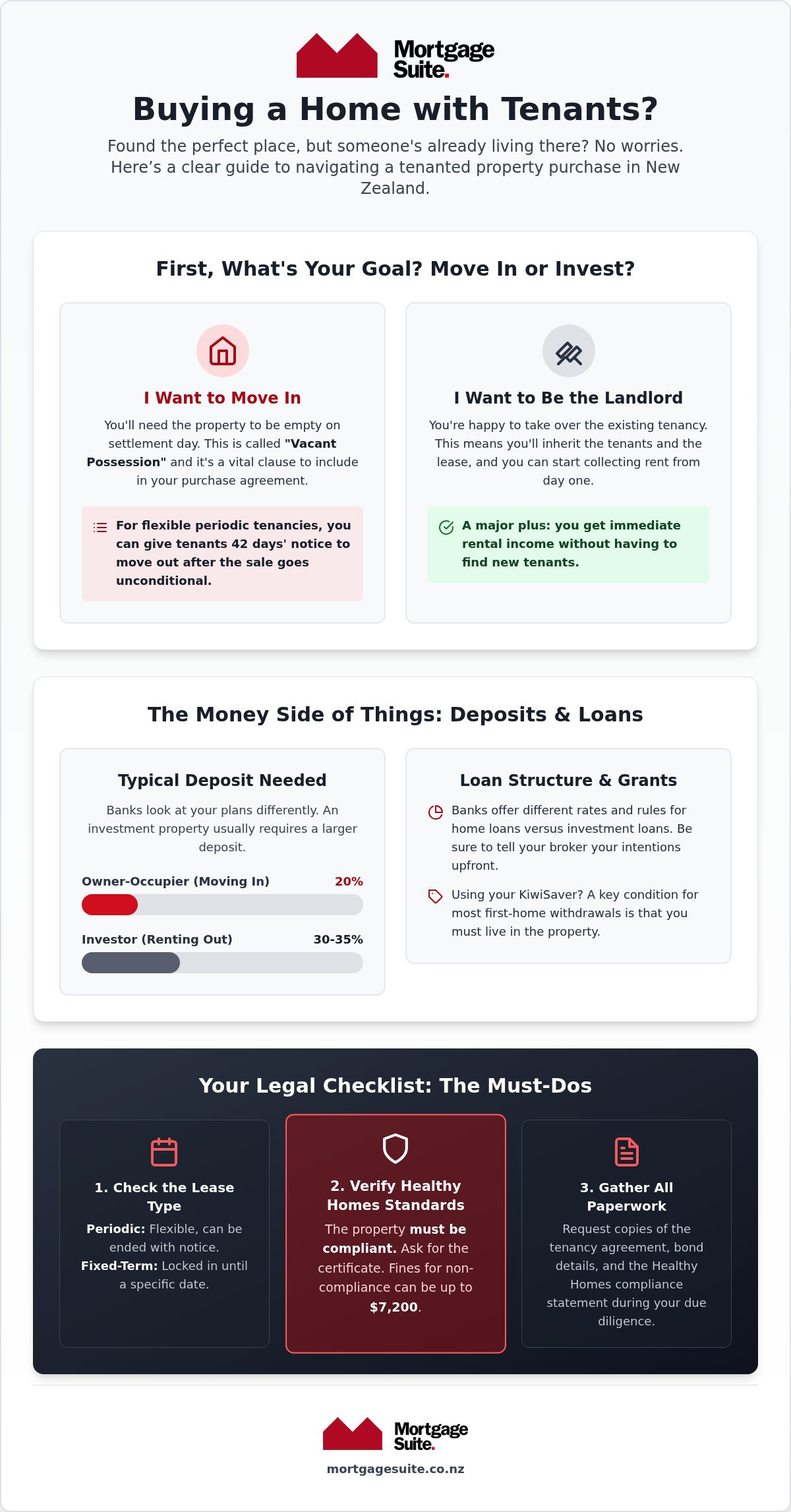
- Get clear on the 2026 notice periods, such as the 42-day requirement for periodic tenancies when you need the home for yourself.
- Learn how buying tenanted property nz changes your deposit needs, as banks often look for a 30-35% stake if you aren’t moving in straight away.
- Master the “vacant possession” clause in your sale and purchase agreement to ensure you don’t end up with unexpected delays on settlement day.
- Verify that the home meets the full Healthy Homes Standards to protect yourself from heavy fines and ensure your investment is up to scratch.
- Discover how to structure your finance correctly so you can secure a loan even when a property already has tenants.
The Basics of Buying a Tenanted Property in NZ
When you’re browsing property listings, you’ll often see phrases like “tenanted” or “ideal investment opportunity” popping up. A tenanted property purchase is a sale where an existing rental agreement remains in place at the time of the offer. This means you aren’t just buying bricks and mortar; you’re stepping into the middle of a legal relationship between a landlord and a tenant. It’s a unique path that requires a bit more homework than a standard house hunt.
For some buyers, this setup is a huge plus. If you’re looking for a residential investment, having a tenant already paying rent from day one is a dream. For others who want to move in themselves, it can feel like a bit of a hurdle. These properties sometimes have a different vibe because the presentation depends on the tenant rather than a professional staging company. You might even find the price point is slightly more attractive because the pool of buyers is smaller; many first home buyers shy away from the perceived complexity of Landlord-tenant law and the extra paperwork involved.
Fixed-Term vs. Periodic Tenancies: Why It Matters
The type of tenancy agreement in place is the most important detail you need to uncover. A periodic tenancy is quite flexible. If you want to move in, you can usually give the tenants 42 days’ notice once the sale goes unconditional. However, a fixed-term tenancy is a different beast altogether. These are locked in until a specific date. Unless the tenant agrees to leave early in writing, you can’t ask them to move out just because you bought the house. You can usually spot the difference by checking the “Tenancy” section of the sale and purchase agreement or asking the agent for a copy of the lease before you make an offer.
Understanding Your Rights as a Prospective Buyer
You have a right to know exactly what you’re taking on, but you must respect the tenant’s privacy. The seller is required to provide details about the current lease, including the rent amount and the bond status. It’s also vital to ask for the Healthy Homes compliance certificate early in your due diligence. Since July 2025, all private rentals must meet these standards without exception. If the property isn’t compliant, you could be looking at a $7,200 fine from the Tenancy Tribunal shortly after you take over. When buying tenanted property nz regulations require total transparency from the seller, so don’t be afraid to ask for every scrap of paperwork before you commit your hard-earned deposit.
The “Vacant Possession” Clause: Your Most Important Decision
When you’re looking at the sale and purchase agreement, “vacant possession” is the most important phrase you’ll encounter. In plain English, it’s a legal promise from the seller that the property will be empty and ready for you to walk into on settlement day. If you’re buying tenanted property nz for your own home, this clause is your safety net. Without it, you are essentially agreeing to take over the existing rental arrangement, which could leave you with a moving truck full of furniture and nowhere to put it if the tenants are still there.
The risks of a messy settlement are real. If the tenants haven’t moved out by the agreed time, the seller hasn’t met their contract obligations. This can lead to expensive delays, penalty interest, and a lot of unnecessary stress. This is why your lawyer and mortgage broker need to be perfectly aligned. Your broker needs to know your move-in plans because banks view a home loan differently than an investment loan. If you’re unsure how this affects your borrowing power, chatting with a specialist from Mortgage Suite Ltd who understands residential investment property loans is a smart first step to keep your finance on track.
Moving In: How to Ensure the House is Empty
According to the Residential Tenancies Act 1986, the rules for ending a tenancy during a sale are quite specific. If the tenants are on a periodic agreement, the landlord must give them at least 42 days’ notice to leave once the sale goes unconditional. Timing is everything here. You’ll want to ensure your settlement date is set far enough in the future to allow for this notice period. On move-in day, do a final inspection early. Check that the house is empty and clean before the money changes hands to avoid any “surprises” after you’ve already paid.
Becoming a Landlord: Taking Over the Tenancy
If you’ve decided to keep the tenants on, the transition is usually quite straightforward. You don’t necessarily need to sign a brand-new agreement the moment you take over, as the existing one remains valid. However, you and the seller must complete a “Change of Landlord” form to transfer the bond over to your name with Tenancy Services. It’s also a great time to review the current rent. If it hasn’t been adjusted for a while, you might find it’s sitting below the current market rate, which could impact your return on investment. Just remember that you’ll need to follow the proper legal steps if you decide to increase the rent later on.
How Existing Tenants Affect Your Mortgage and Grants
When you’re buying tenanted property nz, the bank doesn’t just look at the price tag; they look at who is going to be sleeping in the bedrooms. This is where your financial plan can get a bit tricky. If you intend to keep the tenants and run the property as a rental, most mainstream banks will ask for a significantly larger deposit. Usually, you’ll need between 30% and 35% of the property’s value upfront. This is a big jump from the 20% deposit often required for a home you plan to live in yourself. The bank sees investment properties as a slightly higher risk, so they want more of your own skin in the game.
There is a silver lining, though. If you are keeping the tenants, you can often use a portion of that rental income to help you qualify for a larger loan. The bank will “shade” the rent, usually counting about 75% of it towards your income, which can give your borrowing power a helpful boost. Because these details can change your budget overnight, a conditional offer is your best friend. It gives you the breathing room to talk to your broker and ensure the bank is happy with the tenancy setup before you’re legally locked in.
KiwiSaver and First Home Grant Hurdles
If you’re a first home buyer, having tenants in the house can create some serious roadblocks for your grants and KiwiSaver withdrawals. To use these funds, you generally have to follow the “owner-occupier” rule, which means you must intend to live in the home as your primary residence for at least six months. If the property has a fixed-term tenant who isn’t leaving for another year, you might find yourself disqualified from using your KiwiSaver altogether. First Home Grant recipients must move into the property within a specific timeframe after settlement. If a long notice period or a stubborn lease prevents you from moving in quickly, you could be asked to pay that grant money back.
Meeting Bank Criteria for “Owner-Occupied” Loans
Banks can be quite particular about proving your intent to move in. If you’re buying tenanted property nz with the goal of making it your home, the bank will want to see a clear plan for when the tenants are leaving. They may even ask to see the “vacant possession” clause we talked about earlier. If there’s any doubt, the bank might re-classify your loan as a residential investment deal. This could mean a higher interest rate and a requirement for that much larger deposit. It’s vital to get a pre-approval that covers both scenarios so you aren’t caught off guard if the tenancy status complicates your application.
Navigating the Legal Nitty-Gritty Without the Headache
Once you have sorted your finance, it is time to roll up your sleeves and look at the paperwork. Getting the legal details right is what separates a smooth move from a settlement day disaster. When you are buying tenanted property nz, you need a clear checklist to ensure nothing slips through the cracks during the due diligence phase. Following these five steps will help you stay in control of the process.
- Step 1: Verify the tenancy type. Do not just take the agent’s word for it. Request a copy of the signed tenancy agreement to confirm if it is periodic or fixed-term.
- Step 2: Tick the right box. Ensure your lawyer checks that the “vacant possession” box is definitely ticked in the sale and purchase agreement if you plan to move in.
- Step 3: Confirm the notice. Ask for written proof that the vendor has issued the legal notice to the tenants. The clock only starts ticking once this is officially served.
- Step 4: The final walk-through. Conduct your pre-settlement inspection as close to the big day as possible. You want to see an empty, tidy house that matches the condition it was in when you signed.
- Step 5: Organise your insurance. You are responsible for the property the moment the deal is done. Make sure your insurance policy is active and specifically covers your situation, whether you are a homeowner or a landlord.
If you feel overwhelmed by these steps, remember that you do not have to do it alone. You can apply for a home loan with Mortgage Suite Ltd, a team that knows exactly how to guide you through these legal requirements so you can focus on the excitement of your new purchase.
The 90-Day Notice Period Explained
Under the rules in 2026, there are two main notice periods you need to know about for periodic tenancies. If you have bought the house and want to move in yourself, the landlord only needs to give 42 days’ notice once the sale is unconditional. However, if you just want the tenants to leave without a specific reason, such as to start major renovations, the notice period is 90 days. You can sometimes negotiate a shorter timeframe if the tenants find a new place earlier, but they aren’t legally required to leave a day before their notice expires. If they do find a “perfect” new flat and want to head off early, it’s usually best to be flexible to ensure a friendly handover.
Healthy Homes Standards and Your Liability
By July 2026, the grace period for Healthy Homes compliance is long gone. Every private rental in New Zealand must now meet strict standards for heating, insulation, and ventilation. The moment you settle on the property, any non-compliance becomes your problem. If the house doesn’t meet the grade, you could be facing a fine of up to $7,200 from the Tenancy Tribunal. Use your due diligence period to check the compliance statement thoroughly. If the property is lacking, this is a powerful negotiation point to ask for a price reduction to cover the cost of the necessary upgrades.
How Mortgage Suite Ltd Helps You Secure a Tenanted Property
Purchasing a home with people already living in it adds a layer of complexity that can make even the most confident buyer feel a bit wobbly. That is where we step in. Mortgage Suite Ltd looks at your entire financial picture, from your KiwiSaver withdrawal eligibility to your twenty-year investment goals. Our role is to act as your advocate, ensuring that buying tenanted property nz becomes a straightforward step toward your future rather than a source of late-night worry. We believe in building a partnership with you, providing a steady hand as you move through the fluctuating 2026 market.
Sometimes, the big mainstream banks can get a bit “cold feet” when a tenancy agreement doesn’t fit their standard boxes. If a property is perfect but the lease is slightly unusual or the Healthy Homes paperwork is still being finalised, we have the expertise to access 2nd tier loans. These options are designed for clients who don’t fit the rigid criteria of the major banks. This flexibility means we can often find a professional path forward where others see a dead end. Mortgage Suite Ltd takes the stress out of the mountain of paperwork so you can focus on the practicalities of your move.
Why a Seasoned Broker is Your Best Mate
We do more than just find a rate; we negotiate with lenders to ensure your loan is coded correctly from the start. This is vital because a loan misclassified as “investment” when you intend to move in can cost you thousands in higher interest or deposit requirements. Our team deeply understands the fine print of residential investment property loans NZ buyers need to master. If your move-in date gets delayed due to tenant notice periods, we can help you bridge that gap with the bank so your finance remains secure and your settlement stays on track.
Organising Your Finance for a Stress-Free Settlement
Acting fast is the key to success in the current environment. Getting your pre-approval sorted early means you can walk into a tenanted property viewing knowing exactly what you can afford to bid. Mortgage Suite Ltd provides clear, jargon-free advice on mortgage rates nz banks are currently offering, helping you weigh up the costs against the potential rental return. Our goal is to help you decide if a specific property is a “fair go” for your financial health. We give you the confidence to sign that agreement knowing your back is covered, because we believe buying tenanted property nz should be a reward, not a burden.
Ready to Turn That Tenanted Listing into Your Next Home
Buying tenanted property nz doesn’t have to be a legal headache or a financial mystery. By now, you know that getting the “vacant possession” clause right and understanding the 2026 notice periods are the keys to a successful settlement. Whether you’re planning to move in yourself or you’re ready to start your journey as a landlord, the secret is in the preparation. You need to ensure your deposit is structured correctly and that your KiwiSaver eligibility stays protected throughout the process.
We have spent over 20 years navigating the banking world to help Kiwis just like you secure their future. As specialists in home loans for first home buyers New Zealand, we know how to handle the fine print that often trips up others. We’re here to act as your mentor and advocate, making sure you get a fair go with the lenders. Talk to the team at Mortgage Suite about your property goals today and let’s get your next move sorted with confidence. You’ve got this, and we’ve got your back.
Frequently Asked Questions
Can I use my KiwiSaver to buy a house that currently has tenants?
Yes, you can use your KiwiSaver, but you must intend to live in the property as your primary home for at least six months. The main challenge when buying tenanted property nz with KiwiSaver funds is the timing. You need to ensure the tenants can legally move out so you can move in within a reasonable timeframe after settlement. If the tenants are on a fixed-term lease that lasts for months, you might not meet the “owner-occupier” criteria required by your provider.
How much notice do I have to give tenants if I want to move in?
You must give the tenants at least 42 days’ notice to move out if they are on a periodic tenancy and you have an unconditional sale agreement. This notice is specifically for when the owner or a family member needs to move into the home. If you aren’t moving in but want to end the tenancy for another reason, such as starting major renovations, the notice period increases to 90 days. Always ensure this notice is provided in writing to keep everything above board.
Do I need a bigger deposit for a tenanted property in NZ?
Your deposit size depends on whether you plan to be a homeowner or a landlord. If you intend to move in as soon as the tenants leave, most banks will treat it as a standard home loan, which usually requires a 20% deposit. However, if you are keeping the tenants and using the house as an investment, banks typically require a 30% to 35% deposit. It is a good idea to have your finance structured correctly from the start to avoid any surprises with the bank’s lending limits.
What happens if the tenants refuse to move out on settlement day?
If your contract specifies “vacant possession” and the tenants are still there, the seller has breached the agreement. You should never feel pressured to settle if the house isn’t empty as promised. Your lawyer will usually advise you to delay the final payment or set aside a portion of the funds until the property is vacant. In some cases, you may even be entitled to penalty interest from the seller to cover your extra storage or accommodation costs while you wait for the keys.
Is the rent I receive from tenants considered income for my mortgage application?
Yes, banks will generally count a portion of the rental income toward your total earnings. Most lenders use about 75% of the gross rent to account for costs like rates, maintenance, and potential vacancies. This extra income can be a massive help in proving you can afford the loan. When buying tenanted property nz, providing a current tenancy agreement or a rental appraisal to the bank can often boost your borrowing power significantly.
Can I increase the rent as soon as I buy the property?
No, you must follow the existing legal requirements for rent increases. You can only increase the rent once every 12 months, and you must provide the tenants with at least 60 days’ written notice. If the previous owner increased the rent four months before you bought the place, you’ll have to wait another eight months before you can make any changes. It is worth checking the rent history during your due diligence so you know exactly where you stand.
What if the tenants are on a fixed-term lease that doesn’t end for six months?
You will inherit that lease and the tenants until the fixed term expires. Unlike a periodic tenancy, a fixed-term agreement cannot be ended early just because the house has been sold. You’ll become the new landlord and must honour the existing terms until the end date. If you really need to move in earlier, you can try to negotiate a “mutual exit” with the tenants, but they are under no legal obligation to agree to leave before the term is up.
Do I have to pay GST when buying a tenanted residential property?
Generally, you won’t have to pay GST on a residential property purchase in New Zealand. The sale of a private dwelling is usually exempt from GST, even if it has tenants living in it at the time of the sale. This is different from commercial properties, which often involve GST considerations. However, because every financial situation is unique, it is always a smart move to have your accountant or solicitor double-check the tax status of the deal before you sign.