
Finance for land banking in New Zealand for house plans
Land can be part of a home plan, but arranging finance for a house on multiply-owned Māori land can be complex. Financing for land banking in NZ may involve the Kāinga Whenua Loan, which supports Māori to build, purchase or relocate a house on multiply-owned Māori land in New Zealand.
If the steps feel hard to follow, you’re not alone. Building on multiply-owned Māori land can take time, and the steps may not happen in sequence. Understanding how the loan works and what lenders consider can help you plan your next move with more confidence.
This guide explains how finance may fit plans to build, buy or relocate a house, and what information to prepare for a loan enquiry. It also covers when specialist home loan or property development support may be useful, so you can approach the process with a clearer view of your options.
Key Takeaways
- The Kāinga Whenua Loan supports Māori to build, purchase or relocate a house on multiply-owned Māori land in New Zealand.
- Planning can take time, and the steps may not happen in sequence, so understanding how they fit together can help you prepare.
- Land finance options depend on the purpose of the borrowing and the land involved; the article explains what to consider when approaching lenders.
- Deposit expectations and lending decisions depend on the details of the application, rather than a single figure that suits every borrower.
- You’ll learn what information can help start an enquiry about finance for building, buying or relocating a house.
Building, purchasing, or relocating a house
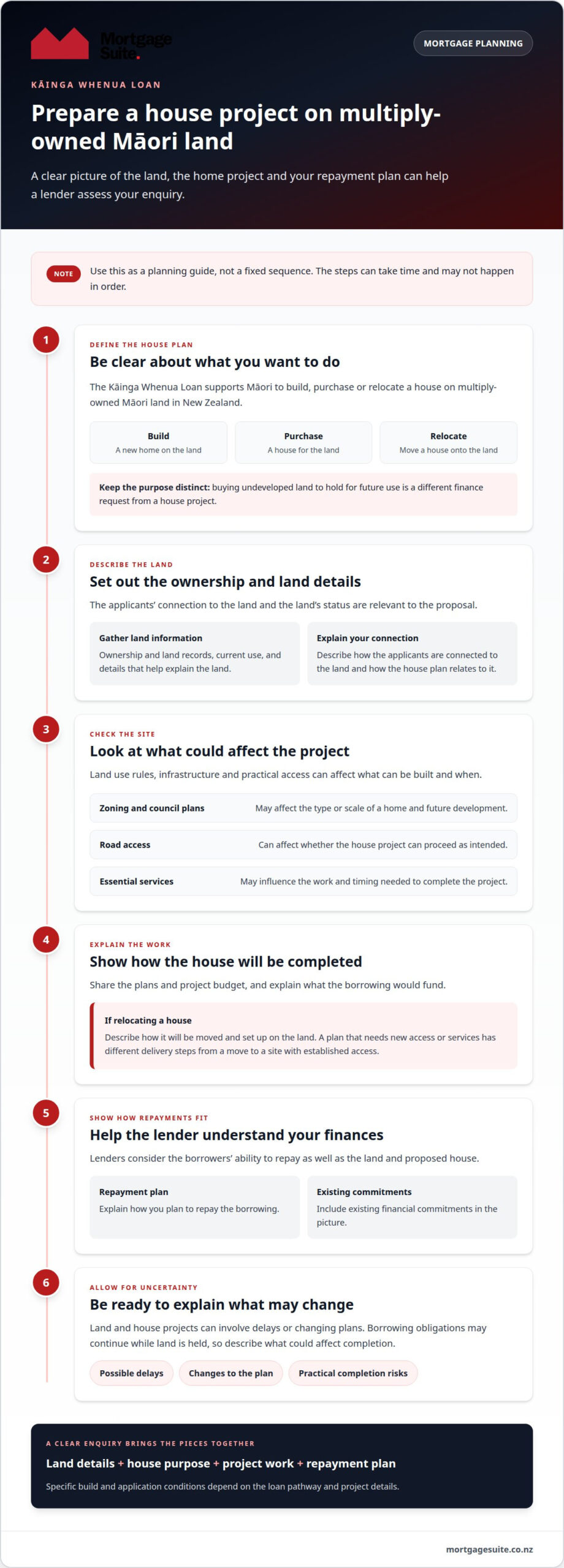
The Kāinga Whenua Loan supports Māori to build, purchase or relocate a house on multiply-owned Māori land in New Zealand. Key considerations include the applicants’ connection to the land, the intended house project and how the work relates to the land’s status. The process can take time, and its steps may not happen in sequence.
The core purpose of the Kāinga Whenua Loan is to support a house project on multiply-owned Māori land. It covers building, purchasing or relocating a home to the land. Specific build and application conditions depend on the loan pathway and project details, so distinguish the land’s eligibility and intended use from the practical work needed to complete the house.
Before financing land, a lender examines the land, the proposed house and the borrowers’ ability to repay. Relevant information may include ownership and land records, intended use, access, services, council planning constraints, building plans and a project budget. For a relocated house, explain how it will be moved and set up on the land. These details help the lender understand what the borrowing will fund and what could affect completion.
Land banking carries risks, including delays, changing plans and ongoing borrowing obligations while the land is held. Tax implications depend on the circumstances, such as why the land was acquired, how it is used and whether it is eventually sold or transferred. Get advice on the tax treatment of your plans before committing, as the outcome varies from case to case.
Zoning, council plans and infrastructure affect what can be built and when. Zoning can limit a home’s type or scale, while council plans may signal future changes that affect development potential. Road access and essential services also influence whether a house project can proceed as intended. These factors matter to lenders because they affect the land’s practical use and value.
For example, a house plan that depends on new access or services has different delivery steps from relocating a home to a site with established access. Set out the project clearly: say whether you plan to build, buy or relocate, describe the land and explain the work required. This gives the lender a clearer basis for assessing the request and the finance needed. Land ownership and project stages can be complex, so a lending decision may involve several steps.
Which New Zealand lenders offer finance for land banking?
For a house on multiply-owned Māori land, the Kāinga Whenua Loan is a specific option. It supports Māori to build, purchase or relocate a house on this land. That is different from buying undeveloped land to hold for future use. Identify what you’re financing before approaching a lender, because a home loan and land-banking finance are not the same request.
For land bought to hold, lenders assess the proposal rather than applying a single nationwide land-banking loan. Mainstream banks may consider the land, your income, existing debts and intended use. Specialist or second-tier lenders may consider applications that do not fit a mainstream bank’s usual approach. Lending terms and appetite depend on the details, so rural, undeveloped and residential land should not be assumed to receive the same assessment.
Start by defining your purpose. Buying a section now to build a family home is different from holding rural land without an immediate building plan. A proposal to subdivide land is different again, as it involves a development plan and additional steps. The lender needs to understand whether you’re seeking finance for a home, a land purchase or a development project.
For each enquiry, present the same core information so lenders can assess the proposal clearly. Explain:
- What land you plan to buy or already own, and its current use.
- Whether you intend to build, hold, subdivide or sell later.
- How you plan to repay the borrowing and manage existing commitments.
- What supporting information is available, such as sale details, plans or council records.
A lender’s decision may depend on how well the land suits the proposed loan. A property with a clear residential use may be assessed differently from remote land without an immediate building plan. For a development proposal, the planned stages and funding needs also matter. Ask for a lending structure that reflects the project, not just the land purchase.
If a mainstream bank declines, that does not automatically settle the question for every lender. The reason matters: land type, intended use, repayment capacity or application structure may each affect the outcome. A clearly presented application makes these details easier to assess, but each lender still decides whether the proposal meets its criteria.
Preparing a concise summary of your plan is a useful first step. A plain-English guide to mortgage basics can help you understand the questions lenders may consider before an enquiry.
What deposit is required for a land banking loan in NZ?
There is no single deposit figure for every land purchase in New Zealand. The amount a lender asks you to contribute depends on the land, intended use, lender’s assessment and your financial position. A deposit is the part of the purchase you fund without borrowing against that property. Depending on the lending structure, savings or available equity may contribute.
Land type can shape the assessment. A serviced residential section with a clear building plan differs from remote rural land intended to be held without immediate development. The lender considers whether the land is suitable security for the borrowing, alongside its purpose and repayment plan. The value used in the assessment may also differ from the agreed purchase price.
For example, imagine you’re buying a section to build a home, while another applicant plans to hold undeveloped land for later use. Both have a deposit, but their proposals differ in timing, intended use and likely lending structure. The lender may assess each deposit in that context rather than applying the same expectation to both applications.
Before making an enquiry, set out how you plan to fund the purchase and what resources are available. Useful details include:
- Cash savings set aside for the land purchase.
- Existing property equity that may support the proposed borrowing.
- Other debts and regular commitments affecting repayment capacity.
- The purchase purpose, such as building, holding or developing the land.
Equity is the value in an asset after the debt secured against it is accounted for. If you plan to use equity from another property, the lender considers its value and existing lending. This affects how much may be available to contribute and the risk attached to your wider borrowing. A property valuation and details of current lending help explain your position.
The deposit is only one part of the lender’s decision. Income, existing repayments and your plan for servicing the loan also matter. A larger contribution may reduce the amount you need to borrow, but it does not resolve concerns about repayment capacity or the land’s suitability. The lender assesses the application as a whole.
For a house project on multiply-owned Māori land, the Kāinga Whenua Loan has a specific purpose: supporting Māori to build, purchase or relocate a house on that land. Do not assume the deposit approach for this house plan is the same as for buying undeveloped land to hold. Clearly describe the land, proposed project and funding sources so the lender can assess the request on its details.
Can you get a bank loan to buy rural or undeveloped land in New Zealand?
A bank loan may fund rural or undeveloped land, but the land’s use and your borrowing plan shape the assessment. Buying a rural block to live on differs from purchasing bare land to hold for future development. A clear purpose helps the bank understand what it is being asked to finance.
For rural property, a bank considers how the land will be used and how that relates to your income and repayments. A working farm, a lifestyle block and an undeveloped parcel each present different circumstances. Explain whether you plan to live on the property, use it for business, build later or hold it without immediate development.
Access and services also matter. Describe how the site connects to roads and whether it has the services needed for your intended use. For a remote block, explain how access works and what improvements your plan depends on. If a future house or development is part of the proposal, distinguish current conditions from work that would need to happen later.
Undeveloped land can be harder to assess than an existing home because its current use may differ from your future plans. A bank considers the property as security alongside your ability to repay. If there is no immediate building plan, explain how you’ll manage repayments while holding the land. Expected future development is not a substitute for a clear repayment plan.
Prepare a straightforward summary for the bank, including:
- The land’s location, current use and access arrangements.
- Your intended use, such as rural living, building, business or holding.
- Any plans that rely on council decisions, services or siteworks.
- Your income, existing debts and proposed repayment approach.
- Relevant sale information, land records or professional assessments.
For example, a buyer seeking a rural home site can explain the planned home and how repayments fit their income. Someone buying undeveloped land to hold should set out the purpose, funding plan and repayment source. These examples show why the same bank may assess two land purchases differently.
If the bank’s initial assessment does not fit your circumstances, ask which part of the proposal needs more detail. The issue may relate to land use, access, the proposed loan structure or repayment capacity. A revised explanation may clarify the request, but it does not change the bank’s lending criteria.
Before committing to a purchase, organise the land details and borrowing plan in one place. This gives the bank a clearer basis for considering the property and your intended use, rather than relying on future possibilities alone.
What lending criteria apply to land banking loans in New Zealand
For financing for land banking in NZ, lenders assess the proposed use, the land offered as security and your ability to repay. Criteria vary between purchases. A lender needs to understand why you’re buying the land and how the borrowing will fit your finances over time.
Purpose and timeframe: Explain whether you plan to hold the land, build a home, use it for business or develop it. Include the expected timing and any steps your plan depends on. Buying a block to hold while considering future options differs from purchasing land for a defined building project. A clear purpose helps the lender assess the application in context.
Repayment capacity: Lenders consider your income, existing debt and regular commitments. They need to understand how you’ll make repayments if the land produces no income while you hold it. If your plan relies on a future sale, explain how you’ll cover repayments before the sale. The proposed timeframe and your current financial position both inform this assessment.
Land and security: The lender considers the property’s value and suitability as security for the loan. Location, access and current use help describe its practical features. Council planning information can also show how your intended use relates to the land. Future development potential does not replace an assessment of the property as it stands now.
Contribution and overall position: Your deposit or available equity forms part of the application, alongside other assets and debts. The lender considers how much you’re borrowing against the property and how the full application fits together. A substantial contribution alone does not address questions about repayment capacity or whether the land is suitable security.
Ownership and project details: Purchase records and land information help establish what is being acquired and who has an interest in it. For shared or multiply-owned land, describe the ownership arrangement and intended use. If the proposal includes building or subdivision, provide relevant plans and explain the project stages. These details distinguish the request from a general land purchase.
Before applying for financing for land banking in NZ, bring together the purchase details, land information, income and debt records, and a clear funding plan. A mortgage repayment calculator can help you consider how repayments fit your budget, but it doesn’t replace a lender’s assessment.
These criteria help frame an enquiry, but they do not guarantee an outcome. A lender weighs the application as a whole, including your circumstances, the land and the proposed loan structure. Clear, consistent information gives the lender a practical basis for assessing the request.
Mortgage Suite
Mortgage Suite Ltd can help shape a finance enquiry around your land plans and circumstances. Whether you’re buying land for a future home, considering a property project or exploring a business purpose, the right lending route depends on what you plan to do and how repayments will fit your finances.
Mortgage Suite Ltd offers Home Loans to First Home Buyers, Business Loans and Property Development Loans. If your plans do not fit a standard home loan application, a discussion can help clarify the purpose, funding structure and information a lender may need. A mainstream bank’s decline does not necessarily end the conversation, although no lender can promise an outcome.
If you’d like to talk through your land plans and finance options, contact Mortgage Suite Ltd.
Plan your next move
Your next step is to define what success looks like beyond securing the land. Is your aim a future home, a business site or a property project? Keeping that end point in view can help shape a borrowing discussion around the outcome, not just the purchase.
Financing for land banking in NZ should fit the role the land will play in your wider plans, including how you expect to move from purchase to use. Consider what could change between those stages, such as your timing or the property’s purpose. A clear plan is a useful starting point for discussing the loan structure and your longer-term goals.
Mortgage Suite offers Home Loans to First Home Buyers and Business Loans. These offerings address different borrowing needs, so the right conversation starts with your plans and circumstances, not a one-size-fits-all approach. Discuss how your land plans connect with your wider borrowing goals and what information to include in an enquiry.
Take the next step when you’re ready: contact Mortgage Suite about a loan. A thoughtful conversation can help you move forward with a clearer plan.
Frequently Asked Questions
How does the Loan work?
The Kāinga Whenua Loan is a specific housing finance option, not a general loan for holding any type of land. For an enquiry, start by establishing who the applicants are, their connection to the land and how the house plan relates to it. This helps distinguish a housing proposal from a request to buy undeveloped land for future use.
What are typical interest rates and fees for land banking finance in NZ?
There is no standard lending structure for every land purchase. Financing for land banking in NZ depends on the lender, the land and its intended use, as well as your financial circumstances. A proposal to hold rural land differs from one linked to a defined house or development plan. Consider whether the proposed loan structure suits your plans and how repayments fit your budget.
What steps does a finance broker manage when applying for land banking finance in New Zealand?
A broker helps organise your application, present your circumstances to lenders and negotiate on your behalf. You’ll discuss your goals and provide information about your finances and the land. The broker can explain lender feedback and help you consider available options. Mortgage Suite provides no-obligation mortgage brokerage and financial advisory services, supporting you through the process while you remain in control of decisions about the proposed loan and whether it fits your plans.