
Guarantor Home Loan NZ: How It Works and What to Consider in 2026
Could family support help you buy a home while putting someone else’s property at risk? A guarantor home loan nz arrangement may help address a deposit shortfall, but it isn’t simply a way to get across the line. The guarantee’s limits, risks and conditions for release matter just as much as the support it may provide.
If you’re considering asking someone to guarantee your loan, it’s understandable to feel unsure about what they’d be agreeing to. A guarantor may become responsible for the guaranteed debt if you can’t repay, and the lender will still assess whether you can afford the loan.
This guide explains how guarantor home loans work in New Zealand in 2026, what lenders may consider and what to check in the guarantee documents. You’ll also find practical questions to ask the lender and an independent legal adviser, including what the guarantee covers and how the guarantor might be released. Take time to understand the arrangement before anyone agrees, and don’t feel pressured to proceed.
Key Takeaways
- Ask whether a guarantor could help with your deposit shortfall, but remember the lender will still assess your ability to repay.
- Before discussing a guarantor home loan nz, clarify what the guarantee covers and whether any property will be used as security.
- Weigh the potential support for the borrower against the responsibilities the guarantor may take on under the signed terms.
- Prepare for a lender conversation by setting out income, debts, savings and a realistic repayment plan.
- Ask the lender and an independent legal adviser about the guarantee documents, lender criteria and possible ways to end the arrangement.
What is a guarantor home loan in New Zealand?
Saving a deposit can feel like the biggest barrier to buying your first home. If you have income to support repayments but need to discuss extra support for your application, a guarantor arrangement may be one option to explore. In a guarantor home loan nz arrangement, another person supports your home-loan application under terms agreed with the lender. That support may involve providing security, but the structure depends on the proposed arrangement.
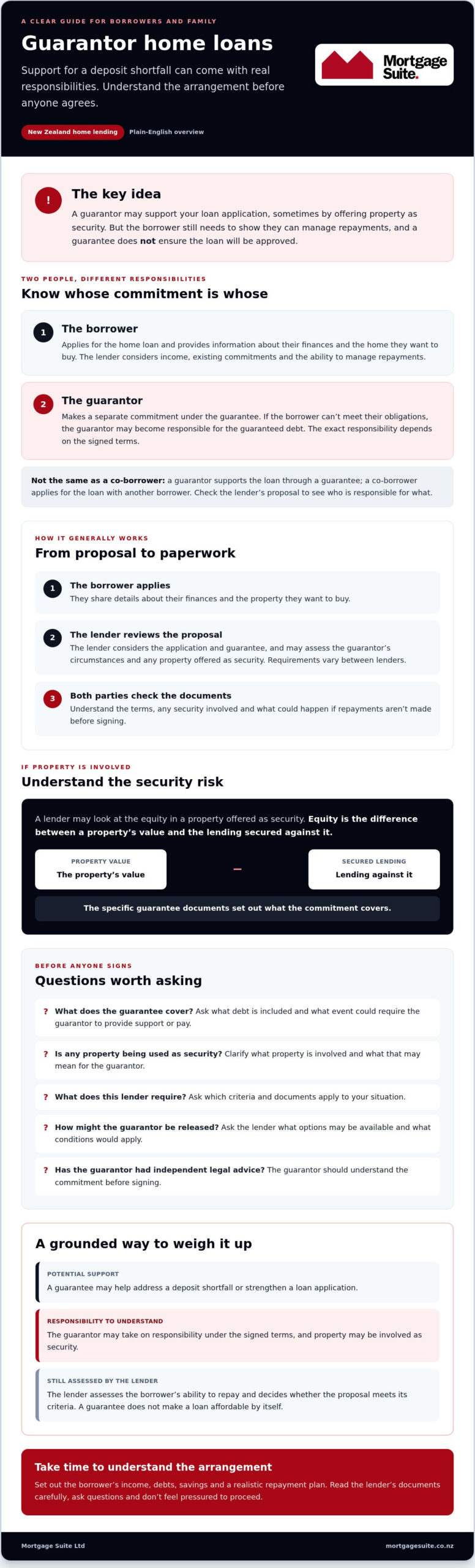
A loan guarantee is a promise to support a loan if the borrower doesn’t meet their obligations. The guarantee documents set out what that promise means. The borrower’s loan is the debt used to buy the home; the guarantor’s promise is a separate commitment. A guarantee may strengthen an application, but it doesn’t ensure approval. The lender still considers the borrower’s circumstances and its own criteria.
For broader first-home buying and borrowing guidance, explore Mortgage Suite’s mortgage school.
How is a guarantor different from a co-borrower?
A guarantor supports a loan through a guarantee rather than simply joining in the home purchase. A co-borrower, by contrast, applies for the loan with another borrower. The responsibilities are not automatically the same, and the role names alone don’t explain the full arrangement. Check the lender’s proposal and documents to establish who is responsible for what.
Pay particular attention to what the guarantee covers, whether any security is involved and what could happen if repayments aren’t made. Don’t assume every lender uses the same structure or wording. Both parties should understand the specific terms before deciding whether to proceed.
Who might consider a guarantor home loan?
A first-home buyer might explore this option if they believe they can manage repayments but need to discuss deposit support with a lender. A guarantee doesn’t make a loan affordable by itself or mean the application will meet the lender’s criteria. The lender still needs to assess the full application.
A family member may be willing to help, but should first consider their own finances, commitments and plans. There’s no one-size-fits-all answer: the borrower’s finances, the guarantor’s position and the lender’s requirements all affect which options may be available.
How does a guarantor home loan work in New Zealand?
A guarantor arrangement is considered as part of a home-loan application, not as an automatic shortcut to approval. The borrower applies for a loan and explains the support being proposed. The lender then assesses the application and guarantee, including what the guarantor is offering and whether the arrangement meets its criteria. Criteria vary between lenders, so ask what applies to your situation.
The process generally involves these steps:
- The borrower applies: They provide information about their finances and the home they want to buy.
- The lender reviews the proposal: It considers the borrower’s application and the proposed guarantee, and may assess the guarantor’s circumstances too.
- Both parties check the documents: Before signing, the borrower and guarantor should understand the terms, any security involved and what could happen if repayments aren’t made.
If the guarantee involves property, the lender may look at its equity. Equity is the difference between a property’s value and the lending secured against it. Ask whether property is part of the proposed arrangement and what that could mean for the guarantor.
The lender’s documents set out the scope of the guarantee. Read them carefully rather than relying on a general description of how these arrangements work.
What might the guarantor be agreeing to?
Don’t assume the guarantor’s responsibility is limited to a particular amount or situation. The exact commitment depends on the guarantee wording and the lender’s arrangement. Ask the lender: what event could require the guarantor to pay or provide support? What debt does the guarantee cover? What property, if any, is involved?
A general explanation of how guarantor mortgages work can introduce the concept, but it doesn’t set the terms for a New Zealand loan. The proposed lender documents do that. The guarantor should get independent legal advice before signing and ask the lender to explain its requirements.
What does the lender assess?
The lender may consider the borrower’s income, existing commitments and ability to manage repayments. It may also assess the guarantor’s financial circumstances and any property offered as security. The checks and documents required depend on the lender and the application, so confirm what is needed rather than relying on another borrower’s experience.
To build your understanding of lending terms and prepare questions for a lender, explore Mortgage Suite’s mortgage learning resources.
Guarantor home loan benefits and risks: what should both sides weigh?
A guarantor arrangement gives the borrower another option to discuss with a lender, but it also asks someone else to accept a formal commitment. For a guarantor home loan nz application, weigh the potential support against the exact responsibilities in the documents. A guarantee isn’t a risk-free shortcut or a promise that the lender will approve the loan.
Before signing, both parties should be able to explain what the guarantee covers, what security is involved and how the arrangement could end.
| Possible support for the borrower | Responsibilities and limits for the guarantor |
|---|---|
| A lender may consider a guarantee as part of an application where the borrower needs to discuss deposit support. | The guarantor may have to provide support or meet a financial responsibility if an event described in the agreement occurs. |
| The arrangement may help address a deposit gap, depending on the lender’s policy and the borrower’s full financial position. | Any property used as security may be affected under the agreed terms. The guarantor should confirm exactly what is involved. |
| It gives the borrower another option to ask about, rather than assuming the same approach suits every lender. | The commitment may affect future borrowing plans, depending on how another lender views the guarantee and the guarantor’s circumstances. |
What could a guarantor arrangement help with?
Some lenders may consider a guarantee when assessing an application, but their policies and criteria differ. It may be relevant if a borrower has income to manage repayments but needs to discuss a deposit shortfall. The lender will still consider the borrower’s broader financial position, including income, debts and ability to meet repayments. A guarantee doesn’t replace that assessment, and it may not be available or suitable in every case.
What risks should the guarantor understand?
The guarantor’s risk depends on the signed terms and any security involved. If the borrower can’t meet their obligations, the guarantor may face financial responsibility as set out in the agreement. Don’t rely on a verbal summary or assume the guarantee covers only one specific part of the loan. Read the documents and ask the lender to explain any wording that isn’t clear.
Consider future plans, too. If the guarantor later applies for borrowing, another lender may take the guarantee into account. The effect depends on that lender’s assessment and the details of the arrangement. Ask how and when the guarantee could end, who must agree to release it and what conditions need to be met. Don’t treat release as automatic unless the lender confirms the terms in writing.
How to prepare for a guarantor home loan discussion
A useful conversation starts before anyone approaches a lender or signs paperwork. For a guarantor home loan nz discussion, both people need time to ask questions and decide whether the arrangement fits their circumstances. Work through the details without treating family support as a foregone conclusion.
- Agree to talk openly. Discuss what support is being considered, what each person feels comfortable with and whether either has concerns.
- Get the borrower’s finances in order. Write down income, debts, savings and planned repayments. This gives both people a clearer starting point for discussing affordability with a lender.
- Review the guarantor’s position. Consider existing commitments, any property that might be involved and future borrowing needs. Ask the lender what information it needs and how it will assess the proposed support.
- Ask about the guarantee’s terms. Clarify what the guarantee covers, whether property is used as security, how long it may apply and what conditions could allow it to be changed or released.
- Read, question and get advice. Review the lender’s documents, ask for plain-English explanations and make sure the guarantor gets independent legal advice before signing.
Questions the borrower and guarantor should ask
Keep a written list and check the answers against the lender’s documents. Ask:
- What exactly would the guarantor be responsible for under these documents?
- What conditions must be met before the guarantee can be changed or released?
- What happens if the borrower can’t keep up with repayments?
- Could the guarantee affect the guarantor’s future borrowing plans, and how might a lender assess that?
Ask the lender to explain anything that remains unclear. Don’t rely on assumptions about the guarantee’s scope, duration or release conditions. Those details depend on the proposed arrangement and documents.
What should each person review before signing?
Read the full set of lender documents carefully. If a term is unfamiliar, ask the lender what it means in this specific agreement. The guarantor should also seek independent legal advice to understand their position. That advice works alongside, not instead of, clear information from the lender.
Before proceeding, check that the arrangement still suits both people’s circumstances and future plans. Mortgage Suite’s Mortgage School home-loan guides offer background to help you prepare. For support understanding lender options and preparing questions, talk with Mortgage Suite about your home-loan situation.
Choosing your next step for a guarantor home loan in NZ
Before moving ahead with a guarantor home loan nz arrangement, get clear on three things: the lender’s current criteria, what the guarantee documents commit each person to, and whether the borrower’s repayment plan is realistic. If anything is uncertain, pause and ask for an explanation. A careful decision helps both the borrower and guarantor understand what they’re agreeing to.
A decline from a mainstream bank doesn’t necessarily close off every option. Different lenders may assess applications differently, but there’s no promise another lender will approve the loan. Mortgage Suite works with mainstream and alternative lending channels and can help you explore options and prepare for lender conversations based on your circumstances.
When is it worth getting professional guidance?
Consider speaking with a mortgage adviser if lender requirements are difficult to compare or you’re unsure how to present the application and proposed guarantee. An adviser may help organise the borrower’s information, clarify which lender options to discuss and communicate with potential lenders. The guarantor can also ask the lender directly about the proposed commitment.
Borrowers and guarantors may need separate legal advice about their own responsibilities. A mortgage adviser can help explain lending options, but that doesn’t replace independent legal advice for a guarantor reviewing the documents.
What happens after the first conversation?
A first discussion can cover the borrower’s goals, finances and intended purchase, as well as who may act as guarantor and what support is being considered. From there, an adviser can help identify questions to raise with lenders. Any suggested route depends on lender criteria and both people’s circumstances. The next step might be to gather more information, compare options or decide that a guarantee isn’t the right fit.
For more background on home-loan decisions and the wider buying process, visit Mortgage Suite’s Mortgage School. If you’d like to talk through your home-loan options, Mortgage Suite can help you consider a practical next step, without pressure or any promise of approval.
Take your next step with confidence
A guarantor home loan nz arrangement may help you explore a path to your first home, but the decision should rest on more than the deposit gap. Check the lender’s criteria, make sure repayments look manageable and understand exactly what the guarantee asks of the guarantor.
Both people should read the documents carefully and get clear answers about the guarantee’s scope, any security involved and how it could end. The guarantor should also seek independent legal advice. If a mainstream bank has declined your application, that doesn’t necessarily mean every option is closed. What may be possible depends on your circumstances and the lender’s assessment.
Mortgage Suite works with home-loan clients across New Zealand. Founder Krish Krishna brings more than two decades of banking experience, helping borrowers understand lender options without promising an outcome.
If you’re ready to discuss your circumstances and possible next steps, talk through your home-loan options with Mortgage Suite. Start with your questions and decide what feels right.
Frequently Asked Questions
Can a guarantor help me get a home loan in New Zealand?
A guarantor may support your application, but can’t guarantee approval. Some lenders may consider a guarantee as part of their assessment, including when you need to discuss a deposit shortfall. They’ll still assess your income, debts and ability to manage repayments, along with the proposed guarantee. If you’re considering a guarantor home loan nz option, ask the lender what criteria apply to your circumstances.
Does a guarantor have to own a home?
Not necessarily. Whether a guarantor needs to own a home depends on the lender’s requirements and the type of support being considered. Some arrangements may involve property as security, while others may be structured differently. Ask the lender what the guarantor would need to provide and whether any property is involved. Don’t assume a particular arrangement applies until you’ve checked the proposed terms.
Can a guarantor lose their home?
A guarantor could put a home at risk if it is used as security and the borrower doesn’t meet the loan obligations, depending on the signed terms and any action the lender may take. This doesn’t mean a guarantor will automatically lose their home, but the possibility should be understood before signing. Ask the lender to explain the security involved and get independent legal advice on the documents.
How much deposit do I need with a guarantor home loan?
There’s no single deposit amount that applies to every guarantor arrangement. The lender will assess the borrower’s finances, the proposed guarantee and its own lending criteria. A guarantee may help address a deposit shortfall, but it doesn’t replace checks on whether the borrower can manage repayments. Ask the lender what deposit it requires for your application and whether the guarantee changes that requirement.
Can a guarantor be removed from a home loan later?
A guarantor may be released, but this isn’t automatic. The lender’s documents set out the arrangement, and the lender will confirm whether its release conditions have been met. Before signing, ask what would need to happen for the guarantee to end, who must approve the change and how to request it. Don’t rely on an informal understanding or assume the guarantee ends after a set time.
Does being a guarantor affect your ability to borrow?
It may affect future borrowing, depending on the guarantee’s terms and how a future lender assesses the guarantor’s finances and commitments. If you’re considering borrowing for another purpose, ask the lender how this guarantee could be taken into account. The effect can vary, so don’t assume it will have no impact or prevent you from borrowing. Review your plans and seek advice before agreeing to guarantee a loan.