
Home loan for visa holders in NZ: your 2026 guide
Can your visa allow you to buy a home in New Zealand but still leave a lender unsure about your application? That can happen because eligibility to purchase and mortgage approval are separate decisions. If you’re looking at a home loan for visa holders nz, understanding that difference is a useful first step.
It’s understandable to feel uncertain. Property rules can affect whether you’re allowed to buy, while lenders may assess visa type, income, deposit and supporting documents in different ways. A decline from a mainstream bank isn’t necessarily the end of the road, but no lending pathway can promise approval.
This guide explains how the two decisions fit together, what lenders may look at, how mainstream and alternative lending pathways can differ, and which documents may help explain your circumstances. Mortgage Suite helps borrowers understand their options and present their situation to lenders, so you can have a clearer conversation about possible next steps.
Key Takeaways
- Check your right to buy a property separately from a lender’s decision to approve a mortgage. They’re different assessments.
- For a home loan for visa holders nz, be ready to explain your visa conditions, income, debts, deposit source and the property you’re considering.
- Compare mainstream and alternative lending pathways against your circumstances, as lender criteria and flexibility can vary.
- Organise your key documents before discussing an application, while allowing for lenders to request different information.
- A broker can help present your circumstances clearly and negotiate with lenders, but approval depends on the details of your application.
Home loan for visa holders in NZ: separate property eligibility from loan approval
It can be hard to tell whether your visa lets you buy a home and whether a lender will support the purchase. Treat them as two separate questions. First, establish whether you’re eligible to buy the property. Then consider how a lender may assess your finances and circumstances for a home loan for visa holders nz.
Property-purchase eligibility is your legal ability to buy a particular property in New Zealand; loan approval is a lender’s decision about whether your finances can support the borrowing. Meeting one test doesn’t automatically mean you’ll meet the other.
Can visa holders buy residential property in New Zealand?
There isn’t one answer for every visa holder. Eligibility can depend on your visa category, residence history, citizenship, who you’re buying with and the property involved. New Zealand’s overseas investment rules restrict some purchases of residential land. The Overseas Investment Amendment Act 2018 provides background on changes to those rules, but your own circumstances matter.
For example, a residence class visa holder may need consent from the Overseas Investment Office (OIO), the government body that considers certain property purchases, if they haven’t yet met the “ordinarily resident” test. This generally means holding a residence class visa, living in New Zealand for the previous 12 months and being physically present here for at least 183 days during that period. OIO consent is official permission to buy or build a home in cases where the rules require it.
Temporary visa holders are generally restricted from buying a home to live in on their own, but some situations, including buying jointly with an eligible partner, can be treated differently. Australian and Singaporean citizens also have specific exemptions. Check current OIO guidance before making decisions, as eligibility depends on your circumstances.
Why property eligibility does not guarantee a home loan
Even if you’re allowed to buy, a lender makes a separate assessment of whether the loan appears affordable and suitable. It may consider your income and how steady it is, your existing debts, the size and source of your deposit, and the property you plan to buy. Your visa conditions may also affect how a lender views your circumstances. Policies differ, so one lender’s response may not predict another’s.
Keeping the two decisions separate can make the process feel more manageable. A lender’s decision isn’t a verdict on your future, and a decline from one mainstream bank doesn’t necessarily close every pathway. Review what the lender has assessed, identify any details that need explaining, and consider whether another lender’s criteria may fit your circumstances. Property eligibility and borrowing are connected, but each needs its own clear assessment.
What lenders may assess when a visa holder applies for a home loan
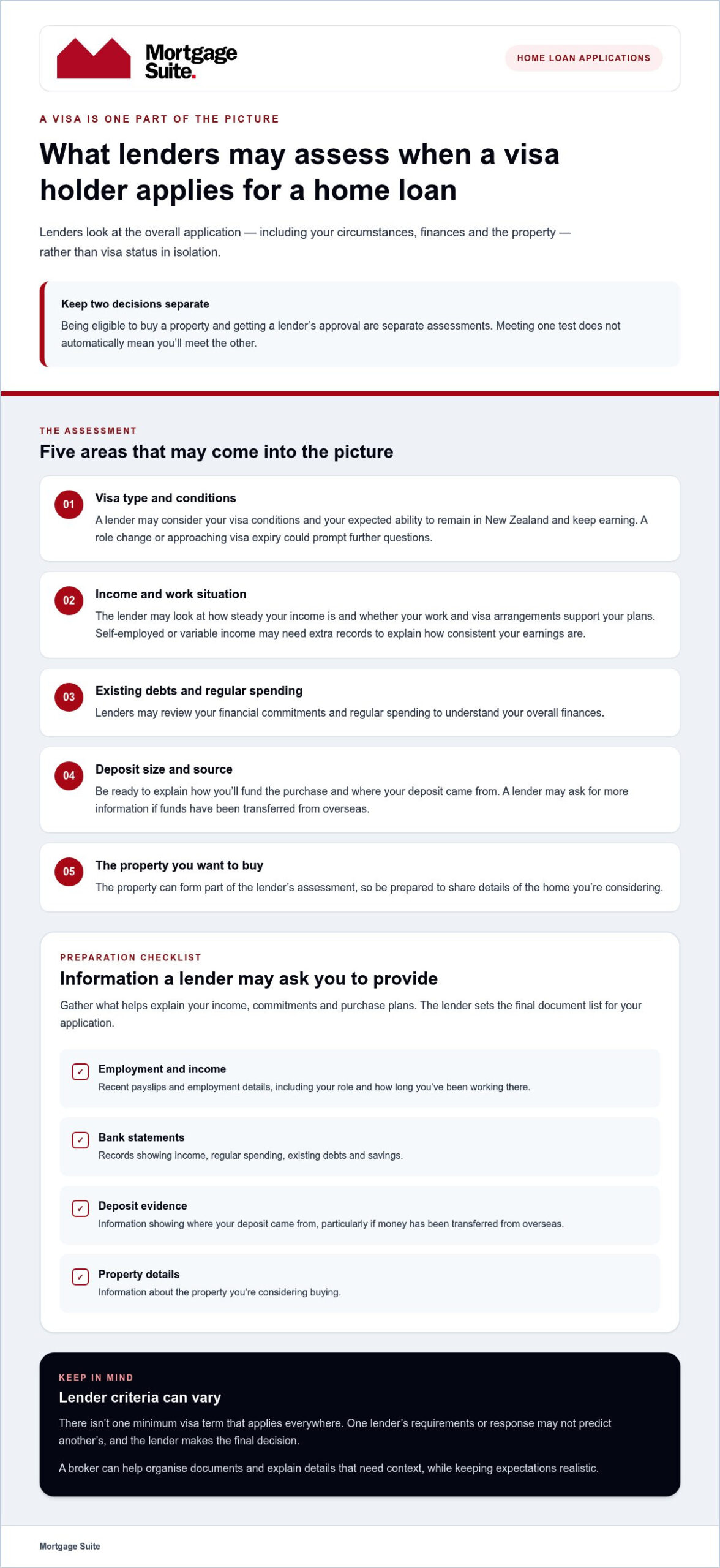
Your visa is one part of the picture, not the whole application. A lender assesses the overall application, not visa status in isolation. It may consider your visa type and conditions alongside your income, work situation, debts, deposit and the property you want to buy. Each lender sets its own criteria, so a requirement applied by one lender shouldn’t be treated as a universal rule.
This is why an application for a home loan for visa holders nz may need a clear explanation of your circumstances. A lender may want to understand how steady your income is and whether your work and visa arrangements support your plans. Questions are part of assessing the application as a whole and don’t automatically mean there’s a problem.
How visa type and remaining visa term may affect an application
Lenders may look at your visa conditions and expected ability to remain in New Zealand and keep earning. Work conditions, a role change or an approaching expiry could prompt further questions, but lender policies differ. Don’t assume there’s one minimum visa term that applies everywhere. The relevant lender’s current criteria determine what it will consider in your situation.
The same applies to named loan pathways. Kāinga Ora’s First Home Loan scheme has its own eligibility criteria, so check the current details rather than assuming a visa alone determines whether you qualify.
Income, deposit and financial records lenders may review
A lender needs a clear view of the money coming in, the commitments going out and how you’ll fund the purchase. Depending on your circumstances and the lender, you may be asked for records such as:
- Recent payslips and details of your employment, including your role and how long you’ve been working there.
- Bank statements showing income, regular spending, existing debts and savings.
- Evidence showing where your deposit came from, particularly if funds have been transferred from overseas.
- Details of the property you’re considering, as the property can form part of the lender’s assessment.
If you’re self-employed or your income varies, the lender may need extra records to understand how consistent your earnings are. Gather the documents that show your income and commitments clearly, but expect the lender to set the final list for your application. You can also explore plain-English mortgage guidance as you get your information together.
Clear information can make it easier for a lender to assess your application on its merits. A broker can help organise the documents and explain details that need context, while keeping expectations realistic: the lender makes the final decision.
Mainstream and alternative home loans for visa holders: how to compare pathways
There isn’t one lender pathway that suits every visa holder. Mainstream and alternative lenders may assess applications differently, and policies can vary within each group. When comparing a home loan for visa holders nz, look at how the lender’s criteria fit your circumstances, as well as the loan’s repayment structure and flexibility. A headline interest rate alone won’t show whether the overall arrangement suits your plans.
The 2nd tier and non-bank home loans guide explains more about alternative lending. This can be a pathway to explore if your circumstances don’t fit a mainstream lender’s criteria, though suitability depends on your application and the terms available.
| What to compare | Mainstream lender | Alternative lender |
|---|---|---|
| Criteria and assessment | May apply defined policies to visa status, income, deposit and property details. | May consider applications that sit outside some mainstream criteria, with its own assessment requirements. |
| Flexibility | Depends on the individual lender’s rules and how your application fits them. | May offer a different way to assess some circumstances, but flexibility isn’t the same across all lenders. |
| Loan fit | Compare repayments, structure and conditions against your needs and plans. | Review the full loan terms and repayment commitments, not just the initial rate. |
When a mainstream lender may be worth considering
A mainstream lender may be worth exploring if your visa, income, deposit and property plans fit its current criteria. That doesn’t guarantee acceptance. Find out how the lender treats your specific visa circumstances, what evidence it needs and whether the repayment arrangement fits your budget over time. Each lender sets its own requirements, so don’t assume one bank’s policy applies to all.
When an alternative lender may be another pathway
If a mainstream lender can’t assess your application under its usual criteria, an alternative lender may be another option to consider. It won’t suit everyone or guarantee approval, so weigh its assessment approach and loan conditions carefully. Mortgage Suite helps explain possible pathways and present more complex circumstances clearly to lenders. If you’d like support comparing options, talk with Mortgage Suite about your goals and situation.
How to prepare a home loan application as a visa holder
A little preparation can make a home loan conversation clearer and less stressful. Before comparing lenders, bring together the details that explain your visa, finances and property plans. This gives you a practical starting point for a home loan for visa holders nz, while allowing for lenders to request documents specific to your application.
Build a clear picture of your visa and financial position
Start by checking your property-purchase eligibility for your circumstances. Then organise your information so you can explain your situation consistently. A simple summary of your income, regular commitments, deposit source and intended property can help you spot gaps before you apply.
Depending on the lender and application, useful documents may include:
- Current visa documents and relevant visa conditions.
- Recent payslips, employment details or other evidence of income.
- Bank statements showing regular income, expenses, debts and savings.
- Information or records showing where your deposit funds came from.
- Details of the property you’re considering, if you’ve chosen one.
If you’re self-employed or your income changes from month to month, gather records that help explain how you earn and how your income varies. Keep names, dates and other personal details consistent across forms and supporting documents. The lender may ask for more or different information, so use this as a starting checklist rather than a fixed list.
Prepare questions and compare lender fit
Use these steps to get sorted before discussing an application:
- Clarify purchase eligibility. Understand whether your visa and circumstances allow you to buy the property you have in mind.
- Map your finances. Note your income, work history, regular expenses, existing debts and deposit source.
- Organise your records. Bring together relevant visa, employment, income and bank documents.
- Discuss lender options. Ask how a lender may assess your visa and income circumstances, and what information it needs to consider your application.
- Compare the whole loan. Look at eligibility, repayment structure, flexibility and communication, as well as the interest rate.
Useful questions can help you understand whether a lender may be a fit: Which parts of my visa or income history need explaining? What documents would help clarify them? How do the repayments and conditions match my plans? For plain-English explanations as you prepare, visit Mortgage Suite’s mortgage education resources.
Mortgage Suite can help you organise your information and discuss lender options without treating one lender’s response as the final word. Talk through your home loan options with a team that can present your circumstances clearly and negotiate with lenders.
How Mortgage Suite can help visa holders explore home loan options
Working out which lender may suit your visa and financial circumstances can feel like a lot to manage alone. Mortgage Suite takes a personal approach: we learn about your goals, understand the details of your situation and consider how your application may fit different lender criteria. This gives you a clearer view of possible next steps without treating a particular loan outcome as certain.
A personal advocate when lending criteria feel hard to navigate
Lender feedback can be difficult to interpret, especially if a decision focuses on one part of your application. A broker can help explain what the feedback means, identify information that may need more context and discuss whether another lending pathway could be worth exploring. A decline from one lender isn’t necessarily a final judgement, but it also doesn’t mean another lender will approve your application.
Mortgage Suite’s founder, Krish Krishna, brings more than two decades of banking experience to conversations about borrowing. That experience supports a practical understanding of how lenders assess applications and how a borrower’s circumstances can be presented clearly. It’s guidance and advocacy, not a promise of approval. You can read more about Mortgage Suite’s team and experience.
What to expect from an initial lending conversation
An initial conversation is a chance to explain what you’re hoping to do and get a clearer picture of the information lenders may need. You can talk through your visa conditions, income, deposit, existing commitments and property plans. If some details are still uncertain, say so. A clear, honest picture helps shape a useful discussion about lender options and what may need attention before an application is presented.
Mortgage Suite can help organise the key details, match your circumstances to potential lender criteria and present your application clearly. Where appropriate, the broker can also negotiate with lenders on your behalf. For a home loan for visa holders nz, this support can help you compare possible pathways and understand what each lender is asking for, while leaving the decision with the lender.
You don’t need to have every answer before starting a conversation. If you’d like to talk through your goals and possible next steps, discuss your home loan options with Mortgage Suite. There’s no pressure to have everything sorted first.
Take your next step with a clearer plan
Buying a home with a visa involves two separate questions: whether you’re eligible to purchase, and whether a lender is prepared to approve your borrowing. Once you understand that distinction, you can focus on the details that shape a home loan for visa holders nz, including your visa conditions, income, deposit and the lender’s own criteria.
Mainstream and alternative lending pathways may suit different circumstances, but neither guarantees approval. Preparing clear information and comparing the full loan structure can help you have a more informed conversation about your options.
Mortgage Suite supports borrowers through mainstream and alternative lending applications, with personal advocacy and lender negotiation. Founder Krish Krishna brings over two decades of banking experience to that work, helping you understand lender feedback and present your circumstances clearly.
Talk through your home loan options with Mortgage Suite and explore possible next steps at your pace. Getting started doesn’t have to be daunting.
Frequently Asked Questions
Can I get a home loan in New Zealand on a work visa?
You may be able to apply, but a lender’s decision depends on your circumstances and its current criteria. A work visa doesn’t automatically mean you can buy a home independently, so check purchase eligibility separately before making plans. Lenders may consider your visa conditions, income, employment history, deposit and other commitments. For a home loan for visa holders nz, both property rules and borrowing requirements need to be considered.
Can temporary visa holders buy a house in New Zealand?
Temporary visa holders are generally restricted from buying a home to live in on their own, but individual circumstances can affect the rules. For example, a temporary visa holder may be able to buy jointly with an eligible New Zealand partner if the property is treated as shared under relationship-property rules. This means it falls within the property-sharing rules for couples. Check current Overseas Investment Office guidance before entering a purchase agreement or assuming an exception applies.
Does a residence-class visa guarantee home loan approval?
No. A residence-class visa may affect whether you’re eligible to purchase, but it doesn’t require a lender to approve a mortgage. The lender will separately assess your income, debts, deposit, ability to manage repayments and the property. Some residence visa holders may also need Overseas Investment Office consent, depending on their circumstances. Confirm purchase eligibility and borrowing requirements as separate steps before committing to a property.
What documents might a visa holder need for a home loan application?
Possible documents include current visa details, payslips, employment information, bank statements and evidence showing where your deposit came from. If you’re self-employed or your income varies, a lender may ask for additional records to understand your earnings. You may also need to provide details of the property you’re considering. The exact documents depend on the lender and your application, so treat this as a starting list, not a universal requirement.
Do all New Zealand lenders assess visa holders in the same way?
No. Lenders set their own criteria, and they may differ in how they consider visa conditions, income, employment history, deposit and property details. One lender’s decision doesn’t necessarily tell you how another will assess your application. Compare more than the interest rate: consider eligibility, repayment structure, flexibility and the information each lender needs. A broker can help explain lender feedback and present your circumstances clearly.
Can I apply for a home loan if a bank has declined my application?
Yes, a decline from one bank doesn’t automatically rule out every other lending option. First, understand the reasons for the decision and whether anything in your application needs clarification or improvement. Lenders assess applications differently, and an alternative lender may consider circumstances outside some mainstream criteria. That isn’t a promise of approval or a suitable route for everyone, but a tailored review can help you understand possible next steps.