
How to Present a Business Loan Application in New Zealand
A lender’s decision depends on more than whether your finances look perfect. If you’re unsure how to present a business loan application, you’re not alone. Gathering financial records, explaining what you need the funds for and showing how you’ll manage repayments can feel like a lot, especially if income has changed, the business already has debt or an earlier application was declined.
A clear application gives the lender a consistent picture of your business: what you need, how you’ll use the funds and how repayments may fit your cash flow. This guide covers the information and supporting documents that can help a lender assess your request, along with ways to explain your plans in plain English. You’ll also learn how to describe unusual circumstances honestly without letting them define your whole application.
The right funding route depends on your business needs, the evidence you can provide and the lender’s assessment. Mortgage Suite supports business finance applications by helping shape and negotiate the request. Founder Krish Krishna brings more than two decades of banking experience and a practical understanding of how lenders review funding proposals.
Key Takeaways
- Present your funding need, business position and repayment plan as one clear account.
- Prepare financial records that support your case, keeping in mind that document requests vary between lenders and applications.
- Compare funding routes by how you’ll use the money, make repayments and access funds, including how a term loan works.
- Check your figures, update your records and explain unusual circumstances clearly before applying.
- Mortgage Suite can help shape and negotiate your funding request, but no particular lending decision is guaranteed.
Why a well-presented business loan application matters
Applying for business finance can feel demanding, especially if sales have shifted, costs have risen or cash flow looks different from last year. You may be keeping day-to-day work moving while also gathering records and explaining a decision that feels obvious to you. A well-presented application brings those details together, helping a lender understand what the business needs and how the proposed repayments may fit.
Good presentation isn’t about dressing up the numbers or hiding a difficult period. It means giving a consistent, straightforward account of the business, the funding request and the repayment plan. This can help a lender assess your request, but it can’t guarantee approval. Each lender makes its own assessment, and the right finance route depends on your business and its circumstances.
What does a business loan application need to communicate?
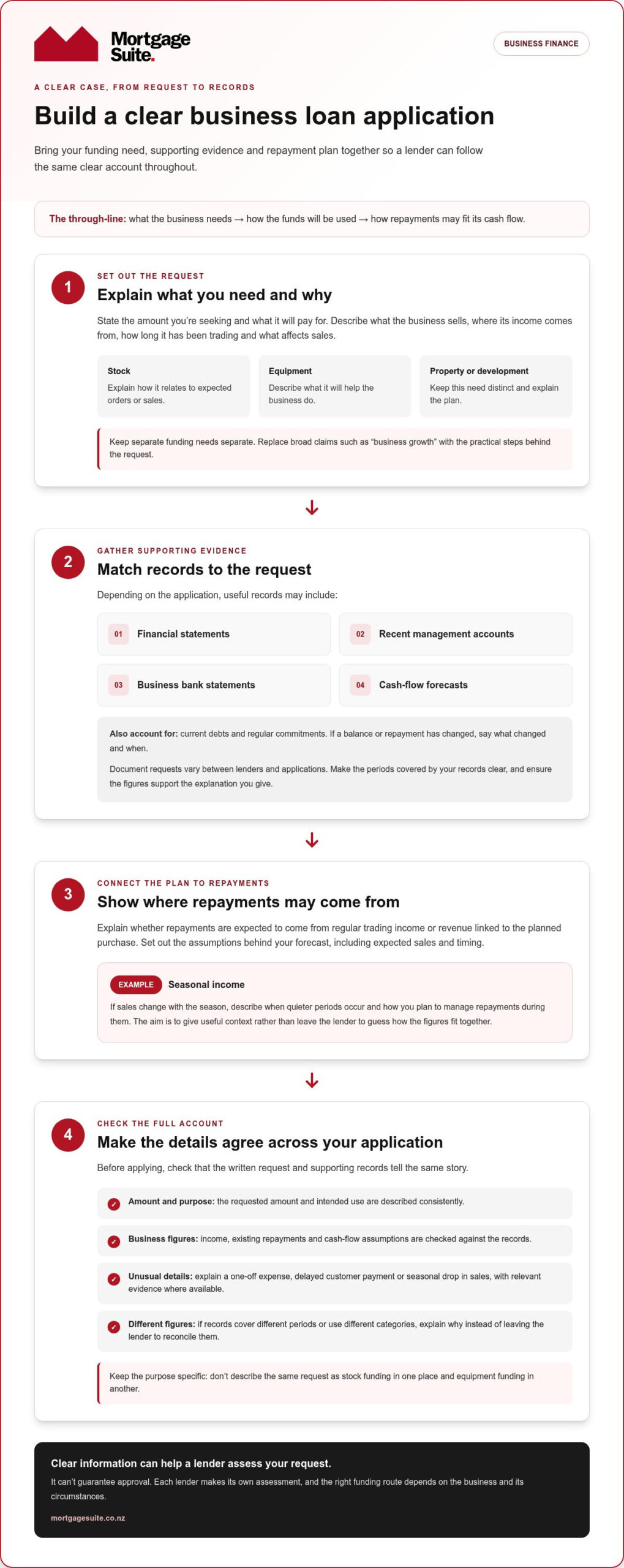
Start by stating the amount you’re seeking and what it will pay for. Keep separate needs distinct rather than grouping unrelated expenses under a broad label such as “business growth”. Briefly describe how the business operates, where its income comes from and how it manages existing commitments.
Then connect those details to your repayment plan. Explain how the business expects to meet repayments from its cash flow and what assumptions that expectation relies on. If income varies with seasonal demand, for example, describe when quieter periods occur and how you plan to manage repayments then. This gives the lender useful context instead of leaving them to guess how the figures fit together.
Why clarity and consistency matter
Figures that agree across your application and supporting records are easier to follow. If your written request describes one use for the funds but your forecast suggests another, the lender may need clarification. That doesn’t automatically determine the outcome, but it can make the assessment less direct and create extra work for you.
Check the key details across your documents: the amount requested, intended use, income figures, existing repayments and cash-flow assumptions. If figures differ because records cover different periods or use different categories, explain why rather than leaving the lender to reconcile them.
For instance, if you’re seeking funding to buy stock, say so clearly and show how the stock supports expected sales. Don’t describe the same request as equipment funding in one part of the application and working capital in another. A lender needs to see a clear connection between the funds and the business purpose. For general background on types of business loans and assessment criteria, you can also review an overview of how business loans may be structured and assessed.
In practice, how to present a business loan application comes down to making your case easy to understand and checking that each part supports the same account. Clear explanations won’t remove every concern, but they help a lender assess your request with a better understanding of the business.
Build a clear business loan case with evidence
A lender needs more than a stack of records. They need to understand how the business operates, why it needs funding and how the request connects to a realistic repayment plan. Arrange your explanation and evidence so each supports the same account. Document requests vary between lenders and applications, so use the examples below as a starting point and follow the requirements for your application.
Explain the business and the reason for borrowing
Give a short picture of your business: what it sells, how it earns income, how long it has been trading and what affects sales. Then describe the funding purpose in practical terms. For example, explain whether the request is for stock to meet expected orders, equipment to support operations, or a property or development plan. Keep different needs separate, as they may call for different funding structures and supporting evidence.
Be specific about how the funds relate to the business need. If you’re seeking finance for equipment, explain what it will allow the business to do and how that supports income or day-to-day operations. Avoid broad claims such as “this will grow the business” unless you can explain the steps behind them.
Prepare records that support the request
Depending on the application, useful evidence may include financial statements, recent management accounts, business bank statements and cash-flow forecasts. These records can help show both past performance and what you expect ahead. Check that the periods covered are clear and that the figures in your written explanation appear in the relevant records.
List current debts and other regular commitments accurately. If a balance or repayment has changed, explain what changed and when. Do the same for unusual figures: a one-off expense, delayed customer payment or seasonal drop in sales may need a brief explanation and relevant supporting evidence. Don’t leave a lender to guess, but avoid over-explaining ordinary fluctuations. Focus on the details that make the business’s position clearer.
Mortgage Suite’s business finance support can help you organise information around your funding request and shape the case you present.
Make the repayment plan understandable
Explain where repayments are expected to come from, such as regular trading income or revenue linked to the planned purchase. Set out the assumptions behind your forecast, including expected sales, costs and timing. If income changes with the season or depends on work being completed, show how that timing affects the cash available for repayments.
Think through a quieter period or delayed income. Explain how the business could manage that change, and make sure the plan accounts for existing commitments as well as the new borrowing. Forecasts are estimates, not guaranteed results, so label assumptions clearly and keep them realistic. Evidence and a measured explanation help support the request without overstating what the business can achieve.
Compare funding routes and address concerns before applying
The right finance structure depends on what the business needs, when it needs the funds and how it expects to repay them. A facility that suits regular operating expenses may not suit a property purchase or development project. Compare the purpose, repayment pattern, security and access to funds before framing your request. The options below are broad categories, and a lender’s assessment determines what may be available for a particular application.
Match the funding structure to the business need
| Funding route | How it works | May suit |
|---|---|---|
| Term loan | A loan provided as a lump sum with a defined repayment schedule and end date. | A planned purchase or one-off business expense where the amount and purpose are known. |
| Revolving facility | Access to funds up to an agreed limit, with repayments and access working according to the facility’s terms. | Changing short-term cash-flow needs where the business may need to draw funds at different times. |
| Property-related finance | Funding assessed in relation to a commercial property purchase or development plan. | A property or development project, rather than general day-to-day business needs. |
Security, timing and cash flow can all affect which route may fit. A business buying a commercial property has a different funding purpose from one managing uneven trading income. Property or development finance is shaped around the project and its supporting information, while general business funding relates to other operating needs. Set out the intended use clearly so the request can be considered in context.
What if the business has been declined or has a complex profile?
A decline from a mainstream bank can be discouraging, but it’s a decision on that application, not a judgement of your worth or the value of your business. Before applying again, review any reasons the lender gave. Was the concern about cash flow, existing commitments, proposed security or information that needed more explanation? Address the specific issue rather than sending the same request unchanged.
If income varies, trading history is unusual or a past event affected the figures, explain the circumstances plainly and support them with relevant records. A different lender or finance route may suit some applications, including options outside mainstream banks, but each lender makes its own assessment and approval can’t be assured. Changing the structure or strengthening the evidence may help present your request more clearly, though it won’t remove every concern.
Knowing how to present a business loan application also means choosing a funding route that fits your business, rather than focusing on a headline rate alone. Mortgage Suite can help shape and negotiate a business finance request around its purpose and supporting case. For a personal discussion of your funding needs, talk with Mortgage Suite about business finance.
Prepare and present your application in practical steps
Once you’ve settled on the funding need, turn your notes and records into a pack that’s easy to review. Organisation can make the process feel more manageable and help you spot gaps before you submit. Use this sequence as a guide, adapting it to the lender’s document requests and your business circumstances.
A step-by-step application preparation process
- Set out the request. Write down the amount you’re seeking, what the funds will be used for and when you expect to need them. Be specific: describe the planned purchase or business need rather than relying on a broad phrase such as “business growth”.
- Gather relevant records. Collect the business information and financial documents that support the request. Check that figures agree across records, and note the period each document covers. Keep files in clearly named folders so you can find the right evidence without searching through a jumble of attachments.
- Draft a short business summary and repayment explanation. Describe how the business earns income and what the funding will help it do. Then explain the expected source of repayments, the assumptions behind your forecast and how you’ve allowed for existing commitments or changes in income.
- Review the application pack. Read the written explanation alongside the supporting records. Check that dates, figures and the stated use of funds match. Add a brief explanation where a lender might otherwise be left wondering about a gap or unusual change.
Keep a copy of what you submit and note which records you included. If the lender asks a follow-up question, respond clearly and provide the relevant information. An organised reply can help keep the discussion focused, although the lender may still need to make further enquiries while assessing the application.
Common presentation mistakes to avoid
Before sending your application, watch for these avoidable issues:
- Unexplained differences. If a forecast doesn’t match recent bank activity or a written claim, explain the reason and point to the information that supports it.
- A vague funding purpose. “Business growth” doesn’t tell a lender what you plan to do. Name the intended use and connect it to the business need.
- Missing commitments. Include existing debts and regular obligations accurately. Leaving them out can create a different picture from the one shown in your records.
- Overconfident forecasts. Present expected income as an estimate, not a sure thing. Make the assumptions clear, especially if sales or payment timing can change.
Knowing how to present a business loan application means making it straightforward for someone unfamiliar with your business to follow the request and its supporting information. If you’d like help organising and presenting your funding case, discuss your business funding needs with Mortgage Suite.
How Mortgage Suite can help with a business loan application
Putting together a business finance request can take time, especially if your income has changed, your funding need is unusual or a lender has already declined an application. You don’t have to work through every detail alone. An adviser can help organise the request, consider finance routes that may fit and make sure the supporting information explains the business case clearly.
What support can an adviser provide?
Start with the purpose. An adviser can help you describe what the funds are for, what the business needs to achieve and what information best supports that explanation. They can also help make sense of your circumstances, such as changing income, existing commitments or a previous lender decision, so relevant context isn’t lost in a bundle of documents.
From there, an adviser can discuss funding routes that may suit the request and help present it to a lender. Mortgage Suite acts as a personal advocate and negotiator, working to shape the application around your business needs and supporting evidence. Founder Krish Krishna brings more than two decades of banking experience.
That support can help organise and discuss a request, but it can’t determine the outcome. Lenders make their own assessments and may ask for more information. A well-prepared application can make the business’s position easier to understand, but no adviser can promise approval or remove every lending concern.
Take the next step with a clear funding brief
You don’t need a polished presentation to start a useful conversation. A short brief can explain what the business does, what funding you’re seeking, how you plan to use it and where repayments are expected to come from. Include known changes to trading or cash flow, along with relevant lender feedback if you’ve already applied.
Being upfront about a decline or a complex circumstance gives an adviser a clearer picture of the request. It also helps identify which parts of the case may need more explanation or supporting information before it goes to a lender. If you’re still gathering records, the next step is to work out what information is relevant and how to present it consistently.
If you’re ready to talk through your business finance needs, start a conversation with Mortgage Suite. Explain what the business needs and where you’d like help. Together, you can consider how to present a business loan application that gives a lender a clear view of the request, without assuming what the decision will be.
Take your next funding step with a clear plan
A funding request can help you look ahead as well as meet an immediate need. Before you submit, consider what you want the business to do next and whether the proposed repayments leave room for everyday commitments if trading changes. That forward view can help you discuss the request in practical terms and keep your longer-term business goals in mind.
Understanding how to present a business loan application is a strong starting point, but you don’t have to shape the case on your own. Mortgage Suite can help organise and negotiate a request that reflects your business’s needs and circumstances. Lenders make their own decisions, so there’s no promise of a particular result. The aim is to help you approach the conversation prepared and clear about what you’re asking for.
Have a funding need in mind, even if some details are still taking shape? Talk with Mortgage Suite about your business finance needs and take the next step at a pace that feels right for your business.
Frequently Asked Questions
How much should I ask for in a business loan application?
Ask for an amount you can explain and support with a clear breakdown of its intended use. For example, list the equipment, stock or project expenses the funding would cover, using relevant quotes or forecasts where available. Include a cash-flow estimate showing when the funds are needed. This makes it easier to present your request clearly and avoid asking for more than the business case supports.
Can a new business apply for a business loan without a long trading history?
Yes, a new business can apply, although a short trading history may leave less past performance for a lender to review. You may need to explain the business model, your experience in the industry, expected customers and how you arrived at your income forecasts. Evidence such as confirmed work or customer interest may help give context, but the lender decides what it needs and whether the request suits its lending approach.
Do I need a business plan to apply for a business loan?
A formal business plan isn’t always required, but a clear written outline can help explain what the business does and why it needs finance. Keep it practical: describe your customers, how the business earns income, what you’ll use the funds for and how you expect to make repayments. For a new venture, explain the assumptions behind projected sales and costs so they aren’t presented as established results.
Can I apply for a business loan if my business already has debt?
Yes, existing debt doesn’t automatically prevent you from applying. Be ready to outline current balances, regular repayments and any changes, such as a facility that has recently been reduced or repaid. A lender may consider how the new repayments sit alongside those commitments and the business’s available cash flow. If you’re seeking extra funding to manage debt pressure, explain the underlying cause as well as the immediate need.
Will a business loan application affect my personal credit file?
It may, depending on the lender, the type of credit check and whether the application involves a personal guarantee. A lender may review an owner’s personal credit information as part of its assessment, but checks aren’t all handled in the same way. Before authorising a check, ask how it will be carried out and whether an enquiry may appear on your file. Be open about any past credit issues and relevant context.
What happens after I submit a business loan application?
After submission, the lender reviews the information and may ask questions or request further documents to clarify parts of the application. For example, it may need an updated cash-flow forecast or more detail about a particular transaction. Keep your records accessible and respond accurately. The lender then communicates its decision and any proposed terms, if applicable. Processes and timing vary, so avoid making business plans that depend on an assumed decision date.
Can a business loan be secured against commercial property?
Yes, some business borrowing may be secured against commercial property, but this depends on the lender, the property and the wider application. The lender may consider the property’s value and the existing lending attached to it, alongside the business’s ability to repay. Offering property as security can put it at risk if repayments aren’t met, so understand the proposed terms and obligations before agreeing to use it as security.