
Interest only mortgage NZ: Compare rates, terms and fees
The lowest advertised rate may not be the best fit for an interest-only mortgage in NZ. Your repayments cover interest, not the amount borrowed, so the rate type, loan term and plan for repaying the principal all matter.
It is understandable to focus first on whether to choose a fixed or variable rate. But there is no one option that suits every borrower: the right structure depends on your goals, cash flow and how much flexibility you need. Most New Zealand lenders require a minimum deposit of 20% of the property value for an interest-only loan.
This guide explains how fixed and variable rates compare, what to consider when combining them, and how the loan term and structure can affect your decision. You will also learn what lenders may assess and how Mortgage Suite Ltd can help compare options and negotiate lending suited to your circumstances.
Key Takeaways
- Compare fixed and variable rates alongside the loan structure, term and flexibility, not just the headline rate.
- Interest-only repayments cover interest rather than reducing the amount borrowed, so a plan for repaying the principal matters.
- Most New Zealand mortgages run for 25-30 years, but the repayment term and payment structure affect how much interest you pay over time.
- Most lenders require a deposit of at least 20% of the property’s value for an interest-only mortgage.
- A mortgage adviser can assess your circumstances and help compare lending options, including alternatives when a mainstream bank is not the right fit.
How a mortgage adviser can help you choose a mortgage
Choosing a mortgage involves more than picking the lowest advertised rate. An adviser can match your borrowing needs with a loan structure suited to your property plans, income and cash flow. With an interest-only loan, look beyond the initial repayment: you still need a plan to repay the principal. Discussing the trade-offs clearly can help you decide what to apply for.
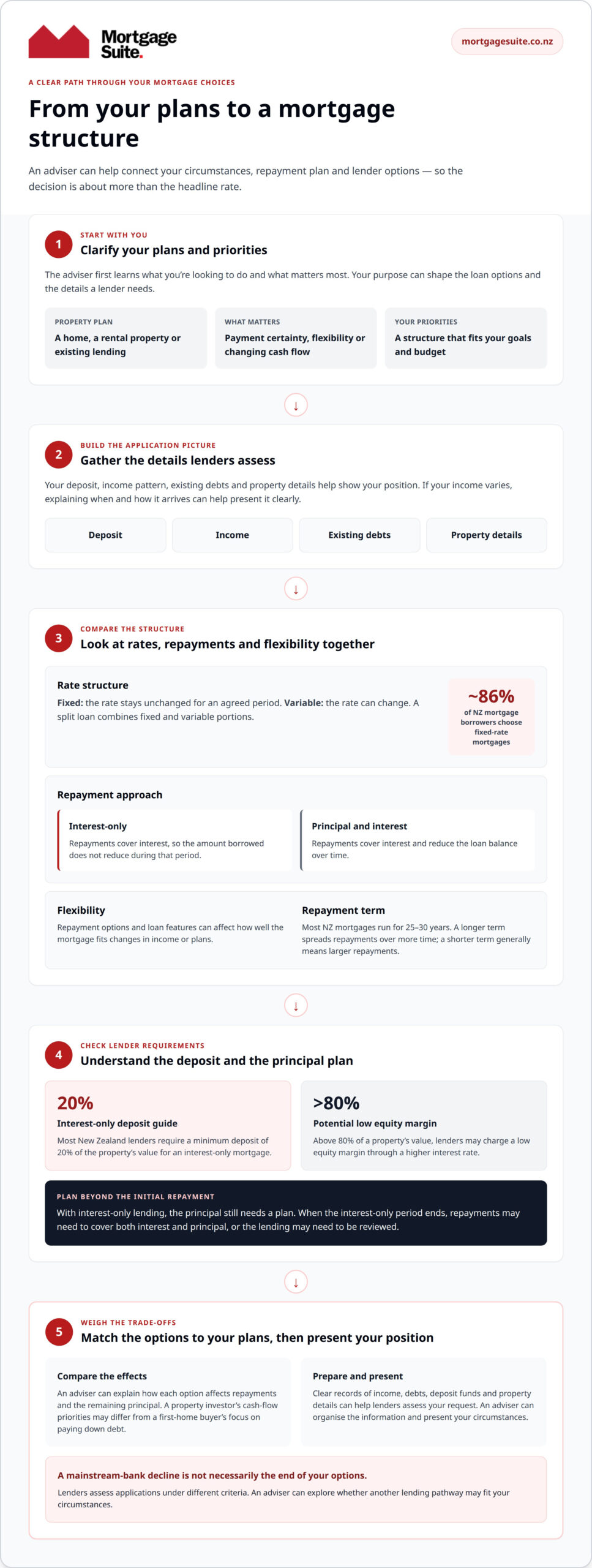
The adviser starts by understanding your circumstances and priorities. You might be buying a home, purchasing a rental property or reviewing existing lending. The purpose can shape the suitable loan options and the information a lender needs. Your deposit, income pattern, existing debts and property details help build a picture of the application. If your income varies, explaining when and how it arrives can help present your position clearly.
Next, an adviser can compare the mortgage features that affect your day-to-day choices:
- Rate structure: A fixed interest rate offers a set rate for an agreed period, while a variable rate can change. A combination may suit borrowers who want to split their lending.
- Repayment approach: Interest-only repayments leave the amount borrowed unchanged during that period. Principal-and-interest repayments reduce the loan balance as you pay.
- Flexibility: Repayment options and loan features can affect how easily the mortgage fits changes in income or plans.
- Lender requirements: Above 80% of a property’s value, New Zealand lenders may charge a low equity margin through a higher interest rate.
The comparison should reflect your plans, not just a rate table. For example, a property investor expecting rental income may weigh cash flow differently from a first-home buyer focused on paying down debt. An adviser can explain how each option affects repayments and the remaining principal, helping you weigh the consequences before choosing a structure.
An adviser can also organise your application information and present your circumstances to lenders. Clear records of income, debts, deposit funds and property details can help lenders assess your request. If a mainstream bank declines your application, that is not a judgement on your worth as a borrower. Lenders assess applications under different criteria, and an adviser can explore whether another lending pathway may fit.
Use the discussion to clarify what matters most to you: payment certainty, flexibility or room to manage changing cash flow. Learning resources can explain key terms before you compare options. With an adviser’s guidance, weigh the rate, structure and repayment plan together instead of treating one headline figure as the whole decision.
Mortgage repayment terms
A mortgage term sets how long you have to repay the loan. In New Zealand, most mortgages have repayment terms of 25-30 years. A longer term spreads repayments over more time, while a shorter term generally means larger repayments. The balance is important: repayments need to fit your budget, while the term affects how long interest can accumulate.
The repayment method also determines what happens to your loan balance. With a table mortgage, each regular payment covers interest and part of the principal, meaning the amount borrowed. Early payments cover a larger share of interest; over time, more goes towards reducing the principal. Interest-only repayments cover interest during the agreed period, so those payments do not reduce the principal.
These figures show why the repayment amount alone does not tell the whole story: the term and interest paid over time matter too.
This illustrates how repayment size can affect the overall term and interest. The same change will not produce the same result for every loan: the balance, rate and repayment structure all shape the outcome.
For an interest-only arrangement, the key question is what happens when the interest-only period ends. Payments may then need to cover both interest and principal, or the lending may need to be reviewed. Either way, the remaining balance still needs attention. Your repayment plan should account for eventual principal repayments, not just the lower payments during the interest-only period.
- Compare total interest: Look at the effect of the term and repayment amount together.
- Plan for the principal: Interest-only payments don’t reduce the amount borrowed.
- Check the changeover: Consider how repayments will work when an interest-only period finishes.
These factors are useful to model before choosing a structure. A mortgage repayment calculator can help you explore how changing the term or payment amount affects an example. For a real application, the loan structure and your circumstances determine the suitable repayment plan.
Mortgage types in New Zealand
New Zealand mortgages differ in interest rate, repayment method and access to funds. The right structure depends on how you plan to use the property and manage repayments.
Fixed and variable rate mortgages
A fixed interest rate stays unchanged for an agreed period, while a variable rate can move during the loan. Around 86% of New Zealand mortgage borrowers choose fixed-rate mortgages. Fixing can make repayments more predictable during that period, while a variable rate offers a different balance of flexibility and rate movement. A split loan combines both structures, so borrowers can divide lending between fixed and variable portions. The proportions should fit your budget and plans, not simply follow a popular choice.
For example, a borrower who values predictable repayments may fix part of the loan while keeping another part variable. This can give different portions different features and rate exposure. Consider the total repayment picture: a change to one portion can affect the household budget, even if the other portion stays fixed.
Table and interest-only mortgages
A table mortgage includes principal and interest in regular repayments, gradually reducing the amount borrowed. With interest-only repayments, you pay interest for the agreed period, so the principal does not decrease. This can change short-term cash flow, but the original loan balance still needs to be addressed later. The repayment type and loan term work together, so consider what payments may look like when the interest-only period ends.
For a property owner relying on rental income, interest-only payments may affect cash flow differently from table repayments. The longer-term question remains how the principal will eventually be repaid. A clear comparison should cover both the current payment structure and the future repayment plan.
Offset mortgages
An offset account links savings to a mortgage, reducing the loan balance used to calculate interest. The savings remain available in the linked account, while their balance affects the interest calculation. This structure may suit borrowers who keep savings accessible and want them to reduce interest charged. Its value depends on the loan terms and the balance held in the account.
How a mortgage adviser assesses eligibility for an interest-only mortgage in New Zealand
An adviser assesses eligibility by matching your deposit, income, property and loan purpose against lender criteria. Most New Zealand lenders require a minimum deposit of 20% of the property value, equivalent to an 80% loan-to-value ratio. That threshold matters because it can shape which lenders and mortgage structures are available. The adviser can also consider how the proposed repayments fit your income and existing commitments.
Comparing current interest-only loan rates with a mortgage adviser
A mortgage adviser compares current interest-only rates available from New Zealand lenders alongside each loan’s terms and conditions. Compare loans with the same purpose and repayment structure, rather than placing unrelated rates side by side. Rate changes can affect borrowing costs, while the term and flexibility shape how the loan works over time. This provides a clearer basis for weighing options than a headline rate alone.
Which NZ banks offer interest-only home loans, and how can a mortgage adviser compare their current rates for you?
There isn’t one lender that suits every interest-only application. A mortgage adviser can compare lenders currently considering this structure and assess their available terms against your circumstances. Bank policies and rates can change, so the comparison should reflect the application being prepared, not a general rate table.
The adviser first clarifies the loan’s purpose, property and proposed repayment structure. An owner-occupier and a residential property investor may have different needs, while income, deposit and existing commitments shape the overall application. These details help narrow the comparison to lenders whose current criteria may fit, instead of treating every advertised home-loan rate as relevant.
For each suitable lender, the adviser compares more than the interest rate. The review can include:
- Rate basis: whether the quoted rate is fixed or variable, and how long any fixed period lasts.
- Repayment structure: whether the lender will consider interest-only repayments for the stated purpose and requested period.
- Conditions: what the lender expects from the borrower and property before approving the proposed structure.
- Future payments: how the loan may need to change when interest-only repayments end.
A like-for-like comparison matters. A lower rate may not be the better match if its repayment conditions or available term do not suit your plans. For example, a property investor comparing two offers should consider the plan for repaying the principal after the interest-only period. The adviser can explain the differences in plain language.
Check current rates when comparing options because lenders can update them. An adviser can gather relevant options, align the loan amount and structure, then show how each offer affects repayments. This helps avoid comparing a rate for one loan type with a different structure or purpose.
The adviser also manages discussions with lenders and presents your application details clearly. If one bank’s criteria do not fit, the adviser can consider other lenders and explain the practical differences. A decline from a mainstream bank does not automatically rule out every lending option, but another lender will still assess your application against its own requirements.
Before settling on an offer, make sure the comparison covers both the interest-only period and what follows. A useful discussion considers the rate, conditions, repayment change and longer-term plan together. This gives you a clearer basis for choosing between current lender options instead of relying on a headline rate alone.
How can a mortgage adviser assess your eligibility for an interest-only mortgage in NZ?
A mortgage adviser assesses whether your application fits a lender’s criteria and whether the proposed structure suits your circumstances. The review considers your overall borrowing picture, not simply whether interest-only repayments seem manageable today. This helps identify what to explain in the application and whether another structure may better match your plans.
The adviser begins by clarifying why you want interest-only repayments and how they fit your property plans. A short-term cash-flow need, for example, raises different questions from a longer-term property strategy. The adviser can consider whether the arrangement has a clear purpose and how it relates to the property and your wider borrowing plans.
Evidence matters as much as the figures in an application. An adviser can identify differences between declared income and supporting records, or distinguish irregular income from ongoing earnings. For example, a one-off payment may not show the same pattern as regular earnings. Explaining these differences clearly helps a lender assess the circumstances behind your application.
If you’re applying with another borrower, the adviser considers how each person’s finances affect the joint application. This includes existing commitments and how responsibility for the debt is shared. The legal term joint and several liability means each borrower is responsible for the entire shared debt. Understanding this can help co-borrowers discuss how the mortgage fits their individual and shared plans.
The adviser also considers how you intend to manage the loan beyond the requested interest-only arrangement. A clear plan gives context to the request and helps frame the application around your longer-term intentions. The adviser can explore how that plan aligns with the lender’s assessment, rather than presenting the initial repayment as the only consideration.
A strong application presents your circumstances consistently. The adviser can organise supporting information, explain unusual details and clearly outline why you are requesting the structure. This is particularly useful if your financial situation does not fit a standard pattern or a previous application left questions unanswered.
If you’d like help understanding how your circumstances may fit an interest-only application, discuss your interest-only mortgage options with an adviser. They can talk through the details and help you consider a suitable way forward.
Mortgage Suite
Mortgage Suite can help you compare mortgage structures and discuss how an interest-only option fits your property plans. Its advisers work with home loans, including lending for first-home buyers and residential investment property loans, and can help present your circumstances to lenders. If a mainstream bank’s criteria don’t fit, Mortgage Suite also specialises in 2nd tier loans for borrowers who need an alternative lending pathway.
Bring your goals, income details, deposit information and property plans to the conversation. An adviser can use these to explore suitable options and explain how repayments may change after an interest-only period. The focus is on your whole lending picture, not just the initial rate or payment.
If you’d like help comparing your options, contact Mortgage Suite for a free, no-obligation conversation about your circumstances.
Take the next step with a plan that fits
An interest-only mortgage in NZ is a choice about timing as well as borrowing. Before moving ahead, consider what you want the property to achieve and how the loan will fit your plans beyond the interest-only period. A clear discussion about your lending can help turn those priorities into a structure to discuss with lenders.
Mortgage Suite can support borrowers considering a first home, a residential property loan or business borrowing. The right starting point depends on your circumstances, property plans and lending question. You don’t need to have every detail sorted before beginning the conversation.
If you’re ready to talk through your situation and possible next steps, contact Mortgage Suite to discuss your options. A considered plan can help you move forward with greater clarity and confidence.
Frequently Asked Questions
Interest rate: fixed, variable or both?
Either option, or a split between the two, may be available depending on the loan and lender. For a split arrangement, note when each portion’s rate period ends. If portions reset at different times, your repayments may change at separate points. Ask for the proposed rates and dates together, so you can see how they fit your budget and plans.
What is an interest-only mortgage in New Zealand?
It’s a mortgage arrangement where scheduled payments cover the interest charged rather than reducing the principal during the agreed period. Before accepting an offer, clarify whether the arrangement applies to all the borrowing or only a portion. Check the loan documents for its start and end dates, and make sure you understand the repayment arrangement for any lending outside that period.
How long can an interest-only mortgage term last in New Zealand?
There is no single duration for every borrower; the lender sets the approved period for each loan. Ask how the period is recorded, when it begins and what process applies if you want it reviewed. This helps you plan discussions with the lender before the change, rather than treating interest-only repayments as an automatic feature of the full mortgage term.
How much higher may repayments be when an NZ interest-only period ends?
There is no standard increase. Ask the lender for a personalised estimate of payments after the arrangement ends, using the loan details and rate that would apply then. Request the estimate before committing, and compare it with your household budget and other regular commitments. This gives you a practical figure to plan around instead of relying on the current payment as a guide to future affordability.
Can a mortgage adviser help NZ borrowers extend or renew an interest-only period, and how do they apply?
Yes. An adviser can help you prepare a request for the lender, but an extension isn’t automatic. The lender reviews the request and decides whether it fits its current criteria. Start the conversation before the existing period ends, so there is time to discuss the lender’s response and possible next steps. If the lender declines, an adviser can explain the decision and consider other lending arrangements suited to your circumstances.