
Land Development Loans: Your 2026 Guide to Funding Your NZ Project
What if a bank’s “no” isn’t the end of your subdivision plans? If you’re looking for a land development loan, it can be hard to know where to turn when a mainstream lender isn’t comfortable with your project. The process can feel complicated, especially when you’re working out how to fund the land, the site preparation and the work needed to create new sections.
You deserve a clear explanation of your options, not a pile of lending jargon. This guide explains how lenders may assess a project, how funds can be released as work progresses, and what to plan for, from council requirements to site preparation and services.
Mortgage Suite’s Krish Krishna brings more than 20 years of banking experience to property development lending. He understands how lenders assess proposals and can advocate for you when your plans don’t fit a bank’s usual approach. We’ll walk through how to prepare your project, compare funding options and present a practical plan, so you can make informed decisions with greater confidence.
Key Takeaways
- A land development loan can help fund more than the land itself, including work to prepare it for subdivision.
- Break your funding needs into stages, from buying the land to completing the work and deciding what happens next.
- If a mainstream bank says no, second-tier lenders may offer another path, depending on your project and circumstances.
- Prepare a clear plan showing how the development could work, and bring together a capable team to support it.
- An experienced lending guide can help you understand your options and present your project clearly to potential lenders.
What is a land development loan and how does it actually work?
A land development loan can fund a subdivision and the work needed to turn undeveloped land into prepared sections or a site ready for building. It’s different from a loan to buy a home, because the project centres on improving land rather than purchasing a finished place to live.
Depending on the project, funding may cover earthworks, pipes, roads and other work needed to make the land usable. Civil works means preparing the site and putting essential connections and access in place. The specific work depends on the land and the subdivision plan.
Land development usually involves several steps, from planning and preparing the site through to creating new sections. For a simple overview of the process, see What is land development? A development loan is generally intended to support a project over a shorter period than a typical home loan, with the aim of completing the work so you can sell the sections or build on them. The repayment plan needs to match that goal.
Why a standard home loan usually will not cut it
A standard home loan is designed around buying a home. A bare block has no finished house to live in, and its value may depend on work that hasn’t happened yet. That can make undeveloped land more difficult for a mainstream bank to assess.
Development funding needs to account for the plan as well as the land’s current value. A lender may consider what you intend to do, the work required and how the completed project could be sold or used. The funding and repayment plan may also be structured around the project rather than a standard home-loan setup.
The difference between “buying” and “developing”
Buying the land is the acquisition stage: ownership changes hands, but the site may still be untouched. Developing is the work that follows, such as preparing the ground, installing pipes and creating roads so the land can be divided or built on.
Because these stages have different funding needs, one arrangement may not suit the whole journey. You might need funds to secure the block first, followed by suitable finance for the work. Mapping out each stage helps show a lender what the money is for and how the project is expected to progress.
Be clear about your end goal from the start. Selling prepared sections and building homes are different plans, and your funding approach should reflect the one you’re pursuing. You don’t need every detail finalised before discussing finance, but it helps to have a clear picture of the land, the work ahead and what you hope to achieve.
The three main stages of funding your land project
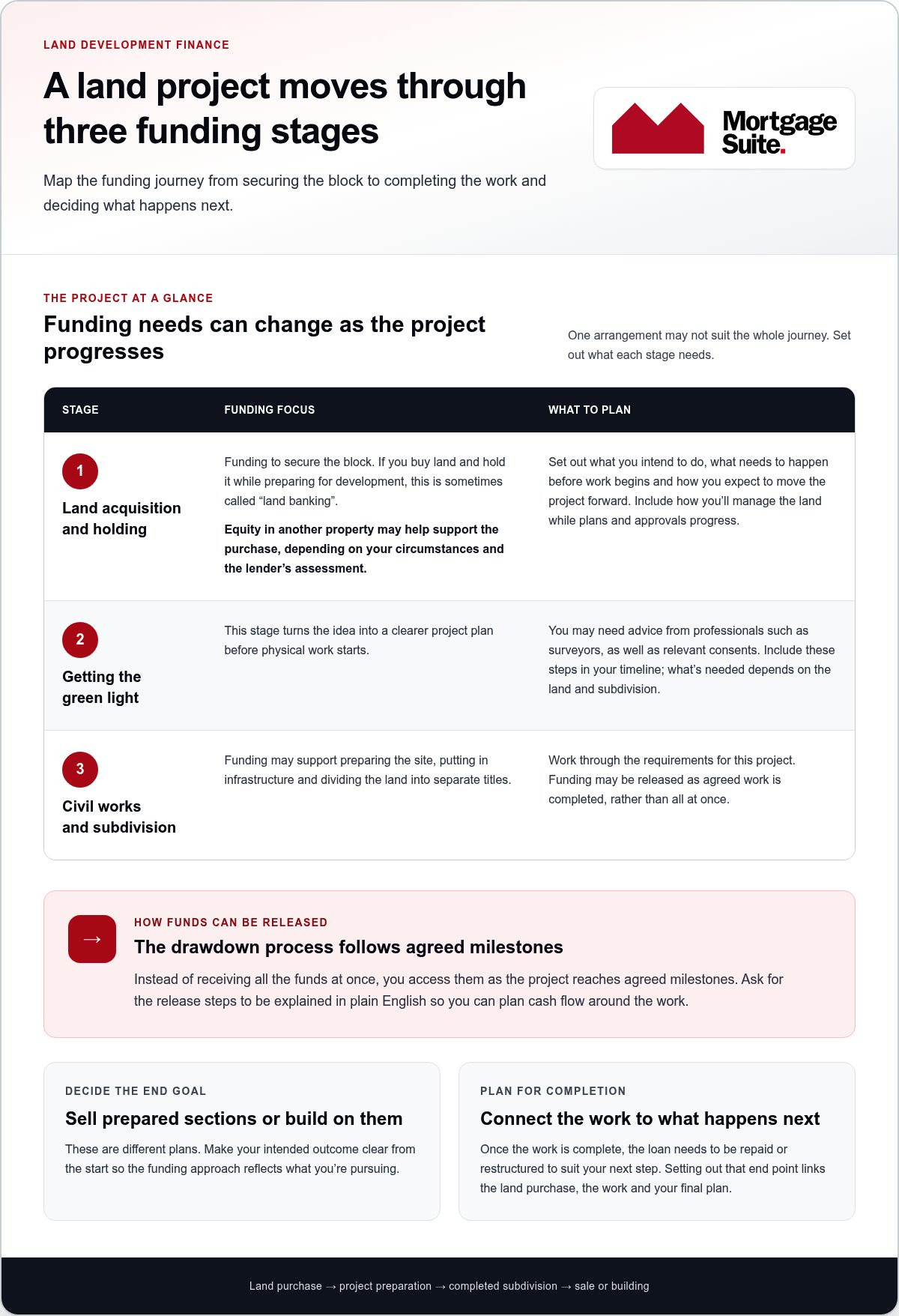
A subdivision usually moves from buying the land to preparing it, completing the work and then selling or building. Your funding needs can change at each step, so map the whole journey early rather than focusing only on the purchase.
Stage 1: Land acquisition and holding
First, you need funding to secure the block. If you buy land and hold it while preparing for development, this is sometimes called “land banking”. Even if the diggers aren’t on site yet, set out what you intend to do, what needs to happen before work can begin and how you expect to move the project forward.
Equity in another property may help support the purchase, depending on your circumstances and how a lender assesses the overall plan. It isn’t an automatic solution, but it can be part of the funding picture. Include the holding period in your plan too, so you understand how you’ll manage the land while plans and approvals progress.
Stage 2: Getting the green light
Before physical work starts, you may need advice from professionals such as surveyors, as well as relevant consents for your proposal. This stage turns an idea into a clearer project plan. The steps depend on the land and the subdivision, so include them in your timeline rather than assuming everything can happen at once. New Zealand’s planning framework is changing; the Government’s update on planning laws for land development is useful context as you consider how planning rules may affect a project.
Stage 3: Civil works and subdivision
Once the project is ready to proceed, the work may include preparing the site, putting in infrastructure and dividing the land into separate titles. This is where one block can become several sections, but progress depends on completing the work required for that particular project.
Funding may be released in stages as agreed work is completed. This is called the drawdown process: instead of receiving all the funds at once, you access them as the project reaches agreed milestones. Ask for the release steps to be explained in plain English, so you can plan cash flow around the work.
At the finish: once the work is complete, you may plan to sell the new sections or build on them. The loan then needs to be repaid or restructured to suit what happens next. Setting out that end point early connects the land purchase, the work and your final plan into one funding story.
Banks vs Non-bank lenders: Finding the right fit for your land
A mainstream bank’s “no” can be discouraging, but it doesn’t automatically mean your project has no way forward. Banks often use set lending rules designed for more straightforward proposals. A subdivision can be harder to assess because the land still needs work before it can be sold or built on, and the outcome depends on several steps being completed.
Non-bank, or second-tier, lenders are professional lending organisations, not simply a last resort. They may assess the project plan and how it could reach completion alongside your personal finances. Their approach and terms can differ from a bank’s, so the right fit depends on your proposal and circumstances. Flexibility may help a project proceed, but it’s still important to understand the repayment plan and how the loan fits your wider goals.
When a mainstream bank may fit
A bank may suit a straightforward project if you have a clear plan, a sound financial position and enough funds available to manage the work. Banks may offer lower interest rates, but their assessment can involve detailed paperwork and firm requirements. A strong credit history may help, though lenders consider the full application. The key is whether the bank’s criteria suit your project, not just whether its rate looks appealing.
For example, a simple subdivision with a well-prepared plan and resources to manage changes may fit a bank’s usual approach. If the project has unusual features or your circumstances fall outside its standard checks, the application may be more difficult to assess. That’s a reason to understand the bank’s decision, not to assume the project itself has no merit.
The second-tier option for developers
A second-tier lender may assess a land development loan by considering the project’s purpose and expected outcome, as well as your personal finances. This can help if your proposal has a clear plan but doesn’t fit a bank’s usual approach. Terms may differ, including the interest rate, so weigh any added flexibility against the full repayment arrangement.
Timing can matter if contractors are booked or work is ready to begin. Non-bank lenders may assess proposals differently, but approval timeframes vary. A clear plan and organised information can help explain what you need funding for and how the project is expected to progress.
Mortgage Suite specialises in property development and second-tier lending. Krish Krishna brings more than 20 years of banking experience and can help you understand lender expectations and present your proposal clearly. If your application has been declined, reviewing the reasons and considering a suitable alternative funding approach can help you decide what to do next.
Getting your ducks in a row: How to qualify for a land loan
A clear, well-prepared application helps a lender understand what you want to do and how the project could work. Before applying for a land development loan, set out the plan, the people supporting it and how you expect the project to reach its end goal. A past development can strengthen your case, but a capable team, such as surveyors and other relevant specialists, can also show that you’ve thought through the work.
Be clear about your equity, meaning the money or property value you’re contributing yourself. It shows how much of your own resources are going into the project. The amount and type of contribution a lender expects will depend on your circumstances and proposal, so explain what you can bring to the table without assuming one formula applies to every project.
What to prepare for your application
Get your paperwork together early, before the right block appears and the pressure is on. A lender may want to understand whether the numbers add up, what permissions or consents apply, and how the borrowing will be repaid. A useful preparation list includes:
- A feasibility study: Does the plan make financial sense? Set out the expected project steps and how the figures support them.
- Planning and consent information: Include relevant council information for your proposal, such as resource consent details where applicable. Requirements can vary by project.
- A clear exit plan: Explain how you expect to repay the lending, for example by selling completed sections or moving on to the next stage of the project.
- Supporting documents: Gather the land details, project plans and information from the professionals helping you prepare the development.
You don’t need to present yourself as a developer who has done it all before. A realistic plan and a team with relevant experience can help explain how the project will be managed. Be upfront about any parts still in progress, too. That gives the lender a clearer picture than leaving gaps for them to fill in.
How a mortgage adviser can help you prepare
Krish Krishna brings more than 20 years of banking experience to property development lending. He can help organise your application so the purpose, figures and proposed repayment plan are clear before it reaches a lender. That means explaining the project in a way lenders can assess and helping you compare options that may suit your circumstances.
To get a starting view of your figures, use our mortgage calculator. It’s one part of preparation, not a decision on whether a lender will approve development funding. Your application still needs to show how the project fits together. Getting organised early can make it easier to act when a suitable block comes along.
Why a seasoned expert makes all the difference for your development
A development project has a lot of moving parts, and explaining them to a lender can feel like a job in itself. Krish Krishna brings more than 20 years of banking experience to Mortgage Suite, helping make sense of lender expectations and how they relate to your plans.
Think of Mortgage Suite as a bridge between the lending process and what you want to achieve with your land. We can help present your project clearly, discuss suitable funding options and negotiate with lenders on your behalf. That can be useful when your proposal doesn’t fit a bank’s usual approach. A decline can be discouraging, but it isn’t a judgement on your goals or necessarily the end of the road.
Our approach is about working alongside you, not treating your land development loan as a one-off transaction. The right funding needs to fit the project and your wider plans, not just look good on paper at the start. We’ll explain the options in plain English, so you can make decisions with a clearer picture of what each path involves.
The Mortgage Suite approach
Preparing a development application takes planning and follow-through. We help with lender conversations and explain what information may be needed, so you’re not left trying to piece together unfamiliar requirements on your own. You can read our client reviews to hear about other people’s experiences. Our About Us page also shares more about the people and approach behind Mortgage Suite.
We believe Kiwis deserve a fair go at developing their land, even if a mainstream bank has been tough to deal with. That doesn’t mean every application will be approved. It means taking the time to understand your circumstances, look at the project carefully and explore a way forward where one may be available.
Taking the next step
Start by setting out what you want to do, where you are in the process and what’s making the funding feel difficult. This gives you a useful basis for understanding what lenders may want to see and which options could suit your circumstances. No jargon, no pressure, just a clearer discussion about the next steps.
If you’re weighing up a subdivision or have already had a lender say no, Mortgage Suite can help you talk through your plans and funding options. A considered conversation can help you see what may be possible and decide how you’d like to proceed.
Take the next step with a clear plan
Funding a subdivision is easier to approach when you break it into stages, understand what lenders may look for and prepare a clear plan for the work and the end goal. The right land development loan depends on your project and circumstances, so a bank’s decision isn’t the only factor to consider.
Mortgage Suite specialises in property development and non-bank, second-tier lending across New Zealand. Krish Krishna brings more than 20 years of banking experience and can help you understand lender expectations, present your project clearly and explore suitable options. No lender can promise approval, but you can get a clearer view of possible next steps.
Ready to discuss your project? Talk with Mortgage Suite about your plans and funding options. A well-prepared project can have a way forward, and you don’t have to work through the lending questions alone.
Frequently Asked Questions
How much deposit do I need for a land development loan in NZ?
There isn’t one deposit amount that applies to every project. A lender may consider the land, the work planned, your financial position and how much of your own money or property value you can contribute. This contribution is often called equity. Prepare a clear project plan and details of your available funds so a lender can assess your circumstances and explain what may be needed.
Can I get a loan if I have never developed land before?
Yes, a lack of development experience doesn’t automatically rule you out. You can strengthen your application by showing a clear plan and bringing together a capable team, such as surveyors and other professionals who understand the work. A lender will still assess the project and your circumstances, so be upfront about your experience and how you’ll manage parts that are new to you.
What happens if the bank has already declined my application?
A bank’s decision isn’t necessarily the end of your options. Find out what made the application unsuitable, then consider whether a different lender may assess your project another way. Mortgage Suite specialises in property development and second-tier lending for borrowers who don’t fit mainstream bank criteria. Krish Krishna can help you understand the feedback and present your plans clearly, though no lender can guarantee approval.
How long does it typically take to get a land development loan approved?
There’s no set timeframe for every application. The time needed can depend on the project’s complexity, the information available and the lender’s assessment process. A straightforward proposal with organised documents may be easier to assess than one with unanswered questions about the work or repayment plan. Gather your land details, project plans and supporting information early, and allow time for the lender to review them.
Do I need to have resource consent before I apply for funding?
Not always. The right timing can depend on the project and the lender. Some funding discussions may begin while plans or consent steps are still underway, but a lender will want to understand what approvals are relevant and where you are in the process. Be clear about what’s been completed and what remains. Don’t present a proposed subdivision as approved if it isn’t.
What is the difference between a land loan and a construction loan?
A land loan generally helps fund the purchase or holding of a block, while a construction loan is used for building work. A subdivision may also need funding for site preparation and infrastructure, such as roads and pipes. The right arrangement depends on what you’re doing and when. Explain each project stage so the proposed funding matches the work, rather than assuming one loan type covers everything.
Is it more expensive to use a non-bank lender for my subdivision?
A non-bank lender may have a higher interest rate or different terms than a mainstream bank, but the right comparison goes beyond the rate alone. Look at how the funding is structured, what flexibility it offers and whether it fits your project timeline and repayment plan. Non-bank lending isn’t automatically the right choice, but it may be an option if a bank’s standard criteria don’t fit your proposal.
Can I use the equity in my family home to fund a land development?
It may be possible to use equity in your home as part of the funding plan, depending on your finances and the lender’s assessment. Equity is the portion of your home’s value that isn’t covered by lending against it. Using your home this way can put it at risk if repayments aren’t met, so consider the impact on your household and get clear advice before deciding.