
New Build Turnkey Loans NZ: How to Compare Your Options
The lowest interest rate may not be the best starting point when you’re comparing new build turnkey loans nz. The contract’s payment dates need to line up with the lender’s assessment and settlement process, and turnkey finance can work differently from buying an existing home or funding a build in stages.
With a turnkey build, the main loan is generally drawn at settlement rather than released in stages during construction. Before signing or relying on a particular loan structure, understand when your deposit is due, when settlement is expected and what the lender will assess.
This guide explains how turnkey lending differs, what lenders may consider and how to compare options beyond the headline rate. It also covers what to prepare for a conversation with a mortgage adviser. Mortgage Suite Ltd can help you weigh lender fit against your circumstances and contract, and support you through a process that can feel stressful. A decline from a mainstream bank doesn’t necessarily mean you’re out of options.
Key Takeaways
- New build turnkey loans nz can differ from off-the-plans purchases and construction finance. Use the contract and lender’s assessment to understand which structure may fit.
- Discuss your finances alongside the property and purchase agreement. A valuation may also form part of the lender’s assessment.
- Gather your agreement, income details, existing commitments and deposit position before comparing proposed loan structures.
- Look beyond the headline interest rate and consider how each option fits the contract timing and your circumstances.
- Mortgage Suite can help you compare lender fit. Founder Krish Krishna started the business in 2000 after 18 years in banking.
What are new build turnkey loans in NZ and how do they work?
A turnkey home is a new property sold under an agreement that sets out how and when the home will be completed and handed over. The aim is for you to take possession of a finished home, but the details depend on the contract. Inclusions, completion conditions and payment dates all affect how you plan your finance.
New build turnkey loans nz aren’t simply a standard mortgage with a different label. A lender may consider the property’s status, the agreement and your financial circumstances when assessing how the loan could be arranged. Read the payment and completion terms carefully, then compare them with the proposed finance before relying on a particular structure.
What does turnkey mean when buying a new home?
“Turnkey” generally describes a home sold with an agreed completion and handover position. The contract sets out what you can expect, so don’t assume every finished home includes the same fittings, finishes or extras. Check the inclusions, any conditions that must be met before handover, and the payment dates. These details help you understand what the lender is being asked to finance and when funds may be needed.
For example, if the home is still being completed, compare the contract’s list of inclusions with the expected handover conditions. Then map the stated payment dates against your finance discussions. As completion approaches, the lender assesses the application in light of the agreement and the property’s status. Settlement follows the contract requirements once the relevant conditions are met. The contract sets the actual sequence, so don’t assume every purchase follows the same timeline.
Is turnkey finance the same as a construction loan?
Not necessarily. A turnkey purchase may be financed as a property purchase, with lending arranged for settlement under the agreement. A construction loan, by contrast, may release funds in stages as building work reaches agreed points. The turnkey contract concept centres on delivery of a completed project, while staged funding is tied to progress during the build. How a lender treats a particular arrangement depends on its details.
The signed agreement and the project stage matter. A home close to completion may raise different finance questions from a project where building has only just begun. The lender may assess the purchase terms, the property and your ability to meet repayments before deciding on a suitable structure. Neither a purchase-style loan nor staged construction finance is automatically right for every buyer.
Before signing, make sure you understand the agreement’s payment dates, completion terms and handover expectations. Resolve any uncertainties before assuming a particular finance arrangement will fit. For buyers considering new build turnkey loans nz, matching the loan discussion to the contract can help reduce the risk of a timing mismatch and make the next steps easier to plan.
How lenders assess a turnkey home loan in New Zealand
A lender considers more than the home itself. It will look at your finances, the property and the agreement that sets out how the sale will proceed. Your ability to repay matters, as do the property’s status and the timing and conditions in the contract.
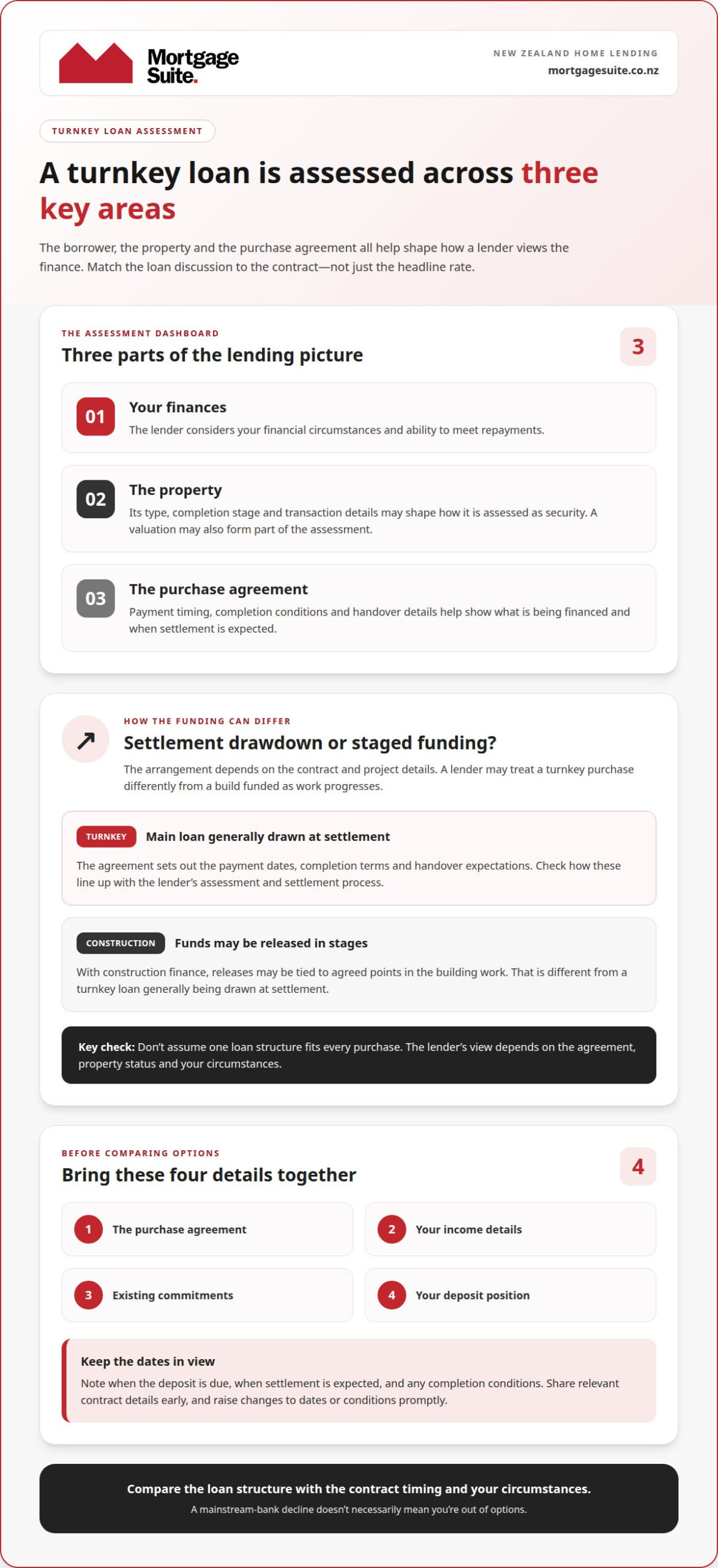
A turnkey loan assessment brings together three broad areas: the borrower, the property and the purchase contract. Sharing the agreement early can help you discuss whether a proposed lending structure fits the transaction, rather than focusing only on the amount you hope to borrow.
What parts of the purchase agreement matter to finance?
Pay close attention to payment timing, completion conditions and handover details. The lender needs a clear picture of what you’re buying and when settlement is expected. If the contract dates and conditions don’t align with your finance arrangements, you may be unsure whether lending will be ready when needed. Include the contract in the finance conversation from the outset.
Read the agreement with your solicitor, who can advise you on its legal meaning. For the loan discussion, note the key dates and conditions and share the relevant details with your adviser. If a completion date changes or a condition affects settlement, raise it promptly so the finance plan can be considered against the updated position. This doesn’t replace legal advice. It helps keep the lending discussion informed.
What can affect the lender’s view of the property?
The type of home, its completion stage and the transaction details may shape how a lender assesses the property as security. A valuation may help the lender form a view of the property’s value, but whether one is needed and how it’s used depends on the application. Not every turnkey purchase follows the same process.
A completed home and one still awaiting completion provide different information for a lender to consider. The lender may assess the property alongside the purchase terms and your finances, rather than relying on the home’s description alone to decide how the loan should work. That’s one reason to look beyond the name of a proposed structure.
For new build turnkey loans nz, consider how the proposed lending fits your circumstances, the property and the contract’s settlement arrangements. Bring those details together before comparing options, and make sure any changes to the agreement are reflected in the discussion. If you’d value support weighing lender fit against your purchase details, Mortgage Suite’s home loan guidance can help you work through the questions.
Turnkey loan options compared with off-the-plans and construction finance
The useful comparison isn’t about choosing a universally “best” loan type. It’s about when the property is expected to be ready, when funds may be needed and what you’ll need to manage under the contract. For new build turnkey loans nz, the contract and lender assessment determine which finance structure applies. Use the table as a guide, not a rulebook.
| Option | Property and timing | Payment structure and buyer focus |
|---|---|---|
| Turnkey purchase | The home may be complete or nearing handover, depending on the agreement. | Finance is arranged around the purchase and settlement terms. Check what must be completed before settlement and when payments fall due. |
| Off-the-plans purchase | You agree to buy before the home is complete. The contract sets out the expected completion and settlement arrangements. | Understand what conditions must be met before settlement and how the timing fits your finance plans. |
| Construction finance | The project is funded while building work is under way. | Funds may be released in agreed stages, depending on the finance arrangement and project. Be clear about the stage requirements and your responsibilities. |
These are broad distinctions, not guarantees about how a particular lender will treat a purchase. The contract wording, project stage and lender’s assessment all matter. Compare practical details: when will the home be ready, when does the agreement require funds, and does the proposed loan structure match those points?
Turnkey purchase versus buying off the plans
A turnkey purchase may involve a home that’s ready or close to handover, while an off-the-plans purchase is agreed before completion. The contract, not the label, sets out the actual position. Before relying on a finance plan, identify what must happen before settlement, including the completion conditions and handover requirements.
Build timing can change, so don’t assume the expected completion date is certain. If timing shifts, the finance arrangements may need to be considered against the revised position. Your solicitor can explain the legal effect of the contract terms, while your mortgage adviser can help relate the dates and conditions to the lending discussion.
Turnkey purchase versus construction finance
A purchase loan is arranged around buying the property, while construction finance may release funds as agreed building stages are reached. The staged drawdown process depends on the finance arrangement and project, so don’t assume every build follows the same steps. Development funding is a separate consideration from a buyer’s home loan for a completed or near-complete turnkey property.
Use the comparison to clarify responsibilities and timing, rather than assuming one route suits everyone. If you want support comparing lender fit against your contract and circumstances, Mortgage Suite’s home loan guidance can help you work through the options.
How to prepare for a turnkey home loan conversation
Preparation can make a complex borrowing conversation feel more manageable. Bring together the purchase agreement, a clear picture of your finances and the key dates, then compare proposed loan structures against the contract. This gives your adviser a practical starting point for discussing lender fit and timing.
Work through these steps in order:
- Gather the agreement. Have the signed or draft contract available, including payment dates, completion conditions and handover details.
- Outline your finances. Be ready to discuss income sources, regular commitments, your deposit position and any other borrowing. Don’t assume one deposit amount will suit every lender.
- Identify the timing. Note the expected settlement date and any dates or conditions that could affect when funds are needed.
- Compare the proposed structures. Consider how repayments, flexibility and lender conditions fit your plans, as well as the interest rate.
Information to have ready before discussing finance
Useful information includes your agreement, available financial records, key contract dates and a summary of your income and commitments. Think about your broader borrowing goals too, such as the repayment approach you’re comfortable with and how much flexibility matters to you. These details help shape a clearer discussion, but no single document or deposit position guarantees approval.
If parts of your income or commitments vary, explain that clearly rather than trying to reduce them to a simple estimate. The aim is to give your adviser an accurate picture of your circumstances and the purchase, so possible loan structures can be considered in context.
Questions that help compare lender options
Test whether each option fits the transaction, not just whether its headline rate looks appealing. Ask how the proposed loan aligns with the contract’s payment and settlement timing, what repayment choices are available, and which conditions or flexibility features may matter to you. You can also ask how the structure would work if the expected completion timing changed.
To explore repayment scenarios, Mortgage Suite’s mortgage calculator can give you a starting point. Treat any result as an estimate, not a lender offer, and discuss the assumptions behind it with your adviser. Mortgage School resources also offer plain-English explanations of mortgage topics to help you prepare questions.
Comparing new build turnkey loans nz is easier when each option is measured against the same information: your finances, goals and contract. If you’d like help working through those details and comparing lender fit, use the calculator as a first step in exploring repayment scenarios.
How Mortgage Suite can help you compare new build turnkey loans
Choosing finance for a new build can feel like a lot to manage, especially when the lender’s process needs to fit the purchase agreement. Mortgage Suite takes a personal approach: we learn about your goals and circumstances, then compare how different lenders may fit the property and contract. We’ll help you weigh up your options without promising that one lender or loan will suit everyone.
Krish Krishna founded Mortgage Suite in 2000 after 18 years in banking. Since then, he has arranged over a billion NZD across residential, commercial and business lending. That experience informs how we consider the full picture, including the timing and terms of your new-build agreement, rather than judging an option by its headline rate alone.
What working with a mortgage adviser can add
Bringing your finances and contract details together can make it easier to compare options across a wide range of bank and private lenders. Mortgage Suite can help you consider lender fit, discuss possible structures and negotiate on your behalf. The aim is to support an informed decision. No adviser can guarantee a particular rate, approval or outcome.
Client experiences can also give you a sense of the support people have valued. Read Mortgage Suite client reviews to learn about their experiences with guidance and lending negotiations. Every borrower’s circumstances are different, so those stories aren’t a promise that your application will follow the same path.
A calm next step for your new-build plans
You don’t need to have every lending question answered before starting a conversation. Bring the agreement, note the key contract dates, and share your borrowing goals and any concerns about how the finance might fit. Those details can help frame a useful discussion about which options may be worth considering and what questions remain.
If a mainstream bank has already said no, that isn’t automatically the end of your borrowing options. A different lender may assess your circumstances differently, though approval is never assured. The next step is to understand what the decision means for your plans and whether another lender or structure may be a better fit.
If you’re considering new build turnkey loans nz, a first discussion can help clarify how your agreement and finances relate to possible lending options. Bring your questions and contract timing, and talk with Mortgage Suite about your home-loan options.
Take the next step with confidence
Buying a new home is a big personal milestone, and it’s normal to want a clearer sense of what comes next. You don’t need to have every answer lined up. A thoughtful conversation can help you feel prepared to move forward at a pace that suits you.
If you’re exploring new build turnkey loans nz, Mortgage Suite can help you talk through your plans and consider your options. Start a conversation with Mortgage Suite when you’re ready.
Take it one step at a time. The right support can help you approach your new-build plans with greater confidence.
Frequently Asked Questions
Can I apply for a turnkey home loan before signing the purchase agreement?
Yes, you can start discussing finance before you sign. This gives you time to understand what lenders may need and whether your plans appear workable, without treating an early indication as final approval. If the agreement is still being negotiated, tell your adviser what may change. A different purchase price, ownership arrangement or contract condition could affect the application, so avoid making firm commitments based only on an initial conversation.
What happens if the turnkey property’s completion date changes?
A changed completion date may affect the timing of your finance, so get the revised date in writing and tell your adviser promptly. Ask whether any lending approval conditions or time limits need attention, and keep track of updated notices from the seller or developer. If the revised date creates a concern under your agreement, speak with your solicitor about your position and the steps available to you.
Can a turnkey home loan include the land as well as the house?
It can, if the purchase is structured to include both, but the lender needs to understand exactly what you’re buying. Check whether the agreement describes the land and home together or sets them out as separate parts of the transaction. That distinction can affect how the lender assesses the request and what information it needs. Make sure your borrowing discussion reflects the full purchase arrangement, not just the house component.
Can I use a turnkey home as an investment property?
Yes, a turnkey home may be purchased as a residential investment property, subject to the lender’s assessment. Be clear about your intended use from the outset, especially if you plan to rent the home rather than live in it. You can discuss how you expect to manage the property and any rental income as part of your overall finances. The lender will assess your circumstances and the proposed purchase before deciding what it can offer.
What if a bank declines my turnkey home loan application?
A decline doesn’t automatically rule out every option. Start by finding out the main reason for the decision, such as a concern about your application details or the property. Then you and your adviser can consider whether further information may help, or whether another lender could assess the situation differently. Mortgage Suite works across bank and private lenders, including 2nd Tier Loans for borrowers who don’t fit mainstream bank criteria. Approval is never guaranteed.
Does a turnkey home loan require a property valuation?
Not in every case. The lender decides whether it needs a valuation and what information will help it assess the property. If one is requested, ask what it needs to cover and whether it must be completed before a particular stage of the application. This can help you understand the lender’s next steps and avoid assuming that an assessment used for another property or application will be suitable.
Can I change lenders after signing a turnkey purchase agreement?
You can explore another lender after signing, but a new application may involve fresh checks and could take time to progress. Before switching, compare the new lender’s requirements with your existing approval and consider whether the change affects your ability to meet the agreement’s obligations. Your solicitor can advise on the contract, while a mortgage adviser can help you weigh up the lending options. Don’t assume a new application will be approved.