
Parents Helping With a House Deposit in NZ: Ways to Help Safely
Could a gift from your parents help you buy a home and still be treated as relationship property? For parents helping with a house deposit in NZ, the answer depends partly on whether the money is genuinely a gift or is recorded as a loan. A gift is generally treated as the child’s separate property, but the family home may still be relationship property. Mixing the money with shared assets can also affect how it is treated.
It’s understandable to focus first on putting the deposit together. But how the money is given can shape what happens if circumstances change, so clarify the difference between a gift and a loan before transferring funds.
This guide explains how gifts and loans may be treated under New Zealand relationship property rules, what each option may mean for the couple buying a home, and what parents should consider before helping. It also explains how banks may view a family contribution and what to think through if parents and children plan to own a property together.
Key Takeaways
- Decide whether the money is a gift or a loan before it’s transferred, and record the arrangement clearly.
- Think about how a gift could be treated if the couple separates, especially if the money becomes mixed with shared assets.
- Understand the commitment before guaranteeing a child’s borrowing or taking out a loan together; either can leave parents responsible for debt.
- Agree in advance on expenses, an exit plan and how sale proceeds will be divided if you co-own a property.
- Find out how the bank will assess the family contribution, as gifted funds and repayable loans may affect a home loan differently.
Is a gift from parents for a house deposit relationship property in NZ?
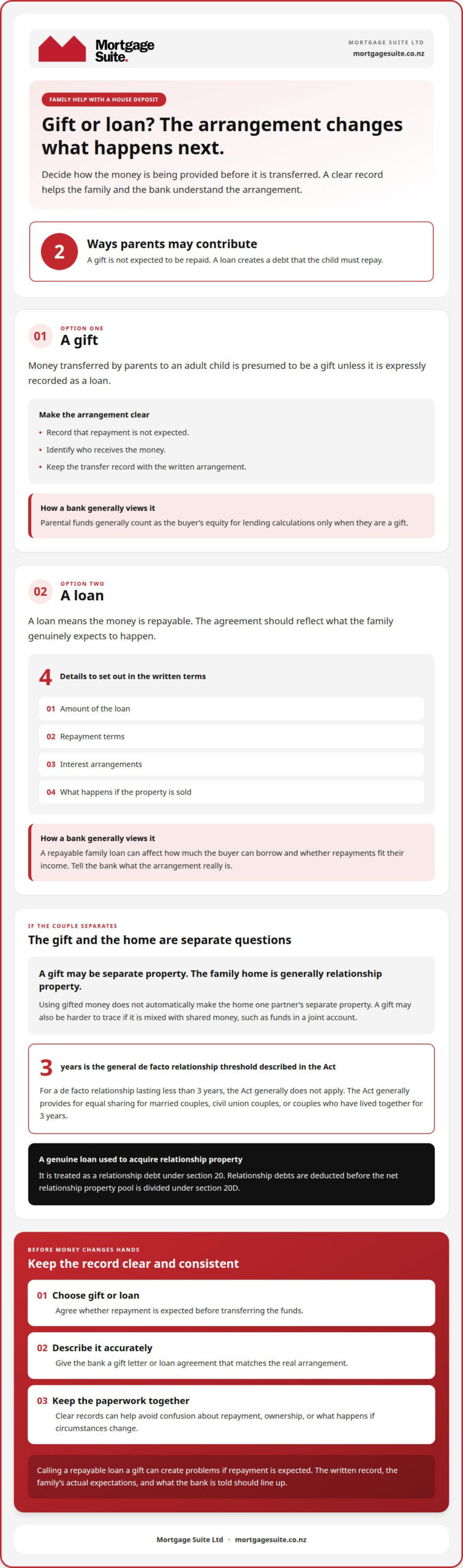
A parental deposit gift may be treated as separate property, but its status can depend on how it is used and mixed with other property. However, the family home is generally relationship property under section 8, regardless of who paid for it. The gift’s treatment and the home’s treatment are separate questions. That distinction matters if a couple separates or sells, because a contribution does not automatically make the home one partner’s separate property.
The Act generally provides for equal sharing when a couple is married, in a civil union, or has lived together as a couple for three years. Section 14A generally means the Act does not apply to a de facto relationship lasting less than three years. Where it applies, division is based on contribution rather than equally. Section 13 allows a court to depart from equal sharing only in extraordinary circumstances where equal sharing would be repugnant to justice.
A gift may be harder to treat as separate if it becomes mixed with shared property. For example, funds placed in a joint account or used alongside both partners’ savings may be difficult to trace later. Under section 10(4), the family home and family chattels are relationship property unless a Part 6 agreement says otherwise. In June 2026, the Court of Appeal confirmed the presumption of advancement applies to transfers from parents to adult children.
A section 21 contracting-out agreement can ring-fence a parental gift for one partner. It can be made during the relationship, not only before it begins. Each partner needs independent legal advice, and a lawyer must witness and certify each signature. A court may set the agreement aside under section 21J if enforcing it would cause serious injustice.
If the parental contribution is a genuine loan used to acquire relationship property, section 20 treats it as a relationship debt. Under section 20D, relationship debts are deducted before dividing the net relationship property pool. If parents want the loan secured against the home, include the intended security and sale arrangements in the written terms and disclose them to the mortgage lender.
For first-home buyers, parental support provides funds or a family loan, while a First Home Loan is a separate borrowing pathway. The appropriate option depends on the buyer’s circumstances and the lender’s assessment. In 2026, 20% is a deposit threshold some young professionals in Wellington may need help to reach, not a universal requirement for every buyer.
If a relationship ends or the property is sold, the gift’s traceability, any agreement, and the home’s ownership all matter. Parents and children who co-own should agree on expenses, exit arrangements, and how sale proceeds will be divided. Setting out those terms before the purchase helps each owner understand their share and obligations.
Gifting or lending a house deposit
Choose the arrangement before transferring money, since the bank and family may treat a gift differently from a loan. A clear record helps everyone understand whether repayment is expected.
Choosing Between a Gift and a Loan
A gift transfers money to your child without expecting repayment; a loan creates a debt they must repay. In New Zealand, money parents transfer to an adult child is presumed to be a gift unless it is expressly recorded as a loan. The distinction affects the child’s borrowing and what happens to the funds later.
For a gift, document that repayment is not expected and identify who receives the money. For a loan, record the amount, repayment terms, interest arrangements, and what happens if the property is sold. Labelling a transfer “loan” without a genuine expectation of repayment may not reflect the arrangement in practice.
Consider family circumstances as well as the purchase. A parent’s loan is repayable to their estate after death, although their will can make the debt part of the child’s share. Clear records can help prevent confusion between siblings and the child receiving support.
Bank Rules for Gifts and Family Loans
For lending calculations, banks generally treat parental funds as the buyer’s equity only when they are a gift. Equity is the buyer’s contribution to the purchase, rather than money they must repay. A repayable family loan can therefore affect how much the buyer can borrow and whether the repayments fit their income.
Before transferring funds, establish what the bank needs to know about the arrangement. A gift letter or loan agreement should accurately describe the money. Calling a loan a gift can create problems if repayment is expected. The bank also needs a clear picture of the buyer’s existing commitments when assessing affordability.
A family trust may distribute or lend money to a child who is a beneficiary. That source does not change the need to explain whether the funds are repayable. State who is providing the money, whether repayment applies, and any conditions attached, so the lender can assess the contribution correctly.
Tax Implications of Parental Deposit Support
Tax treatment depends on whether parents give money, charge interest, or acquire an ownership interest. Interest earned on a loan from a parent to a child will likely be treated as taxable income in New Zealand. If the loan charges interest, record the terms and keep track of the interest received.
A gift and a loan have different financial consequences, so don’t describe one as the other to avoid tax or lending questions. Keep transfer records with the written arrangement. If the parents’ circumstances change, those records help clarify whether the money was given outright or remains repayable.
Parents who buy a share of the property alongside their child become co-owners, not simply deposit supporters. Agree on ownership shares, expenses, sale proceeds, and exit arrangements before buying together.
Guaranteeing or jointly borrowing for a child
Parents can use equity in their own home to support a child’s deposit through a bank guarantee. The guarantee makes the parent responsible if the child fails to meet the bank’s loan payments. It can help a buyer with a deposit shortfall, but it puts the parent’s own finances at risk.
Most bank guarantees are all-obligation guarantees. This can make a parent responsible for the child’s current and future lending, not just the home loan linked to the purchase. Before agreeing, understand what lending the guarantee covers, how the bank can call on it, and what conditions apply to ending it. The guarantee document sets out the commitment.
A guarantee is different from giving a cash gift. The parent doesn’t transfer the deposit to the child; instead, they agree to support the bank’s lending. If the child misses repayments, the parent can become liable. For example, a parent may face a claim even if they don’t live in the child’s home or make decisions about it.
Joint borrowing creates another kind of commitment. Parents and children who borrow together have joint and several liability for the borrowed funds. This means each borrower can be responsible for the entire shared debt, not just their agreed share of repayments. A parent could therefore face repayment responsibility if the child stops paying.
This arrangement can also affect a parent’s own borrowing plans. The shared debt remains relevant when they apply for lending or assess household commitments. Consider how repayments would be managed if the child’s income changed, the property was sold, or one borrower wanted to leave the arrangement. Agreeing on responsibilities in advance helps prevent different expectations.
Before choosing a guarantee or joint loan, work through these points together:
- Identify who will own the property and who will make each loan repayment.
- Read the guarantee’s scope, including whether it covers future lending.
- Agree how missed repayments will be handled and how a parent can exit.
- Consider the effect of the commitment on the parent’s home and borrowing plans.
A bank guarantee or joint loan can help a child buy sooner, but it does not remove the debt risk. Parents should understand the legal commitment before signing, and children should understand what the support depends on. An agreement between family members cannot change the bank’s rights under its loan and guarantee documents.
Steps parents can take before transferring money
Document the arrangement before any deposit money moves. State whether it’s a gift or loan, who receives it, and what happens if the home is sold or circumstances change.
Start with the purpose and amount. For example, record that the funds are for a child’s home deposit, and whether they support the child alone or both partners. Name everyone involved, including the parent providing the money and the buyer receiving it. If parents are giving funds to a couple, make clear whether the gift is intended for one person or both.
- Choose the arrangement. Write that the money is an unconditional gift with no repayment expected, or a loan with repayment required. Make the document match what the family actually intends. Calling money a gift while expecting repayments can create confusion with the buyer, partner and bank.
- Set out loan terms. For a loan, record the amount, any interest, repayment dates or conditions, and whether the debt becomes due if the property is sold. Explain what happens if repayments pause or the buyer’s circumstances change. If parents expect security over the home, describe that intention clearly in the loan documents.
- Tell the lender how the funds work. Give the bank the relevant gift letter or loan agreement before it assesses the deposit. A gift can count as the buyer’s equity for lending calculations; a repayable family loan is a debt that affects their commitments. The bank’s assessment needs to match the arrangement on paper.
- Keep a clear payment trail. Save the signed agreement, bank transfer record and any messages explaining the payment. Use a transfer reference that reflects the documented purpose, such as “deposit gift” or “family loan”. Keep copies together so the source and terms remain clear later.
- Agree on shared ownership. If parents will own part of the property, put each owner’s share and responsibilities in writing. Cover household expenses, repairs, decisions about selling, how an owner can exit, and how sale proceeds will be divided. These terms help avoid relying on family members’ different recollections.
For a gift to one partner, the couple can also consider a contracting-out agreement under section 21 of the Property (Relationships) Act 1976. Each partner must receive independent legal advice, and a lawyer must witness and certify each signature. This agreement can set out how the gift is treated between partners.
Before transferring money, compare the signed documents with the bank’s understanding and the family’s expectations. If a parent’s will should take a loan into account when distributing an estate, record that intention in the will too. Consistent paperwork gives the family, buyer, and lender the same account of the contribution.
What are the NZ bank rules for gifted deposits and family loans?
For a New Zealand home loan, banks generally count parental funds as the buyer’s equity only when they’re a gift. A family loan is different because the buyer must repay it, so it can affect their financial commitments and borrowing assessment. The bank needs an accurate description of the arrangement, not just evidence that money arrived in the buyer’s account.
Explain whether the contribution is a gift or a loan when discussing the application. A gift means the parents don’t expect repayment. A loan means the child owes money under agreed terms. For example, if parents transfer deposit funds but expect monthly repayments, it is a loan in substance, even if the transfer reference calls it a gift.
Keep the paperwork consistent with the actual arrangement. A written record can identify who provides the funds, who receives them, and whether repayment is expected. If the agreement sets out repayments, include those details in the information provided for the home loan assessment. This gives the bank a clearer view of the buyer’s financial position and avoids presenting borrowed funds as savings.
- For a gift: State that the money is given to the buyer and isn’t repayable.
- For a loan: Set out repayment expectations and any interest or conditions.
- For shared ownership: Explain whether parents are contributing money or buying a share.
- For trust funds: Identify whether the family trust is making a distribution or a loan.
A family trust can distribute money or lend it to a child who is a beneficiary. These are different arrangements, so specify which one applies. A distribution is not the same as a repayable loan. If the trust expects repayment, record that obligation and include it in the buyer’s financial picture. The source and terms of the contribution help the bank understand how the deposit is funded.
Don’t assume a larger deposit automatically settles every lending question. The bank still assesses the home loan application, including the buyer’s ability to meet repayments and any family loan commitments. It may also need to know whether parents will have an ownership interest or a claim against the property. Those details can affect how the proposed purchase and borrowing are presented.
Before the application is assessed, make sure the deposit description, transfer records and any family agreement tell the same story. If parents intend to lend funds, include the expected repayments when setting out the buyer’s commitments. If it’s a gift, don’t add repayment terms that contradict that intention. Discuss how family support fits your home loan as you plan the application.
Mortgage Suite
Mortgage Suite can help you understand how a parental gift or family loan fits into a first-home loan application. The right approach depends on how the funds are structured, the buyer’s repayments, and the lender’s assessment. Clear information about the contribution helps shape a lending application that reflects your family’s arrangement.
For first-home buyers, Mortgage Suite can guide you through the home loan process and help negotiate with lenders. If a mainstream bank’s decision has left you unsure what to do next, it doesn’t automatically mean your options are closed. Bring the deposit details and borrowing questions together, then consider a suitable path forward.
If you’d like support with your family’s deposit and home loan plans, contact Mortgage Suite.
Make the next move together
Helping with a deposit can shape more than a home purchase. It can affect family plans, financial flexibility, and how ownership works over time. Before settling on the next step, make space for an open conversation between the parent, buyer, and partner. A shared understanding can help everyone move forward with clearer expectations.
For parents helping with a house deposit in NZ, the lending plan should reflect the family’s arrangement and the buyer’s wider goals. Mortgage Suite offers home loans for first-home buyers and business loans. The right starting point depends on the property plans and the lending support needed.
You don’t need to have every detail worked out before discussing your options. A clear conversation can help you understand how the family contribution fits the borrowing plan and what to consider next. Talk with Mortgage Suite about your plans and take the next step with confidence.
Frequently Asked Questions
Was it a gift or a loan, and why does it matter?
It can matter beyond the home purchase because the transfer may affect how a parent’s estate is distributed. A parent’s will can address whether lifetime gifts to a child are taken into account when distributing gifts under the will. For example, parents who want an earlier contribution reflected in a child’s inheritance should record that intention in their estate planning, rather than relying on family assumptions.
How can parents help their child with a house deposit in New Zealand?
Parents helping with a house deposit in NZ can choose how involved they want to be after the purchase. A cash contribution may support the buyer without giving the parent an ownership share, while co-ownership means parents and children share decisions about the property. Before deciding, discuss whether the goal is to help the child buy independently or own the property together.
Can parents gift money for a house deposit in NZ, and what declaration is required?
Yes, parents can give money towards a house deposit. A lender may ask for a signed gift declaration as part of the buyer’s application. The declaration should accurately identify the contribution and confirm the donor’s intention. Keep it with the transfer record so the buyer can show the lender how the deposit funds reached their account and explain any difference between the declaration and other documents.
Can parents lend money for a house deposit, and how does this affect mortgage approval?
Yes, a family loan can contribute to a deposit, but the lender assesses it as part of the buyer’s financial picture. The repayment amount and timing help show how much income remains for mortgage repayments and household commitments. For instance, a loan requiring regular payments may reduce the borrowing the buyer can support. Include the arrangement accurately in the application, including any interest terms.
Can parents act as guarantors for a home loan in New Zealand, and what are the risks?
Yes, parents can guarantee a child’s home loan, but the guarantee can expose them to the child’s unpaid debt. Before signing, understand exactly which lending the document covers and what would trigger a demand for payment. A parent should also consider whether they could meet that obligation while keeping up with their own financial commitments. The guarantee’s written terms define the scope of the risk.