
What to Do When the Bank Declines Your Mortgage in NZ: A 2026 Guide
You’ve spent months searching for the right property, only to have your long-term bank turn you down at the final hurdle. It’s a frustrating, anxious experience that makes you feel like the system is working against you, especially with the strict debt-to-income rules currently in play. If you’re wondering what to do when bank declines mortgage nz, the first thing to remember is that a “no” from a mainstream lender isn’t the end of your journey. It’s often just a sign that you need a more flexible, expert approach to get the deal across the line.
We understand the sting of being rejected by a bank you’ve been loyal to for years. This guide shows you how to turn that setback into a successful purchase by using 2nd tier lenders as a strategic bridge. You’ll learn how these specialist providers work outside the rigid boxes of traditional banks and why a smart exit strategy is your ticket back to mainstream rates in a year or two. We’ll walk through the 2026 market conditions and give you a clear, professional plan to secure your loan and move into your new home with confidence.
Key Takeaways
- A rejection from a main bank doesn’t mean your home-buying dreams are over; it’s simply a signal to switch to a more flexible 2nd tier lender.
- Discover exactly what to do when bank declines mortgage nz by shifting the focus to your unique “borrower story” and long-term potential.
- Learn why matching your specific financial situation to a specialist lender’s unique criteria is the secret to turning a decline into an approval.
- Get a clear view of the temporary costs involved and how these non-bank options serve as a vital bridge to your property goals.
- Master the exit strategy that allows you to “graduate” back to a mainstream bank within 12 to 24 months once your situation has stabilised.
What is a 2nd Tier Loan and Why is it Your Best Plan B?
Getting a “no” from a main bank feels like a dead end, but in the New Zealand property market, it’s often just the start of a different conversation. Most people are taught that if the big four banks won’t help, nobody will. That isn’t true. A 2nd tier loan is a flexible, regulated alternative for unique financial situations. These lenders operate differently from the high-street names you see in every shopping centre. They provide a vital path forward when you’re figuring out what to do when bank declines mortgage nz.
Second-tier lenders are often called “non-bank” lenders. They don’t take deposits from the public like a traditional bank does. Instead, they raise their own capital to lend out. Because they aren’t bound by the same rigid internal rules as the main banks, they can look at your application with much more nuance. They are specialists in finding ways to say “yes” when a computer algorithm at a main bank has already said “no”.
The Difference Between Main Banks and Alternative Lenders
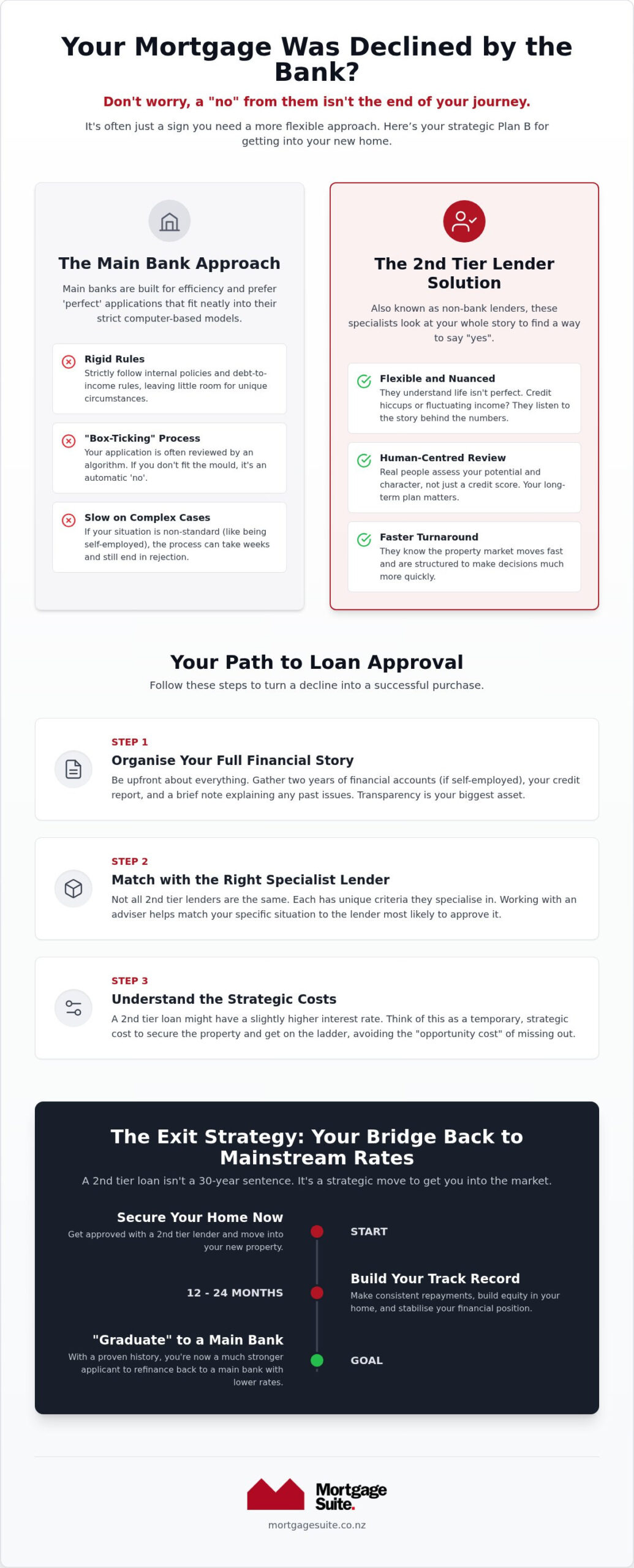
Main banks are designed for efficiency. They love “perfect” applications where every piece of data fits into a pre-defined box. If you’re self-employed with a fluctuating income, or if you have a slightly smaller deposit than the current 2026 regulations prefer, you might not fit that box. This is where a non-bank financial institution shines. They take the time to look at your whole story rather than just your credit score.
Speed is another major factor. While a main bank might take weeks to process a complex application, alternative lenders are often much faster. They understand that property deals move quickly and that you can’t afford to wait. The trade-off is usually a slightly higher interest rate or different fee structure, but for many Kiwis, this is a small price to pay to secure a home in a competitive market. To understand how these different options affect your long-term plans, you can explore the resources in our mortgage school.
Dispelling the Myths About Non-Bank Lending
There’s a common misconception that anything outside a main bank is risky or untrustworthy. It’s time to clear that up. These lenders are reputable, highly regulated businesses that must follow the same consumer protection laws as any other financial provider. They aren’t “loan sharks”; they are professional advocates for borrowers who need a bit more flexibility.
Think of a 2nd tier loan as a strategic stepping stone. It isn’t necessarily a thirty-year commitment. Instead, it’s a way to get into the market now, build equity, and prove your reliability. By the time you’ve held the loan for a year or two, you’ll often be in a much stronger position to “graduate” back to a main bank. Knowing what to do when bank declines mortgage nz often starts with embracing this tactical “Plan B” to keep your home-ownership goals on track.
How to Prepare Your 2nd Tier Loan Application
Preparing for a non-bank application is quite different from a standard bank meeting. It’s about building a comprehensive case for yourself. When you’re stuck on what to do when bank declines mortgage nz, your first move should be gathering every detail of your financial life, even the bits you’re worried about. Being upfront is your greatest asset in this process. If there’s a skeleton in the closet, it’s better to bring it out now rather than let a lender find it later. 2nd tier lenders invest in people and their potential, not just a credit score, so they value transparency and a clear plan over a perfect history.
The Essential Paperwork You Will Need to Organise
You’ll need to look beyond the standard documents a main bank asks for. If you’re self-employed, gather your full financial accounts and tax returns for the last two years. Lenders want to see the real-world consistency of your earnings, even if they don’t fit a standard salary pattern. If you’ve had a credit hiccup in the past, get a copy of your credit report and prepare a brief, honest note explaining the circumstances. These lenders are professional, regulated, and often belong to independent dispute resolution bodies, which ensures you’re treated with fairness throughout the application. You should also have the specific details of the property you’re eyeing ready, as the type of dwelling often impacts the lender’s risk assessment.
Telling Your Story to the Lender
This is where you move beyond the columns of a spreadsheet. A main bank might see a dip in your income from eighteen months ago and decline you without a second thought. A 2nd tier lender will listen if you explain that the dip was a one-off event, such as a temporary illness or a strategic business pivot. You need to show them that your plan for future financial stability is robust and well-thought-out. This is exactly why having a veteran negotiator on your side is a game-changer. We know how to “translate” your unique life situation into the specific language that non-bank lenders understand. If you’re ready to start building your case and want to work with a partner who knows the system, you can learn more about us and how we advocate for our clients. Knowing what to do when bank declines mortgage nz is all about presenting your future potential as clearly as your financial past.
Choosing the Right Lender for Your Specific Situation
Every non-bank lender in New Zealand has its own “personality” and set of rules. Unlike the main banks, which all tend to follow very similar guidelines, 2nd tier lenders often specialise in specific types of borrowers. One might have a high appetite for helping people buy existing family homes with smaller deposits, while another might focus almost entirely on business owners with complex tax structures. Finding what to do when bank declines mortgage nz often comes down to knowing which of these hundreds of options is the right fit for your specific hurdle.
The challenge for most Kiwis is that these lenders don’t usually advertise on television or have branches on the high street. They work primarily through specialist brokers who understand their unique criteria. Matching your situation to the right lender is a bit like solving a puzzle. It requires a deep understanding of how each provider views risk and what kind of “borrower story” they find most compelling. This is where Mortgage Suite Ltd and our 20-plus years of expertise become your biggest advantage, as we know exactly which door to knock on to get your deal across the line.
Lenders Who Favour the Self-Employed
If you run your own business, you’ve likely discovered that main banks struggle with income that isn’t a steady, fortnightly salary. Many 2nd tier lenders were built specifically to solve this problem. They offer what we call “low-doc” options. In plain English, this simply means they use alternative ways to verify your income, such as looking at your business bank statements or a simple letter from your accountant, rather than demanding years of perfect tax returns. They focus on your current ability to manage repayments and the overall health of your business, giving you the credit you deserve for your hard work.
Options for Credit Hiccups or Smaller Deposits
A past financial setback or a deposit that doesn’t quite hit the 20 per cent mark for an existing home can lead to an instant decline from a main bank. However, some lenders specialise in “recovery” loans. They look at your “risk grade”-a professional assessment of your current reliability-and offer a path forward even if your history isn’t spotless. Unlike some competitors who suggest that new builds are the only way to buy with a small deposit, we find lenders who are happy to support you in buying an existing property. These loans act as a vital bridge, allowing you to secure your home now while you work on improving your financial position for the future.
Knowing what to do when bank declines mortgage nz is about looking beyond the surface and finding a partner who sees the value in your specific situation. With the right lender, that initial rejection becomes nothing more than a temporary detour on your way to home ownership.
Understanding the Costs: Rates, Fees, and the “Opportunity Cost”
When you’re trying to figure out what to do when bank declines mortgage nz, the numbers on the page can feel a bit heavy. It’s true that 2nd tier lenders charge higher interest rates than the main banks. This is because they’re taking on more risk by looking at applications that don’t fit the standard criteria. However, it’s vital to view these costs as a tactical investment rather than a permanent burden. You can use our Mortgage Calculator to see how these different rates look in reality and how they might fit into your monthly budget.
Interest Rates vs. The Cost of Missing Out
The real question isn’t just “how much is the interest?” but “how much will it cost me to wait?”. With inflation currently sitting at 3 per cent and the property market constantly shifting, staying on the sidelines can be expensive. If house prices rise while you’re spending another year or two saving for a larger deposit, you might find yourself priced out of the very suburb you want to live in. Most of our clients don’t stay on a 2nd tier rate forever. We view these loans as a 12-to-24-month bridge. When you calculate the “real” cost over this short period, the extra interest is often far less than the potential growth in your home’s value during that same time.
Think of it as a temporary premium for speed and flexibility. By getting into the market now, you start building equity immediately. You’re no longer paying rent to someone else, and you’re finally on the property ladder. This strategic move allows you to “graduate” back to a main bank once your financial situation has stabilised or you’ve proven your repayment history to the wider market.
Upfront Fees and Budgeting
Beyond the interest rate, you’ll need to budget for specific upfront costs. These typically include establishment or application fees, which cover the intensive manual assessment required for alternative lending. You’ll also need to factor in valuation reports from approved professionals and legal costs that might be slightly higher due to the complexity of the contracts. It’s also worth checking the early exit terms. Since the goal is to move back to a main bank as soon as possible, you want to ensure your loan structure allows for that transition without heavy penalties. If you want a clear, honest breakdown of how these costs apply to your situation, get in touch with us today for a professional assessment. We’re here to ensure there are no surprises on your journey to home ownership.
The Exit Strategy: How to Move Back to a Main Bank
Securing a 2nd tier loan is a massive win, but it’s rarely the final stop on your home ownership journey. We always encourage our clients to view this as a temporary bridge rather than a thirty-year commitment. The goal is simple: use this period to stabilise your finances and build a solid track record. When you’re considering what to do when bank declines mortgage nz, the long-term plan is just as important as the immediate approval. We work with you to set a clear 12-to-24-month target to “graduate” back to a main bank, where you can access lower interest rates and standard terms.
Cleaning Up Your Financial Profile
Your time with a 2nd tier lender is your chance to prove to the main banks that you’re a reliable borrower. The most critical factor here is maintaining a perfect repayment history. Every single payment on your new loan must be on time, without exception. This shows future lenders that your previous credit hiccup is firmly in the past. At the same time, focus on reducing other liabilities. Paying down credit cards or clearing car finance can significantly improve your debt-to-income ratio, which is a key metric for banks in 2026. If you’re a first-time owner, our Home Loans for First Home Buyers Guide offers deeper insights into how these factors influence bank decisions.
Don’t forget that as property values potentially grow, your equity increases. A higher equity position naturally lowers the bank’s risk, making it much easier to qualify for those competitive rates you missed out on initially. We’ll keep an eye on the market with you to identify the best moment to make your move.
Working with Your Broker on the Move
You shouldn’t wait until your fixed term is nearly over to start thinking about the switch. We usually begin the conversation about six months before your target graduation date. This gives us enough time to review your polished profile and identify any final adjustments needed. Re-applying with a year of perfect mortgage history and a cleaner debt profile allows you to walk into a main bank with genuine confidence. We don’t just secure your first loan and disappear; we stay with you for the whole journey. Our reputation is built on these long-term partnerships, helping Kiwis navigate what to do when bank declines mortgage nz and eventually seeing them successfully refinance into the mainstream banking system.
Take the Next Step Toward Your New Home
A bank decline is often just a nudge toward a more flexible path. By choosing a 2nd tier loan as a strategic bridge, you can secure your property now and build a solid foundation for a future return to a main bank. Knowing what to do when bank declines mortgage nz means looking past the initial rejection and focusing on your long-term potential. We’ve seen how a clear exit strategy and professional advocacy can transform an anxious situation into a successful purchase.
With over 20 years of expert banking and brokerage experience, we specialise in finding “outside the box” lending solutions that the big banks often ignore. You can read our client reviews to see how we’ve helped other Kiwis succeed where they once felt stuck. If you’re ready to move forward, book a friendly chat with Mortgage Suite to find your path forward. Your home ownership goals are still within reach, and we’re here to help you navigate the system with confidence.
Frequently Asked Questions
Is it harder to get a 2nd tier loan than a main bank loan?
Getting a 2nd tier loan is often more straightforward than a main bank loan because these lenders have more flexible criteria. While main banks rely on rigid “yes” or “no” computer models, alternative lenders take a manual approach to understand your whole financial story. They are specialists in finding ways to approve applications that don’t fit the standard box, making them a reliable path when you’re stuck on what to do when bank declines mortgage nz.
Can I still get a home loan if I have a bad credit history?
You can absolutely secure a home loan with a less-than-perfect credit history by working with a specialist non-bank lender. These providers are designed to help borrowers who have had past financial setbacks. Instead of a flat rejection, they look at your current stability and your plan for the future. They assess the “risk grade” of your application and offer a loan structure that reflects your specific recovery journey, helping you move forward with confidence.
What are the typical interest rates for non-bank lenders in 2026?
In the 2026 market, interest rates for non-bank lenders vary based on your specific situation. For “near-prime” borrowers with good credit, rates are typically 1 to 2 per cent higher than mainstream bank rates. If your application is more complex or involves significant credit issues, specialist rates can range between 10 per cent and 14.5 per cent. These higher rates reflect the extra risk the lender takes on to help you get into the property market.
How long does the 2nd tier loan application process take?
The application process with a 2nd tier lender is often significantly faster than a main bank, sometimes taking just a few days for an initial approval. Because these lenders aren’t bogged down by the same massive institutional layers, they can make decisions quickly once they have your full paperwork. This speed is a huge advantage when you’re competing for a property and need a clear answer on what to do when bank declines mortgage nz.
Do I really need a mortgage broker to access these lenders?
While you can technically approach some lenders yourself, most 2nd tier providers in New Zealand deal exclusively through professional mortgage brokers. A broker acts as your advocate, translating your “borrower story” into the specific format these lenders require. We have access to hundreds of different criteria sets and know exactly which specialist provider is most likely to say yes to your unique situation, saving you time and protecting your credit score.
What happens if I want to pay off my 2nd tier loan earlier than planned?
You can pay off your 2nd tier loan early, but you should always check the specific terms for early exit fees. Since these loans are often intended as a temporary bridge, many are structured with flexibility in mind. However, some lenders include a minimum term or a set fee to cover their setup costs. We ensure you understand these details upfront so your plan to move back to a bank remains cost-effective and clear.
Will a 2nd tier loan affect my ability to get a bank loan later?
Holding a 2nd tier loan actually strengthens your future bank application, provided you maintain a perfect repayment history. Successfully managing a non-bank loan proves to mainstream lenders that you are a reliable, low-risk borrower. This track record is exactly what banks look for when they consider taking you back. It serves as a professional “graduation” certificate that demonstrates your financial stability has been fully restored after your initial hurdle.