
Mortgage Broker for First Home Buyers NZ: 2026 Guide
What if the bank you have used since you were a child is actually the biggest hurdle standing between you and your first set of keys? It’s a frustrating reality for many Kiwis who find that mainstream lenders can be surprisingly rigid when it comes to first home loans. If you’re feeling overwhelmed by talk of debt-to-income ratios or worried your deposit isn’t quite large enough, you aren’t alone. Partnering with a specialist mortgage broker for first home buyers NZ can change the entire experience from a stressful chore into a clear, manageable plan.
We understand that the rules have shifted, with the First Home Grant now gone and new 2026 interest rates to consider. This guide explains how to navigate the current market with a seasoned mentor like Krish Krishna, who uses over twenty years of banking experience to advocate for you. You’ll learn how to access the best possible rates, simplify KiwiSaver withdrawals, and discover lending options that look beyond the standard bank criteria. We’re here to handle the paperwork and the tough negotiations so you can focus on finding the right place to call home with complete confidence.
Key Takeaways
- Learn why the old First Home Grant is gone and how the 2026 market actually makes it easier for you to secure a home with a 5% deposit.
- Discover how a specialist mortgage broker for first home buyers NZ acts as your personal advocate to find the best rates across multiple lenders.
- Understand why staying loyal to your current bank might cost you thousands and how to package your application so lenders see your true potential.
- Get a clear plan to organise your KiwiSaver withdrawal and navigate the latest government rules without the usual stress or confusion.
- Find out how having a mentor with 20 years of banking experience helps you secure a loan even if the big banks have previously turned you away.
Why navigating the NZ property market feels like a maze for first-home buyers
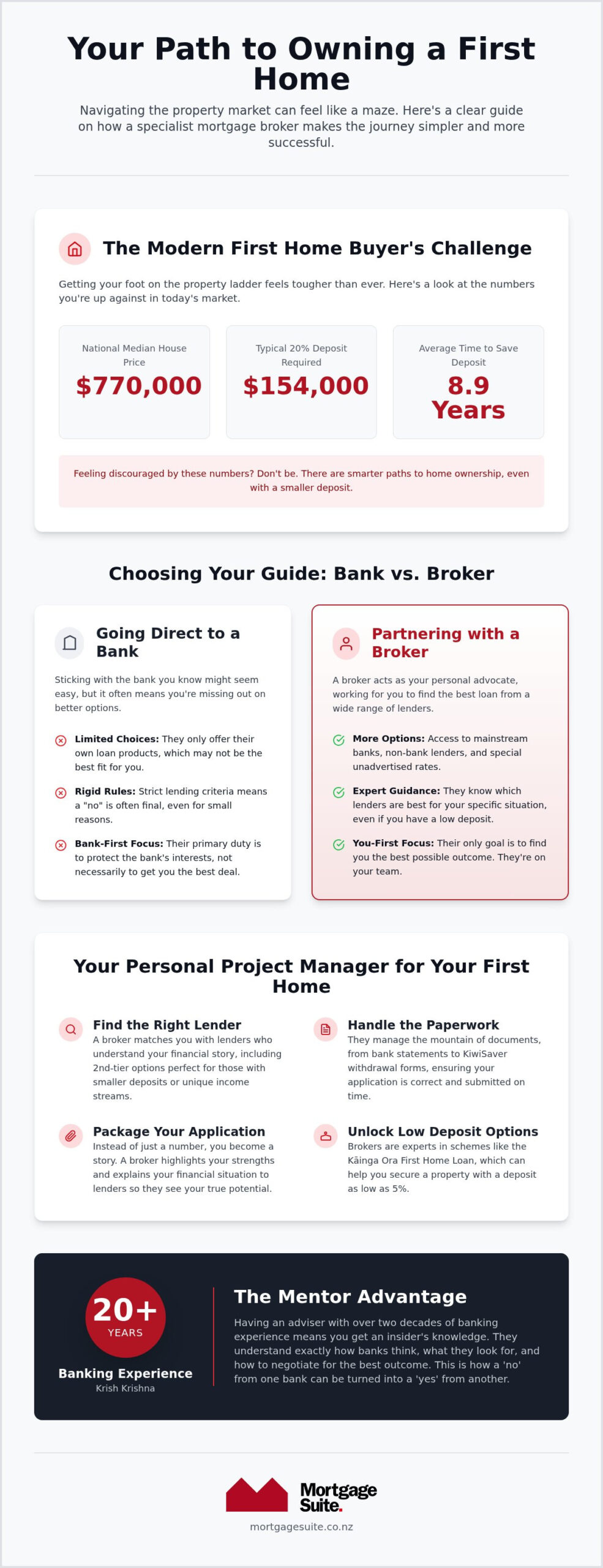
The property market in 2026 is moving sideways, but that doesn’t make it any less daunting for those trying to get a foot in the door. With the national median house price sitting at $770,000, the entry point for most people remains a massive hurdle. You might find yourself scrolling through endless listings, wondering if your savings will ever be enough. It’s an emotional rollercoaster where one minute you’re excited about an open home and the next you’re worried about missing out. Trying to handle this process alone often leads to missed opportunities or higher costs because you might not know which lenders are offering the best deals behind the scenes. Understanding what is a mortgage broker? is the first step in realising you don’t have to face the banks by yourself. A dedicated mortgage broker for first home buyers NZ acts as your guide through this maze, ensuring you have the right insider knowledge to move forward.
The challenge of saving a deposit today
Most banks still look for a 20% deposit, which on a median-priced home means finding $154,000. That’s a huge sum that can feel out of reach. While the average time to save this amount is currently around 8.9 years, many people are looking for faster ways into their first home. You might be considering a 5% deposit through the Kāinga Ora First Home Loan or looking at family assistance to bridge the gap. House price fluctuations can also move the goalposts just as you think you’re getting close to your target. Using a mortgage calculator can help you see exactly where you stand, but the real trick is knowing which lenders are currently more flexible with their low-deposit rules.
Why bank criteria can feel like a moving target
Banks have become incredibly picky about how you spend your money. They don’t just look at what you earn; they scrutinise your debt and your daily spending habits to decide if you’re a safe bet. With the Official Cash Rate at 2.25%, interest rates have stabilised, but banks still test your ability to pay at much higher “stress” rates. This can slash your borrowing power overnight. If one bank says no because of a small credit card debt or your specific income level, it’s easy to feel defeated. However, a “no” is often just a sign that you’re talking to the wrong lender. Different banks have different appetites for risk, and a specialist mortgage broker for first home buyers NZ knows exactly which door to knock on to get you a “yes”. This is where having a mentor who understands the inner workings of the banking system makes all the difference.
How a mortgage broker helps you secure your first home
Think of a mortgage broker for first home buyers NZ as a personal project manager for the biggest purchase you’ll ever make. While a bank officer’s primary job is to protect the bank’s interests, a broker’s only goal is to look after yours. They take the “maze” of the property market and turn it into a clear, step-by-step path. Instead of just passing your details through a computer, they package your application to highlight your strengths. This might mean explaining a temporary dip in savings or showcasing your career potential to a lender who will actually listen. They act as your voice, making sure your story is told in a way that makes sense to the people holding the purse strings.
Managing the mountains of paperwork is another huge part of the service. Between proof of income, bank statements, and legal documents, the process can feel like a full-time job. Your broker handles the heavy lifting, organising the files and ensuring everything is submitted correctly the first time. This prevents the delays that often cause first-home buyers to miss out on their dream property. By providing a bridge between rigid bank rules and your personal situation, they give you the best possible chance of a “yes”.
Access to a wider range of lenders
Most people only think about the big mainstream banks they see on the high street. However, a broker has access to a much wider range of lenders, including 2nd tier options that often have more flexible rules. If you have a smaller deposit, they can help you navigate the First Home Loan scheme, which allows eligible buyers to get started with just 5% down. Brokers also see “special” rates and deals that aren’t always advertised to the general public. Having more options naturally leads to better outcomes because you aren’t forced to accept the first offer that comes your way.
The unseen work: negotiation and follow-up
The real magic happens during the negotiation phase. A broker doesn’t just accept the first interest rate a bank offers; they use their industry reputation to fight for a better deal. This includes pushing for lower rates and better cash-back offers that can help with your moving costs. They also dig into the fine print of loan conditions to ensure there aren’t any nasty surprises down the track. Because they handle the constant follow-ups and back-and-forth emails, you can stay focused on finding the right house. If you’re curious about how this personalised support has helped others, you can read about our clients’ experiences and see the results for yourself.
Choosing between a bank and a mortgage broker
When you walk into your local bank branch, you’re essentially talking to a salesperson for one specific company. They can only offer you the products sitting on their own shelf, regardless of whether a better deal exists across the street. In contrast, a mortgage broker for first home buyers NZ looks at the entire 2026 mortgage market to find a fit that actually suits your life. It’s the difference between a transactional chat and a personalised partnership. Many people believe that staying loyal to the bank they’ve used for years will earn them a “mate’s rate,” but the reality is often the opposite. Banks frequently reserve their most aggressive interest rates for new customers, leaving long-term clients on standard terms.
You might be wondering how this service fits into your budget. The good news is that brokers are typically paid a commission by the lender once your loan settles. This means you get expert advice, high-level negotiation, and a dedicated advocate without having to pay an upfront fee yourself. With the Official Cash Rate currently at 2.25%, having someone who can scan every bank’s response to wholesale costs gives you a massive advantage. You aren’t just getting a loan; you’re getting a bird’s-eye view of the national property scene.
The limitations of going direct to your bank
A bank’s main goal is to see if you fit their specific “box.” If your situation is even slightly unusual, they might decline your application. This can be risky because every formal decline can leave a mark on your credit record, making it harder to get an approval elsewhere. Banks also won’t go out of their way to help you coordinate your KiwiSaver withdrawal or explain the finer details of government support. They expect you to have it all figured out before you sit down. A broker fills these gaps, ensuring you don’t miss out on support just because a bank teller didn’t mention it.
The broker advantage: a long-term partnership
The relationship doesn’t end the day you get your keys. A great broker provides ongoing support, helping you manage your loan as your life changes. Whether it’s time to refix your mortgage or you’re looking to renovate down the track, you’ll have a mentor who already knows your history. This long-term focus is why so many people choose this path. You can read our reviews to see how this steady, professional guidance has helped other Kiwis move from renting to owning with far less stress.
Getting your finances ready for a home loan application
Preparing your finances for a home loan is like training for a marathon. You wouldn’t turn up to the start line without putting in the work first. Banks in 2026 are more thorough than ever, looking closely at your debt-to-income ratio, which is currently capped at six times your annual earnings. This means every dollar of debt and every bit of spending counts. A mortgage broker for first home buyers NZ can help you tidy up your accounts months before you apply, making sure you look like the ideal candidate when the bank finally opens your file.
Your first step is to get a realistic view of your numbers. Using a Mortgage Calculator helps you understand how your income translates into a weekly or fortnightly payment. Once you have a budget in mind, you can start gathering your essential documents. You’ll need at least three months of pay slips and six months of bank statements to show a steady history. Having these ready early prevents a last-minute scramble when you find a house you love.
KiwiSaver and government assistance
KiwiSaver is often the biggest part of a first-home deposit. You can typically withdraw your savings and your employer’s contributions as long as you leave a $1,000 balance. It’s vital to check with your provider early to see exactly how much you can access. You also need to be aware that the old First Home Grant was permanently closed in May 2024. Today, the primary support is the Kāinga Ora First Home Loan, which allows eligible buyers to purchase with just a 5% deposit. For a full breakdown of these rules, our guide on Home Loans for First Home Buyers covers everything you need to know about current government support.
Proving you are a reliable borrower
Lenders look at “account conduct” to see how you handle your money day-to-day. If your bank statements show constant use of Buy Now Pay Later services or small, recurring debts, it can signal that you’re living beyond your means. Try to clear these small balances and close unused credit cards at least three to six months before applying. Banks also want to see that you can handle interest rate changes. Even though the OCR is stable at 2.25%, they’ll test your ability to pay at much higher rates to ensure you’re safe. If you have gaps in your employment or you’re self-employed, a mortgage broker for first home buyers NZ knows how to explain these situations to a lender so they don’t count against you. If you’re ready to see how your finances stack up, you can start your journey here with a quick chat about your goals.
Finding the right path to your first home with Mortgage Suite
Krish Krishna brings something special to the table. Having spent more than two decades working within the banking sector, he understands exactly what lenders are looking for when they review an application. He knows the “inner workings” that banks don’t usually share with the public, and he uses that knowledge to your advantage. This level of insight is vital when you’re looking for a mortgage broker for first home buyers NZ. We provide a national service across the country, ensuring every Kiwi has access to high-level expertise regardless of where they are looking to buy. Our approach is built on trust and a genuine desire to see you succeed in the 2026 property market.
When the big banks say no: 2nd tier lending
Many people believe that a rejection from a mainstream bank means their dream of home ownership is over. In reality, it often just means you need a more flexible lender. We specialise in finding solutions for “non-standard” borrowers who might be self-employed or have a unique financial history that doesn’t fit the standard bank mould. This is where 2nd tier loans come into play. These are provided by reputable lenders who look at the bigger picture rather than just ticking boxes. Our 2nd Tier Lender Guide explains how these options can help you get across the line when the traditional banks aren’t an option. We’re here to find the path that works for your specific situation, even if you’ve been turned away elsewhere.
Starting your journey with us
Your first conversation with a Mortgage Suite broker will feel like a helpful chat with a mentor rather than a formal interview. We pride ourselves on being a jargon-free zone because clarity is the key to making good decisions. You won’t hear us using confusing industry shorthand; instead, we’ll explain your options in plain English. Our goal is to remove the obstacles that stand in your way and handle the complex negotiations on your behalf. You can learn more About Us to see how our philosophy of partnership makes the entire process feel personal and supportive. We’re committed to being the steady hand you need to secure your first New Zealand property with confidence, handling the details so you can focus on your future.
Take the first step toward your new front door
Buying your first home in the 2026 market doesn’t have to be a solo struggle. We’ve explored how a dedicated mortgage broker for first home buyers NZ can simplify the process by handling the heavy lifting, from managing paperwork to negotiating better rates. Remember that being ready means more than just having a deposit; it’s about tidying up your accounts and knowing which government schemes actually apply to you today. Even if the big banks have said no, alternative lending options can provide a way forward that you might not have considered.
Our team brings over 20 years of banking and finance experience to your side, offering a national service that puts your success first. We specialise in alternative and 2nd tier lending to ensure that every Kiwi has a fair shot at owning their own place. If you’re ready to move from scrolling through listings to signing a contract, we’re here to help you navigate every turn. Book a friendly chat with our team today and let’s get your journey started. You’ve worked hard for this, and the keys to your first home are closer than you think.
Frequently Asked Questions
How much does it cost to use a mortgage broker for a first home in NZ?
Most brokers don’t charge you a fee because the lender pays them a commission after your loan is finalised. This means you get professional advice and negotiation at no cost to you. It is a great way to have an expert on your side without adding to your expenses. Some brokers might charge for very complex cases, so it’s always best to ask how they work during your first chat.
Can I get a home loan with only a 5% deposit?
You can definitely buy a home with a 5% deposit through the Kāinga Ora First Home Loan. This scheme is designed for buyers who have a smaller deposit but can afford regular repayments. To qualify in 2026, your household income needs to be under $95,000 for a single buyer or $150,000 for couples. A mortgage broker for first home buyers NZ can check your eligibility and help you apply.
How long does the mortgage application process usually take?
Getting a pre-approval usually takes between five and ten working days once all your documents are submitted. However, this can change depending on how busy the banks are or if your situation is more complex. Having your pay slips and bank statements organised beforehand will speed things up significantly. Your broker will keep you updated every step of the way so you aren’t left wondering what is happening with your application.
Do I need to be in the same city as my mortgage broker?
You don’t need to be in the same city as your broker because we offer a national service across all of New Zealand. Most of the process happens via phone, email, or video calls, which makes it much easier to fit into your busy schedule. Whether you are looking at a property in the North Island or the South Island, we can handle the negotiations and paperwork from our central office.
What happens if my bank declines my home loan application?
A decline from a mainstream bank isn’t the end of your journey. It often just means that specific lender’s rules don’t fit your current situation. We specialise in looking at alternative options, including 2nd tier lenders who have more flexible criteria for first-home buyers. We can also help you identify what needs to change in your spending habits so you can reapply with confidence in a few months.
Can a mortgage broker help me with my KiwiSaver withdrawal?
Yes, a mortgage broker for first home buyers NZ will guide you through the process of withdrawing your KiwiSaver funds. While we don’t manage the funds ourselves, we help you coordinate the timing with your lawyer and your provider. This ensures the money is ready for your deposit exactly when you need it. We make sure you have the right forms and understand the timeframes involved in the withdrawal.
What is the difference between a fixed and floating interest rate?
A fixed rate stays the same for a set period, like one or two years, which gives you the certainty of knowing exactly what your repayments will be. A floating or variable rate can go up or down based on market changes. Floating rates offer more flexibility if you want to make extra payments without a penalty. Many buyers choose to split their loan between both options to get the best of both worlds.
How much can I borrow based on my current income?
Lenders generally cap your borrowing at six times your annual household income under current debt-to-income rules. For example, if your household earns $120,000 a year, your maximum loan would typically be $720,000. Banks also look at your existing debts and daily spending to ensure you can comfortably afford the repayments if interest rates rise. We can run the numbers for you to give you a clear and realistic budget.