
Good Debt vs Bad Debt in NZ: How to Tell the Difference
A mortgage can be called “good debt”, but that label doesn’t tell you whether repayments will fit your life. The real question behind good debt vs bad debt nz is whether borrowing supports a goal without putting too much pressure on your day-to-day finances.
It’s understandable to feel unsure. A home loan may help you buy a home, while borrowing for everyday spending or something that loses value can leave less room in your budget. But the purpose alone doesn’t decide whether debt is right for you. Your repayments, income, plans and ability to manage change all matter, too.
This guide will help you weigh those factors without judging yourself or past choices. You’ll find a practical way to review borrowing you already have or are considering, and questions to ask before a home-loan discussion. Mortgage Suite founder Krish Krishna brings more than two decades of banking experience to conversations about different borrowing needs. A thoughtful discussion can help you explore suitable options, without treating a bank’s first response as the final word.
Key Takeaways
- In good debt vs bad debt nz, the label matters less than whether borrowing supports a goal and stays manageable for your household.
- Compare a loan’s purpose with its repayments, flexibility and the effect it could have if your circumstances change.
- Use five questions about purpose, repayment fit, flexibility, future plans and downside risk to review borrowing before you commit.
- Look at all your household commitments together, rather than judging a new loan on its own.
- If repayments feel difficult, gather your loan details and contact your lender early to ask what options may be available.
Good debt vs bad debt in NZ: what does the difference mean?
Borrowing can feel stressful, especially when people talk about debt as if it’s automatically good or bad. The label doesn’t tell you whether a loan suits your household. A more useful question is whether the borrowing supports a goal you’ve thought through and whether you can manage the repayments alongside your other commitments.
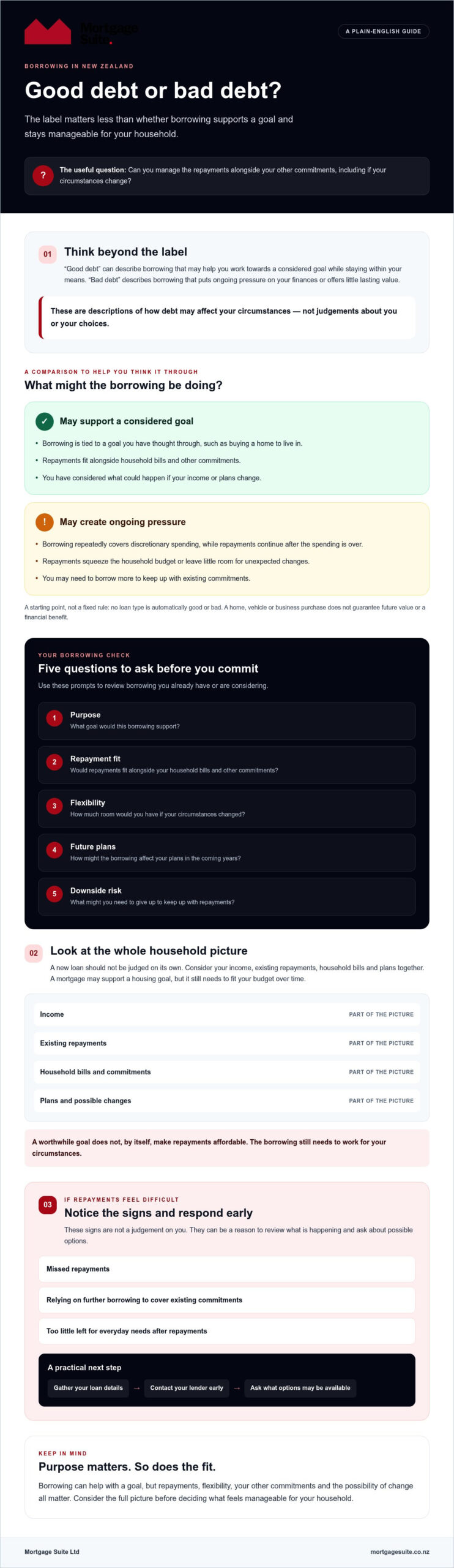
In this guide to good debt vs bad debt nz, “good debt” means borrowing that may help you work towards a considered goal while staying within your means. “Bad debt” describes borrowing that puts ongoing pressure on your finances or offers little lasting value. These are descriptions of how debt may affect your circumstances, not judgements about you or your choices.
Why the purpose of borrowing matters
Borrowing to buy a home is different from borrowing for a short-lived treat. A home loan may support a long-term housing goal, while borrowing for discretionary spending can leave repayments after the purchase or experience has passed. Neither purpose alone makes a loan right or wrong for every household.
For example, one household might consider a home loan because buying suits its plans, while another borrows for a holiday it can’t comfortably afford. The first still needs to check the repayments and future flexibility. The second may find repayments restrict everyday choices. Looking at debt as part of personal financial planning, including your budget and spending, can help put that decision in context.
Purpose describes what borrowing is for; affordability describes whether your household can manage the repayments.
Why the label is not the whole story
A mortgage may help you buy a home, but it can still become difficult if repayments leave too little room for regular bills, unexpected needs or changes in income. The goal may matter to you, yet the loan still needs to fit your budget over time.
Small or short-term borrowing can also build pressure when several repayments add up. A business loan might support a business goal, or it might strain cash flow. A personal loan or mortgage also needs to be considered in light of its purpose and terms. No loan type is automatically good or bad.
So, when weighing up good debt vs bad debt nz, look beyond the name of the loan. Consider what it helps you do, what you’ll need to repay and how those commitments could affect your household’s choices.
How good debt and bad debt affect goals, repayments and choices
To compare borrowing fairly, look beyond what the money is for. Consider whether the loan supports a goal, how repayments fit your household budget, how much room you have if plans change and what you might need to give up to keep up with payments.
Manageable repayments matter just as much as the reason for borrowing. A home, vehicle or business purchase doesn’t guarantee future value or a financial benefit. Its value may change, and your circumstances can change too. Use the table as a starting point, not a fixed rule.
| Potentially supports a goal | May create ongoing pressure |
|---|---|
| Borrowing is tied to a considered goal, such as buying a home to live in. | Borrowing repeatedly covers discretionary spending, with repayments continuing after the spending is over. |
| Repayments fit alongside household bills and other commitments. | Repayments squeeze the budget or leave little room for unexpected changes. |
| You understand what could happen if income or plans change. | You may need more borrowing to keep up with existing commitments. |
When a home loan may support a longer-term goal
A home loan may help you work towards buying a place to live, but it’s still a major commitment. Consider how repayments would fit with regular household spending and whether they’d remain manageable if your income changed or other costs increased. First-home buyers can read this mortgage calculator guide to help prepare questions about repayments before discussing a home loan.
Consider the full picture: your income, existing repayments and plans for the coming years. A property purchase doesn’t guarantee that its value will rise or that it will suit your needs indefinitely. The aim is to assess whether the borrowing works for your circumstances, not just whether the goal sounds worthwhile.
When borrowing can become difficult to manage
Warning signs can include missed repayments, relying on further borrowing to cover existing commitments, or finding that repayments leave too little for everyday needs. These signs aren’t a judgement on you. They’re a reason to pause, review what’s going out and consider what support or changes may be available.
Repeated borrowing for discretionary spending can gradually reduce your flexibility, even if each decision seemed manageable at the time. Several repayments together may take up room you’d otherwise have for bills, savings or changing plans. In good debt vs bad debt nz, the useful distinction is how borrowing affects your goals and choices over time, not simply what kind of loan you have.
A practical NZ framework for comparing good debt with bad debt
A simple framework can help you compare borrowing without relying on labels. Use these five questions to assess how a loan fits your household and what it could mean for your choices over time:
- Purpose: What goal would this borrowing support? Is there a less demanding way to reach it?
- Repayment fit: Can you meet the repayments alongside your regular commitments, even if your income falls or household expenses rise?
- Flexibility: What does the loan agreement allow if you want or need to change how you repay?
- Future plans: Could the repayments affect other plans or reduce your options later?
- Downside risk: What would you do if your circumstances changed or the purchase didn’t provide the benefit you expected?
Consider your answers together. A loan that supports a worthwhile goal may still be hard to manage if it leaves no room for change. This good debt vs bad debt nz framework is a prompt for a careful conversation, not personal financial advice or a decision about whether a lender will approve you.
Questions to ask before taking on debt
Be specific about what the borrowing is for, and ask whether a smaller commitment or another option could meet the same need. Think through changes to income or household expenses, not only how the budget looks today. Check the agreement for what it says about changing your repayment approach, and ask the lender to explain anything you’re unsure about.
How to check the effect on your household budget
Write down your regular income, essential household commitments and existing repayments before adding a new loan. Look at what remains after those obligations, and consider whether it gives you enough room for routine changes and unexpected needs. Assess the whole household picture, not just the proposed loan in isolation.
You can use the mortgage calculator to explore how possible repayments might fit your budget. Treat the result as an estimate for planning, not a prediction of approval. A lender makes its own assessment against its current criteria, while whether a loan suits your household is a separate question. Criteria can change, so ask the lender or a qualified adviser about the requirements that apply to your circumstances.
These checks can help you prepare for a home-loan discussion. They don’t replace advice tailored to your situation or guarantee an outcome. The aim is to arrive with a clearer view of your goals, budget and questions, so you can talk through the options with more confidence.
What to do if debt is putting pressure on your finances
If repayments are becoming hard to manage, that pressure is a reason to seek help, not a judgement of your character or past choices. Start by getting a clear picture of what’s due and where the strain is coming from. Having the details in front of you can make the next conversation feel more manageable.
Gather your current loan information, including repayment amounts, due dates and any changes you know are coming to your income or household spending. Note which repayments feel difficult and whether you’re relying on further borrowing to cover them. Contact your lender early and explain what’s changed. Ask what options may be available, but remember any changes depend on your circumstances and the lender’s assessment. There’s no guaranteed outcome.
How to prepare for a lender conversation
A little preparation can help you explain your situation clearly. Write down your goals, any income changes, your existing repayments and the questions you most want answered. You could ask whether repayment or loan-structure options are available, what conditions might apply and how a change could affect your future commitments. Ask the lender to explain anything that isn’t clear before you decide what to do.
It’s okay not to have a solution ready before you call. The first step is to describe what’s happening and understand what the lender can consider after reviewing your circumstances. If one option isn’t suitable, ask what else, if anything, may be available.
When to seek help with borrowing choices
If you’re considering a home loan or changes to existing lending, professional guidance can help you weigh your goals, budget and possible lending pathways. Lender requirements and your own comfort with repayments are separate parts of the decision. A loan may meet a lender’s criteria and still not feel right for your household.
Mortgage Suite can discuss your home-loan needs and suitable lending pathways, without promising approval or asking you to rush into a decision. A conversation can help you organise your questions and understand what to explore next. If you’re weighing up good debt vs bad debt nz while repayments feel tight, take the time you need to review the full picture and get support that fits your circumstances.
Talk through your home-loan needs with Mortgage Suite when you’re ready to explore your options.
How to make a more confident borrowing decision in New Zealand
A confident borrowing decision doesn’t depend on whether someone calls a loan “good” or “bad”. Focus on three practical questions: does it support a goal that matters to you, can your household manage the repayments, and what effect could it have on your future choices? Compare suitable options before committing, and ask for anything you’re unsure about to be explained in plain English.
This approach to good debt vs bad debt nz keeps the focus on your circumstances, rather than a label. You don’t need to have every answer worked out before starting a home-loan conversation. Bringing a clear picture of your situation can help you ask more useful questions and understand what to consider next.
What to bring into a home-loan discussion
It can help to prepare a few basics before you talk through a home loan:
- Your goal: What are you hoping to do, and what matters most in choosing a loan?
- Your finances: Note your income, any changes you expect, regular household commitments and existing repayments.
- Your questions: Ask how the proposed loan structure and repayments could fit your plans, and what flexibility may be available if things change.
Raise uncertainties early. You’re not expected to know every lending term or arrive with a ready-made solution. If an explanation feels unclear, ask for it to be put another way before deciding whether an option suits your household.
How Mortgage Suite can support your next step
Mortgage Suite can talk through your home-loan needs, goals and budget, then help you consider which lending pathways may be suitable. The business works across mainstream and alternative lending channels and can act as a personal advocate and negotiator as options are explored. That support isn’t a promise of approval; a lender will assess your circumstances and make its own decision.
Founder Krish Krishna brings more than two decades of banking experience to these conversations. That background can help make a complex discussion easier to follow, while keeping your goals and circumstances at the centre. You can take the time you need to compare options and decide what feels manageable. A mainstream bank’s response isn’t necessarily the end of every possible conversation, but any alternative still needs careful assessment.
If you’re considering a home loan and would like to talk through your questions, Talk through your home-loan options with Mortgage Suite.
Make your next borrowing decision with clarity
Debt isn’t automatically good or bad. What matters is whether it supports a goal, fits your household budget and leaves room for the future. Before committing, look at all your repayments together, consider what could change and ask questions about any loan terms you’re unsure of.
That’s a practical way to approach good debt vs bad debt nz without judging yourself or decisions you’ve made in the past. A home-loan discussion can help you check how borrowing may fit your plans and explore which lending options could suit your circumstances. It can’t guarantee approval, but it can help you understand what to ask and what to weigh up.
Mortgage Suite supports borrowers through mainstream and alternative lending channels. Founder Krish Krishna brings more than two decades of banking experience to conversations about home loans and lender fit.
If you’re considering a home loan, talk through your home-loan options with Mortgage Suite. You can take the next step at your own pace, with a clearer picture of what matters to you.
Frequently Asked Questions
Is a mortgage always good debt?
No, a mortgage isn’t automatically good debt just because it helps you buy a home. It may support a long-term goal, but whether it suits you depends on your budget, repayments, other household commitments and plans. Consider whether you could manage the loan if your income or expenses changed. A home purchase also doesn’t guarantee that the property’s value will rise or that you’ll gain a financial benefit.
Can good debt turn into bad debt?
Yes, borrowing that once felt manageable can become a source of pressure if your circumstances change. For example, a drop in income or a rise in household commitments may make repayments harder to meet. A loan’s purpose hasn’t necessarily changed, but its effect on your budget and choices may have. Review your commitments if repayments start to feel tight, and contact your lender early to ask what options may be available.
What is the difference between good debt and bad debt?
Good debt generally describes borrowing that may support a considered goal and remains manageable. Bad debt describes borrowing that strains your finances or provides little lasting value. These labels aren’t a judgement of you, and the type of loan alone doesn’t settle the question. In good debt vs bad debt nz, look at the purpose, repayment fit and effect on future choices, as well as what could happen if your circumstances change.
How can I tell if I can manage a new loan?
Start by listing your regular income, essential household commitments and current repayments. Then consider how a new repayment would fit alongside them, including if your income changed or expenses increased. Check the loan terms and ask what flexibility may be available if your plans shift. A calculator can help you explore possible repayments, but it can’t confirm whether a lender will approve a loan or whether it’s right for your household.
Can a home loan be bad debt if I struggle with repayments?
It can become difficult debt to manage if repayments put ongoing pressure on your household, even if the loan helped you buy a home. Struggling doesn’t mean you made a bad choice or that you should feel judged. It means the loan’s effect on your finances needs attention. Review which repayments are hardest to manage, gather your current loan details and speak with your lender about what options may be available.
Does borrowing for a home guarantee a financial benefit?
No, borrowing to buy a home doesn’t guarantee a financial benefit. A property’s future value can’t be assumed, and whether home ownership suits you depends on your goals, finances and circumstances. Before taking on a mortgage, consider the repayments, other household commitments and how the loan could affect your future choices. A lender can assess an application, but that assessment is separate from deciding whether the commitment feels suitable for you.
What should I do if my debt feels unmanageable?
Gather the details of your loans, repayments and due dates, then identify which payments feel difficult. Contact your lender as early as you can and explain what’s changed. Ask what options may be available and what conditions apply. Any change depends on your circumstances and the lender’s assessment, so an outcome can’t be promised. If you’re also considering a home loan, Mortgage Suite can discuss your needs and possible lending pathways.