
How to buy a house with no money in NZ through a First Home Loan
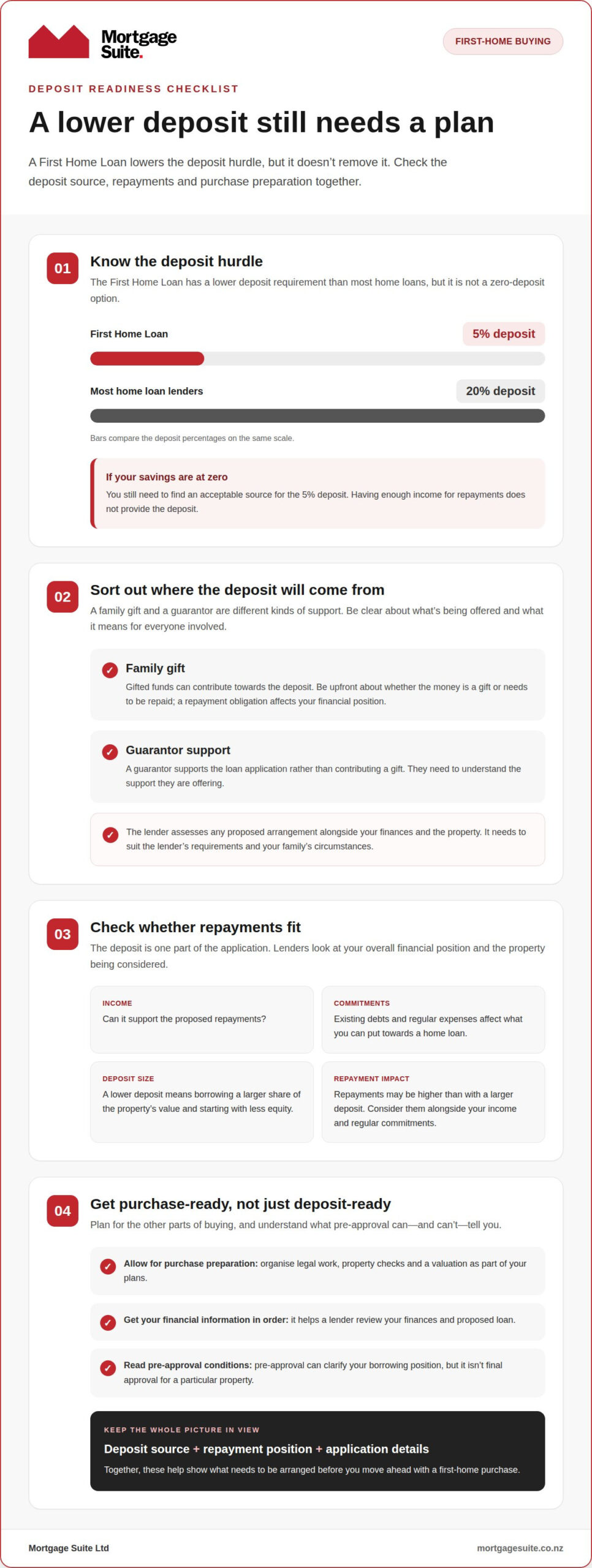
A First Home Loan can lower the deposit hurdle, but it doesn’t make the deposit disappear. For anyone wondering how to buy a house with no money in NZ, the practical answer is that a First Home Loan requires a 5% deposit, compared with the 20% minimum deposit most home loan lenders require.
It’s understandable if saving even a smaller deposit feels daunting, especially when you’re also weighing up repayments and buying costs. If you’re exploring how to buy a house with no money in NZ, start by understanding the deposit requirement. Then consider what lenders assess before deciding on your next steps.
This article explains how the First Home Loan deposit works, what may help you put a deposit together, and how your income and borrowing position affect an application. It also looks at whether buying with no money in NZ could be within reach and what to focus on next.
Key Takeaways
- A First Home Loan requires a 5% deposit, while most home loan lenders require a 20% deposit.
- Understand why buying with no deposit or savings can be difficult and what may help strengthen a home loan application.
- Find out which first-home buyer assistance is available in 2026 and which past schemes have ended or closed to new applications.
- Learn how a family gift or guarantor may support a deposit, and what lending considerations can come with these options.
- See how Mortgage Suite can advocate for you and explore home loan options, including alternatives when mainstream bank criteria don’t fit.
First Home Loan deposit requirements
A First Home Loan requires a 5% deposit, while most home loan lenders in New Zealand require a 20% deposit. The lower threshold can reduce the savings needed, but it doesn’t remove the deposit requirement. Your application also needs to show how the deposit is funded and how you’ll manage the loan repayments.
Buying Without a Deposit or Savings
Buying without a deposit means purchasing a home without funds to contribute towards the required deposit. A First Home Loan doesn’t offer a zero-deposit option: the deposit requirement is 5%. That distinction matters if you’re planning your first purchase, because a lower deposit target still needs a funding plan.
For example, a buyer with no savings needs to identify another acceptable source for the deposit before relying on a First Home Loan. The lender also considers income, existing commitments and the ability to manage repayments. Meeting the deposit requirement is one part of the application, not the only factor.
Guarantors and Family Gifts
A family gift or guarantor may help address a deposit shortfall, but they work differently. A gift contributes funds towards the deposit; a guarantor supports the loan application. The distinction matters because each arrangement brings different responsibilities for family members.
Be clear about whether family money is a gift or must be repaid. A repayment obligation affects the buyer’s financial position, while a guarantor needs to understand the support they are offering. The lender assesses the arrangement alongside the buyer’s finances and the property.
The deposit isn’t the only part of preparing to buy. Buyers also need to organise legal work, property checks and a valuation. These steps can affect the timing and readiness of a purchase, so include them in your plans alongside the deposit.
A low-deposit home loan means borrowing a larger share of the property’s value. You’ll start with less equity, and repayments may be higher than with a larger deposit. Consider how repayments fit your income and regular commitments, rather than focusing only on the deposit percentage.
A mortgage broker can help a first-home buyer prepare for pre-approval by organising financial information and presenting the application to a suitable lender. The broker can explain what information is needed and clarify pre-approval conditions. This helps you understand your borrowing position before making an offer. Pre-approval isn’t final approval for a particular property.
The main figures are straightforward: a First Home Loan requires a 5% deposit, compared with the 20% minimum deposit most lenders require. The next step is understanding your deposit source, repayment position and application details together. That gives you a clearer picture of what needs to be arranged before moving ahead with a first-home purchase.
Can you buy a house in New Zealand with no deposit or savings?
Not through a First Home Loan with no deposit: this loan requires a 5% deposit. Most home loan lenders in New Zealand require a 20% deposit, so the lower-deposit option reduces the amount needed but doesn’t remove it. If you currently have no savings, the question of how to buy a house with no money in NZ comes down to finding an acceptable deposit source and showing how you’ll manage repayments.
“No deposit” and “low deposit” describe different situations. A buyer with some funds may meet the First Home Loan deposit requirement, while a buyer with no funds still needs to resolve the shortfall. Having enough income to make repayments doesn’t provide the deposit. Lenders assess the application as a whole, including the deposit, income, debts and property.
Start by identifying which funds could contribute to the purchase. A family gift or guarantor support may form part of the plan, as covered in the previous section. A First Home Loan is a low-deposit loan, not a no-deposit loan. Any proposed support needs to suit the lender’s requirements and the family’s circumstances.
It also helps to separate deposit readiness from borrowing readiness. A lender assesses whether your income can support the proposed repayments alongside existing commitments. Regular expenses and debt repayments affect how much you can put towards a home loan. The lender also assesses the property connected to the application.
Pre-approval can clarify your borrowing position before you make an offer. The lender reviews information about your finances and proposed loan, then sets out the amount and conditions it is prepared to consider. This isn’t final approval for a particular property. If your savings are currently zero, pre-approval won’t replace the deposit, but it can help show what else needs to be in place.
If you’re considering how to buy a house with no money in NZ, map the gap between your current funds and the required deposit. Then consider how your income, existing debts and any family support affect the application. A buyer with a clear deposit source and manageable repayments is in a different position from someone without a deposit plan, even if both are considering the same First Home Loan.
So, can you buy a New Zealand home with no deposit or savings? A First Home Loan doesn’t provide a zero-deposit route: it requires 5%. The useful focus is identifying an acceptable deposit source and understanding how the lender will assess your full application before you commit to a property.
KiwiSaver may be one deposit source to investigate. Members in New Zealand can apply to withdraw savings for a first home if they have been in KiwiSaver for at least 3 years. First-home buyers must apply to their KiwiSaver scheme provider to withdraw savings for a first-home purchase.
People in a superannuation scheme other than KiwiSaver may also be able to withdraw funds to help buy their first home, subject to their scheme’s rules. Check the relevant requirements before including those funds in your deposit plan.
NZ first-home buyer grants and assistance in 2026
First-home assistance in New Zealand includes a grant for some eligible Kāinga Ora tenants buying selected homes. Older schemes can cause confusion: the First Home Grant ended in May 2024, and the First Home Partner scheme is full and not accepting new applications. Knowing which support remains available helps you plan around assistance you can actually apply for.
Kāinga Ora tenant home ownership grant
This support is tied to selected Kāinga Ora houses, rather than being a general grant for every first-home buyer. If you rent from Kāinga Ora, this is the specific assistance in the available facts that may be relevant to your purchase.
The grant’s value is linked to the selected home’s purchase price, up to the maximum cap. The assistance may contribute towards buying a selected house, but not every Kāinga Ora tenant qualifies, and not every home is included.
Closed schemes and ended grants
The First Home Partner scheme is full and isn’t accepting new applications in 2026. Kāinga Ora’s First Home Partner scheme was for buyers with a 5% deposit. That contribution had to be repaid within 15 years. The scheme’s former structure may still appear in older information, but it isn’t a route for new applicants now.
The First Home Grant ended in May 2024 and is no longer available. Those figures describe the past grant, not an amount buyers can claim in 2026. Including it in a current deposit plan would give you an outdated picture of available support.
These schemes work differently: the Kāinga Ora tenant grant may assist eligible tenants buying selected homes, while the First Home Grant and First Home Partner scheme are closed to new applications. This distinction matters when estimating how much deposit funding you need. Don’t count a grant or scheme that has closed as money available for a purchase.
For a practical assessment, first identify whether you’re an eligible Kāinga Ora tenant and whether the home is among the selected houses. Then separate any possible tenant grant from your own deposit funds and borrowing plans.
Can a guarantor or family gift help you buy a house with no money down in New Zealand?
A family gift or guarantor can help address a deposit shortfall, but neither automatically makes it possible to buy with no money down. A gift adds funds towards the purchase, while a guarantor supports the lending application. New Zealand lenders still assess the buyer’s finances, the property and the proposed support before deciding whether the arrangement works.
A genuine gift can increase the funds available for a deposit. For example, a parent might give a buyer money that doesn’t need to be repaid. A family loan is different: it creates another debt and could affect the buyer’s ability to manage mortgage repayments. Make the arrangement clear so the lender can understand where the funds came from and whether repayment is expected.
A guarantor supports the application differently. A family member may offer security connected to their own property, helping address concerns about the buyer’s deposit. The guarantor isn’t simply providing cash, and their support can put their financial position at risk if the borrower can’t meet the loan commitments. Both parties need to understand the arrangement before proceeding.
Consider the family’s circumstances alongside the buyer’s. A parent who offers a guarantee still has their own mortgage, expenses and plans to manage. The lender assesses the proposed support and the guarantor’s financial position, while the buyer must show that repayments fit their income and commitments. Family support doesn’t replace that affordability assessment.
Before relying on a gift, make the terms clear between the giver and buyer. If the money must be repaid, the lender needs to understand that obligation when assessing the buyer’s finances. For a guarantee, clarify what property or other security is involved, what responsibilities the guarantor accepts and how the arrangement could affect their future borrowing plans.
These options can help some buyers bridge a deposit gap, but they aren’t interchangeable. A gift contributes money; a guarantor backs the application. Neither ensures a lender will approve a home loan, and neither removes the need to show that repayments are manageable. The right fit depends on the available funds, the family’s willingness to support the purchase and the lender’s assessment.
For a first-home buyer with no savings, family support may provide a route towards a deposit, but the details matter. A clear gift arrangement avoids confusion about future repayments, while a guarantee requires careful thought about the family member’s property and finances. Set out the source and terms of the support as part of the overall borrowing picture, rather than treating it as a simple workaround.
Mortgage Suite
Mortgage Suite helps first-home buyers understand their home loan options and prepare an application that reflects their circumstances. If you’re weighing up a First Home Loan, a family contribution or another deposit plan, a broker can help bring those details together. The aim is to clarify what a lender will assess, not to suggest that a particular loan or approval is assured.
A useful conversation starts with your goal: buying your first home, the funds available for a deposit and the repayments your income can support. Mortgage Suite can consider how these pieces fit together, including your existing debts and the property you hope to buy. A deposit figure alone doesn’t show whether a loan will suit your finances.
If a mainstream bank has declined your application, that decision doesn’t define your prospects with every lender. Lenders assess applications using their own criteria. Mortgage Suite can help present your circumstances clearly and negotiate with lenders where appropriate. The focus is on understanding the reason for the decline and whether another lending option may fit, not on promising an outcome.
For a First Home Loan application, your deposit and borrowing position matter. A broker can help organise the information lenders need, explain questions in plain English and guide you through the lending discussion. You remain involved in decisions about the home and loan, with support to understand the options and trade-offs.
This guidance can be especially useful if your income, debts or deposit source make the application feel complicated. For example, a buyer combining savings with a family gift needs to explain the full deposit picture. Mortgage Suite can help you understand how that information fits into a home loan application and what the lender needs to assess your position.
Good borrowing decisions look beyond whether an application might proceed. The loan structure, repayments and fit with your longer-term plans all deserve attention. Mortgage Suite advocates for your needs and negotiates with lenders, while helping you weigh the information without pressure. A mainstream-bank decline can be a reason to review your approach, not a judgement on you.
If you’re ready to talk through your first-home loan options, contact Mortgage Suite to discuss your circumstances and possible next steps.
Frequently Asked Questions
Does a decline from a mainstream bank mean you can’t get a home loan?
A mainstream-bank decline means that lender hasn’t approved the application under its criteria; it isn’t a judgement on you. The useful next step is to understand the reasons behind the decision, such as income, existing commitments, deposit details or property information. These details can show what may need attention before another lending assessment. Another lender may assess your circumstances differently, while still considering affordability and the proposed home.
What costs besides the deposit do New Zealand home buyers need to budget for?
Budget for legal work, property checks and a valuation, as well as loan repayments and regular commitments.
What are the risks of low-deposit home loans and lenders mortgage insurance in New Zealand?
A low-deposit loan means borrowing a larger share of the property’s value, leaving less equity initially and potentially higher repayments. The material gives no information about lenders mortgage insurance.
How does the Kāinga Ora First Home Loan work, and what are its deposit and income limits?
A First Home Loan requires a 5% deposit, compared with the 20% minimum most lenders require.
Can KiwiSaver be used for a first-home deposit in New Zealand, and what are the withdrawal rules?
KiwiSaver members can apply to withdraw savings for a first home if they have been in KiwiSaver for at least three years. Apply through your KiwiSaver scheme provider. A previous homeowner may qualify if Kāinga Ora determines they are in the same financial position as a first-home buyer.