
Commercial Property Loans Auckland: Your 2026 Guide to Simple Business Financing
A mainstream bank’s “no” doesn’t always mean your plans are over. If you’re considering commercial property loans, it’s natural to feel uncertain: business lending can involve unfamiliar terms, and lenders assess it differently from a home loan.
You may want a clear idea of what lenders consider and what to do if your application doesn’t fit a bank’s usual approach. A decline reflects that lender’s assessment, not a judgement on your business or your goals. Other lending options may be worth exploring.
This guide covers how commercial and residential lending differ, what may shape a lender’s decision and how to prepare a clear application. It also explains how 2nd tier lending may suit borrowers who don’t fit mainstream criteria. Mortgage Suite Ltd’s Krish Krishna brings more than two decades of banking and brokerage experience to lender discussions, helping you understand your options and negotiate the terms. The aim is to give you a practical way to explore finance that fits your business plans, without jargon or pressure.
Key Takeaways
- Commercial property loans are assessed with the building’s business use and income in mind, not just your personal salary.
- Compare lending options by how well their criteria and terms fit your business and property plans, not only by the headline rate.
- Prepare clear details about your contribution and how business or rental income could support repayments.
- Organising your paperwork before you apply can make the process easier to manage.
- A broker can present your circumstances clearly to lenders and help you understand possible next steps if a bank declines your application.
The Basics: How Commercial Property Loans Work in New Zealand
A commercial property loan is borrowing to buy a building used for business, such as an office, shop, café, warehouse or workshop. It can help you secure premises for your own business or buy a property that earns rental income.
Lenders usually consider what the property will be used for and how it may generate income. If it’s leased, the rent and lease terms can help show how the building could contribute to repayments. If your business will occupy it, explain how the premises fit your plans and how the business will manage the repayments. Your personal finances may also be part of the assessment, but they are not the only consideration.
Commercial property can involve different lease arrangements and tax considerations from a family home. These details may affect how a lender views the property and the proposed borrowing. For commercial property loans Auckland and elsewhere in New Zealand, the property, its intended use and the wider business case all matter.
Why a Commercial Loan is Different to a Standard Home Loan
A home loan is mainly assessed around buying somewhere to live. A commercial loan is assessed around the property and the business plan together. A lender may look at rental income, how the premises will be used, your business’s ability to make repayments and your wider financial position.
Commercial loan terms can differ from home loans. For example, a commercial loan might have a 15-year term rather than a 30-year home-loan term, but the structure depends on the lender and application. The lending may be shaped around business needs, so make sure you understand the repayment plan and any conditions before committing.
You may be able to apply as an individual, through a company or through a trust. The right structure depends on your circumstances and can affect how a lender assesses the application. Clarify who will own the property, who will borrow and how the building will be used. That gives the lender a consistent picture from the outset.
The Different Types of Property You Can Finance
Commercial property includes a range of premises. Its purpose, condition and income potential can all shape how a lender assesses it. Explain how the property will support your business goals and what you plan to do with it.
- Retail spaces: Shops and cafés where customers visit. Explain whether your own business will occupy the space or whether you plan to lease it.
- Industrial units: Warehouses and workshops used for trade, storage or manufacturing. Describe how the premises suit the business activity.
- Professional offices: These can range from a small suite to a whole building floor, depending on your business or tenants’ needs.
Start by setting out the property’s intended use, who will occupy it and how you expect to manage repayments. Clear answers help a lender understand the proposal without relying on banking jargon.
Mainstream Banks vs Alternative Lenders: Finding Your Best Fit
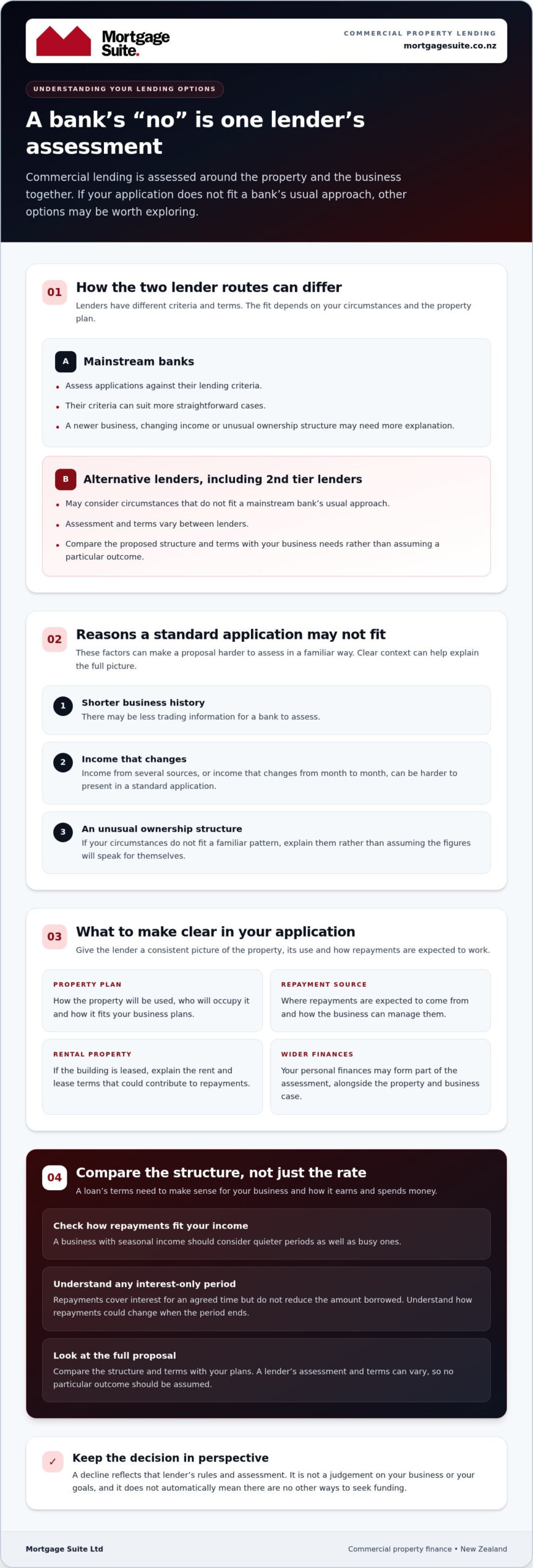
A bank decline can feel like a door closing, particularly after you’ve put time into a business plan or found a suitable property. But the decision reflects that lender’s rules and assessment of your application. It doesn’t automatically mean there are no other ways to seek funding.
Mainstream banks generally assess applications against their lending criteria. Those criteria can suit straightforward cases, while a newer business, uneven income or unusual ownership structure may need more explanation. Alternative lenders, including 2nd tier lenders, may consider circumstances that don’t fit a mainstream bank’s usual approach. Compare the proposed structure and terms with your business needs rather than moving to another lender without a clear plan.
When the Big Banks Might Say No
A shorter business history may mean there’s less trading information for a bank to assess. Income from several sources, or income that changes from month to month, can also be harder to present in a standard application. If your circumstances don’t fit a familiar pattern, explain them clearly rather than assuming the figures will speak for themselves.
Set out how you’ll use the property, where repayments are expected to come from and what supports the business’s ability to meet them. A negotiator familiar with mainstream and alternative lending can help present these details and identify a possible next step. Before committing to a property, discuss the legal steps with your solicitor. The New Zealand Law Society on Property Law provides general information about property transactions and the role of a lawyer.
The Benefits of Using a Non-Bank Lender
Alternative lenders may consider applications that don’t match a mainstream bank’s usual criteria. Their assessment and terms vary, so don’t assume a particular lender or outcome in advance. Some may offer interest-only periods, where repayments cover interest for an agreed time but don’t reduce the amount borrowed. If you’re considering this structure, understand how repayments could change when the period ends.
A lender may also consider how your business earns and spends money when shaping the terms. For example, a business with seasonal income should consider how repayments fit quieter periods as well as busy ones. A negotiator can help compare options, explain trade-offs and discuss rates and terms with lenders on your behalf. The aim is to find a structure that supports your plans and remains manageable, not to promise approval or the lowest rate.
If your application doesn’t fit a bank’s usual approach, other funding routes may be worth exploring. Mortgage Suite helps businesses consider commercial property loans Auckland and across New Zealand, including 2nd tier options. Explore Mortgage Suite’s lending support to understand possible next steps.
The Checklist: What Lenders Really Look for in Your Application
Focus on the practical questions behind the paperwork: how much are you contributing, how will repayments be covered, what is your plan for paying the loan back, and is the property suitable for its intended use? Lenders may assess these factors together, so a strong point in one area doesn’t automatically make up for a gap in another.
For commercial property loans Auckland and elsewhere in New Zealand, requirements can vary by lender and property. Use this checklist to organise the main parts of your application.
Understanding the Deposit and Borrowing Limits
Loan-to-value ratio, or LVR, means the amount you borrow compared with the property’s value. Commercial lending may call for a deposit of around 30% to 35%, but the amount a lender will consider depends on the property and your application. Treat that range as a guide, not a promise.
If you own a home, its equity may sometimes help support a commercial purchase. A mortgage calculator can help you compare how different loan amounts affect estimated repayments. Use it to explore scenarios, then remember that a lender’s assessment and final terms may differ from a calculator estimate.
Why the Lease Agreement is Your Best Friend
If tenants already occupy the property, the lease can help show the lender what income the building may bring in. A tenant and a lease with a longer time remaining can make that income easier to assess. The lender will still consider the full application, not just the lease.
A vacant property can be harder to assess because it has no current rental income. That doesn’t automatically end the conversation: some alternative lenders may consider your wider plan, including how you intend to use or lease the building. Explain the steps you expect to take and how you could manage repayments while it’s empty.
Repayment Ability, Property Condition and Your Plan
Lenders want to understand how you expect to repay the loan. That may include business income, rent from tenants or a combination of both. Set out expected income and regular business commitments so the repayment plan is easy to follow. If income varies, explain the pattern instead of presenting one strong period as typical.
The property itself also matters. Its condition, safety rating and current use may affect whether it is suitable as security and fits your plans. Describe the building honestly and explain how you intend to use it.
Finally, outline your plan for repaying the loan over time. If selling the property may be part of that plan, explain how and when you expect that to happen. A realistic account helps a lender understand your thinking, even if your circumstances change. Bringing these points together gives your application a clear story rather than a stack of disconnected figures and documents.
Steps to Get Your Commercial Loan Sorted Faster
Commercial finance can feel like a lot to manage while you’re running a business. Get key records together early, be upfront about your plans and have someone help present your application. Preparation can’t guarantee a decision, but it can reduce avoidable back-and-forth and make it easier to answer lender questions.
Organise Your Financial Story
Before you start viewing properties, gather your last two years of business accounts, current lease details if relevant and a short explanation of what you want the property to do for your business. If you’re looking to refinance, note what you want the new lending to achieve, such as changing the loan structure or reviewing the existing terms.
Clear, up-to-date records make your income, commitments and plans easier for a lender to assess. Keep information consistent and flag anything unusual instead of leaving a lender to guess. If business income varies, explain the pattern and give context for quieter or busier periods.
Tell your broker about your goals and any concerns. The more they understand your circumstances, the more clearly they can present your application and look for a lender whose approach fits. A broker can act as your advocate, explain possible structures and discuss rates and terms with lenders on your behalf.
Bring Your Professional Team Together
Your broker, accountant and solicitor each bring a different perspective. Your broker can help prepare and present the finance application; your accountant can help explain business records and cash flow; your solicitor can advise on the legal documents involved in the purchase or lending. When everyone understands the plan, questions are easier to address without crossed wires.
Krish Krishna brings more than two decades of banking and brokerage experience to lender discussions. An experienced negotiator can help you compare the overall structure, not just the headline rate, and raise questions about how the terms fit your business. Even a small difference in interest can add up over the life of a loan, but no particular saving or rate can be promised.
An early lending discussion can give you an initial view of what may be workable, subject to the lender’s assessment and the property details. It isn’t final approval, but it can help you set a sensible search range and avoid spending time on properties that don’t fit your borrowing plans.
With preparation and the right support, commercial property loans Auckland needn’t feel like a slog. Talk with Mortgage Suite about your commercial lending plans to understand the next steps.
Why Partnering with Mortgage Suite Makes the Difference
Commercial finance can be a lot to carry on your own. You’re balancing business decisions, property details and lender requirements while keeping everyday work moving. Mortgage Suite helps make the process easier to understand as you consider your options.
Krish Krishna’s experience across banking and brokerage gives him a practical understanding of how lenders assess applications. Mortgage Suite takes time to understand your goals, explain what lenders may need and present your circumstances clearly. The aim is to find a lending option that suits your business plans, not just one that looks appealing at first glance.
A Veteran Hand in a Fluctuating Market
Lending conditions and lender requirements can change, and an option that suits one business may not suit another. Working with someone who understands mainstream and alternative funding channels can help you make sense of the choices. Your rate matters, but so do the repayment structure, terms and how well the lending fits your business over time.
Mortgage Suite’s “Mortgage School” approach is about explaining the process in plain language, so you can make informed decisions rather than feel rushed through paperwork. You should understand what a lender is considering, what a proposed structure means for your business and what questions to raise before moving ahead. Mortgage Suite client reviews offer a chance to hear how other clients describe their experience.
Ready to Take the Next Step?
If you’re weighing up a purchase or a bank has already declined your application, a conversation can help clarify which options may be worth exploring. You don’t need every detail worked out before discussing your plans. Start with what you want the property to achieve, where your application stands and what is making the process feel uncertain.
From there, you can work through possible next steps, including whether a mainstream lender or a 2nd tier option may better fit your circumstances. No application is guaranteed approval, but a clear and honest discussion can help you understand where you stand and what may be worth considering.
For commercial property loans Auckland, Mortgage Suite can advocate for you, explain the choices and negotiate with lenders on your behalf. The goal is to find a workable path towards your business plans while keeping you informed at each stage.
Take the Next Step with a Clear Plan
Before pursuing commercial property loans Auckland, define what you need the property and lending to achieve. Is your priority securing premises for your business, supporting future growth or finding a structure that fits the way your income comes in? A clear goal gives your next finance conversation a useful starting point.
You don’t need every detail worked out before asking questions. Start with what you know, be open about what’s uncertain and consider which terms would help your business stay on steady footing. The right path depends on your circumstances, but a bank’s earlier decision doesn’t have to be the final word.
Mortgage Suite can help you discuss commercial finance options and next steps for your business. Talk with Krish and the team about your commercial finance plans to start working towards a funding plan that makes sense for you.
Frequently Asked Questions
How much deposit do I typically need for a commercial property loan?
There isn’t one deposit amount that suits every commercial purchase. A lender may consider the property’s value and type, your financial position and the strength of the application. For commercial property loans Auckland, the amount you need depends on how the lender assesses those details. Get a clear estimate based on your plans before committing to a purchase, as an initial figure may change after the property is assessed.
Can I get a commercial loan if I am self-employed or have a complex income?
Being self-employed or having income that varies doesn’t automatically rule you out. Lenders need to understand how your business earns money and whether that income can support the proposed repayments. If revenue rises and falls through the year, records showing the pattern can help explain your position. Lenders may assess your circumstances differently, so a bank’s criteria aren’t the only possible route.
What is the difference between a business loan and a commercial mortgage?
A business loan can fund a range of business needs, while a commercial mortgage is lending connected to buying or refinancing business property, with the property usually forming part of the lender’s security. For example, a business might borrow to support its operations, while a commercial mortgage helps fund premises. The right fit depends on what you’re borrowing for, how the funds will be used and what security is available.
How long does the approval process usually take for commercial finance?
There’s no set timeframe for every commercial finance application. The process can depend on how complete your records are, the lender’s assessment and how quickly property information can be gathered. A complicated ownership structure or missing paperwork may prompt extra questions. You can help avoid preventable delays by preparing your accounts and purchase details early, then responding promptly if the lender asks for more information.
Can I use the equity in my home to buy a commercial property?
It may be possible to use equity in your home to support a commercial purchase, depending on your financial position and the lender’s assessment. Equity is the part of your home’s value that isn’t already covered by lending. Before using it, consider how additional borrowing could affect your household if business income changes or the commercial property takes time to earn income.
Do I need to have a tenant already signed up before I apply for a loan?
Not necessarily. A tenant and signed lease can give a lender useful information about expected rental income, but a vacant building may still be considered. Explain how you plan to use or lease it, what steps you’ll take to find tenants and how you could manage repayments in the meantime. A lender will assess the whole application, so a tenant isn’t the only factor.
What happens if my bank has already turned down my application?
A bank’s decision doesn’t automatically close off other options. Start by understanding why it declined the application, such as concerns about the property, your records or the proposed loan structure. That can help you and a broker decide whether to address a gap or explore a different lender. Mortgage Suite works with 2nd tier lending for situations that don’t fit mainstream-bank criteria, though approval depends on the lender’s assessment.
Are interest rates higher for commercial loans than for home loans?
Commercial loan rates can differ from home-loan rates, but there isn’t one rate for every borrower or property. A lender may consider the security, your financial circumstances and the loan structure when setting terms. Compare more than the headline rate: repayment arrangements and flexibility also affect how well the lending suits your business. Ask for the proposed terms in plain language so you can judge the full arrangement.