
Home Loan Pre-approval in NZ: What to Expect in 2026
What if the amount on your pre-approval isn’t the amount a lender will ultimately offer for the home you choose? It’s understandable to want a clear borrowing figure before you start house hunting. If you’re looking into home loan pre-approval NZ, remember that pre-approval is a conditional guide, not a guarantee of a loan.
This guide explains what pre-approval can tell you, what it can’t confirm and how to prepare your application. You’ll learn what financial information to gather, how changes in your circumstances or the property could affect the outcome, and what to consider before making an offer while lending is still conditional.
We’ll also cover the steps towards confirmed lending, including the lender’s assessment of the specific property. A Mortgage Suite adviser can help you understand the process, talk through your goals and circumstances, and negotiate with suitable lenders. With clear information and a steady plan, you can take the next step with more confidence, without mistaking pre-approval for final approval.
Key Takeaways
- Home loan pre-approval NZ can help guide your budget, but the lender’s conditions still matter when you choose a property.
- Check the expiry date and conditions in your pre-approval so you know what needs to happen before the application can progress.
- Prepare by setting out your plans and gathering information about your income, regular spending, debts and deposit.
- Before making an offer, find out what property details the lender needs to review and what steps remain before a final decision.
- Mortgage Suite can explain the process, present your circumstances to suitable lenders and negotiate on your behalf.
What does home loan pre-approval in NZ actually mean?
Planning to buy a home can feel exciting one moment and uncertain the next. You may be wondering what a lender could let you borrow, and whether that figure will hold once you find a property. Home loan pre-approval NZ is a conditional indication from a lender, based on the information available about your finances at the time. It can help you plan, but it isn’t final approval or a promise that the lender will fund any home you choose.
In its initial review, a lender considers your financial position, which may include your income, regular spending, debts and deposit. The outcome gives you an indication of a possible borrowing limit and any conditions still to be met. Those conditions depend on the lender and your application. The property may also need to meet the lender’s requirements before it agrees to the loan. That means the pre-approval amount could change, or the lending may not proceed for a particular home.
Think of pre-approval as an early checkpoint. The lender has considered your circumstances, but may not have completed every check needed to approve a loan for a specific property. A general overview of how lenders assess a mortgage loan can explain the broader process. Your own lender’s conditions are the ones to follow.
What does a pre-approval letter tell you?
The letter records the lender’s current indication, any borrowing limit it has assessed and the conditions that apply. Read it closely and note what the lender has considered and what remains outstanding. Treat the figure as a ceiling for planning, not a spending target. Work out a budget that leaves room for everyday expenses and feels manageable, rather than assuming you should borrow the maximum amount.
Why arrange pre-approval before house hunting?
An early indication can help you focus your search on homes that are more likely to fit your borrowing range. It also gives you time to understand the lender’s conditions before a suitable property comes up. That preparation can reduce last-minute uncertainty, but it can’t guarantee your offer will be accepted or the purchase completed. Keep your plans flexible and revisit the lender’s requirements when you’re considering a particular home.
Use pre-approval as a planning tool, not a green light to commit without checking the details. Your financial position can change, and the property itself matters to the lender’s decision. Knowing these limits helps you house hunt with a clearer idea of what may be possible while leaving room for the checks still to come.
Pre-approval conditions, expiry and final loan approval
A pre-approval can give you a useful starting point, but its conditions shape what happens next. The conditions vary between lenders and applications, so there’s no single expiry period or set of rules for every buyer in New Zealand. Check the letter for its expiry date and requirements. Make a note of anything you need to provide or do before the lender will consider the next stage.
Pre-approval is a conditional indication. Confirmed lending comes only after the lender completes its checks and agrees to finance the specific property. Keep that distinction in mind before making an offer or taking on other commitments.
What conditions might a lender attach?
Conditions may include providing updated financial information or having the lender assess the property you want to buy. The lender may also need to check that the home fits its criteria before confirming the loan. These are general examples, not a checklist for every lender. Your letter sets out the conditions for your application, so read it carefully and ask your adviser to explain anything that isn’t clear.
Property checks can affect the outcome. For example, a lender may need to review the property’s value or other details before deciding whether it can support the proposed lending. If the property doesn’t meet the lender’s requirements, the pre-approval may not progress to confirmed lending on the terms you expected. If you’re considering the Kāinga Ora scheme, its Kāinga Ora First Home Loan pre-approval information explains that scheme’s eligibility and application steps.
What happens when your circumstances or plans change?
Your application reflects the information considered at the time. A change to your income, debts, spending or buying plans could affect how a lender views it. The impact depends on your circumstances and the lender’s assessment. Tell your adviser or lender if something material changes, rather than assuming the existing indication still applies.
Timing matters, too. Check when your pre-approval expires and whether any conditions need attention before then. If it has expired or your situation has changed, the lender may need updated information or to review your application again. Don’t rely on an old letter as if it were a current, final decision.
Pre-approval is separate from deciding how your eventual loan will be set up. The interest rate and loan structure are considered as part of arranging lending, while pre-approval is an earlier, conditional assessment. Keeping these steps separate helps you consider the home alongside repayments and flexibility that suit your plans.
If you’re unsure how a condition affects your next move, talk with Mortgage Suite’s home loan advisers to understand the process and discuss your circumstances before you commit.
How to prepare for home loan pre-approval in NZ
A little preparation can make applying for home loan pre-approval NZ feel more manageable. Start by getting clear on what you hope to buy and what repayments could fit your everyday budget. Then gather an overview of your finances. You don’t need to guess every document a lender will request. Requirements differ, and your adviser can guide you on what’s needed for your application.
- Clarify your plans. Think about the type of home you’re looking for, who will be borrowing and what repayments feel comfortable. Note any plans that could affect the application, such as a change in work or a commitment you expect to take on.
- Organise your financial records. Gather current information about your income, regular spending, debts and deposit. Keeping it together can help you spot gaps and answer questions clearly.
- Talk through your income and commitments. Be ready to explain how you earn, what regular payments you make and any changes that could affect your finances. A clear picture helps the lender assess your application in context.
- Provide the information requested. Your adviser will explain what’s needed for your situation. Give complete, up-to-date details and ask if you’re unsure how to describe an item or which records are relevant.
What information should you organise?
Start with records that show how money comes in and goes out. Depending on your circumstances, these may include information about employment or business income, regular household spending, debts and savings for your deposit. This is a starting point, not a fixed document list. Your adviser will explain what information is needed and whether anything should be updated before the application is assessed.
Accuracy matters more than trying to make your finances look a certain way. If a payment or income source needs context, make a note of what it relates to so you can explain it. Clear, consistent information can help avoid confusion while your application is reviewed.
How can you prepare if your income is not straightforward?
If you’re self-employed, work as a contractor or have income that changes, it’s understandable to wonder how a lender will view it. Different income patterns call for a closer look at the full picture, and they’re not a reason to feel judged. Relevant records and a clear explanation of how your income works can help show the context behind your finances.
Mortgage Suite can present your circumstances to suitable lenders and discuss possible pathways, including alternative lending channels when mainstream criteria don’t fit. This doesn’t guarantee approval, but it can help you understand your options and what information may support an informed assessment.
For an early sense of how different loan amounts and repayments might affect your plans, try the Mortgage Suite mortgage calculator. Treat the result as a planning aid, not a decision about how much a lender will approve. Your borrowing capacity depends on your circumstances and the lender’s assessment.
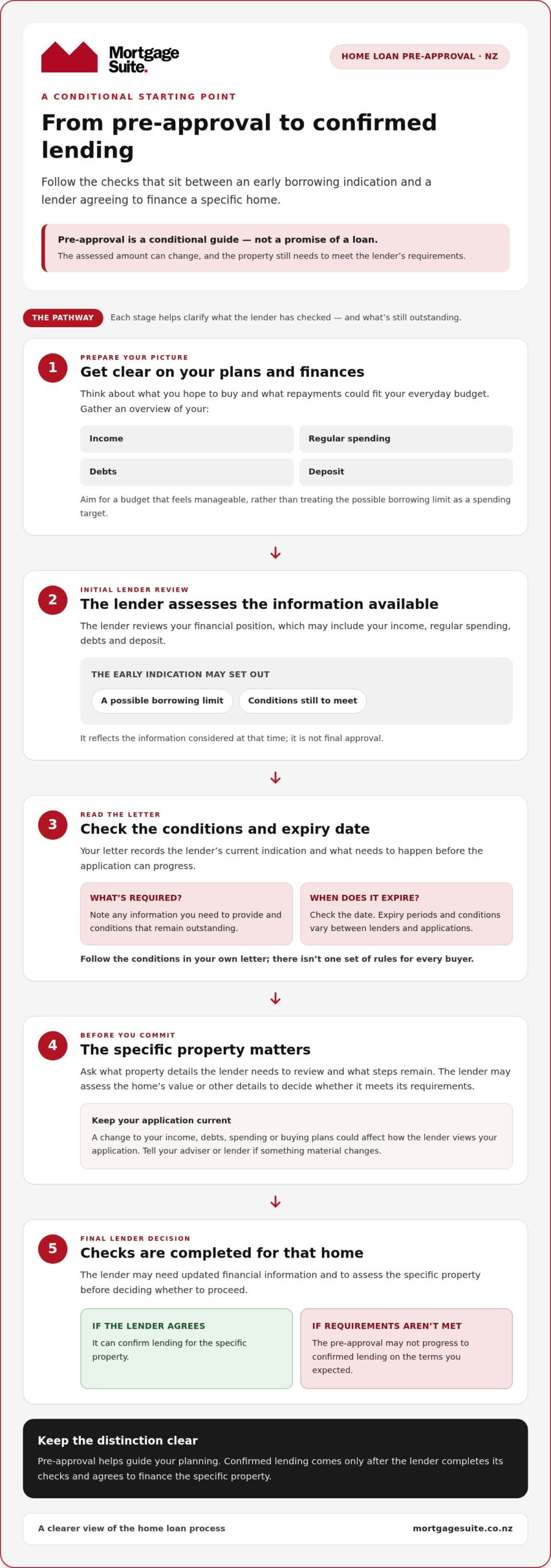
Steps after pre-approval before making an offer
Finding a home that feels right is a big moment. Before moving from a shortlist to an offer, compare the property details with your pre-approval conditions. The lender still needs to assess the specific home, so the initial indication isn’t final confirmation that the purchase can be funded. A simple process can help you see what’s outstanding and keep the right people informed.
After initial pre-approval, the lender needs to review the chosen home before it can confirm the loan.
What changes when you find a property?
Share the property details with your adviser promptly so they can identify what the lender needs to review. The lender may assess whether the home meets its criteria and whether property-related conditions in your pre-approval have been met. The outcome depends on the property and the lender’s assessment, not just the borrowing figure in your letter.
It’s also sensible to do your own checks on the home. For example, a building report is a professional assessment of a property’s condition and defects. Other checks can help you understand the home and the purchase, but they don’t guarantee that the lender will approve the loan or that the property is free of issues. Keep these separate from the lender’s decision. Passing one check doesn’t automatically satisfy the others.
Before making commitments, reread the pre-approval conditions and make sure you understand what remains to be done. If a condition is unclear, raise it with your adviser before relying on the initial indication. This gives you a clearer view of what the lender still needs, without assuming that finance is confirmed.
How can you keep the purchase process organised?
Once you have a property in mind, keep the moving parts together in one place. A simple note or checklist can help you track:
- The conditions in your pre-approval and any expiry date.
- Property information and documents shared with your adviser or lender.
- Requests for further information and whether you’ve responded.
- Key purchase milestones to discuss with your adviser as they come up.
Update your record if the property changes or your circumstances shift. A pre-approval relates to the information and conditions considered at the time, so don’t treat it as final confirmation for a different home or a changed situation. If you’re buying your first home, consider your wider purchase plans alongside the finance steps so you can stay focused on what matters to you.
Home loan pre-approval NZ can help you plan, but the property review and outstanding conditions move the application towards a final decision. If you’ve found a home and want help understanding the next lending steps, talk with Mortgage Suite about your home loan.
How Mortgage Suite can support your home loan pre-approval
Applying for home loan pre-approval NZ can feel like a lot to manage, especially if you’re unsure what a lender will focus on. Mortgage Suite starts by learning about your home-buying plans, financial circumstances and what you want your loan to achieve. That conversation helps shape the next steps around you, rather than treating your application as a set of figures alone.
Your adviser can explain information requests and lender conditions in plain English, help present your application and negotiate with lenders that suit your situation. If your circumstances don’t fit a mainstream bank’s usual approach, that isn’t a judgement on you or your plans. Mortgage Suite can discuss alternative lending channels too. Each lender makes its own assessment, and no pathway guarantees approval.
This support can be useful if your income varies, you’re self-employed or your financial picture needs context. A clear explanation and relevant information can help a lender understand your circumstances, but the right approach depends on your application and the lender’s criteria. Your adviser can talk through the options and what may be needed before you decide how to proceed.
When can a mortgage adviser help with pre-approval?
An adviser can help you make sense of a lender’s requests, identify questions to resolve and keep track of conditions as your application progresses. If your work, income or commitments don’t follow a simple pattern, a tailored discussion can help present the full picture. For plain-English information as you prepare, Mortgage Suite’s Mortgage School home loan guides cover related topics.
An adviser can also help you consider whether a possible borrowing amount fits your plans, rather than focusing only on the maximum a lender may consider. Your goals matter: the home you hope to buy, the repayments you’re comfortable with and the flexibility you may want from your loan are all useful parts of the conversation.
What is a sensible next step?
Start with a conversation about what you hope to buy, how your finances work and what questions are on your mind. You don’t need every detail sorted before talking it through. Mortgage Suite founder Krish Krishna brings more than two decades of banking experience to helping borrowers understand the process and discuss suitable lending pathways.
From there, you can get clearer on what information may be useful and what the next step could look like for your circumstances. If you’d like to talk through your home-buying plans, get in touch with Mortgage Suite. It’s a chance to discuss your situation and options, not a promise of a particular lending outcome.
Take your next step with a clearer plan
Your next move doesn’t have to be a big commitment. Start by noting what you want your home loan to make possible, what questions are still on your mind and any changes that could affect your plans. That gives you a practical starting point for working out how home loan pre-approval NZ fits your buying journey.
A conversation can turn those questions into a clear next step, whether that’s getting your information in order or talking through a lender’s conditions. You can also discuss what matters beyond the borrowing limit, such as repayments that feel manageable and a loan structure that suits your plans. You don’t need to have every answer ready before you begin.
Talk through your home loan pre-approval options with Mortgage Suite and get a clearer sense of what to do next. With a steady plan and the right questions, you can move towards your home-buying goals with more confidence.
Frequently Asked Questions
Can I make an offer on a house with pre-approval?
You may be able to make an offer, but check how the proposed purchase fits the amount and limits in your home loan pre-approval NZ letter. Your adviser can help identify what property information the lender needs. Keep a note of outstanding items alongside your offer details so you can track what still needs attention. The seller makes a separate decision about accepting an offer, and pre-approval doesn’t reserve the property.
Does home loan pre-approval affect my credit record?
The effect can depend on the lender’s application and checking process. Before proceeding, ask what checks are part of the application and whether the lender needs to access your credit information at that stage. You can also ask what information you’ll need to provide and how it will be used for the assessment. This gives you a clearer picture of the process without assuming an enquiry will improve or harm your record.
Can I get home loan pre-approval if I am self-employed?
Yes, self-employed buyers can discuss pre-approval. To explain your circumstances, prepare a simple overview of how business income reaches you, including any changes in how you’re paid. Keep business income distinct from money available for personal use, and note regular business commitments. Your adviser can guide you on relevant records for your situation, as requirements vary between applications.
What happens if my income or debts change after pre-approval?
A change may affect your application, so record what changed and when, then update your adviser. For example, note whether a new debt has a regular repayment or whether a change in work affects your expected income. Your adviser can help identify which figures or records the lender needs to review and whether any conditions or next steps are affected. Don’t rely on the earlier figures. The lender will assess the updated information.
Can I apply for pre-approval with more than one lender?
You can discuss options with more than one lender, but first compare what each application involves. Consider the information requested, the conditions attached to any indication, and how the proposed repayments or loan structure fit your plans, not only the borrowing limit. Keep a record of applications and requests, and coordinate discussions with your adviser. That can help you avoid mixing up lender questions or providing inconsistent information.
What if a bank declines my home loan pre-approval?
Start by finding out what led to the decline and whether it relates to missing information, the lender’s assessment or another part of the application. Check that the details considered were accurate, then discuss whether further information could clarify your situation. A decline isn’t a personal judgement. Mortgage Suite can help you understand the feedback and discuss mainstream or alternative lending pathways, though no lender can be assumed to approve an application.