
First home buyer anxiety and the choices that shape a purchase
Is buying a first home stressful? It can be. First home buyer anxiety often comes from weighing a major financial commitment against choices that can be difficult to undo. But you don’t have to make every decision at once or work through the process without support.
It’s understandable to feel uncertain about what you can afford, whether a property suits your needs and when to make a move. A clear plan helps you focus on what matters, ask better questions and take the next step with more confidence.
This article looks at how trusted support, a clear borrowing plan and a careful assessment of property fit can ease the pressure. It also covers how to think about timing when the market or your circumstances feel uncertain, so you can make a decision that works for you.
Key Takeaways
- Talk through your concerns with trusted people and get clear support with the home loan process.
- Set a realistic price range and research neighbourhoods before you focus on particular properties.
- Think about how a home’s size, location, parking and outdoor space will fit your everyday life.
- When timing feels uncertain, focus on the facts and take decisions one step at a time.
- Set aside time for home-buying tasks and make room for breaks to keep the process manageable.
1. Getting professional and personal support
Buying your first home involves a series of decisions, from borrowing to choosing a property. Friends and family who have bought before can share practical lessons, but their circumstances may differ from yours. Ask what they wish they had understood earlier, such as how they organised documents or managed deadlines. Treat their experience as a useful prompt, not an assessment of what you can borrow.
Choose one or two trusted people to talk with when decisions feel tangled. You could ask a relative to help list questions to discuss with a lender, or ask a friend who knows your routine to help weigh up commute, space and location. Keeping your support circle focused can be more useful than gathering conflicting opinions from a large group.
A home loan broker can explain the application process, answer questions and keep you updated. They can also manage paperwork and help present your finances to a lender. Ask for clear explanations of which documents you need, what happens next and how the lender will assess your application. Knowing the next step can make the process feel more manageable.
Lenders assess your income, debts, spending and the property when considering an application. Loan-to-Value restrictions may also affect lending, so the amount you can borrow depends on your circumstances and the lender’s assessment.
To start buying, organise your income and spending records, discuss borrowing options, then seek pre-approval before making an offer. Once you find a property, consider its condition and suitability, and have the sale documents explained before signing. A broker can help coordinate the lending steps, while a trusted legal professional can explain the purchase documents.
Affordability means more than whether a lender might approve a loan. List your regular commitments and estimate repayments against your take-home income, leaving room for ordinary bills and unexpected changes. Ask how repayments could shift if your interest rate changes after a fixed interest rate period. A mortgage repayment calculator can help you explore different repayment scenarios, but it cannot replace an assessment of your full finances.
Support is most useful when it helps you make informed decisions for yourself. If first home buyer anxiety rises, write down the specific concern, such as how repayments could change. Then take that question to a broker or trusted person to work through a practical next step.
Write down what is worrying you and identify the next question you need answered. Friends and family who have bought a home may offer support and advice, but you can decide which suggestions fit your plans. Keep the conversation centred on the choices in front of you, and give yourself time to think when you need it.
A home loan broker can manage your application, including the paperwork, and keep you updated. Agree on how you would like to receive updates, and ask questions whenever a step is unclear. Practical help from people you trust, combined with clear communication about the application, can help you focus on decisions that suit your circumstances.
2. Researching neighbourhoods and properties
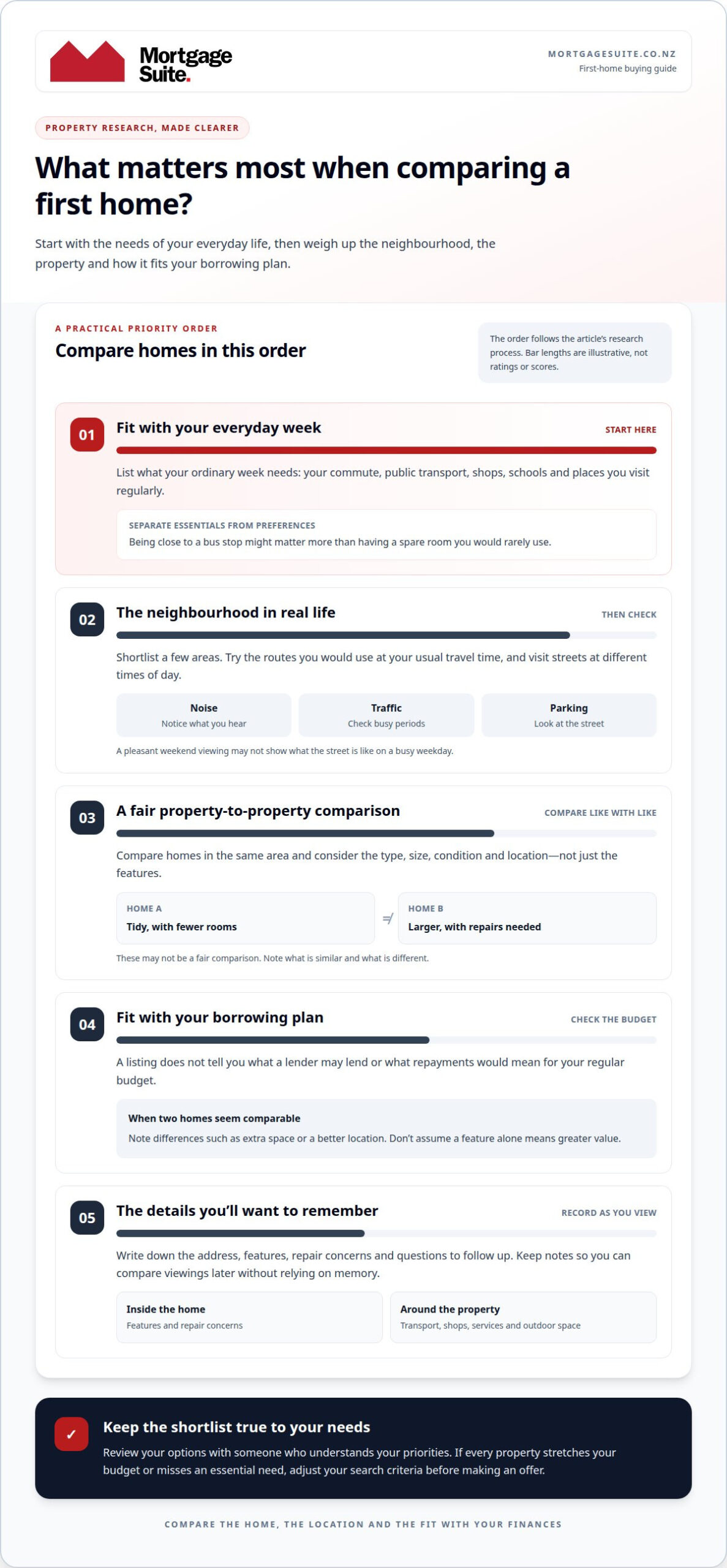
Uncertainty about a home’s location or value can make buying stressful. Before browsing listings, write down what your ordinary week requires. Include your commute, access to public transport, shops, schools and other places you visit regularly. Then separate essentials from preferences. For example, being close to a bus stop might matter more than having a spare room you would rarely use.
Use those needs to shortlist neighbourhoods rather than researching every suburb. Pick a few areas and try the routes you would use, including the journey to work at your usual travel time. Visit streets at different times of day and notice noise, traffic and parking. A pleasant weekend viewing may not show what the same street is like on a busy weekday.
Next, compare properties with similar features in the same area. Consider the type of home, its size, condition and location, not just its features. A tidy home with fewer rooms may not be a fair comparison with a larger property that needs repairs. Note what makes each property similar or different, so one eye-catching listing doesn’t set your expectations.
Keep asking whether a property fits your borrowing plan. A listing doesn’t tell you what a lender may be willing to lend or what repayments would mean for your regular budget. If two homes look comparable but one has extra space or a better location, note the difference rather than assuming it means greater value. Your shortlist should reflect both the property and your finances.
When you view a home, record the details straight away. Note the address, features, repair concerns and questions to follow up. For example, if the kitchen has been updated but the flooring looks worn, record both points. Keeping notes makes it easier to compare viewings later, rather than relying on memory or mixing up properties.
Research the area as carefully as the building. Walk from the property to nearby transport, shops or services you expect to use. Consider whether the street suits your routine, including where visitors might park and how outdoor space is maintained. If you’re choosing between two suburbs, compare the actual journeys and facilities that matter to you, not just their reputations.
Finally, review your shortlist with someone who understands your priorities. Ask them to test your reasoning, not make the choice for you. If every option stretches your budget or misses an essential need, adjust your search criteria before making an offer. A clear comparison can help you spot a suitable property without treating every new listing as a decision you must make immediately.
3. Choosing unsuitable property sizes and locations
A home can look appealing at one viewing yet prove poorly suited to daily life. First-home buyers may get caught up in the excitement and overlook whether the property’s size or location suits their routine. Before deciding, picture an ordinary weekday, from getting ready in the morning to coming home after work. Consider who will use each room and how the layout would work during a busy week.
Too little space can become frustrating if your needs change. A small home, for example, may have nowhere to work from home or store sports gear. A larger property can bring different pressures: extra rooms need cleaning, furnishing and heating. List the spaces you genuinely use now, then consider which would make a practical difference later. Don’t let an impressive spare room outweigh the rest of the home.
Give outdoor space the same realistic check. A generous yard may suit someone who enjoys gardening, but it can also mean more upkeep. If you prefer low-maintenance weekends, look closely at the garden’s size and layout. Consider whether you would mow, weed or maintain it yourself and whether you have time for that work. A small patio may suit your routine better than a large lawn.
Location affects everyday convenience, not just how a property feels at an open home. Imagine your regular trips to work, the supermarket or other places you visit often. Check how you would make those journeys and whether the location still suits you in poor weather or on a busy day. A home farther from familiar places may look appealing, but consider the extra travel involved.
Parking is easy to miss during a quick viewing. If your household has a car, check where you can park and how easy it is to get in and out. Think about visitors, too. A home without convenient parking may cause daily friction, even if the interior seems ideal. Add parking to your notes alongside room sizes and outdoor space.
Arrange more than one viewing of a property you’re considering. The first visit can help you notice the layout; another gives you time to check storage, light, noise and practical details. Take a short list of questions to each viewing and record the answers afterwards. A building report or survey can also help you understand the property more clearly, rather than relying on a quick visual impression.
As you buy, compare each home with your needs, not an imagined perfect property. If a feature sounds appealing, ask how you would use it in a typical week. That simple test can help you avoid choosing too much space, too little room or a location that doesn’t support the life you want.
Delaying a home purchase
Waiting can be sensible when your circumstances are changing, but uncertainty alone doesn’t tell you what to do. Separate a practical reason to pause from worries about making a perfect decision. For example, a change in employment may affect your borrowing plans, while waiting repeatedly for the “right” market moment may leave you without a clear point to decide.
Choose a specific question to resolve during a pause. You might need to understand your income, reduce existing commitments or decide which areas suit your routine. Write down what information would help, who can answer your question and when you’ll review the decision. This turns “I’ll wait” into a useful plan rather than an open-ended source of stress.
It can also help to respond to events as they happen. If your work situation changes, update your budget and reconsider what repayments feel manageable. If a suitable property appears, assess it against your needs and lending position instead of assuming you must act immediately. Facts about your circumstances are more useful than trying to predict every change in the market.
In New Zealand, a First Home Loan is an option for eligible first-home buyers. Its criteria and the lender’s assessment shape the deposit and loan arrangements, so understand the terms before relying on them in your purchase plan.
An auction can put pressure on you to decide quickly, so think through your priorities before attending. Consider the property’s condition, your lending arrangements and the sale terms in advance. An offer can also create risk if you commit without understanding its conditions, deadlines or the available property information. Read the documents carefully and have the terms explained before signing.
To make a considered offer, decide which conditions matter and what would make you walk away. For example, if you still need clarity about a building’s condition, factor that into your decision before committing. Having clear criteria can help you avoid changing your decision just because another buyer is bidding or negotiations feel tense.
Waiting doesn’t mean you need to stop preparing. Use the time to organise your financial records, revisit your priorities and discuss questions with a qualified professional. If new information changes your position, update your plan. If it doesn’t, you can keep looking without treating every listing as a deadline.
Set a review point based on a real change or task, such as receiving updated income information or understanding the purchase documents. That gives you a practical moment to reassess rather than expecting certainty before taking any step. A considered decision can account for both the property and your current circumstances.
5. First-home buyer anxiety
Buying a first home can feel intense because it combines a major financial commitment with unfamiliar decisions. The pressure may come from searching beyond what you can afford, worrying about repayments or feeling rushed to make an offer. Buying a home also brings ongoing responsibilities, so it makes sense to want time to think clearly.
Emotions can surface during the search. A survey found that 30% of homebuyers had cried at least once while looking for their first home. Another survey found that 72% of first-time buyers felt buying a house was worth the stress and anxiety. Those figures don’t predict how you’ll feel, but they show that difficult moments can be part of the process.
Before committing, arrange a building report to assess the property’s condition and possible defects. Have a lawyer or conveyancer review the sale and purchase agreement, explain its conditions and clarify any deadlines. These checks can help you understand what you’re agreeing to and what an inspection may reveal. Keep the findings and your questions together so you can consider them before deciding.
Anxious feelings can also grow when tasks pile up. Set aside regular time for calls, documents and property decisions, then stop when that time ends. For example, use one session to organise paperwork and another to review a building report. A short list of next actions can make a complicated process feel more manageable.
Keep a simple record of what is worrying you. “I’m nervous about buying” is hard to act on; “I don’t understand the report’s comments about dampness” gives you a specific question. Take that question to the relevant professional and write down the answer. If a lender’s decision or property detail changes, focus on the new information before revisiting your plan.
Rest matters, too. Choose a break that takes you away from property talk, such as going for a walk, reading or spending time with friends. You don’t need to research listings every evening. A planned pause can give you space to return to decisions with a clearer head while keeping your next practical step in view.
That pressure is not unusual: 43% of people claim that the stress of a sale is a contributing factor. A 2025 Compare My Move survey found that people ranked moving house as one of life’s most stressful experiences, even more stressful than childbirth. The stakes can feel especially weighty because buying a first home can involve a decades-long financial responsibility and time commitment.
First-time buyers may search for homes beyond what they can afford, so staying clear about what you can manage can help keep choices grounded. Consider building an emergency savings buffer as part of your planning. Setting aside dedicated time for home-buying administration can also help prevent tasks from piling up and adding to your anxiety.
Mortgage Suite Ltd: Home Loans to First Home Buyers
Mortgage Suite Ltd helps first-home buyers work through home loan options and understand how their circumstances shape an application. If you’re unsure what a lender may consider, or a mainstream bank has declined your application, that doesn’t necessarily mean you’re out of options.
Start by discussing your goals, income, deposit and concerns about repayments. Mortgage Suite Ltd can help you consider a suitable home loan path, including which lender may fit your situation. The next step is a clear conversation about your borrowing position and any questions still weighing on you, with no pressure to rush a decision.
If you’re ready to talk through your first-home loan, contact Mortgage Suite Ltd.
Take your next step with confidence
First home buyer anxiety can make the whole purchase feel like one enormous decision. You don’t have to resolve every uncertainty at once. Focus on the choice that needs your attention now, and give yourself permission to pause before making a commitment that doesn’t feel right.
Your next step might be a conversation about your borrowing position, or simply deciding what you need to understand before moving forward. Either way, a clear question is a useful place to begin. Take time to consider the answer and decide what feels right for your circumstances.
If you’d like a personal conversation about your home loan options, talk with Mortgage Suite Ltd. You deserve a considered approach that respects your goals and helps you move forward at a pace that feels manageable. One clear next step is enough to get started.
Frequently Asked Questions
Is buying a house stressful?
Yes, buying a house can be stressful, especially when financial decisions, property checks and deadlines overlap. It can feel harder if you’re unsure which decision needs attention first. Separate immediate tasks from later ones: note the offer deadline, for example, then list the property questions you need answered before deciding. This gives you a clearer way to handle the pressure without treating every decision as equally urgent.
What are New Zealand’s current first-home buyer mortgage deposit and lending rules?
New Zealand has no single deposit figure for every first-home buyer. Lenders assess the deposit alongside income, debts, spending and the property, and Loan-to-Value restrictions may also affect lending.