
Joint Borrower Sole Proprietor Mortgage in NZ: How It Works
Could someone help you qualify for a home loan without becoming an owner of the property? A joint borrower sole proprietor mortgage nz arrangement separates the people responsible for the mortgage from the person named as the property owner. It can be a way for a family member to support a purchase, but it also brings important questions about repayment responsibility.
If you’re unsure whether a family member can help without taking a share of the home, you’re not alone. This guide explains how the arrangement works, what each borrower takes on and what could happen if repayments become difficult. You’ll also see how it differs from buying together or using a guarantor.
In New Zealand, JBSP isn’t usually advertised by major banks as a standard, named product. Lenders may assess similar co-borrowing arrangements case by case, so the structure and lender’s approach matter. We’ll cover what to consider when exploring home-loan options, and how Mortgage Suite can help present your circumstances and negotiate with lenders, without promising approval.
Key Takeaways
- A joint borrower sole proprietor mortgage nz arrangement may help when one buyer needs family support. Consider how it fits everyone’s goals before moving ahead.
- Be ready to discuss each borrower’s income, financial commitments and overall position as part of the lender assessment.
- Compare JBSP with joint ownership and a guarantor arrangement by looking at who borrows, who owns the property and how support is provided.
- Talk through the supporting borrower’s repayment commitment and how it could affect their future plans.
- Mortgage Suite can help explore home-loan options with banks, private lenders and non-bank lenders. Advice is free of charge with no obligation.
What does joint borrower sole proprietor mean for a New Zealand home loan?
Buying a first home can feel out of reach when your income alone doesn’t support the borrowing you need. A parent or another family member may be willing to help but not want to own part of the property. A joint borrower sole proprietor mortgage nz arrangement separates these roles: more than one person borrows for the home, while one person is named as its owner.
The phrase describes a way of structuring borrowing and ownership, not necessarily a standard mortgage product offered under that name. The loan is still a Mortgage loan, but the people responsible for repaying it may not be the same people who own the property.
New Zealand lenders can have different policies and assessment criteria, so there’s no single eligibility rule to assume applies everywhere. A lender may consider the proposed borrowers’ circumstances and how the loan and ownership are arranged. Everyone involved needs to understand the structure before deciding whether it suits them.
What does “sole proprietor” mean in this mortgage context?
Here, “sole proprietor” means the person who owns the property. It doesn’t mean a sole trader who runs a business. The owner is named on the property title, while another person may also be named on the home loan as a borrower without being an owner.
That distinction matters. Being named on the loan and having a share of the property are separate questions, and the arrangement can give each person different rights and responsibilities. Before proceeding, make sure everyone understands who will own the home and who will be responsible for repaying the debt under the proposed loan terms.
Why might a buyer consider a JBSP arrangement?
A lender may take another borrower’s financial position into account when assessing whether the proposed repayments are affordable. For example, an adult child buying a home might ask a parent to join the borrowing, while the child remains the sole property owner. The parent’s income and financial commitments may be part of the lender’s assessment, but that doesn’t guarantee approval.
Be clear about the difference between helping with an application and simply offering encouragement. A supporting borrower may take on real responsibility for the debt, even without owning the home. That commitment could affect their own plans, so discuss it openly before anyone agrees to take part.
If mortgage terms feel unfamiliar, the Mortgage School resources can help you build a foundation before comparing arrangements. Then focus on the proposed structure and make sure both the ownership position and loan responsibilities are clear.
How does a joint borrower sole proprietor mortgage work in practice?
Once you’ve separated ownership from borrowing, the next step is to understand how a lender might assess the arrangement. A joint borrower sole proprietor mortgage nz isn’t necessarily a product with that exact name. Lenders can use different terms and assessment rules, so focus on the proposed loan structure and written terms rather than assuming every lender handles it the same way.
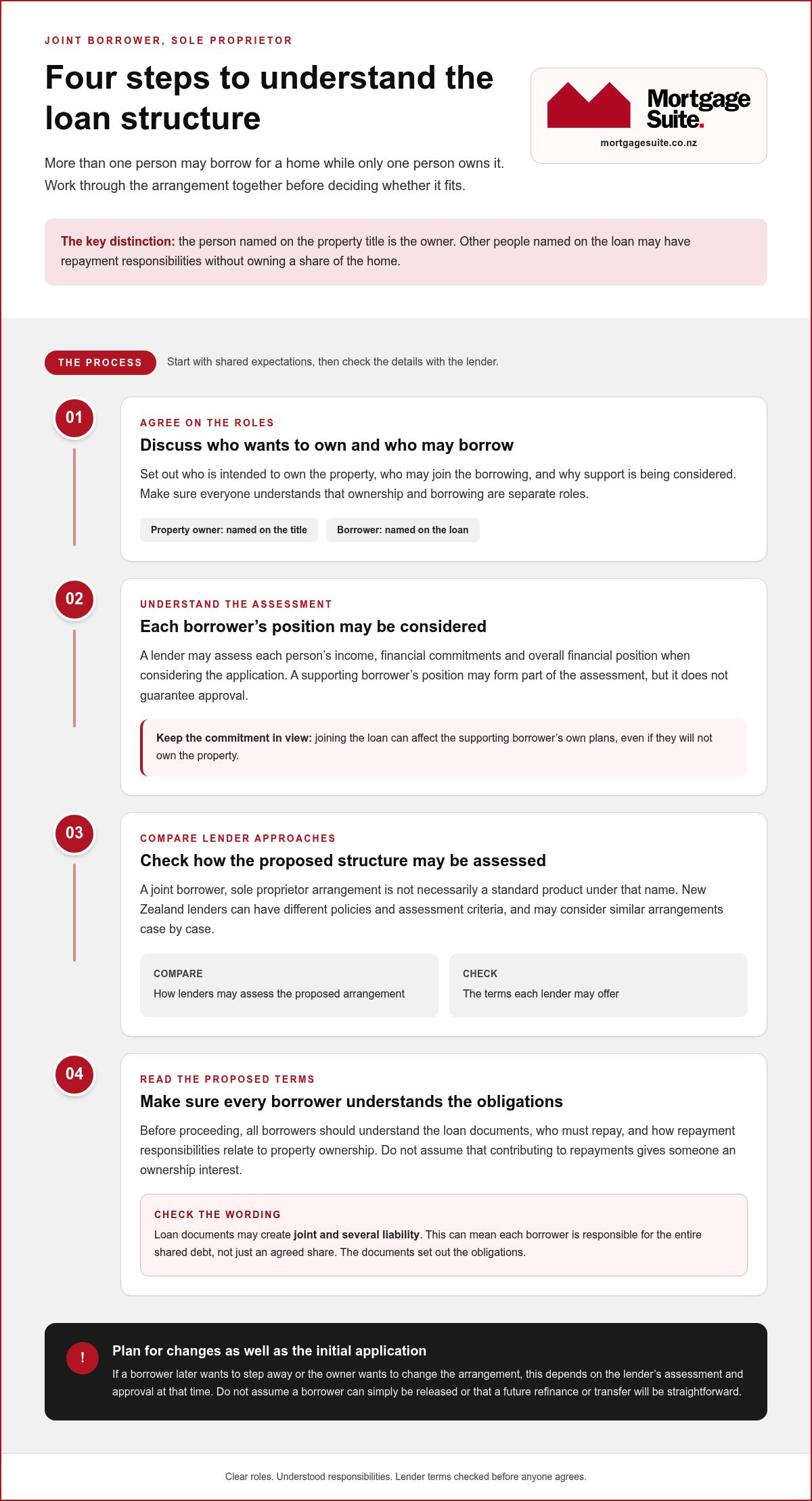
It helps to work through the decision in stages:
- Discuss the goals. Set out who wants to own the property, who may join the borrowing and why support is being considered.
- Assess each borrower. The lender may consider each person’s income, financial commitments and overall financial position when assessing the application.
- Compare lender options. Mortgage Suite can help explore how different lenders may assess the proposed structure and what terms they may offer. Lender approaches can vary.
- Review the proposed terms. Before proceeding, make sure every borrower understands the loan documents, their repayment responsibilities and how those responsibilities relate to ownership.
Who borrows, who owns, and who makes repayments?
The person named as the property owner holds the ownership role. Anyone else named as a borrower may have loan responsibilities even if they aren’t named as an owner. All named borrowers should read and understand the proposed terms before agreeing to the arrangement.
Loan documents set out who must repay and what each borrower is responsible for. They may create joint and several liability, which means each borrower can be responsible for the entire shared debt, not just an agreed share. The documents determine the obligations. Contributing to repayments doesn’t automatically give a borrower an ownership interest in the property.
For example, if a parent joins an adult child’s loan but isn’t named as an owner, the parent’s role as a borrower remains separate from the child’s ownership. Both should understand that difference, including what the loan terms require if repayments become difficult.
What happens if circumstances change later?
Plans can shift. The supporting borrower may want to step away from the loan, or the owner may want to change the arrangement. Removing a borrower or changing responsibility depends on the lender’s assessment and approval at that time. Don’t assume a borrower can simply be released or that a future Refinance or transfer will be straightforward.
Talk through possible changes before choosing a structure. Consider what might happen if the owner’s income changes, the supporting borrower needs to borrow for another purpose, or the family’s plans alter. You can also talk through your home-loan options with Mortgage Suite and consider the lender discussions involved. Approval or a later change can’t be guaranteed, but raising these questions early can help everyone make a more considered decision.
JBSP vs joint ownership vs guarantor: what is the difference?
Family support can take different forms, and the right comparison isn’t just about how much income a lender may consider. Think about who will borrow, who will own the home and what the supporting person is agreeing to do. A joint borrower sole proprietor mortgage nz arrangement separates borrowing and ownership, while joint ownership and guarantor arrangements work differently.
This table gives a general guide. Lender terms and requirements can vary, so the proposed loan documents matter more than the label used to describe an arrangement.
| Arrangement | Who borrows? | Who owns the property? | How is support provided? |
|---|---|---|---|
| JBSP | The owner and one or more other named borrowers | One person is the owner | Additional borrowers join the loan; the lender may consider their financial position. |
| Joint ownership | One or more buyers may borrow, depending on the loan structure | Multiple buyers may own the property, subject to the ownership terms | Buyers may contribute towards the purchase and share ownership. |
| Guarantor arrangement | The main buyer or buyers borrow; the guarantor’s role depends on the lender’s structure | Ownership arrangements are separate from the guarantee | A guarantor may support the lending, for example through a guarantee or additional security, depending on the arrangement. |
How is JBSP different from buying a property together?
With JBSP, one person is intended to own the property, while another person joins the borrowing. With joint ownership, two or more buyers may share ownership under the agreed terms. These are different choices, even if both arrangements involve family members and shared financial support.
Talk through ownership expectations separately from borrowing capacity. If each person wants a share of the home, joint ownership may better reflect that intention. If one buyer wants to own it alone, JBSP may be worth exploring. Neither option is automatically simpler or better for every family.
How is JBSP different from a guarantor arrangement?
In JBSP, the supporting person is an additional borrower named on the loan. A guarantor arrangement may work differently: the person providing support might not join the loan as a borrower, and their role may relate to a guarantee or security. The exact obligations depend on the lender’s structure and documents, so don’t assume the terms are interchangeable.
Before comparing options, identify what kind of support is being offered and what responsibilities come with it. For first-home buyers, comparing these arrangements alongside broader purchase considerations can help clarify the fit; New Zealand first-home loan guidance covers that wider context.
The suitable approach depends on the borrowers’ circumstances, the lender’s criteria and the proposed loan terms. A careful comparison can help your family decide whether the priority is shared ownership, extra borrowing support or a different way to structure the application.
What should borrowers weigh up before choosing a JBSP arrangement?
Family support can make a home-loan plan feel more achievable, but joining a loan is a significant commitment. Before considering a joint borrower sole proprietor mortgage nz arrangement, make sure the supporting borrower understands their potential responsibility for repayments, even if they won’t own or live in the property. Both borrowers should consider whether the arrangement fits their financial goals and future plans.
What questions should the borrowers discuss together?
Have an open conversation before exploring lender options. Agree on what each person expects, and talk through what might happen if someone’s circumstances change. Ownership and occupancy plans are part of that discussion, but they aren’t universal lender rules. The proposed lender’s terms and assessment will matter.
- Who is expected to own the property, and who plans to live there?
- How will repayments be managed, and what’s the plan if one borrower can’t contribute as expected?
- Could the supporting borrower’s own plans change, such as wanting to apply for another loan?
- What would each person hope to do if they later want to change or end the arrangement?
These questions can feel uncomfortable, especially among family, but clear expectations can help prevent misunderstandings later. Don’t assume a verbal agreement changes the responsibilities set out in the loan documents.
What information can help a lender assess the application?
Start with a clear picture of each borrower’s circumstances and what they hope to achieve. Give accurate information about income and existing financial commitments, and be ready to explain the purpose of the proposed arrangement. This helps frame the discussion, but no single detail guarantees an application will be accepted.
- Each borrower’s income and regular commitments.
- The proposed ownership and occupancy plans.
- Each borrower’s goals, including any plans that could affect their ability to contribute over time.
Lenders assess applications using their own criteria and current processes, so requirements can differ. A conversation about the structure can help identify what information a lender needs and how the arrangement may be assessed. Avoid making decisions based only on an initial estimate of borrowing capacity.
It can also help to consider repayments alongside your wider household budget and future plans. Use the mortgage repayment planning calculator to explore repayments without relying on example rates or amounts.
If you’d like support weighing up the structure and lender options, talk with Mortgage Suite about your home-loan plans. The advice is free of charge with no obligation, and approval can’t be promised.
How can Mortgage Suite help you explore a joint borrower sole proprietor mortgage in NZ?
Working out whether family support could help with a home loan can feel like a lot to manage, especially when you’re weighing up ownership, repayments and everyone’s future plans. Mortgage Suite helps clients across New Zealand explore home-loan options with banks, private lenders and non-bank lenders, so you can consider different approaches rather than focus on one lender’s response.
The advice is free of charge with no obligation. You can talk through your circumstances and possible next steps without being promised approval, a particular loan structure or a specific rate.
How does Mortgage Suite help compare lending options?
Mortgage Suite considers your goals and circumstances when exploring lender options. That means looking beyond whether an application fits a particular label: the proposed borrowers, ownership plan, financial position and loan terms all help shape the discussion. Mortgage Suite can help present your situation and negotiate with lenders, while each lender makes its own assessment.
Krish Krishna, Mortgage Suite’s founder and director, brings more than two decades of banking experience and has personally settled well over a billion dollars in residential, commercial and business loans. This experience informs the guidance, but it doesn’t guarantee a lender decision. You can read about Mortgage Suite’s experience and hear from borrowers in Mortgage Suite client reviews.
If you’ve already spoken with a mainstream bank and didn’t get the answer you hoped for, that response doesn’t have to be the final word on your plans. A fresh look at your circumstances may help clarify which options are worth exploring, though each lender will apply its own criteria.
What is a sensible next step if you are considering JBSP?
Before starting a conversation, write down the basics: who would borrow, who would own the property, what support is being considered and what each person expects from the arrangement. Note any concerns about repayment responsibility or possible future changes too. Having these points clear can make it easier to compare a JBSP structure with other home-loan options.
For a joint borrower sole proprietor mortgage nz discussion, Mortgage Suite can help you understand how lender options may fit your situation and what to consider when reviewing proposed terms. The process is a conversation, not a promise of approval. Take the time you need to weigh up the trade-offs, then talk through your home-loan options with Mortgage Suite when you’re ready.
Take the next step with a shared plan
Before moving ahead, set aside time for the prospective owner and supporting borrower to talk candidly about what they each want from the arrangement. Write down the ownership plan, the support being offered and any changes that could affect repayments. This gives you a practical starting point for discussing a joint borrower sole proprietor mortgage nz option, without treating family support as an automatic commitment.
It’s fine to take time to consider whether the arrangement still feels right after you’ve talked through the responsibilities. If your plans or circumstances shift, revisit the conversation before making decisions about a home loan. Clear expectations can help everyone move forward with more confidence.
When you’re ready to discuss your situation, start a conversation about your home-loan plans. Mortgage Suite’s advice is free of charge with no obligation, and you can take the next step at a pace that feels right for you and your family.
Frequently Asked Questions
Is a joint borrower sole proprietor mortgage available in New Zealand?
A joint borrower sole proprietor mortgage nz arrangement may be explored with New Zealand lenders, but don’t assume it’s offered as a standard product under that name. Lenders may describe or assess similar structures differently, and their criteria can change. Mortgage Suite can help explain who wants to own the property and who may join the loan, then explore how lenders could assess the proposed arrangement.
Can my parents help with a home loan without owning the property?
A parent may be considered as an additional borrower while you remain the sole owner, depending on the lender’s criteria and proposed loan terms. For example, a parent could join an application to support their adult child’s home purchase without being named as an owner. Before agreeing, talk through the parent’s repayment responsibilities and how the arrangement may affect their own borrowing plans.
Who is responsible for repayments on a joint borrower sole proprietor mortgage?
The loan agreement sets out each borrower’s repayment responsibilities. If several people sign, check whether each could be held responsible for the full shared debt rather than only a portion. For example, a missed repayment may affect the borrowers, not just the person living in the home. Make sure everyone understands the lender’s terms and knows who will manage payments before signing.
What is the difference between a JBSP mortgage and a joint mortgage?
With a JBSP-style arrangement, several people may borrow while one person owns the property. With joint ownership, multiple buyers may own the home together, subject to the agreed ownership terms. For example, two partners buying a home together may both expect an ownership share, while a family supporter may want to help with borrowing without owning it. Clarify those expectations separately.
Is a JBSP mortgage the same as a guarantor mortgage?
No. A JBSP-style arrangement involves more than one borrower on the loan, while a guarantor may support an application through a different structure. What that support means in practice depends on the lender’s terms. Compare who signs as a borrower, what responsibility the supporting person takes on and whether they have any ownership interest. Don’t rely on the arrangement’s label alone.
Can a supporting borrower be removed from a JBSP mortgage later?
Not automatically. A borrower who wants to leave should expect the lender to assess any proposed change under the loan terms and its process at that time. For instance, the lender may need to consider whether the remaining borrower can manage the loan. Discuss possible future changes before entering the arrangement, and don’t make plans on the assumption that a release will be approved.
Does a joint borrower sole proprietor mortgage guarantee that I can borrow more?
No, adding a borrower doesn’t guarantee a higher borrowing amount or loan approval. The lender assesses the full application under its own criteria, including the circumstances of the people applying and the proposed loan. A supporting borrower’s income may be relevant, but their existing commitments and future borrowing plans matter too. Mortgage Suite can help explore options and negotiate with lenders, but can’t promise an outcome.