
Mortgage refixing strategy NZ: Compare rates and loan types
A mortgage refixing strategy in NZ starts with reviewing your loan six to twelve months before a key fixed term expires. Compare more than the headline rate: consider the loan structure, flexibility and how repayments fit your plans. Staggering fixed-term dates can also help avoid having all your lending refix at once.
It’s understandable to feel unsure when rates and your circumstances can change. A lower rate may look appealing, but the right choice also depends on how much certainty or flexibility you need and when you might need access to funds.
This guide explains how to compare banks and non-bank lenders, weigh fixed, floating and split options, and prepare for a review before your term expires. You’ll also learn how staggered expiry dates can spread decisions over time, helping you plan your mortgage with care.
Key Takeaways
- Compare lenders on structure and flexibility as well as the interest rate, so the loan fits your plans.
- Choose between fixed, floating or split lending by weighing repayment certainty against access to flexibility.
- Start reviewing your mortgage six to twelve months before a key fixed term expires to give yourself time to consider your options.
- Staggering fixed-term dates can prevent all your lending from needing to refix at once.
- Compare current rates by lender and fixed term, then consider how each option affects your repayments and future plans.
1. Comparing banks and non-bank lenders
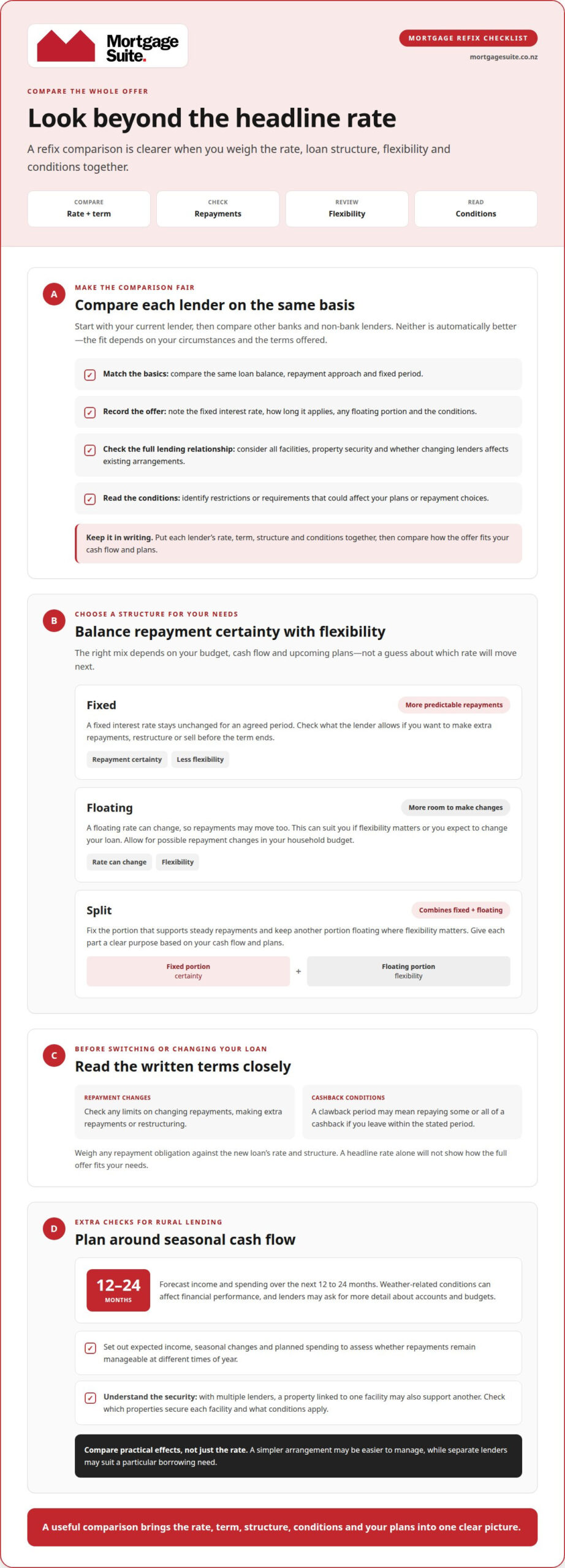
Compare your bank’s refix offer with alternatives by looking beyond the advertised rate. Assess the rate, fixed period, repayment options and conditions together. A lower rate may not suit you if the structure limits flexibility you need. Use the same loan balance and repayment approach when comparing offers, so you can make a like-for-like assessment.
Start with your current lender’s offer, then compare other banks and non-bank lenders. Ask how each option would affect your repayments and loan structure. A non-bank lender may be worth considering when mainstream bank criteria don’t fit your circumstances. Neither type of lender is automatically better: the right comparison depends on your income, security, plans and the terms available.
Use the same checklist for each lender. Record the fixed interest rate, how long it applies, any floating portion and conditions that affect how you manage the loan. Consider whether changing lenders would affect your existing lending arrangements. A headline rate won’t show the full picture if the offer changes your flexibility or requires a different security setup.
- Compare like with like: Match the loan balance, repayment approach and fixed period across offers.
- Read the conditions: Note restrictions or requirements that could affect your plans.
- Review the structure: Check whether fixed and floating portions suit your need for certainty and access.
- Consider the whole lending relationship: Look at how each lender treats all facilities and property security.
Rural borrowers have extra cash-flow factors to weigh. Forecast income and spending over the next 12 to 24 months before choosing a refix. Weather-related conditions can affect financial performance, and lenders may request more detail about accounts and budgets. Prepare a clear view of expected income, seasonal changes and planned spending. This helps you assess whether repayments remain manageable through different parts of the year.
Using multiple lenders for rural lending can also create complex security arrangements, including cross-collateralisation. This means a property linked to one facility may also support another. Before splitting lending across lenders, understand which properties secure each facility and what conditions apply. A simpler arrangement may be easier to manage, while separate lenders may suit a particular borrowing need. Compare the practical effects, not just the rate.
Keep your comparison in writing. Set out each lender’s rate, term, structure and conditions in one place, then identify the option that best fits your cash flow and plans. For rural lending, include the 12 to 24-month forecast. This turns a stressful choice into a clearer decision based on your actual circumstances.
2. Fixed, floating and split mortgage structures
Compare fixed mortgage rates and fees by matching the loan balance, fixed period and repayment type. Read each written offer for rate conditions, fee details and any limits on changing repayments. A headline rate is useful only when the surrounding terms also suit your needs.
A fixed interest rate stays unchanged for an agreed period, making repayments more predictable during that term. That certainty can help if your household budget has little room for unexpected changes. The trade-off is less flexibility: check what the lender allows if you want to make extra repayments, restructure or sell before the term ends.
A floating rate can change, so repayments may move when the lender changes its rate. This option can suit borrowers who value flexibility or expect to make changes to their loan. Factor the possibility of changing repayments into your household budget rather than assuming the current amount will stay the same.
A split structure combines fixed and floating portions. For example, you could fix the part of your loan that supports steady repayments and keep another portion floating for flexibility. Base the split on your cash flow and upcoming plans, not a guess about which rate will move next.
For rural borrowers, a split mortgage can combine a fixed portion of core term debt, a floating portion for flexibility and seasonal facilities for short-term cash-flow swings. This links different parts of the lending to different needs. Consider when income arrives, when expenses fall due and which funds need to remain accessible.
What mortgage refixing strategy suits changing interest rates and household budgets in New Zealand? Choose a fixed portion for repayment certainty and a floating portion where flexibility matters. The balance depends on your cash-flow needs and how much change your budget can absorb.
Cashbacks can affect a decision to refinance, but compare the offer with its conditions. A clawback period may require you to repay some or all of a cashback if you leave within the stated period. Read the written terms before switching, and weigh any repayment obligation against the new loan’s structure and rate.
Keep the comparison practical. Write down each portion’s purpose, rate type, repayment conditions and any relevant fee or cashback terms. Then assess the structure against your budget and plans. A suitable split gives each part of the loan a clear purpose, rather than dividing lending without a reason.
A rural mortgage refix in New Zealand can involve renegotiating the rate and loan structure with your current lender or splitting lending across multiple lenders. In either case, compare how each arrangement serves your cash-flow needs and preserves the flexibility your plans require.
3. Reviewing a mortgage before the fixed term expires
Yes, you can ask your bank to review the rate it offers for your next fixed term. Make a specific request, such as asking whether it can improve the rate or adjust the loan structure. Have your current loan details and preferred terms ready. A clear request gives the bank something practical to respond to.
Before speaking with your lender, prepare a concise snapshot of your mortgage. Include each loan portion, its balance, repayment type and current conditions. Note what you want to change, such as the repayment frequency or the amount you’d like to keep flexible. This helps keep the discussion focused on your needs.
Break fees are charges for ending or changing a fixed loan before its agreed term expires. Early repayment costs may also apply if you repay more than the loan terms allow. Read your loan documents and ask the lender for a written breakdown before making an early change. The terms and calculation determine the amount.
Use the review to check whether your current setup still reflects your circumstances. For example, a change in household income could affect what repayment amount feels manageable. List any planned property or borrowing changes, then consider how they might affect your loan structure. This gives you a practical basis for discussing options with your lender.
You can switch lenders when your fixed term expires. Compare the new lender’s written terms with your existing arrangement, including the steps needed to transfer the loan. Switching can involve charges or other costs, depending on the lending and transfer requirements. Ask for a clear breakdown before deciding, and compare the overall implications rather than focusing only on the rate.
Keep your review notes together. Record the lender’s offer, when it was provided, any conditions and questions that still need answers. If you discuss changes by phone, check the written terms afterwards. This makes it easier to compare what was discussed with the offer you’re being asked to accept.
Before agreeing to a new term, check how the proposed repayments fit your current budget. Consider whether you need the option to make extra repayments or change the structure later. A useful review ends with a clear record of the agreed rate, term, repayment arrangement and applicable conditions.
For rural borrowers in New Zealand, begin reviewing your mortgage six to twelve months before key fixed terms expire. Use that time to gather your loan details, preferred terms and planned changes, then identify what you need the lender to clarify. Setting out these points early can keep the review focused on the choices that matter to your household.
As expiry approaches, revisit the written offer alongside your notes. Check the rate, term, repayment arrangement, conditions and any costs tied to a change or transfer. If anything remains unclear, ask for an explanation in writing before deciding. Keep your decision grounded in what your budget can manage and whether the arrangement provides the flexibility you want.
4. Staggering fixed-term expiry dates
Staggering means arranging fixed loan portions so they expire at different times. Instead of facing a single decision for the whole mortgage, you review each portion as its term ends. This can reduce the impact of a rate rise by preventing all your lending from refixing at once.
The main benefit is spreading rate changes across separate review points. If rates rise before one portion expires, that portion may refix at a higher rate while the others remain on their agreed terms. If rates fall, later expiry dates give you opportunities to consider the rates available then. Staggering spreads exposure; it doesn’t predict or prevent rate movements.
Decide how much of your mortgage to put in each portion by considering your budget and tolerance for repayment changes. A larger portion expiring at once can cause a more noticeable change to repayments. Smaller portions can spread that effect, but mean managing more individual dates and decisions. The right balance is personal, not a standard formula.
Before changing your schedule, map your existing loan portions and their expiry dates. Mark the portion that expires first, then consider whether the next expiry coincides with a planned change in household finances. For instance, if you expect a change in regular income, consider how a refix decision around that time could affect your available budget.
Staggering also has practical trade-offs. Each portion has its own rate, term and review point, so you’ll need to keep clear records. Maintain a loan schedule showing each portion, its expiry date, repayment arrangement and lender terms. A calendar reminder for each review can help you keep decisions distinct and avoid treating the mortgage as one undivided loan.
When a portion approaches expiry, assess it on its own merits. Consider the rate and terms available then, how its repayments fit your budget and whether the remaining portions still have the right schedule. A decision about one portion doesn’t have to dictate the next. Review the whole plan when circumstances change, but tie each refix choice to the portion reaching expiry.
Staggered dates are most useful when you can manage the extra administration and want to avoid concentrating every refix decision at one point. They won’t guarantee a lower rate or smoother repayments in every market. The practical aim is to make each decision manageable and keep future expiry dates visible, so you can approach them with a clear view of your mortgage.
5. What are current NZ mortgage refix rates by bank and fixed term?
Mortgage rates change, so a useful comparison needs the lender’s current offer and the fixed term you’re considering. Rather than relying on a single rate figure, compare the terms available for your loan and confirm how each offer applies to your circumstances. The rate alone won’t show whether the structure suits your budget.
Start with your bank’s current refix offer. Record the rate, fixed period, repayment conditions and date the offer applies. Then compare it with other available offers for the same loan balance and repayment approach. This keeps the comparison fair and helps you spot differences beyond the headline rate.
Fixed terms can have different rates at the same lender. Compare the options side by side using the same loan details. For example, look at the shorter and longer fixed periods available, then consider how each fits your expected budget and plans. Don’t assume a rate for one term applies to another.
A bank’s advertised rate may not be the final offer for every borrower. Your loan details and the lender’s terms affect what you’re offered. Ask for the rate and conditions that apply to your mortgage in writing. Note the date of each offer, so an older figure doesn’t distort your comparison.
Use a simple comparison record with these details:
- Lender: Record which bank or lender made the offer.
- Fixed period: Note the term linked to that rate.
- Loan structure: Include any fixed and floating portions.
- Conditions: Record repayment limits and any relevant offer terms.
- Offer date: Write down when the lender provided the information.
For a clear decision, compare the same fixed period across lenders first, then compare other terms separately. If one offer has a lower rate but tighter repayment conditions, consider whether those limits fit your plans. A household expecting an income change may value flexibility differently from one seeking steady repayments.
Check whether your comparison includes any cashback terms or conditions associated with changing lenders. Read how long those conditions apply and what could happen if you move the loan again. Keep these details separate from the interest rate, so an upfront offer doesn’t distract from the ongoing loan terms.
Before accepting a refix, confirm that the rate, term and conditions match the lender’s written offer. If your current bank’s offer doesn’t meet your needs, use comparable written terms to discuss alternatives. A careful, dated comparison gives you a practical basis for choosing a mortgage structure that fits your budget.
Mortgage Suite: Home Loans to First Home Buyers
Mortgage Suite Ltd offers Home Loans to First Home Buyers, helping you consider your borrowing needs and mortgage structure. If reviewing your finances has raised questions about buying your first home, or you’re weighing a new loan against your household budget, this can be a useful next step.
Bring together your income, regular spending, existing lending and property plans before discussing your options. A clear picture of your finances can help you explore a loan structure suited to your circumstances, rather than focusing only on a headline rate. If a mainstream bank’s decision has left you unsure what to do next, you can explore alternative lending options.
Contact Mortgage Suite Ltd to discuss your home loan needs and possible next steps.
Make your next mortgage decision with confidence
Your next mortgage decision is a chance to make your borrowing fit the priorities ahead. A mortgage refixing strategy in NZ should reflect what you need from your loan and the changes you expect in your household plans. Take a moment to identify what matters most before deciding on your next step.
If you’d value a conversation about your options, discuss your situation and prepare for the decisions ahead. A clear discussion can help you frame the questions that matter and consider a path forward.
Talk through your mortgage options. A thoughtful next step can help you feel more prepared and in control.
Frequently Asked Questions
How does mortgage refixing work in New Zealand?
Refixing means agreeing a new fixed rate and term as your existing fixed term ends. Your lender presents the available options, and you choose a rate period and loan arrangement for the next term. For example, if your home loan has separate portions, you can decide on each as its term comes up. Check the new repayment amount and terms before accepting.
When should I refix my NZ mortgage before the fixed term expires?
Begin reviewing your mortgage six to twelve months before a key fixed term expires. Use that time to gather current loan details, note any changes to income or spending, and consider what repayment amount your budget can manage. For a rural household, include a cash-flow forecast for the next 12 to 24 months. This preparation gives you time to compare options before deciding.
Should I choose a short or long fixed term for a NZ home loan?
Choose a term based on how long you want repayment certainty and whether your plans may change. A longer term keeps the agreed rate in place for longer, while a shorter one brings the next review sooner. For example, if you expect a change in household income or property plans, consider how either term affects your flexibility and budget before choosing.
How do floating, fixed, and split mortgage strategies compare in NZ?
A fixed rate keeps the agreed rate in place for its term; a floating rate can change. A split arrangement combines both, so different loan portions serve different needs. For example, a household seeking predictable repayments could fix most of its lending while keeping a smaller portion flexible for planned changes. Compare repayment conditions and your capacity to manage changing payments before settling on a structure.