
Funding options for property traders in New Zealand
A bank decline doesn’t necessarily end your options: funding for property traders in NZ can come from banks, non-bank lenders or private sources, depending on the project and your circumstances. Most home loan lenders require a minimum deposit of 20% when you’re buying property to trade. Your development experience can also affect which lenders consider your application and how they assess the plan.
It’s understandable to feel unsure when lenders assess projects differently. This guide explains how your experience may affect a lending decision, how bank, non-bank and private finance differ, and how staged construction funding can release money as work progresses. You’ll also learn what lenders may consider, including the project structure, funding needs and construction plan, so you can compare options and prepare practical next steps.
Key Takeaways
- Relevant development experience can strengthen a lending application, but some lenders may also consider less experienced applicants.
- Compare bank, non-bank and private finance by how each option fits your project, funding needs and plans.
- Most home loan lenders require a minimum deposit of 20% when buying property to trade; the equity available and project details also matter.
- Prepare a clear project plan, funding requirements and exit strategy to help lenders assess your application.
- Staged construction funding can release funds in line with building progress, helping match finance to the project timeline.
Lender requirements for developer experience
Development lenders assess experience in different ways. Some prefer borrowers with a relevant development track record, while others may consider applicants with little or no experience. Your background can influence which lenders suit the project, but it’s only one part of the application. Lenders also need to understand what you plan to build, how the work will be managed and how the finance fits the project.
Relevant experience means more than owning or trading property. Completing a townhouse project, for example, may relate directly to another townhouse development. Managing a renovation may be less closely matched to a subdivision. Describe your role in each project, including the decisions you made and the work you oversaw.
If you’re new to development, explain who and what will support the project. Set out who will manage construction, handle design and approvals, and monitor progress. A clear division of responsibilities helps lenders understand how gaps in your own experience will be managed. Be specific to the proposed project instead of relying on general claims about your capability.
Prepare a record of relevant projects, even if you haven’t led a full development before. For each example, note:
- The property type and the work completed, such as a renovation or new build.
- Your role in planning, funding or overseeing the work.
- The outcome and any lessons that will shape the proposed project.
- The professionals or business partners involved in delivery.
Then connect your experience to the proposed project. If you’ve completed a renovation but plan to build several townhouses, explain which skills transfer and where you’ll rely on specialist support. If you haven’t completed a development, show how the project is organised and who brings the necessary experience. This gives lenders a clearer picture than simply saying you’re a first-time developer.
How the First Home Loan deposit fits
A First Home Loan in New Zealand requires a 5% deposit. That figure applies to this home-loan option, not automatically to funding for a property-trading or development project. Keep the purposes distinct when planning your borrowing: a home purchase and a project intended for trading are different finance needs. If you’re considering a First Home Loan, prepare your deposit details and explain the home purchase separately from any development proposal.
Before approaching lenders, match the project type to your experience and document the people, roles and completed work that support your plan. This helps lenders assess the application on its merits, rather than having to guess how the development will be delivered.
Bank, non-bank and private development finance
Funding for property traders in NZ can come from banks, non-bank lenders or private funding sources. Start your comparison with the project’s needs, structure and funding timeline.
Finance provider options
Banks, non-bank lenders and private funders are possible routes for development finance. Compare how each option fits your project, not just the headline interest rate. Consider the loan structure, release of funds, repayment expectations and whether presales are part of the assessment. Some lenders require presales, while other options may be available without them, depending on the project and borrower profile.
The project type matters. Funding may cover land acquisition, residential or commercial development, and staged construction. A townhouse build, apartment project and land subdivision can each have different funding needs and timelines. Set out what the finance must cover, when each amount is needed and how the proposed structure supports delivery. This lets you compare options on more than the interest rate.
Property trading finance application steps
Start with a clear project description: identify the property, planned work and purpose of the funding. Organise the details into a plan lenders can assess. Include the development budget, expected construction stages, funding needed at each stage, and the proposed completion and sale or repayment plan. For a commercial development, explain how its use and intended outcome differ from a residential project.
Next, match your application to the funding approach. If construction funding will be released in stages, show how each request aligns with completed work and the project timeline. If presales form part of your plan, explain their role in the funding picture. Keep the core details consistent across the application, budget and timeline. This helps show how the land, building work and finance fit together.
Loan risks and exit strategies
A property trading loan relies on the project reaching its planned outcome. Delays, changes to building requirements or a slower-than-expected sale can affect repayment timing. Base your plan on the actual work stages, and show how funding needs may change between land acquisition and construction. Staged funding can align releases with construction progress and project timing.
An exit strategy explains how you plan to repay the borrowing. You might sell completed homes or repay from another identified source. Set out the intended route and the steps leading to it, such as completing the build before marketing the property. Consider an alternative if the original sale plan changes. A clear exit strategy links the loan term, project milestones and repayment method.
Use your comparison to identify the funding structure that fits the project, rather than simply choosing the provider that appears quickest. A bank decline doesn’t necessarily end the discussion: non-bank and private funding are also part of New Zealand’s development finance market.
What deposit or equity do NZ lenders require for buying property to trade?
Most home loan lenders in New Zealand require a minimum deposit of 20%. Treat this as a guide for home lending, not a universal deposit rule for every property-trading or development loan. The finance type matters: buying an existing property to hold differs from funding a project involving construction or subdivision. Start by identifying how the lender will assess your purchase and intended work.
A deposit is money you contribute towards a purchase. Equity is the value you own in a property after accounting for lending secured against it. For example, available equity in an existing property could form part of your funding plan. A lender considers the property and proposed borrowing together, rather than treating equity as cash automatically available for the purchase.
For a trading purchase, prepare a clear picture of your contribution and how you’ll fund the balance. Include available cash, any property you may offer as security, meaning an asset the lender may rely on if the loan isn’t repaid, and existing lending secured against that property. If your plan includes later building work, separate the purchase funding from construction costs. This shows how much finance you need at each stage.
Before discussing a deposit figure, map out the parts of the transaction:
- The purchase price and the funds you’ll contribute.
- Any property equity you’re considering and lending already secured against it.
- Whether the project involves a purchase alone, renovation, subdivision or construction.
- How much funding the project needs as each stage begins.
These details help distinguish a residential purchase from development finance. A property bought for resale after renovation may need a different funding structure from land bought for several new homes. The project scope, security offered and your ability to meet repayments all shape how a lender assesses the application. Don’t assume the 20% home-loan benchmark answers the deposit question for every project.
Equity can also affect the overall loan structure. If another property is involved, consider the borrowing already secured against it and what additional security the lender may require. Record each property’s ownership, existing loans and intended role in the project. This makes it easier to explain the source of your contribution and the assets supporting the borrowing.
As a practical next step, prepare a funding summary that separates purchase funds, available equity and later project requirements. Use consistent figures and assumptions in your budget and application. This gives lenders a clear view of your contribution and helps you compare proposed finance by its structure, not just its deposit requirement.
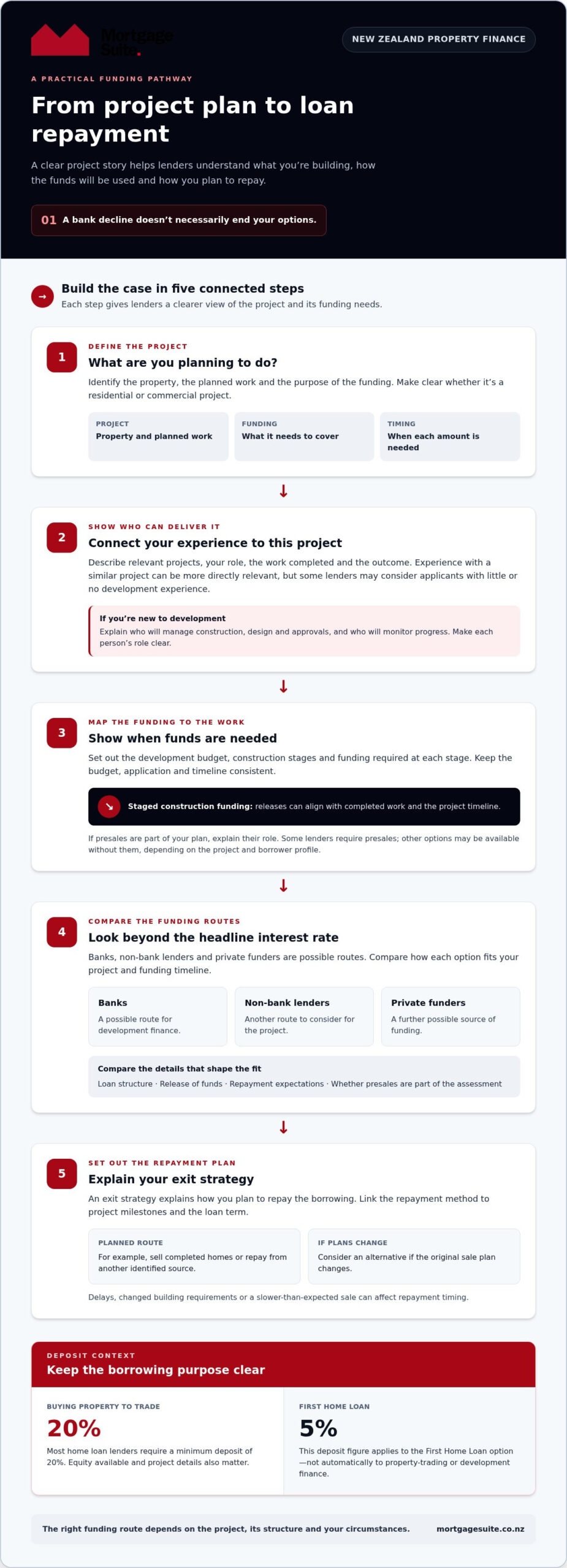
What steps are required to apply for property trading finance in New Zealand?
A well-organised application helps lenders understand the purchase, planned work and repayment plan. For funding for property traders in NZ, prepare the project details first, then present your finances and supporting documents consistently.
- Define the project. Describe the property, what you intend to do with it and the expected outcome. For example, say whether you plan to buy a house for renovation and resale, or acquire land for a development. Separate the purchase from any later building or subdivision work.
- Build a project budget. List the purchase, planned work and other project requirements in clear categories. Show when funds are needed, such as at acquisition or during construction. Keep your figures consistent across the budget, timeline and finance request so the lender can follow the full funding need.
- Set out your contribution and security. Explain where your contribution comes from and identify any property proposed as security. Include details of existing borrowing connected to that property. This lets the lender assess your position alongside the project, rather than viewing the purchase price alone.
- Show how the work will be delivered. Name the people responsible for key tasks, such as design, building and project management. If you’ve completed relevant work before, describe your role and the outcome. For a first development, explain how responsibilities are organised and who will oversee each stage.
- Explain the repayment plan. State how you expect to repay the loan, such as through selling the completed property. Link that plan to the project timeline, including the main steps between purchase and sale. A clear route helps the lender understand how the borrowing fits the project.
Before submitting your application, check that the property details, budget and timeline tell the same story. If the plan changes from renovating one home to building several, update each document. A mismatch between the finance request and project description can make it harder to assess what you’re asking to fund.
Keep supporting records together, including purchase information, project plans, budget details and your financial position. Label documents clearly so lenders can find relevant information without searching through unrelated material. For example, keep property purchase records separate from documents about proposed construction work.
Present the application in the order the project unfolds: acquisition, preparation, building or renovation, then the intended sale or repayment. This gives lenders a practical view of how funds relate to each stage. A tidy, consistent application also makes it easier to compare finance options by structure and project fit.
What are the risks and exit strategy requirements for property trading loans in NZ?
A property trading loan relies on the project reaching its planned outcome. If a renovation takes longer than expected, the sale and repayment dates may also shift. For example, a property bought for renovation may need extra work before it’s ready to sell. Account for these possibilities in your timeline and repayment plan before borrowing.
An exit strategy explains how you intend to repay the loan. Selling the completed property is one possible route; refinancing or another repayment source may also form part of the plan. Describe the steps from purchase to repayment, such as completing the renovation, marketing the property and using sale proceeds to repay the lending. Make sure the plan fits the project and loan structure.
Consider what could disrupt your repayment plan. A building issue, construction delay or slower-than-planned sale can affect when funds become available. In a townhouse development, for example, a delay to one stage may affect later work and the intended sale date. Explain how you’ll respond if the timeline changes, instead of relying on everything happening as planned.
Review the exit plan against these practical points:
- Project milestones: connect each stage of work to the next funding need.
- Sale assumptions: explain what needs to be completed before the property can be marketed.
- Repayment source: identify how the loan will be repaid if the planned sale proceeds arrive later.
- Alternative route: describe a realistic option if the original sale plan changes.
For staged construction funding, align drawdowns with completed building milestones and the project timeline. This shows when funds are needed during construction, rather than treating the whole project as one step. Keep the budget, build schedule and repayment plan consistent. If a change affects one document, update the others too.
Consider how much flexibility your plan has if there’s a delay. If a renovation needs additional work, for example, identify the tasks that must be completed before sale and how they affect repayment timing. A clear explanation helps lenders assess how the proposed loan, project progress and exit route relate. Don’t give a sale date alone: explain the steps needed to make the sale possible.
Before applying, write the primary exit route and the alternative route side by side. Check that both relate to the same property, project scope and finance request. Discuss your property development finance options with Mortgage Suite Ltd when you want help matching the loan structure to your project and repayment plan.
Mortgage Suite Ltd: Home Loans to First Home Buyers
Mortgage Suite Ltd can help match your borrowing needs with a suitable finance option. Its Property Development Funding may suit development projects, while Home Loans for First Home Buyers are designed for a home purchase. These are different borrowing goals, so explain whether you’re buying a home, trading property or funding a development.
Bring your project outline, funding needs and intended repayment plan to the discussion. Mortgage Suite Ltd can talk through finance options that fit your circumstances, including when a mainstream bank’s criteria don’t suit your application. A bank decline doesn’t necessarily end the conversation, but approval depends on the lender’s assessment.
To talk through your next step, contact Mortgage Suite Ltd or visit mortgagesuite.co.nz.
Make your next finance decision with a clear plan
Before taking the next step, decide what a successful outcome looks like for you. Consider how long you’re prepared to hold the property, how much time you can give the project and what you’d do if your plans changed. These priorities can help you judge whether a proposed funding structure supports your goals, not just the immediate purchase.
Use your answers to shape a focused discussion about funding for property traders in NZ. Mortgage Suite Ltd can provide free, no-obligation advice on your borrowing needs and options that fit your circumstances. Clear priorities give the conversation a useful starting point.
Ready to discuss your plans? Contact Mortgage Suite Ltd about your finance options and take the next step when it feels right for you.
Frequently Asked Questions
What funding options are available to property traders in New Zealand?
Funding for property traders in NZ depends partly on whether you plan to resell, hold or develop the property. A property bought to renovate and sell differs from a residential investment property held for rental income. Business or commercial finance may suit projects involving trading activity or commercial property. Be clear about your intended use to help frame the type of borrowing you need.
Which New Zealand banks lend to property traders or property investors?
There isn’t one bank that suits every property trader or project. A lender may assess a property held for rental income differently from one bought for resale, so describe your intended use clearly. Compare how each option fits the ownership structure and purchase purpose, rather than choosing by name alone. This helps focus your enquiries on finance suited to the transaction.
Can property traders in NZ use bridging finance, non-bank lenders, or private loans?
Yes, these options can form part of a property trader’s finance plan. For bridging finance, map out the purchase timing, funds needed and expected repayment event. With private lending, pay close attention to the agreed repayment date, security and conditions for early repayment. Comparing these details helps you understand how each arrangement fits the transaction, beyond whether funds can be provided.
What lending criteria do NZ banks apply to property traders, including income and experience?
Lenders may distinguish regular income from money you expect to receive after selling a project. Keep those figures separate and include existing loan commitments when working out available cash flow. For example, don’t treat a forecast sale price as income already received. This gives a clearer view of what you can meet during the project, before the planned sale or another repayment source comes through.
How do NZ property traders fund renovations, subdivisions, or development projects?
Funding for property traders in NZ should reflect the work included in the project. A renovation may involve improvements to an existing dwelling; a subdivision involves preparing land to create separate lots; a development may include building new homes. State whether your finance request covers the purchase alone or the planned work too. This keeps the funding request aligned with what you intend to complete.