
Second Mortgage for Business NZ: Your 2026 Guide to Unlocking Equity
Why would you sacrifice a record-low mortgage rate just to fund your next business expansion? Many Kiwis assume that using home equity for a business loan in NZ requires a full refinance, but that is a costly mistake that could see you paying thousands more in interest over the long run. It’s a common trap that often stops growth before it even starts.
It is incredibly frustrating when your main bank says no to a business top-up, especially when you know the equity is sitting right there in your property. You have worked hard to secure a competitive rate, and the fear of losing it just to access working capital is a massive hurdle. We understand that you need a steady hand to help you find a way forward that doesn’t involve starting from scratch with a new lender. This guide shows you how to unlock that value through a second mortgage, allowing you to keep your primary loan exactly where it is while still getting the cash you need.
We will break down how second-tier lending actually works in 2026, the current interest rates you can expect from non-bank lenders, and the simple steps to fast-track your application. You will discover how to bridge the gap between traditional banking and your business goals without the usual jargon or delays.
Key Takeaways
- Discover how using home equity for business loan nz lets you tap into your property’s value while keeping your current bank interest rate exactly where it is.
- See why a second mortgage is often a smarter financial move than refinancing, especially when it comes to avoiding high break fees from your main bank.
- Learn exactly what 2nd tier lenders need to see in your business plan, including a solid exit strategy and proof that you can manage the repayments.
- Find out how having two different lenders on your property title works in practice and what happens if you decide to sell your home in the future.
- Understand the value of having a seasoned expert negotiate on your behalf to bridge the gap between rigid bank rules and your business needs.
What exactly is a second mortgage for business in NZ?
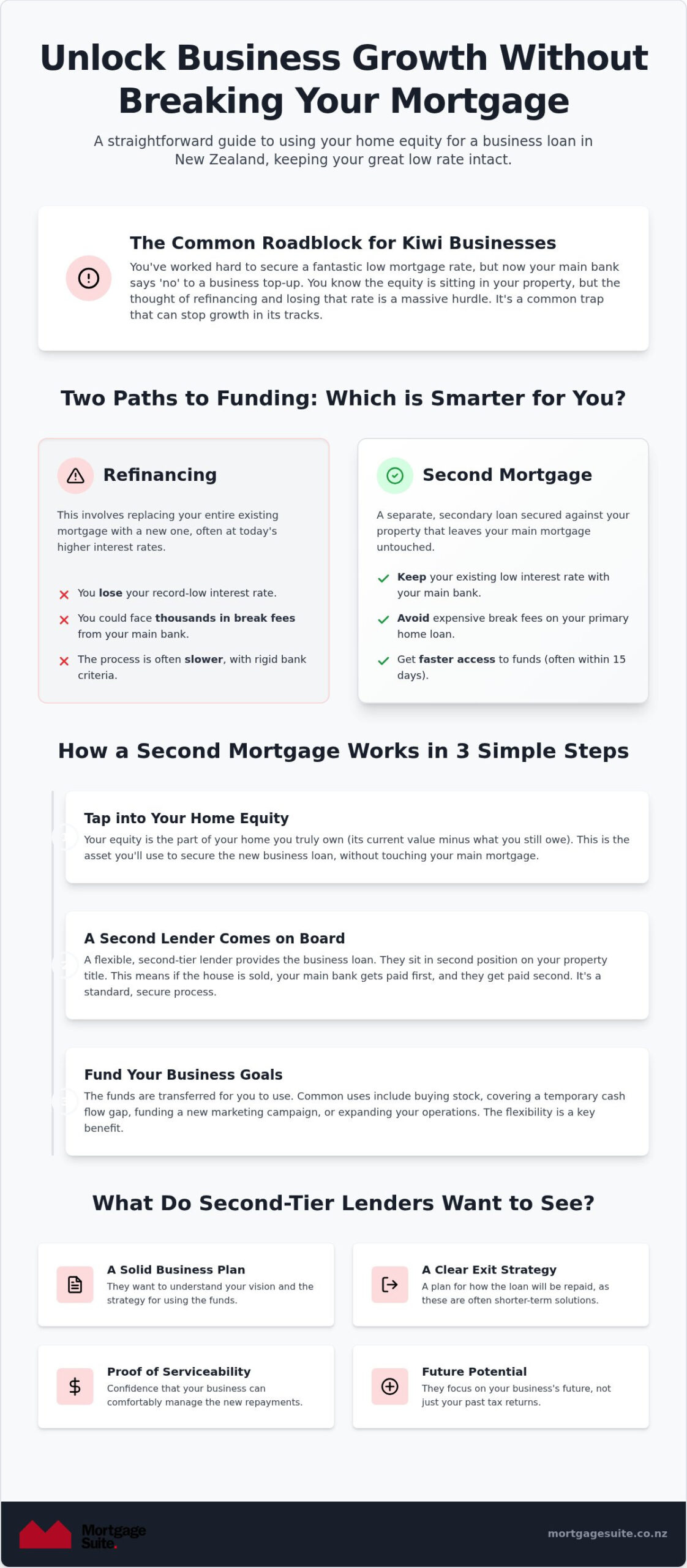
Think of a second mortgage as a way to unlock the value tucked away inside your home’s walls without disturbing the arrangement you already have with your bank. If you have been researching What exactly is a second mortgage, you will find it is essentially a secondary loan secured against your property. In the New Zealand market, this is a strategic tool for entrepreneurs. By using home equity for business loan nz purposes, you are tapping into the difference between what your house is worth and what you still owe the bank. This second loan sits behind your primary mortgage on the property title. This means if the house were ever sold, your main bank gets paid first, and the second lender gets paid next. This ranking is exactly why your main bank does not need to be involved in the new setup, which is a huge win for your wallet.
Tapping into your property equity without the fuss
Equity is simply the portion of your home that you truly own. For many Kiwi business owners, this is their largest financial asset. Instead of letting that value sit idle, you can use it to fund a new marketing push, buy bulk stock, or cover a temporary cash flow gap. A second mortgage is a separate loan that lets you keep your original bank deal while accessing extra funds. This approach is particularly useful if you are currently locked into a low fixed interest rate with a mainstream bank. You won’t have to break your mortgage and pay those eye-watering exit fees just to get a bit of extra capital for your business. Many owners find that using home equity for business loan nz setups is the fastest way to scale without the stress of a full refinance.
Why your main bank might say no (and why that is okay)
Mainstream banks in New Zealand often have very narrow boxes. If your business income fluctuates or you haven’t been trading for three full years, they might give you a flat no. This is where second-tier lenders step in to bridge the gap. These lenders are a vital part of our financial landscape, offering more flexibility than the big banks. They tend to look at the bigger picture, focusing on your business’s future potential and your plan for the future rather than just your past tax returns. It is about finding a solution that fits your specific needs rather than trying to force you into a rigid corporate structure. Working with an expert who understands these alternative paths can turn a bank rejection into a successful funding story.
How a second mortgage works for your Kiwi business
Setting up a second mortgage is like adding a second floor to a house you already own. You have your main bank on the ground floor, and the new lender sits right above them. Both are secured by the same property. When you’re using home equity for business loan nz purposes, it’s vital to remember that these two lenders don’t always talk to each other directly, but they do have a legal ranking. If you decide to sell your property later, your main bank gets their portion first, and the second lender receives the rest. Because they are second in line, these lenders often provide shorter-term solutions, usually ranging from six months to a few years, designed to help you hit a specific business milestone. With many non-bank lenders, you can expect settlement within 15 days, which is much faster than a standard bank top-up.
The “second” in second mortgage explained
A common question we hear is how these two different companies manage the same piece of land. To keep things legal and orderly, your main bank usually needs to provide what is called “consent” for the second loan to be registered. This isn’t a hurdle to be afraid of; it’s just a standard part of the process that ensures everyone is on the same page. If you want to understand the finer details of the legal structure, you can read more about What is a second mortgage and how it functions as a secondary legal claim. Because the second lender takes a slightly higher risk by being second in the queue, they look closely at your business’s ability to pay back the loan quickly. They aren’t looking to be your partner for the next thirty years; they’re here to help you solve a specific problem right now.
What can you actually use the money for?
The beauty of using home equity for business loan nz is the flexibility it offers your company. We often see Kiwi business owners use these funds for several key reasons:
- Equipment and Assets: Buying that new truck or specialised machinery that will double your output.
- Managing Tax Obligations: Clearing IRD payments to avoid heavy penalties and keep your credit record clean.
- Bridging Cash Flow: Covering your overheads while you wait for a massive project invoice to land in your account.
Having a clear purpose for the funds makes the application much smoother. Lenders love seeing that you have a plan to turn that capital into growth. It shows them that you are thinking ahead and managing your risks carefully. If you’re feeling a bit lost about the different types of loans available, our Mortgage School is a great place to brush up on the basics. It’s all about making sure you feel confident and supported before you sign on the dotted line.
Second mortgage vs Refinancing: Which is better for you?
When you need capital for growth, your first instinct might be to ask your bank for a full refinance. However, if you are using home equity for business loan nz purposes, refinancing your entire property can be a costly trap. Refinancing involves paying off your current loan and starting a new one from scratch. If you are currently on a fixed rate, your bank will likely charge “break fees” that can easily reach thousands of NZ dollars. Also, you risk losing a great interest rate of 3% or 4% and being forced to move your entire debt to a current market rate of 7% or 8%. A second mortgage avoids this by acting as a separate, standalone top-up that doesn’t touch your main deal.
Speed is another big factor to consider. Mainstream banks are notoriously slow, often taking weeks to process a full refinance application. Second-tier lenders specialise in being efficient. Because they are mostly looking at the equity in your home and your business plan, they can often settle a second mortgage in a matter of days. When a business opportunity is on the line, that time difference is often the gap between success and a missed chance. To decide which path is right, you just need to compare the total cost of the new interest plus setup fees against the cost of breaking your current bank deal.
Protecting your current low interest rate
Refinancing is often like renovating a whole house just to fix one room. By keeping your primary mortgage exactly as it is, you protect your lowest-cost debt. A second mortgage sits alongside your bank loan, meaning you only pay the higher business rate on the new funds you actually need. This keeps the total interest you pay across both loans much lower than if you moved everything to a higher rate. For a deeper look at how current market shifts might affect your decision, see our Mortgage Rates NZ: Your 2026 Guide. It is about being a steady hand with your finances rather than making a reactive choice that costs you more over time.
Flexibility and control over your debt
Keeping your business and personal debt separate makes life much easier for you and your accountant. When you are using home equity for business loan nz needs, having a distinct loan means the interest is easy to track for tax purposes. You can choose to pay off the business portion aggressively without affecting your long-term home loan structure. It gives you the power to clear the high-interest debt first while your home loan continues as usual. You can even check your potential repayments with our mortgage calculator to see how these two separate loans will fit into your monthly business budget.
Qualifying for business finance: What lenders look for
When you approach a mainstream bank, they often focus on why they should say no. They look at your past tax returns and old credit mistakes. Second-tier lenders operate differently. When you are using home equity for business loan nz, these specialist lenders focus on your future potential rather than just your history. They primarily want to see two things: that you have enough “spare” equity in your property and that you have a realistic plan to pay the money back. In the current 2026 market, most second mortgage lenders will look for a total debt level of around 70% to 75% of your property’s value, which includes your original bank loan.
Your credit history matters far less to these lenders than it does to the big banks. While a bank might decline you for a few missed payments from years ago, a specialist lender is more interested in the security of your house and the strength of your current business. They understand that business owners often face bumps in the road. As long as the equity is there and your business is generating enough cash to handle the monthly interest, you are often in a strong position to qualify.
Your “Exit Plan” is the most important part
A second-tier lender is like a temporary bridge; they help you get from where you are to where you want to be. Because these loans are usually shorter-term, the lender needs to see exactly how you plan to settle the debt. You might plan to sell a specific business asset, use a surge in profits from a new contract, or eventually refinance everything back to a main bank once your business has grown. An exit strategy is simply your roadmap to being debt-free. Having a clear end date makes lenders feel much more confident about approving your application because they can see you aren’t planning to carry this higher-interest debt forever.
Organising your paperwork without the stress
You don’t need a mountain of files to get started, but having the right basics ready will speed up the process. Lenders typically want to see your recent business financial records and a simple summary of what you intend to do with the funds. A letter from your accountant can be a powerful tool here, as it provides a professional second opinion on your business’s health. If you feel unsure about what documents to gather, you can learn more about how we help you prepare in our Mortgage School. If you want a steady hand to help you navigate these requirements and negotiate with lenders on your behalf, reach out to Mortgage Suite for a professional consultation.
Why working with an expert broker makes the difference
Deciding on the right path for your business is a big step, and you don’t have to walk it alone. While the mechanics of using home equity for business loan nz setups are straightforward once explained, the actual negotiation with lenders is where the real work happens. Mortgage Suite Ltd acts as your personal negotiator, standing between you and the lenders to ensure you get a deal that actually serves your growth. Founder Krish Krishna brings over 20 years of banking experience to your side. This “inside knowledge” is a powerful tool because he knows exactly how 2nd tier lenders assess risk and what they need to see to say “yes.”
Many of the best specialist lenders in New Zealand don’t have branches on the high street. They work almost exclusively through trusted brokers. By partnering with us, you gain access to a wide range of funding options that you simply wouldn’t find on your own. We turn what often feels like a cold, corporate interrogation into a professional conversation. Our goal is to present your business story in the best possible light, making sure the lender sees the potential in your plan rather than just a set of numbers on a spreadsheet.
A steady hand in a complex market
The financial market can feel like it’s constantly shifting, but having a veteran in your corner provides a sense of stability. We are committed to finding the “right fit” for your business rather than just the first offer that comes along. We look at the long-term impact of the loan on your cash flow and your home’s security. This personal advocacy is why so many Kiwis trust us to handle their most important financial decisions. You can read what other Kiwi business owners say about us to see how this steady approach has helped them scale with confidence.
Your next steps to business growth
Getting started is much simpler than you might think. The first step is a quick assessment of how much “usable” equity you have in your property. This isn’t a high-pressure sales meeting; it’s a simple, jargon-free chat where we listen to your goals and look at your options. We’ll help you understand exactly what is possible so you can make an informed choice for your company’s future. If you’re ready to see how we can help you bridge the gap between your current bank and your future success, you can meet the team behind Mortgage Suite Ltd and reach out for a kōrero whenever you’re ready.
Take the next step toward your business goals
Unlocking capital doesn’t have to mean sacrificing the low interest rate you’ve worked hard to keep. By choosing a second mortgage, you can access the growth funds you need while leaving your primary bank loan untouched. We have explored how this strategy offers more speed and flexibility than a traditional refinance, provided you have a solid exit plan in place.
When you’re using home equity for business loan nz opportunities, having a veteran on your side makes all the difference. Krish Krishna brings over 20 years of banking experience to your corner, acting as a dedicated negotiator who knows exactly how to navigate the world of 2nd tier and alternative finance. We pride ourselves on providing a personal, no-jargon service that puts your success first. You don’t have to settle for a “no” from the big banks when other professional paths are available.
Ready to see what is possible for your property? Book a friendly chat with Krish and the team today and let’s get your business moving forward. We are here to help you turn that equity into your next big win.
Frequently Asked Questions
Is a second mortgage more expensive than a normal home loan?
Yes, interest rates for second mortgages are generally higher than standard bank rates because the lender sits second in line for repayment. While a main bank rate might be around 6% in 2026, non-bank lenders typically charge between 7% and 13% depending on your specific situation. This extra cost reflects the flexibility they offer. It is a strategic price to pay for fast capital that doesn’t disrupt your primary low-rate home loan.
How much can I borrow for my business using a second mortgage?
Your borrowing limit is mainly determined by the “spare” equity in your property. Most lenders in New Zealand will allow a total debt level, including your original mortgage, of up to 70% or 75% of the property’s current value. For example, if your home is worth $1 million and you owe $500,000, you might access up to $250,000. Using home equity for business loan nz purposes is a great way to unlock these specific funds.
Do I need my main bank’s permission to get a second mortgage?
Yes, your primary bank usually needs to provide formal consent before a second mortgage can be registered on your property title. This is a standard legal step that ensures both lenders understand their ranking. While it might sound complicated, an experienced broker handles this coordination for you. Most banks are familiar with this process and will agree as long as your original loan remains well-secured and your repayments are up to date.
What happens if my business cannot make the repayments?
If your business cannot meet the repayments, your property is ultimately at risk. Because the loan is secured against your home, the lender has the legal right to recover their money through a property sale. However, second-tier lenders prefer a successful exit. This is why we focus so heavily on your “Exit Strategy” during the application. We want to ensure you have a clear, realistic plan to settle the debt without putting your home in danger.
How fast can I get the funds for my business?
You can often access funds much faster than through a traditional bank. While a main bank might take several weeks to approve a top-up, specialist lenders can often provide an indicative answer within 48 hours. Once the paperwork is sorted, settlement can happen in as little as a few days. This speed is vital for Kiwi owners who need to jump on a business opportunity or clear an urgent tax bill without waiting for corporate committees.
Can I get a second mortgage if I am self-employed with inconsistent income?
Yes, being self-employed with a fluctuating income is exactly why many owners choose 2nd tier lenders. Traditional banks often struggle with “non-standard” income, but specialist lenders look at the bigger picture. They focus on the value of your property and your future business potential rather than just your past tax returns. Using home equity for business loan nz is a practical solution for entrepreneurs who have the equity but don’t fit the bank’s rigid boxes.
What is the difference between a second mortgage and a caveat loan?
A second mortgage is a formal loan registered on your property title with your main bank’s consent. A caveat loan is a faster, shorter-term option where the lender places a “caveat” on the title to protect their interest without needing the bank’s formal approval. Caveat loans are usually more expensive and are meant for very urgent, brief periods. We help you weigh up these choices to see which one protects your long-term interests while meeting your immediate needs.
How long do I usually have to pay back a second mortgage for business?
These loans are designed as shorter-term solutions rather than thirty-year commitments. Most business owners use them for periods ranging from six months to three years. The goal is to use the capital to reach a specific milestone, such as finishing a project or increasing turnover. Once you have reached that goal, you typically pay back the loan in full or refinance the debt back into a cheaper, long-term bank mortgage once your financials show more stability.