What if your deposit for investment property nz is not just a savings target, but part of a wider funding plan? For an existing residential rental, current Reserve Bank of New Zealand Loan-to-Value restrictions set a 30% standard deposit benchmark for bank lending. That’s a useful starting point, but it doesn’t mean every buyer’s situation or every lender’s approach is the same.
It’s understandable to feel unsure about how much you’ll need, especially if your savings don’t tell the whole story. Usable equity in your home or another property may contribute, while your income, existing debt, the property type and a lender’s serviceability stress test can all shape the decision. A bank’s criteria can also affect your plan, so it helps to understand your options before committing to a property.
This guide explains what can shape an investment property deposit in New Zealand, how cash savings and property equity may fit into your funding plan, and what to prepare for a lending conversation. Mortgage Suite provides residential investment property loans and can help you understand your position and present your circumstances to bank and private lenders. That gives you a clearer starting point for practical next steps.
Key Takeaways
- Plan your deposit for investment property nz as part of your wider funding strategy, not just as a savings goal.
- Understand how your income, existing lending and the property itself may shape a lender’s assessment.
- Compare cash savings with home equity to see how each could contribute to your deposit plan.
- Gather clear details about your finances and investment goals before discussing borrowing options.
- Mortgage Suite can help you explore deposit requirements, property suitability and potential bank or private lender options.
Deposit for an investment property in NZ: what does it cover?
A deposit is the buyer’s contribution towards a property’s purchase. It may come from savings or another funding source, but having a deposit doesn’t by itself mean a lender will approve the loan. The deposit is one part of a wider assessment that also considers your finances and the property you want to buy.
A deposit is your contribution to the purchase. Loan approval is a separate decision about whether the borrowing and property meet the lender’s criteria.
That distinction can help make sense of the deposit for investment property nz advice you’ll find online. A percentage can give you a starting point, but it isn’t a promise that a particular lender will accept your application.
Why investment property deposits can differ
A lender may assess an investment property differently from a home you plan to live in. The property’s intended use, type and features can affect how the lender views its security and the risk of lending against it. Your circumstances matter too, including your existing lending and ability to manage repayments.
Loan-to-Value restrictions are rules that limit how much a lender can advance compared with a property’s value. The loan-to-value ratio (LVR) compares the loan with the property value, so a larger deposit generally means a lower LVR. In New Zealand, Reserve Bank restrictions affect how banks lend at different LVR levels. Lender policies also shape how those settings apply to individual applications.
These settings and lender criteria can change. A deposit guide you read earlier may not reflect the policy that applies when you’re ready to borrow. Treat online figures as a starting point for planning, rather than a final answer for your own application.
Is there one standard deposit percentage?
No single percentage applies to every borrower, property and lender. Online guides often give a headline figure to help people begin planning. It may reflect one lender’s general approach or a common benchmark, but it can’t account for every detail of your application.
For example, two buyers looking at similar properties could receive different deposit guidance because their financial positions, existing debts or borrowing needs differ. The property itself may also affect a lender’s assessment. A percentage that seems to fit one scenario shouldn’t be treated as a guaranteed minimum for yours.
Use an online percentage as a guidepost. Your actual deposit expectations depend on the lender’s criteria, the applicable Loan-to-Value restrictions and the details of your purchase. If lender requirements change, you may need to adjust your funding plan.
For broader guidance on borrowing for a rental property, explore Mortgage Suite’s Residential Investment Property Loans NZ information. Understanding how the loan is assessed alongside the deposit can help you prepare for a more informed lending conversation.
What affects the deposit a lender may require?
A deposit is only one part of a lender’s assessment. The amount you may need can depend on both the property you’re buying and your financial position. In simple terms, your deposit requirement reflects the lender’s view of the property as security and your ability to manage the borrowing.
Loan-to-Value restrictions set boundaries for how much banks can lend compared with a property’s value, but they don’t decide every part of an application. Lenders also consider their own policies and the full picture of your finances. That’s why two buyers considering similar properties may receive different guidance about the deposit for investment property nz.
How property type and condition can shape lending
A lender needs to assess the property as security for the loan. Its type, condition, location and intended use may influence that assessment, as can the information available about it. The property’s value matters too, because it helps determine how the proposed loan compares with the security being offered.
For instance, an existing property and a newly built home may be considered under different lending policies. That doesn’t guarantee that one will need a smaller deposit. The lender’s criteria and the details of the property and application still matter. A property that needs work, or has features that make it harder to assess or sell, may also prompt closer consideration.
Before settling on a property, gather information that helps explain what you’re buying and how it will be used. This gives a lender a clearer basis for considering its suitability as security, rather than relying on a general deposit estimate.
How income and existing lending fit in
Your income helps a lender assess whether the repayments appear manageable, both now and under its assessment conditions. Existing home loans, personal lending and other financial commitments can affect how much room there is for another loan. A lender may also look at regular expenses and carry out a serviceability stress test, assessing whether repayments could remain manageable if rates were higher.
Expected rent may form part of the assessment, depending on the lender’s policy and the details of the property. But projected rent doesn’t automatically make a smaller deposit acceptable. Rental income is one input. The lender still considers your wider finances, the proposed borrowing and the property’s suitability.
To make a lending conversation more useful, be ready to outline:
- Your income and how it is earned
- Existing loans and regular repayment commitments
- The property type and its intended use
- Any expected rental income and how you arrived at that estimate
- The funds or property equity you may be able to contribute
Looking at these details together can help explain why a deposit figure that works in one scenario may not fit another. Mortgage Suite can discuss your deposit position and property suitability, then present your circumstances to potential bank and private lenders. A bank’s response is one lender’s decision, not necessarily the end of the conversation about possible options.
Cash savings or home equity: how could you fund the deposit?
Your deposit doesn’t have to come from one source. Some buyers use cash savings, some may draw on property equity, and others consider a mix. Each option plays a different role in your plan, so separate money you can readily access from funds that would require new lending.
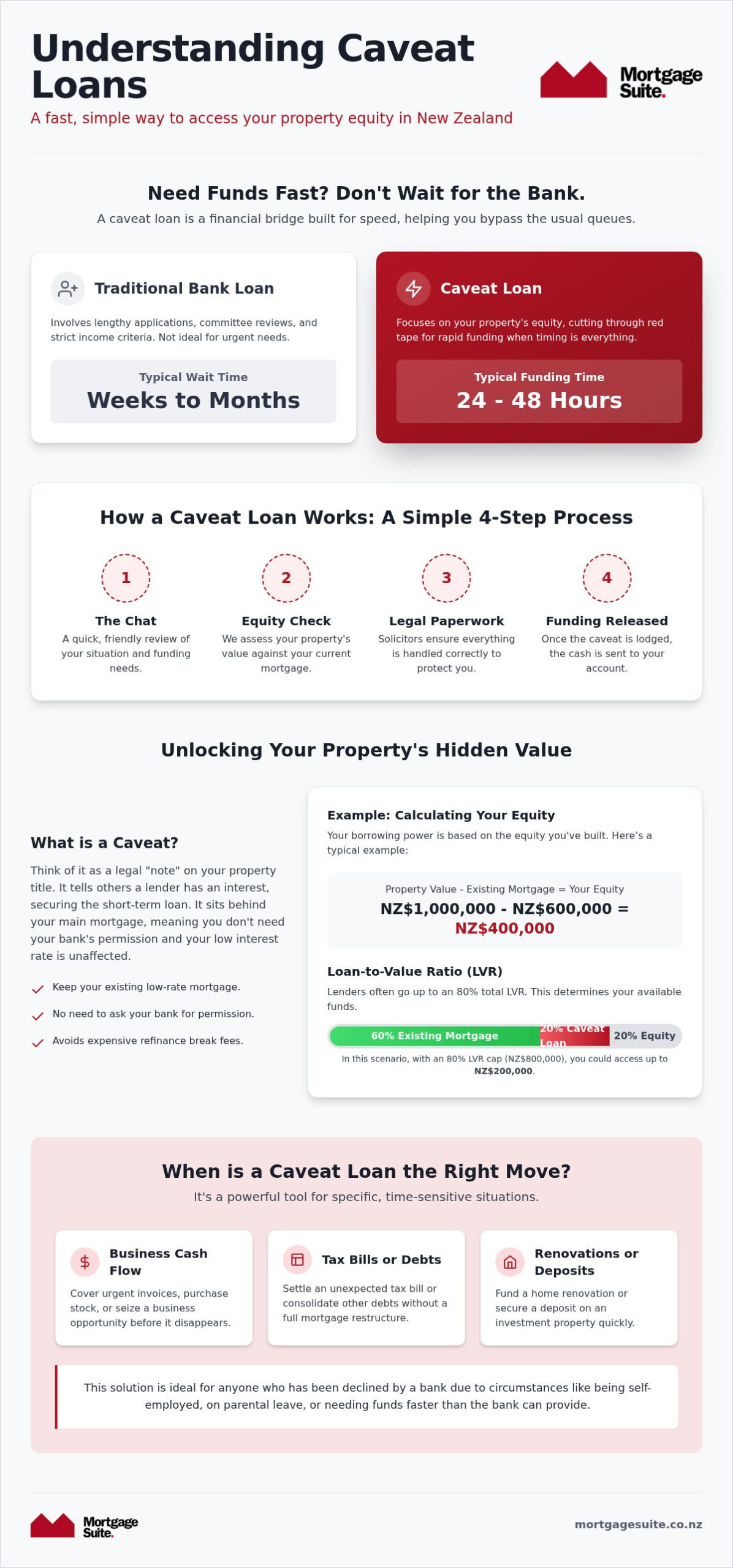
Equity is the difference between a property’s value and the lending secured against it. If a home is worth more than the debt attached to it, the gap is its equity. But that figure isn’t the same as cash in your account, or the amount a lender will let you borrow. Any accessible equity needs to be assessed against the property, existing lending and your ability to manage the extra repayments.
That distinction matters. Using equity may help fund a deposit, but it also means taking on additional borrowing. Your plan needs to account for the resulting repayments as well as the proposed loan for the investment property.
Using savings as a deposit
Savings can be straightforward to map because they’re already held as cash. A clear record of the funds available can help you and the lender understand what contribution you may be able to make. Set out the amount you’re comfortable putting towards the purchase, while keeping separate any money you need for other commitments or a financial buffer.
Organise your figures before discussing a property. Note your available savings, any funds you intend to keep aside, and the amount you’re considering for the deposit. This turns a broad savings balance into a more practical plan, without assuming every dollar should go towards the purchase.
Using equity or combining funding sources
To estimate the equity in a property, subtract the lending secured against it from its current value. That gives you a starting estimate of total equity, not a confirmed borrowing amount. A lender must assess how much, if any, could be made available and whether the additional debt fits your overall borrowing position.
You might, for example, plan to contribute some savings and explore whether approved borrowing against an existing property could provide the rest. This can bring different funding sources together, but it also means considering the repayments and security attached to each loan. Equity isn’t a stand-alone deposit. It’s borrowed money secured against property.
Before relying on equity, map out which property would secure the borrowing, what lending is already attached to it, and how the new repayments could fit your finances. Then compare that option with using savings alone or combining the two. Mortgage Suite can help you understand the questions to raise as you shape your deposit plan.

How to prepare your investment property deposit plan
A clear plan can make the lending conversation feel more manageable. Rather than starting with a property price or a headline deposit figure, work through your goal, available funds, borrowing position and the type of property you’re considering. This helps you see what you know and where you still need guidance.
- Set your goal. Think about why you want a rental property, how it fits your wider financial plans and what kind of property you’re considering. Your goal can help shape the questions you ask about lending and suitability.
- Map your funds. Separate cash savings from potential equity, and note what funds are already committed elsewhere. Don’t count potential equity as cash in hand. It may require separate borrowing and lender approval.
- Review your borrowing position. Summarise your income, current lending, regular repayments and other financial commitments. This gives a lender a clearer view of your overall position.
- Discuss the property. Consider how its type, condition and intended rental use may affect a lender’s assessment of it as security.
Set out your funds and borrowing position
Put the key details in one place before discussing a possible purchase. List savings you could contribute, any equity you may want assessed, existing loans and how you earn your income. Keep funds needed for other commitments separate in your notes, so your plan reflects what you can realistically put towards the purchase.
A mortgage calculator can help you explore possible repayments and compare scenarios, but it isn’t an approval estimate. Mortgage Suite’s mortgage calculator is a planning aid, not a substitute for a lender’s assessment of your finances and the property.
Understand the property before making plans
The same deposit plan may not suit every property. A lender considers the proposed rental use and whether the property is suitable security, alongside your borrowing position. Before committing, compare the property you have in mind with your goals and your capacity to manage the borrowing over time.
Leave room in your plan for the wider commitment, not just the deposit. Consider how repayments would fit your household finances and whether your plans still make sense if circumstances change. You don’t need to have every answer before starting, but clear information helps you have a more focused conversation.
If lending language feels unfamiliar, Mortgage Suite’s plain-English mortgage resources can help you build your understanding. For a personal discussion, Mortgage Suite can help you organise your deposit information and explore potential borrowing routes. Start planning your borrowing with Mortgage Suite, with no obligation.
How Mortgage Suite can help you plan an investment property deposit
Working out a deposit can feel like a moving target when different lenders assess borrowers and properties in different ways. Mortgage Suite provides residential investment property loans and can help you understand the factors at play, consider how your funds might fit together and prepare a clear picture of your position before you commit to a property.
The discussion can cover your savings, potential equity, existing lending and the type of property you’re considering. Mortgage Suite can explain how lenders may view the deposit, consider the property’s suitability and explore borrowing options through its network of bank and private lenders. Each lender makes its own assessment, so exploring possible routes doesn’t guarantee a particular offer or approval.
Personal guidance for different deposit situations
Your starting point might be cash savings, equity in an existing property, or a combination of the two. Mortgage Suite can help you consider how those sources fit into a deposit plan and what questions a lender may raise about your finances, the proposed loan and the property. That’s useful if you’re still comparing properties or want to understand your position before making a commitment.
A mortgage broker can also present your circumstances to potential lenders in a clear, organised way. This gives them the context behind your deposit plan rather than reducing your application to a headline figure. Krish Krishna founded Mortgage Suite in 2000 after 18 years in banking, bringing first-hand experience of lending to these conversations.
A low-pressure next step
A conversation can help you identify what information to prepare, which parts of your plan may need closer assessment and what borrowing routes could be worth exploring. It can’t promise a lending outcome, but it may help you approach the next step with a clearer understanding of your options.
Krish Krishna has arranged well over a billion dollars in residential, commercial and business loans. Mortgage Suite’s brokerage service is free of charge with no obligation, so you can discuss your deposit position without pressure to proceed.
If you’re weighing up the deposit for investment property nz, bring together a summary of your income, existing lending and available funds. That gives the discussion a practical starting point. Discuss your investment property deposit options with Mortgage Suite and explore possible next steps with no obligation.
Take your next step with a clearer plan
You don’t need every detail settled before you begin a lending conversation. Start by identifying what you still need to understand, such as how your chosen property may be assessed or whether your funding plan fits your goals. That gives you a practical focus and turns uncertainty about the deposit for investment property nz into useful questions about your own situation.
A discussion with Mortgage Suite can help you organise those questions and consider possible next steps. It won’t guarantee a lending outcome, but it can give you a clearer view of what information may be useful and where to focus your preparation.
Ready to talk through your plans? Discuss your investment property deposit options with Mortgage Suite. Mortgage Suite’s brokerage service is free of charge with no obligation, so you can take the first step without pressure to proceed.
Frequently Asked Questions
Can I buy an investment property in New Zealand if I do not own a home?
Yes, owning a home first isn’t always a requirement. You’ll still need a deposit and must meet a lender’s assessment of your income, existing commitments and the property you want to buy. A deposit for investment property nz buyers put together may come from savings or another acceptable source, but the lender decides how it will assess your application. Mortgage Suite can help you understand what information to prepare.
Do lenders count expected rent when assessing an investment property loan?
They may include expected rent in their assessment, depending on the lender’s policy and the details of the property. For example, a lender might consider the expected rental income alongside your salary and existing repayments when assessing whether the borrowing is manageable. The rent estimate won’t necessarily be counted in full, and it doesn’t replace the lender’s assessment of your deposit, finances or the property.
Can a family member provide a gifted deposit for an investment property?
A family member may be able to contribute a gift, but whether a lender accepts it depends on that lender’s requirements and your circumstances. Be clear about whether the money is a gift or a loan, as money that must be repaid could affect your borrowing position. Discuss the arrangement with Mortgage Suite and make sure everyone involved understands whether the money is a gift or needs to be repaid.
Is the deposit paid under a sale agreement the same as the mortgage deposit?
Not necessarily. The sale agreement deposit is the amount payable under the purchase contract, while the mortgage deposit refers more broadly to your contribution towards the purchase. The contract deposit may form part of that contribution, but the amounts and payment arrangements depend on the agreement. Before signing, make sure you understand when the contract deposit is due and how it fits with your planned funding.
Will a larger deposit guarantee approval for an investment property loan?
No. A larger deposit may reduce the amount you need to borrow compared with the property’s value, but it doesn’t guarantee approval. Lenders also assess your income, existing debts, regular commitments and the property itself. For instance, a strong deposit won’t resolve every concern if the repayments don’t fit the lender’s assessment. If one lender declines, that decision doesn’t automatically determine what other lending options may be available.
Can I use expected rental income to build my deposit before buying?
You can’t save rent from a property you haven’t bought yet, so projected rent won’t be cash available for your deposit at purchase. If you already receive rent from another property, you may be able to save some of that income over time. A lender may also consider rental income when assessing borrowing, subject to its policy, but that’s separate from having deposit funds ready to contribute.