

Mortgage Broker for First Home Buyers NZ: 2026 Guide

What if the bank you have used since you were a child is actually the biggest hurdle standing between you and your first set of keys? It’s a frustrating reality for many Kiwis who find that mainstream lenders can be surprisingly rigid when it comes to first home loans. If you’re feeling overwhelmed by talk of debt-to-income ratios or worried your deposit isn’t quite large enough, you aren’t alone. Partnering with a specialist mortgage broker for first home buyers NZ can change the entire experience from a stressful chore into a clear, manageable plan.

We understand that the rules have shifted, with the First Home Grant now gone and new 2026 interest rates to consider. This guide explains how to navigate the current market with a seasoned mentor like Krish Krishna, who uses over twenty years of banking experience to advocate for you. You’ll learn how to access the best possible rates, simplify KiwiSaver withdrawals, and discover lending options that look beyond the standard bank criteria. We’re here to handle the paperwork and the tough negotiations so you can focus on finding the right place to call home with complete confidence.

Key Takeaways

  • Learn why the old First Home Grant is gone and how the 2026 market actually makes it easier for you to secure a home with a 5% deposit.
  • Discover how a specialist mortgage broker for first home buyers NZ acts as your personal advocate to find the best rates across multiple lenders.
  • Understand why staying loyal to your current bank might cost you thousands and how to package your application so lenders see your true potential.
  • Get a clear plan to organise your KiwiSaver withdrawal and navigate the latest government rules without the usual stress or confusion.
  • Find out how having a mentor with 20 years of banking experience helps you secure a loan even if the big banks have previously turned you away.

Why navigating the NZ property market feels like a maze for first-home buyers

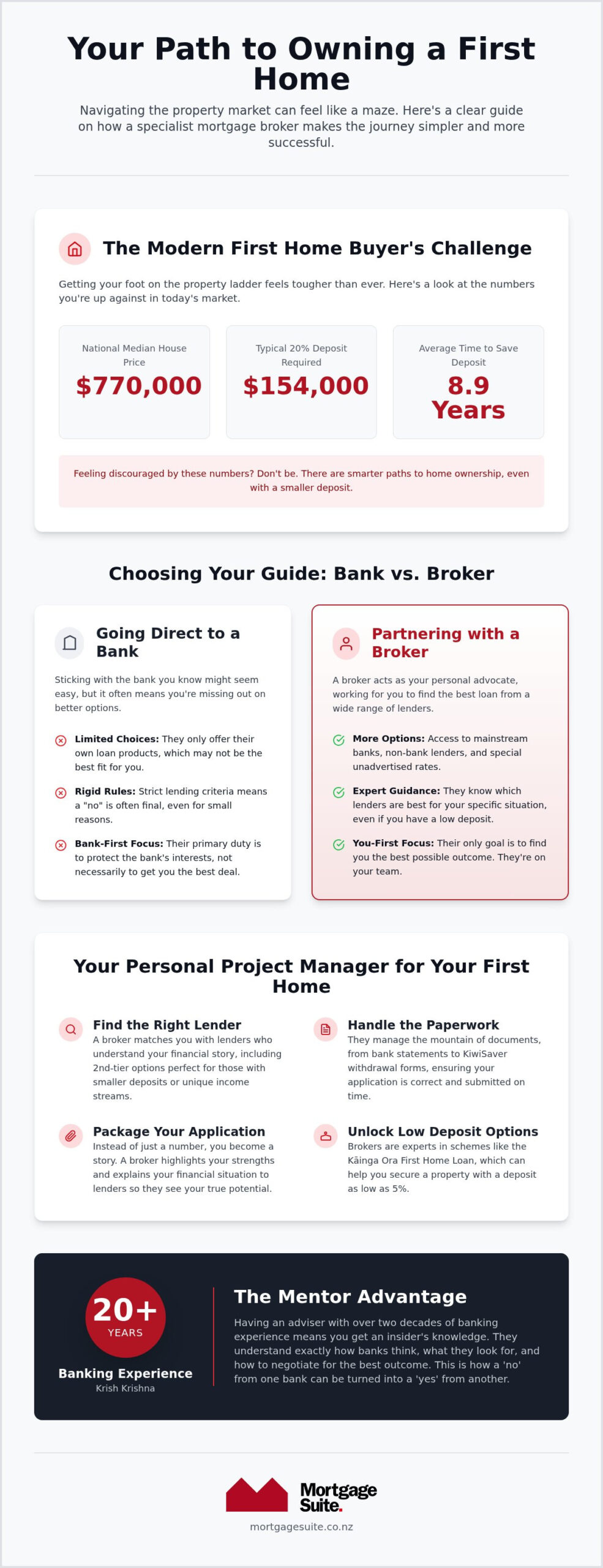
The property market in 2026 is moving sideways, but that doesn’t make it any less daunting for those trying to get a foot in the door. With the national median house price sitting at $770,000, the entry point for most people remains a massive hurdle. You might find yourself scrolling through endless listings, wondering if your savings will ever be enough. It’s an emotional rollercoaster where one minute you’re excited about an open home and the next you’re worried about missing out. Trying to handle this process alone often leads to missed opportunities or higher costs because you might not know which lenders are offering the best deals behind the scenes. Understanding what is a mortgage broker? is the first step in realising you don’t have to face the banks by yourself. A dedicated mortgage broker for first home buyers NZ acts as your guide through this maze, ensuring you have the right insider knowledge to move forward.

The challenge of saving a deposit today

Most banks still look for a 20% deposit, which on a median-priced home means finding $154,000. That’s a huge sum that can feel out of reach. While the average time to save this amount is currently around 8.9 years, many people are looking for faster ways into their first home. You might be considering a 5% deposit through the Kāinga Ora First Home Loan or looking at family assistance to bridge the gap. House price fluctuations can also move the goalposts just as you think you’re getting close to your target. Using a mortgage calculator can help you see exactly where you stand, but the real trick is knowing which lenders are currently more flexible with their low-deposit rules.

Why bank criteria can feel like a moving target

Banks have become incredibly picky about how you spend your money. They don’t just look at what you earn; they scrutinise your debt and your daily spending habits to decide if you’re a safe bet. With the Official Cash Rate at 2.25%, interest rates have stabilised, but banks still test your ability to pay at much higher “stress” rates. This can slash your borrowing power overnight. If one bank says no because of a small credit card debt or your specific income level, it’s easy to feel defeated. However, a “no” is often just a sign that you’re talking to the wrong lender. Different banks have different appetites for risk, and a specialist mortgage broker for first home buyers NZ knows exactly which door to knock on to get you a “yes”. This is where having a mentor who understands the inner workings of the banking system makes all the difference.

How a mortgage broker helps you secure your first home

Think of a mortgage broker for first home buyers NZ as a personal project manager for the biggest purchase you’ll ever make. While a bank officer’s primary job is to protect the bank’s interests, a broker’s only goal is to look after yours. They take the “maze” of the property market and turn it into a clear, step-by-step path. Instead of just passing your details through a computer, they package your application to highlight your strengths. This might mean explaining a temporary dip in savings or showcasing your career potential to a lender who will actually listen. They act as your voice, making sure your story is told in a way that makes sense to the people holding the purse strings.

Managing the mountains of paperwork is another huge part of the service. Between proof of income, bank statements, and legal documents, the process can feel like a full-time job. Your broker handles the heavy lifting, organising the files and ensuring everything is submitted correctly the first time. This prevents the delays that often cause first-home buyers to miss out on their dream property. By providing a bridge between rigid bank rules and your personal situation, they give you the best possible chance of a “yes”.

Access to a wider range of lenders

Most people only think about the big mainstream banks they see on the high street. However, a broker has access to a much wider range of lenders, including 2nd tier options that often have more flexible rules. If you have a smaller deposit, they can help you navigate the First Home Loan scheme, which allows eligible buyers to get started with just 5% down. Brokers also see “special” rates and deals that aren’t always advertised to the general public. Having more options naturally leads to better outcomes because you aren’t forced to accept the first offer that comes your way.

The unseen work: negotiation and follow-up

The real magic happens during the negotiation phase. A broker doesn’t just accept the first interest rate a bank offers; they use their industry reputation to fight for a better deal. This includes pushing for lower rates and better cash-back offers that can help with your moving costs. They also dig into the fine print of loan conditions to ensure there aren’t any nasty surprises down the track. Because they handle the constant follow-ups and back-and-forth emails, you can stay focused on finding the right house. If you’re curious about how this personalised support has helped others, you can read about our clients’ experiences and see the results for yourself.

Choosing between a bank and a mortgage broker

When you walk into your local bank branch, you’re essentially talking to a salesperson for one specific company. They can only offer you the products sitting on their own shelf, regardless of whether a better deal exists across the street. In contrast, a mortgage broker for first home buyers NZ looks at the entire 2026 mortgage market to find a fit that actually suits your life. It’s the difference between a transactional chat and a personalised partnership. Many people believe that staying loyal to the bank they’ve used for years will earn them a “mate’s rate,” but the reality is often the opposite. Banks frequently reserve their most aggressive interest rates for new customers, leaving long-term clients on standard terms.

You might be wondering how this service fits into your budget. The good news is that brokers are typically paid a commission by the lender once your loan settles. This means you get expert advice, high-level negotiation, and a dedicated advocate without having to pay an upfront fee yourself. With the Official Cash Rate currently at 2.25%, having someone who can scan every bank’s response to wholesale costs gives you a massive advantage. You aren’t just getting a loan; you’re getting a bird’s-eye view of the national property scene.

The limitations of going direct to your bank

A bank’s main goal is to see if you fit their specific “box.” If your situation is even slightly unusual, they might decline your application. This can be risky because every formal decline can leave a mark on your credit record, making it harder to get an approval elsewhere. Banks also won’t go out of their way to help you coordinate your KiwiSaver withdrawal or explain the finer details of government support. They expect you to have it all figured out before you sit down. A broker fills these gaps, ensuring you don’t miss out on support just because a bank teller didn’t mention it.

The broker advantage: a long-term partnership

The relationship doesn’t end the day you get your keys. A great broker provides ongoing support, helping you manage your loan as your life changes. Whether it’s time to refix your mortgage or you’re looking to renovate down the track, you’ll have a mentor who already knows your history. This long-term focus is why so many people choose this path. You can read our reviews to see how this steady, professional guidance has helped other Kiwis move from renting to owning with far less stress.
Mortgage Broker for First Home Buyers NZ: 2026 Guide

Getting your finances ready for a home loan application

Preparing your finances for a home loan is like training for a marathon. You wouldn’t turn up to the start line without putting in the work first. Banks in 2026 are more thorough than ever, looking closely at your debt-to-income ratio, which is currently capped at six times your annual earnings. This means every dollar of debt and every bit of spending counts. A mortgage broker for first home buyers NZ can help you tidy up your accounts months before you apply, making sure you look like the ideal candidate when the bank finally opens your file.

Your first step is to get a realistic view of your numbers. Using a Mortgage Calculator helps you understand how your income translates into a weekly or fortnightly payment. Once you have a budget in mind, you can start gathering your essential documents. You’ll need at least three months of pay slips and six months of bank statements to show a steady history. Having these ready early prevents a last-minute scramble when you find a house you love.

KiwiSaver and government assistance

KiwiSaver is often the biggest part of a first-home deposit. You can typically withdraw your savings and your employer’s contributions as long as you leave a $1,000 balance. It’s vital to check with your provider early to see exactly how much you can access. You also need to be aware that the old First Home Grant was permanently closed in May 2024. Today, the primary support is the Kāinga Ora First Home Loan, which allows eligible buyers to purchase with just a 5% deposit. For a full breakdown of these rules, our guide on Home Loans for First Home Buyers covers everything you need to know about current government support.

Proving you are a reliable borrower

Lenders look at “account conduct” to see how you handle your money day-to-day. If your bank statements show constant use of Buy Now Pay Later services or small, recurring debts, it can signal that you’re living beyond your means. Try to clear these small balances and close unused credit cards at least three to six months before applying. Banks also want to see that you can handle interest rate changes. Even though the OCR is stable at 2.25%, they’ll test your ability to pay at much higher rates to ensure you’re safe. If you have gaps in your employment or you’re self-employed, a mortgage broker for first home buyers NZ knows how to explain these situations to a lender so they don’t count against you. If you’re ready to see how your finances stack up, you can start your journey here with a quick chat about your goals.

Finding the right path to your first home with Mortgage Suite

Krish Krishna brings something special to the table. Having spent more than two decades working within the banking sector, he understands exactly what lenders are looking for when they review an application. He knows the “inner workings” that banks don’t usually share with the public, and he uses that knowledge to your advantage. This level of insight is vital when you’re looking for a mortgage broker for first home buyers NZ. We provide a national service across the country, ensuring every Kiwi has access to high-level expertise regardless of where they are looking to buy. Our approach is built on trust and a genuine desire to see you succeed in the 2026 property market.

When the big banks say no: 2nd tier lending

Many people believe that a rejection from a mainstream bank means their dream of home ownership is over. In reality, it often just means you need a more flexible lender. We specialise in finding solutions for “non-standard” borrowers who might be self-employed or have a unique financial history that doesn’t fit the standard bank mould. This is where 2nd tier loans come into play. These are provided by reputable lenders who look at the bigger picture rather than just ticking boxes. Our 2nd Tier Lender Guide explains how these options can help you get across the line when the traditional banks aren’t an option. We’re here to find the path that works for your specific situation, even if you’ve been turned away elsewhere.

Starting your journey with us

Your first conversation with a Mortgage Suite broker will feel like a helpful chat with a mentor rather than a formal interview. We pride ourselves on being a jargon-free zone because clarity is the key to making good decisions. You won’t hear us using confusing industry shorthand; instead, we’ll explain your options in plain English. Our goal is to remove the obstacles that stand in your way and handle the complex negotiations on your behalf. You can learn more About Us to see how our philosophy of partnership makes the entire process feel personal and supportive. We’re committed to being the steady hand you need to secure your first New Zealand property with confidence, handling the details so you can focus on your future.

Take the first step toward your new front door

Buying your first home in the 2026 market doesn’t have to be a solo struggle. We’ve explored how a dedicated mortgage broker for first home buyers NZ can simplify the process by handling the heavy lifting, from managing paperwork to negotiating better rates. Remember that being ready means more than just having a deposit; it’s about tidying up your accounts and knowing which government schemes actually apply to you today. Even if the big banks have said no, alternative lending options can provide a way forward that you might not have considered.

Our team brings over 20 years of banking and finance experience to your side, offering a national service that puts your success first. We specialise in alternative and 2nd tier lending to ensure that every Kiwi has a fair shot at owning their own place. If you’re ready to move from scrolling through listings to signing a contract, we’re here to help you navigate every turn. Book a friendly chat with our team today and let’s get your journey started. You’ve worked hard for this, and the keys to your first home are closer than you think.

Frequently Asked Questions

How much does it cost to use a mortgage broker for a first home in NZ?

Most brokers don’t charge you a fee because the lender pays them a commission after your loan is finalised. This means you get professional advice and negotiation at no cost to you. It is a great way to have an expert on your side without adding to your expenses. Some brokers might charge for very complex cases, so it’s always best to ask how they work during your first chat.

Can I get a home loan with only a 5% deposit?

You can definitely buy a home with a 5% deposit through the Kāinga Ora First Home Loan. This scheme is designed for buyers who have a smaller deposit but can afford regular repayments. To qualify in 2026, your household income needs to be under $95,000 for a single buyer or $150,000 for couples. A mortgage broker for first home buyers NZ can check your eligibility and help you apply.

How long does the mortgage application process usually take?

Getting a pre-approval usually takes between five and ten working days once all your documents are submitted. However, this can change depending on how busy the banks are or if your situation is more complex. Having your pay slips and bank statements organised beforehand will speed things up significantly. Your broker will keep you updated every step of the way so you aren’t left wondering what is happening with your application.

Do I need to be in the same city as my mortgage broker?

You don’t need to be in the same city as your broker because we offer a national service across all of New Zealand. Most of the process happens via phone, email, or video calls, which makes it much easier to fit into your busy schedule. Whether you are looking at a property in the North Island or the South Island, we can handle the negotiations and paperwork from our central office.

What happens if my bank declines my home loan application?

A decline from a mainstream bank isn’t the end of your journey. It often just means that specific lender’s rules don’t fit your current situation. We specialise in looking at alternative options, including 2nd tier lenders who have more flexible criteria for first-home buyers. We can also help you identify what needs to change in your spending habits so you can reapply with confidence in a few months.

Can a mortgage broker help me with my KiwiSaver withdrawal?

Yes, a mortgage broker for first home buyers NZ will guide you through the process of withdrawing your KiwiSaver funds. While we don’t manage the funds ourselves, we help you coordinate the timing with your lawyer and your provider. This ensures the money is ready for your deposit exactly when you need it. We make sure you have the right forms and understand the timeframes involved in the withdrawal.

What is the difference between a fixed and floating interest rate?

A fixed rate stays the same for a set period, like one or two years, which gives you the certainty of knowing exactly what your repayments will be. A floating or variable rate can go up or down based on market changes. Floating rates offer more flexibility if you want to make extra payments without a penalty. Many buyers choose to split their loan between both options to get the best of both worlds.

How much can I borrow based on my current income?

Lenders generally cap your borrowing at six times your annual household income under current debt-to-income rules. For example, if your household earns $120,000 a year, your maximum loan would typically be $720,000. Banks also look at your existing debts and daily spending to ensure you can comfortably afford the repayments if interest rates rise. We can run the numbers for you to give you a clear and realistic budget.

Article by

Krish Krishna

Experienced Financial Adviser with over 46 years of Banking and Mortgage broking experience and over $2.0 Billion in loan settlements.

Buying Land and Building a House in NZ: Your Step-by-Step 2026 Guide

You’ve likely spent months scrolling through floor plans and dream kitchen designs, but the most important blueprint for your new home isn’t the one drawn by an architect; it’s the one drafted by your lender. Buying land and building a house nz can feel like a mountain of paperwork and hidden “gotchas,” especially when you start hearing about development contributions or complex loan drawdowns. It’s completely normal to feel a bit overwhelmed by the fear of costs spiralling out of control or the worry that a mainstream bank might turn you down just because your situation doesn’t fit their standard box.

We believe you deserve more than just a loan; you need the peace of mind that comes from having a seasoned expert in your corner. At Mortgage Suite Ltd, we specialise in helping you navigate the 2026 landscape, from managing the latest building levy changes to mastering the stage-by-stage payment process. This guide is designed to strip away the confusion and show you exactly how to secure your section and unlock the specialised construction finance required to finally get the keys to a place you call home.

Key Takeaways

  • Get your finance pre-approved before you start looking at sections so you can bid with the confidence of knowing your true spending limit.
  • Understand the unique stages of buying land and building a house nz, including how “progressive drawdowns” keep your build moving from the slab to the final sign-off.
  • Identify potential hidden expenses like council development contributions early on to ensure your budget remains realistic and stress-free.
  • Explore how second-tier lenders can provide a vital lifeline for your project if the mainstream banks aren’t willing to help.
  • Learn how an expert broker acts as your personal negotiator to streamline the complex communication between you, your builder, and the bank.

Is Buying Land and Building a House in NZ Right for You?

Deciding between an existing property and a fresh start is the first major hurdle you’ll face. While an older home offers the convenience of moving in next month, buying land and building a house nz provides a blank canvas to create a space that actually works for your family. It’s a choice between the “what you see is what you get” reality of the current market and the long-term satisfaction of a home designed specifically for your lifestyle. In 2026, this decision carries even more weight as building standards continue to evolve, making new homes significantly more efficient than those built even a decade ago.

Buying a section means engaging with New Zealand’s land registration system, a process that ensures your ownership is legally secure and clearly documented. However, the physical reality of that dirt is what really matters for your wallet. The slope of the land, the soil type, and how easily you can connect to water and power will dictate your entire build budget. We often see people fall in love with a view, only to realise later that the cost of the foundations will eat up half their kitchen budget. It’s about balancing your vision with the practicalities of the site.

The Pros of Starting from Scratch

The most obvious benefit is customisation. You aren’t trying to fit your life into someone else’s old floor plan; you’re building for the way you live now. Beyond the layout, a new build in 2026 means your home will be warmer, drier, and healthier. Modern building codes require high-performance insulation and double glazing that older Kiwi homes simply can’t match. You’ll also enjoy much lower maintenance costs in those first ten years. Most builders provide a Master Build guarantee, giving you a steady hand to rely on if any structural issues arise, which offers a level of peace of mind you won’t get with a 1970s bungalow.

The Challenges to Keep in Mind

Building isn’t without its hurdles, and timeline uncertainty is the biggest one. Weather delays, council consent hold-ups, and material supply shifts can push your move-in date out by months. Financially, it’s also more complex than a standard mortgage. You’ll likely be managing interest on your land loan while also preparing for progressive payments as the house goes up. This is why we always insist on a healthy contingency fund. We recommend setting aside at least 10% to 15% of your total build cost to cover those unexpected “site works” or price adjustments that often pop up once the diggers start moving dirt. Being prepared for these shifts makes the process a lot less stressful.

The 5 Essential Steps to Buying Land and Starting Your Build

While many people start their journey by driving through new subdivisions on a Sunday afternoon, the real work begins much earlier. To succeed when buying land and building a house nz, you need a logical plan that protects your bank account and your sanity. Following a structured path ensures you don’t fall in love with a section you can’t afford or a design that a lender simply won’t back. It starts with your budget and ends with the first shovel in the ground.

  • Step 1: Get your finance sorted. Before looking at dirt, you must know your borrowing limit. Banks typically require a 20% deposit for urban land, but this can jump to 50% for rural blocks. Knowing these numbers early prevents heartbreak later.
  • Step 2: Find the right section. Look beyond the view. Consider the sun’s path, the slope of the land, and how much “site work” will be needed before the slab can even be poured.
  • Step 3: Perform due diligence. This is the investigation phase. You’ll need to check the title, the council files, and the physical state of the ground.
  • Step 4: Select your partners. You need to find a qualified builder who understands your vision and, more importantly, your budget. A solid reputation is worth more than the lowest quote.
  • Step 5: Finalise the loan. Once you have a fixed-price contract, your broker can secure the construction finance, allowing for the first drawdown to pay for the initial stages of work.

If the numbers feel a bit daunting, remember that you don’t have to crunch them alone. A quick chat to the team at Mortgage Suite Ltd to organise your pre-approval can clarify exactly where you stand before you sign any contracts.

Due Diligence: What to Check Before You Sign

In New Zealand, a Geotech report is a non-negotiable. Our varied landscape means one section might be solid rock while the neighbour’s is soft clay; this report tells your builder exactly how deep the foundations need to go. You should also examine the Land Title for easements, which are legal rights for others to use part of your land, or covenants that might restrict what colour you can paint your roof. Finally, check that services like water, power, and high-speed fibre are already at the boundary, as bringing these in from the street can cost a small fortune.

Choosing Your Build Method

You generally have two paths: a house and land package or a standalone build. Packages are often simpler because the developer has already handled the consents and basic design. However, if you’re building on your own bare land, you’ll likely need a fixed-price contract. Lenders in 2026 are very cautious about cost-plus arrangements where the price can float. They want to see exactly what the final bill will be before they agree to the loan, which protects you from nasty surprises halfway through the project.

Buying a finished home is a lot like buying a car; you pay the price and drive it away. However, buying land and building a house nz is more like a subscription service where you pay as you go. A construction loan is fundamentally different from a standard mortgage because the bank doesn’t give you all the money at once. Instead, they release funds in chunks, known as “drawdowns,” only after specific milestones are reached on-site. This keeps the project on track and ensures the bank isn’t lending more than what the property is currently worth at any given moment.

The “progressive drawdown” process usually follows the natural rhythm of your build. You’ll start with an initial payment for the land, followed by stages like the floor slab, the wall framing, the roof, and the final interior fit-out. Before the bank pays out each stage, they’ll want to see an invoice from your builder. Sometimes, they’ll even send a valuer to the site to check that the house actually has a roof before they pay for one. This methodical approach might feel like extra paperwork, but it’s a safety net that ensures your builder is being paid for work actually completed. For more details on homeowner rights during this phase, the official government guide to building is a great resource to have on hand.

One of the best features of these loans is that they are typically interest-only during the construction phase. This is a lifesaver for your weekly budget. Since you’re likely still paying rent or a mortgage elsewhere while you wait for the keys, you only pay interest on the amount you’ve actually drawn down. If you’ve only used $100,000 for the land and the slab, you only pay interest on that $100,000, not the full $800,000 loan. This keeps your costs manageable until the day you finally move in and convert to a standard principal and interest mortgage.

Mainstream Banks vs 2nd Tier Lenders

If your local bank branch says “no” because your deposit is a bit light or your income is slightly unconventional, don’t pack up your tools just yet. Second-tier lenders often provide the flexibility that big banks lack. They are often more willing to look at the overall value of your project rather than just ticking boxes. These non-bank lenders can be the perfect bridge to get your project off the ground, especially for land purchases that don’t fit the standard criteria. You can find out more about these alternative options in our 2nd tier lender New Zealand guide.

Using Equity and KiwiSaver

You don’t always need a pile of cash sitting in a savings account to start. If you already own a property, you might be able to use the equity in that home to cover your new deposit. For those starting from scratch, KiwiSaver remains a powerful tool. In 2026, you can still withdraw your savings for a first home build, provided you’ve been a member for at least three years. We cover all the latest rules and tips in our home loans for first home buyers New Zealand guide to ensure you’re making the most of every dollar available to you.

Budgeting for Your Build: Hidden Costs and How to Avoid Them

When you’re buying land and building a house nz, the number at the bottom of your build contract is rarely the number you’ll see on your final bank statement. It’s easy to get swept up in the excitement of choosing tiles and tapware, but the real budget killers are the costs that never even make it onto the builder’s quote. Understanding these “invisible” expenses early is the difference between a smooth project and a stressful financial scramble halfway through the frame stage.

One of the most significant surprises for new builders is the development contribution. Councils charge these fees to fund the extra pressure your new home puts on local infrastructure like water pipes, sewerage, and roading. Depending on your region, this can add thousands to your total. You also need to account for professional fees before a single nail is driven. Architects, surveyors, and structural engineers all play a vital role in getting your plans approved, and their expertise is essential for navigating the complex soil conditions often found across New Zealand.

Don’t forget the “finishing” costs that many standard contracts leave out. It’s common for a build price to exclude the driveway, fencing, basic landscaping, and even your letterbox or clothesline. If you don’t budget for these from day one, you might find yourself living in a beautiful new home surrounded by a sea of mud. To get a realistic view of your borrowing capacity and account for these hidden fees, book a strategy session with our team today.

The Council and Consent Maze

You’ll need to navigate two main types of permission: resource consent and building consent. Resource consent deals with how your home affects the land and neighbours, while building consent ensures the structure itself is safe and up to code. In 2026, it’s vital to plan for council fee increases and the new combined building levies which aim to streamline the process. Your goal is the Code Compliance Certificate (CCC); this is the most important document you’ll ever own, as it proves the house is finished correctly and allows the bank to finalise your loan.

Managing Your Contingency Fund

Lenders almost always insist on a 10% to 15% contingency buffer before they approve a construction loan. This isn’t just “extra money” for the bank; it’s a safety net for “variations” that occur once work begins. Perhaps the diggers found unexpected rock underground, or you decided to upgrade the kitchen cabinetry at the last minute. A fixed-price contract is your best friend because it provides a legal shield against fluctuating material costs and ensures the bank has a clear figure to lend against. Having that buffer ready means these small changes won’t bring your entire build to a grinding halt.

Making It Happen: How an Expert Broker Simplifies the Build Process

Navigating the financial side of buying land and building a house nz is often the most stressful part of the entire project. While your builder focuses on the physical structure, you need someone who understands the inner workings of the banking world to ensure the money keeps flowing. This is where a specialist broker becomes your most valuable asset. We don’t just find you a loan; the team at Mortgage Suite Ltd acts as your dedicated negotiator, ensuring the bank’s requirements align with your builder’s timeline and your personal budget.

We bridge the gap between your vision and the bank’s rigid boxes. We manage the constant back and forth communication between you, your lender, and your construction team. This means when a drawdown is due or a variation occurs, you aren’t stuck in the middle trying to translate banking speak into builder speak. We organise the paperwork and the approvals so you can stay focused on the exciting parts of your new home without the administrative headache.

The Mortgage Suite Ltd Advantage

Our approach is built on Krish Krishna’s 20 plus years of deep banking experience. Having seen the process from inside the big banks, Krish knows exactly how to present your application to get a “yes” faster. We also offer a significant advantage by looking beyond the high street lenders. If your project doesn’t fit standard criteria, we can tap into our network of 2nd tier loans that offer more flexibility for unique builds or smaller deposits. We take pride in making these complex financial structures feel simple, conversational, and easy to follow.

Ready to Start Your Build Journey?

The first step is always the most important. We offer a personalised assessment to help you understand your true borrowing power before you sign any contracts. We’ll help you organise your documents and create a clear finance plan that covers everything from the initial land purchase to the final council sign-off. If you’re looking at larger scale builds or multi unit sites, you might also find our property development loans NZ guide particularly useful for understanding how to fund your next big project. Let’s get your build moving with confidence and a professional in your corner.

Ready to Turn Your Vision Into a Reality?

Building your own home is a massive undertaking, but it’s also one of the most rewarding ways to secure your future in New Zealand. We’ve explored how the right section dictates your budget and how to manage the unique “pay as you go” nature of construction loans. By staying ahead of hidden council fees and keeping a solid contingency buffer, you can avoid the common pitfalls that often trip up first-time builders.

Success when buying land and building a house nz comes down to having a steady hand to guide you through the banking maze. We bring over 20 years of industry experience to the table, specialising in 2nd tier lending for those who don’t fit the standard bank boxes. Our team is dedicated to providing personalised, jargon-free advice that makes your finance feel like the easiest part of the build.

You have the dream; now it’s time to build the foundation. Chat with Krish and the team at Mortgage Suite today to plan your build finance and take that first confident step toward your new front door. Your dream home is closer than you think.

Frequently Asked Questions

Can I use my KiwiSaver to buy land if I am not building immediately?

No, you generally cannot use your KiwiSaver funds just to hold onto a piece of land. To make a withdrawal, you must intend to build your first home on that section as your primary residence. Lenders and the government usually require a clear plan or a build contract to prove that construction will start within a reasonable timeframe after the land purchase is finalised.

How much deposit do I need to buy land and build in NZ in 2026?

Most New Zealand banks require a minimum 20% deposit for vacant residential land within urban boundaries. If you are looking at lifestyle blocks or rural land, this requirement often increases to between 30% and 50%. However, when buying land and building a house nz as part of a total package, some specific schemes may allow eligible buyers to start with as little as a 5% deposit.

What is a Master Build guarantee and why do lenders want to see it?

A Master Build guarantee is a 10-year protection plan that covers structural defects, workmanship issues, and builder insolvency. Lenders insist on seeing this because it significantly reduces their financial risk. It provides a safety net that ensures the project will be completed even if the builder runs into trouble, protecting both your investment and the bank’s security.

How do progress payments (drawdowns) work during a build?

Progress payments are released in stages as your builder hits specific milestones on the construction site. Instead of getting the full loan at the start, the bank pays out for completed work such as the floor slab, framing, and the roof. This methodical process ensures that the builder is paid fairly for work already done while keeping the project on a strict financial schedule.

Can I get a loan for a tiny house or a transportable home on bare land?

Yes, it is possible, but it is often more complex than a standard residential loan. Most mainstream banks require the home to be fixed to permanent foundations and connected to all essential services before they will consider it a mortgageable property. If the big banks aren’t comfortable with your project, we can often find more flexible options through our network of second-tier lenders.

What happens if my build goes over budget during construction?

If your build costs exceed the original estimate, you will typically use your 10% to 15% contingency fund first. If the costs climb even higher, you may need to apply for a loan top-up or contribute more of your own savings. This is why we always advocate for a fixed-price contract, as it provides a legal shield against unexpected price hikes for materials or labour.

Is interest-only the best way to pay for a construction loan?

Interest-only repayments are a popular choice during the build phase because they keep your weekly costs low while you might still be paying rent or another mortgage. You only pay interest on the amount of the loan you have actually used. Once the house is finished and you have your final council sign-off, the loan usually converts to a standard principal and interest mortgage.

How long does it take to get a construction loan approved in NZ?

You should generally allow between 5 and 10 working days for a construction loan approval, provided your paperwork is complete. The process can take a bit longer if the bank needs to review detailed build contracts, Geotech reports, or specific council consents. Having a broker organise your application upfront ensures the bank has everything they need to give you a faster answer.

Article by

Krish Krishna

Experienced Financial Adviser with over 46 years of Banking and Mortgage broking experience and over $2.0 Billion in loan settlements.