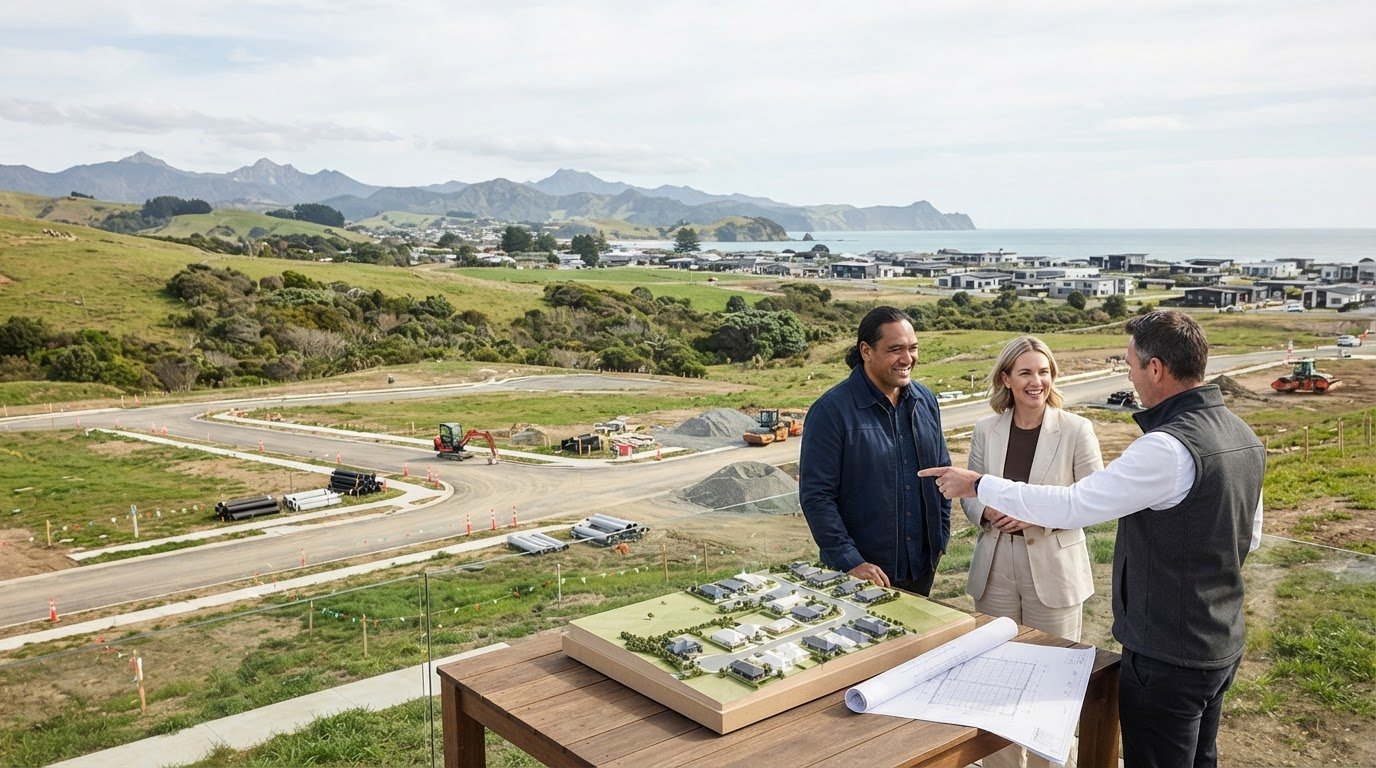
A development loan doesn’t always hinge on presales. Some New Zealand lenders require them, while funding without presales may be available depending on the project and your borrowing profile. If you’re considering private lenders for property development in NZ, the key is how a lender assesses the project as a whole.
It’s understandable to feel uncertain when a lender asks for presales, especially when you’re arranging funding and trying to keep a development moving. Presales are only one part of the assessment. The project type, your experience and the proposed funding structure can also shape the options available.
This guide explains how development finance works in New Zealand, when presales may be needed and what lenders may consider if you’re new to development. It also covers how funding can be structured for townhouses, subdivisions, apartments and commercial developments, helping you assess what may fit your plans.
Key Takeaways
- Development finance may come from banks, non-bank lenders or private funding sources, depending on the project’s needs.
- Presales aren’t always required: some lenders require them, while other options may depend on your project and borrower profile.
- Limited development experience doesn’t automatically rule out a loan; some lenders may consider applications from newer developers.
- Project type matters: funding needs can differ for residential developments, commercial projects and mixed-use buildings.
- Match the funding structure to your project’s feasibility and timeline, including how construction funds may be released as work progresses.
What is development finance?
Development finance funds property projects such as subdivisions, townhouses, apartments and commercial developments. In New Zealand, banks, non-bank lenders and private funding sources may all consider projects. The right fit depends on the proposal and the borrower.
Lender types
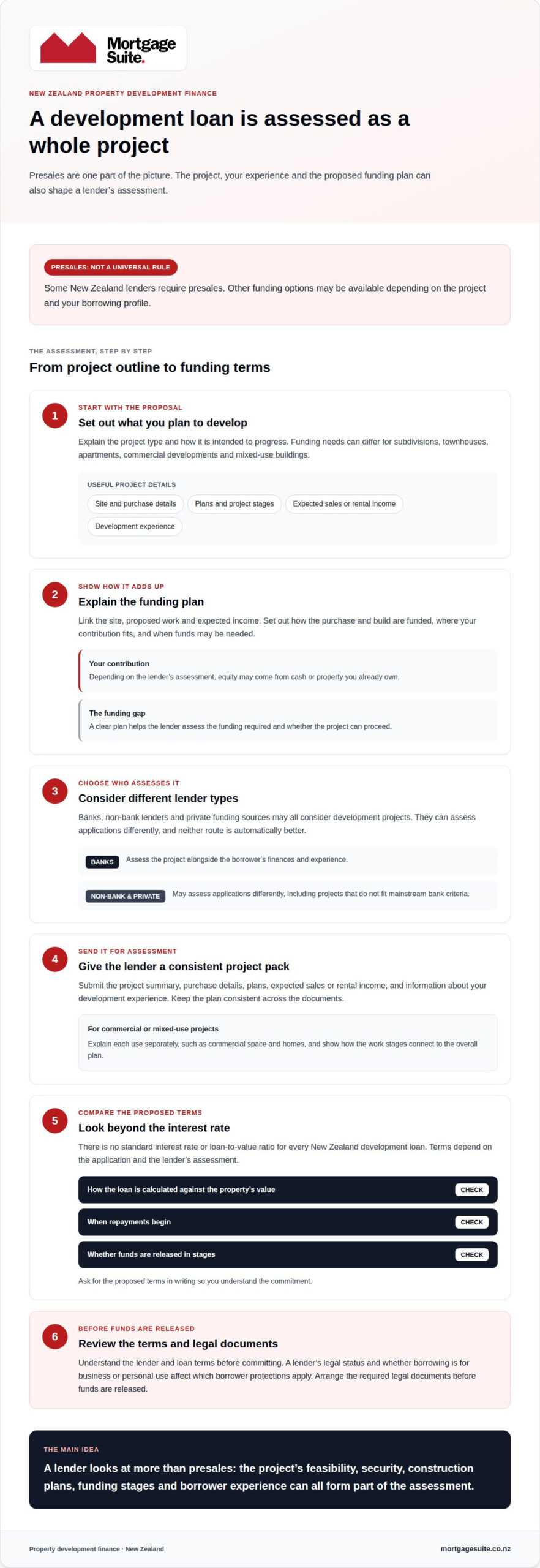
Banks assess a project alongside the borrower’s finances and experience. Non-bank and private lenders may assess applications differently, including projects that don’t fit mainstream bank criteria. Neither route is automatically better. Compare how each lender views the project, funding stages, repayment plan and proposed security.
Private lenders for property development in NZ may suit a proposal that needs a tailored assessment, but review the terms closely. Prepare a project summary, purchase details, plans, expected sales or rental income, and information about your development experience. Submit these for assessment, review the proposed terms, and arrange the required legal documents before funds are released.
A lender’s legal status and whether borrowing is for business or personal use affect which borrower protections apply. Don’t assume every private loan offers the same protections. Understand the lender and loan terms before committing.
Rates and loan-to-value ratios
There’s no standard interest rate or loan-to-value ratio for every New Zealand development loan. Lenders assess factors such as project feasibility, security, construction plans and borrower experience, then set terms for the application.
Compare the full offer, not just the interest rate. Check how the lender calculates the loan against the property’s value, when repayments begin and whether funds are released in stages. A staged build, for example, may need funding linked to construction progress rather than a single lump sum. Ask for the proposed terms in writing so you understand the commitment.
Deposit and equity contributions
Private lenders don’t have one fixed deposit or equity requirement for every development. The amount depends on the project’s value, funding requirements, available security, feasibility and borrower profile. Depending on the lender’s assessment, equity may come from cash or property you already own.
Explain how the project will be funded and where your contribution fits. For example, if you’re buying a site and building townhouses, outline the funding plan for the purchase and build. A clear plan helps the lender assess the funding gap and whether the project can proceed.
Commercial and mixed-use development finance
Commercial and mixed-use projects can combine several property uses in one development. In New Zealand, finance may support commercial developments, mixed-use buildings and investment property developments. A clear funding plan links the site, proposed work and expected income, helping lenders understand how the project is intended to progress.
Start with the site and its planned use. A commercial project might involve developing business premises, while a mixed-use building could include commercial space alongside homes. Because these uses have different construction needs and income sources, explain each part separately. A site plan and project summary show what the funding will cover.
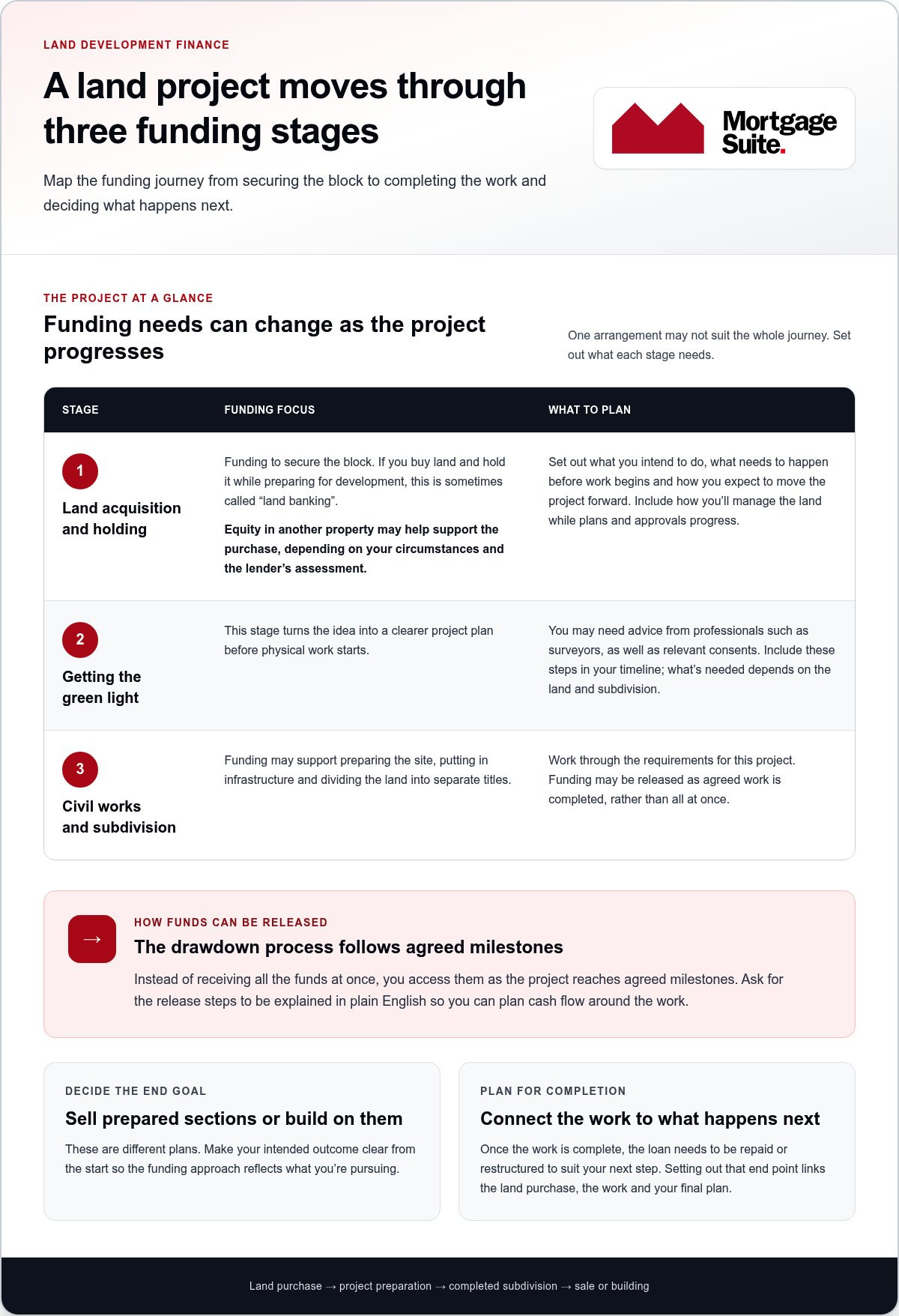
Land purchases also need a clear purpose. Finance may be arranged for development sites, land banking opportunities and property acquisitions intended for future development. If you’re buying land now and planning a later build, for example, outline the intended project and the steps between purchase and construction. The proposed timing helps define the funding need.
For a mixed-use proposal, explain how each part fits into the whole. Set out which areas are commercial and which are residential, and how the construction stages relate. If the project includes separate buildings or work areas, show how those stages connect to the overall plan. This clarifies how funding needs may change as work progresses.
Commercial developments also need a practical explanation of their intended use. Describe the planned space, the work required and how the completed property is expected to earn income. For an investment property development, include the proposed use of the finished building. A coherent plan helps a lender assess the property alongside your wider proposal.
Before applying, gather the main project details in one pack: site information, purchase details, plans, timing and expected income. Then map each stage, from acquisition through construction to completion. This makes it easier to identify when funds are needed and what information supports each request. Keep the plan consistent across documents, especially when commercial and residential components share construction work.
Funding can be arranged in stages that follow construction progress and project timelines. A development with early site preparation followed by building work, for instance, may need funding at different points. Set out the sequence and timing in your proposal rather than treating the project as one undivided task. This gives the funding discussion a practical basis.
If you’re shaping a commercial or mixed-use proposal, discussing your development finance structure can help connect the project plan with its funding needs.
I don’t have development experience, Can I still get a development loan?
Yes. Limited experience doesn’t automatically rule out a development loan. Some New Zealand lenders consider applications from borrowers with little or no development experience.
Funding for limited experience
If you have less experience to draw on, your project plan should explain how the work can progress. Set out the development type, site, proposed stages and intended outcome. A townhouse proposal, for example, should show how site preparation leads into construction and completion.
Lenders may weigh the proposal alongside your borrower profile and the project’s feasibility. Clarify your role, including who will manage key work and how decisions will be made. If you’ve completed related work, explain what you did and how that experience applies to this project. Keep the information factual and consistent.
For a first project, a staged plan can make the sequence easier to understand. Describe what must happen before construction, what follows and how each stage contributes to completion. Explain the assumptions behind your timeline and expected income. A clear plan helps a lender assess the proposal without relying only on your development track record.
Private lenders for property development in NZ may consider borrowers with limited experience, but experience is only one part of the assessment. Project feasibility, funding needs and borrower profile also matter. A decline from a mainstream bank isn’t automatically the final answer, as another lender may assess the proposal differently.
Eligibility and supporting documents
There’s no universal eligibility checklist for every New Zealand private development lender. Lenders assess both the borrower and the project, including feasibility and how the funding would support it. Make those details easy to follow in your documents.
Prepare a project summary describing the site, development type, intended stages and outcome. Add plans and a breakdown of the proposed work so the project and funding needs can be understood together. For a subdivision, explain the planned lot layout; for townhouses, outline the build stages.
Include details of your financial position, available contribution and the security connected with the proposal. Supporting documents may include site purchase details, relevant plans and an outline of expected sales or rental income. These examples help organise your application, while each lender sets its own assessment requirements.
Before submitting an application, check that the figures and project description match across your documents. If the timeline differs between the summary and plans, explain why. An organised submission helps the lender assess the project’s practical steps, funding needs and your ability to manage your part.
Do development loans require presales?
Not always. Some New Zealand development lenders require presales, while funding without them may be available depending on the project and borrower profile.
Presales are agreements to sell homes or other property before construction is complete. They can demonstrate buyer interest and support a lender’s assessment of the sales plan. For a townhouse development, for example, presale agreements may show demand for completed homes. They don’t replace an assessment of project timing or ability to reach completion.
Without presales, the funding case needs to show how the development remains feasible. A lender may consider the project type, expected income, security and your borrower profile. A subdivision with a clear plan to sell sections, for instance, has a different sales pathway from apartments intended for rental. Explain the intended outcome and the basis for it.
Project timing matters too. Construction funding can be arranged in stages that align with building progress and project timelines. Set out when each stage is expected to begin, what work it covers and when funds are needed. A clear sequence connects the funding plan with the practical work, from early site preparation through construction and completion.
Presales can also affect the project’s cash-flow plan. Show how sales proceeds fit into the expected funding and repayment sequence. If homes will be sold at different stages, explain how that timing relates to construction progress. For a rental development, set out how rental income fits the plan after completion. Keep every assumption visible and consistent.
Consider the risks before accepting private development finance. A delayed build, slower sales or lower-than-expected income can affect your repayment plan. Your exit strategy should explain how the loan will be repaid, for example through completed property sales or a suitable refinance. Match that plan to the project timeline and likely income rather than relying on one optimistic outcome.
Before applying, organise the project information into a clear funding case:
- Describe the development, site and construction stages.
- Set out expected income and the timing behind those estimates.
- Explain whether presales, future sales or rental income support repayment.
- Show the planned exit and how it relates to completion.
A townhouse proposal seeking funding without presales, for example, should explain its sales approach, build sequence and repayment plan together. This lets a lender assess the proposal as a whole instead of treating presales as the only measure of feasibility. Clear assumptions also make it easier to see how a timing change could affect repayment.
There’s no universal presale rule for every New Zealand development loan. Requirements depend on the project and borrower profile, so build your funding plan around feasibility, timing and the repayment pathway.
Residential development loans
Residential development finance can support townhouses, subdivisions, apartments and multi-unit projects in New Zealand. Match the funding plan to the property type, project stages and intended outcome rather than treating every residential build alike.
Start by defining the project. A townhouse development involves a planned group of homes, while an apartment project may have different construction stages and a different sales or rental plan. For a subdivision, explain how the land will be divided into separate lots. These distinctions clarify what the funding needs to support.
Next, set out the work from site preparation through to completion. A clear schedule connects each stage with the funding required. A multi-unit build, for example, may need early siteworks before construction begins. Showing the sequence explains when funding is needed, rather than presenting the project as one broad task.
Describe the expected income and repayment plan. A townhouse proposal intended for sale should outline its sales plan and explain how expected proceeds relate to repayment. An apartment project intended to generate rental income should state that intended use. Keep the assumptions consistent with the project details and proposed timeline.
Residential developments vary in scale and complexity. A small group of townhouses may follow a different sequence from a subdivision with several lots or an apartment building. Describe the site, proposed work and key stages in plain language. Show how the project will move from its current state to the intended finished form.
A lender may assess the project alongside your borrower profile and development experience. If you’re new to property development, clarify your role and how the plan will be managed. If you’re an experienced developer, relevant past projects can provide context. In either case, keep the project summary, plans and timeline aligned.
Before submitting an application, organise the material around the specific residential project:
- Identify whether it involves townhouses, apartments, a subdivision or multiple units.
- Describe the site and the proposed work at each stage.
- Show how the project timeline connects with the funding required.
- Explain whether completed homes are intended for sale or rental.
- Set out the expected income and planned repayment pathway.
An apartment development intended for rental, for example, should present its construction sequence and expected income together. A subdivision intended for sale should explain the planned lots and sales pathway. These examples show how to make each proposal specific: the details should reflect the actual project, not a generic residential template.
Preparing a residential proposal and want help matching its funding structure to the project? Talk with Mortgage Suite about your development finance.
Mortgage Suite Ltd: Property Development Loans
Mortgage Suite Ltd arranges Property Development Loans for residential and commercial projects across New Zealand. If you’re weighing presales, project timing or a lender’s assessment, discuss how your funding needs fit the proposal.
Bring together the project summary, plans, timeline and expected income. These details explain what you’re developing, when funding is needed and how repayment is planned. Mortgage Suite Ltd can help you consider lending options through its network of bank and private lenders, including alternatives when mainstream bank criteria don’t fit your circumstances. The right structure depends on your project and borrowing profile, and approval isn’t assured.
Ready to discuss your development plans? Contact Mortgage Suite Ltd to talk through your Property Development Loan options.
Make your next development move with a clear plan
Your next step is to bring your development idea into a lending conversation grounded in the project details. Consider what you need the finance to do, how it fits your wider goals and what repayment pathway makes sense. If private lenders for property development in NZ are part of your thinking, a focused discussion can help you explore how to present the proposal.
Mortgage Suite Ltd also assists with Home Loans for First Home Buyers, Residential Investment Property Loans and Business Loans. If your development plans connect with another borrowing need, explain how the goals relate so the lending discussion reflects your wider circumstances.
You don’t need every decision settled before taking the next step. Start with the project you’re considering and the questions you want answered, then work through the options with a supportive advocate.
Contact Mortgage Suite Ltd about development finance and take the next step towards getting your plans sorted.
Frequently Asked Questions
Do you work with property developers?
Yes. Mortgage Suite Ltd arranges Property Development Loans for projects in New Zealand. You can discuss a new project, an acquisition for future development or funding for a project already being planned. A useful starting point is to explain the development type, your role and what you want the finance to achieve. This gives the lending discussion a practical focus from the outset.
Which private lenders finance property development in New Zealand?
There isn’t one private lender that suits every development proposal. Private lenders for property development in NZ assess factors such as the project, borrower profile and funding structure. Mortgage Suite Ltd can access bank and private lending options, including alternatives when mainstream bank criteria don’t fit. The right lender depends on your proposal, so start by explaining the project and your borrowing needs clearly.
What types of property development projects do NZ private lenders fund?
New Zealand development funding can cover residential, commercial and mixed-use projects, including townhouses, apartments, multi-unit housing, subdivisions and commercial developments. Mortgage Suite Ltd arranges Property Development Loans, while Commercial Property Loans may suit commercial property needs. If a project combines residential and commercial spaces, explain how each part will be used and funded so the proposal reflects the development’s full purpose.
How do private development loans compare with bank finance and non-bank lenders in NZ?
Private, bank and non-bank lenders may assess development applications differently, so compare the proposed terms and structure rather than assuming one option is always better. A project outside a mainstream bank’s criteria, for example, may still be considered through an alternative lending channel. Review how funds are released, what security is involved and how repayment is planned. Mortgage Suite Ltd can help present your circumstances to suitable lending channels.
How long does private property development finance approval and settlement take in NZ?
There’s no single timeframe for every New Zealand development finance application. Timing may depend on how complete the project information is, the lender’s assessment and the work needed to document and settle the loan. An application with clear plans, costs and ownership details, for example, gives the lender a more organised proposal to assess. Keep key documents ready and respond promptly to requests as the application progresses.
Which private lenders finance residential, commercial, or subdivision projects across New Zealand?
Development finance is available for residential, commercial and subdivision projects across New Zealand. Mortgage Suite Ltd serves borrowers nationally and arranges Property Development Loans. Rather than choosing a lender based only on location, explain the site, project type and intended outcome. A subdivision proposal should make the planned development clear, while a commercial project should describe the proposed property use.