

Second mortgage for business in NZ: how it works in 2026

Could business funding put your home at risk, even if you already have a mortgage? For some Kiwis, a second mortgage for business NZ may provide access to property equity without replacing an existing home loan. But it adds another loan secured against the property, so weigh the funding need against the security and repayment risks.

It’s understandable to feel cautious. You may be comparing a second mortgage with a business loan or refinancing, while considering whether your business income and circumstances will meet a lender’s requirements. If the property has to be sold to repay debt, the first mortgage lender generally has priority over the second mortgage lender. Understand how that could affect your options and have a realistic repayment plan before proceeding.

This guide explains how a second mortgage works in 2026, what lenders may assess and what information to prepare. It also sets out questions to ask about repayments, property security and your plan to repay the loan, so you can compare funding paths and make a considered decision.

Key Takeaways

  • A second mortgage for business NZ adds lending secured against property that already has a mortgage, so check how the existing loan’s priority may affect your options.
  • Before proceeding, consider whether the business can manage repayments and what could happen to the property if it can’t.
  • Compare a second mortgage with a term loan or refinancing by checking the security required, repayment structure and impact on existing lending.
  • Prepare accurate business financial information, details of existing lending and a clear plan for repaying the loan.
  • An adviser can help you weigh up the risks and discuss lender options suited to your circumstances, without guaranteeing approval.

What is a second mortgage for business in NZ?

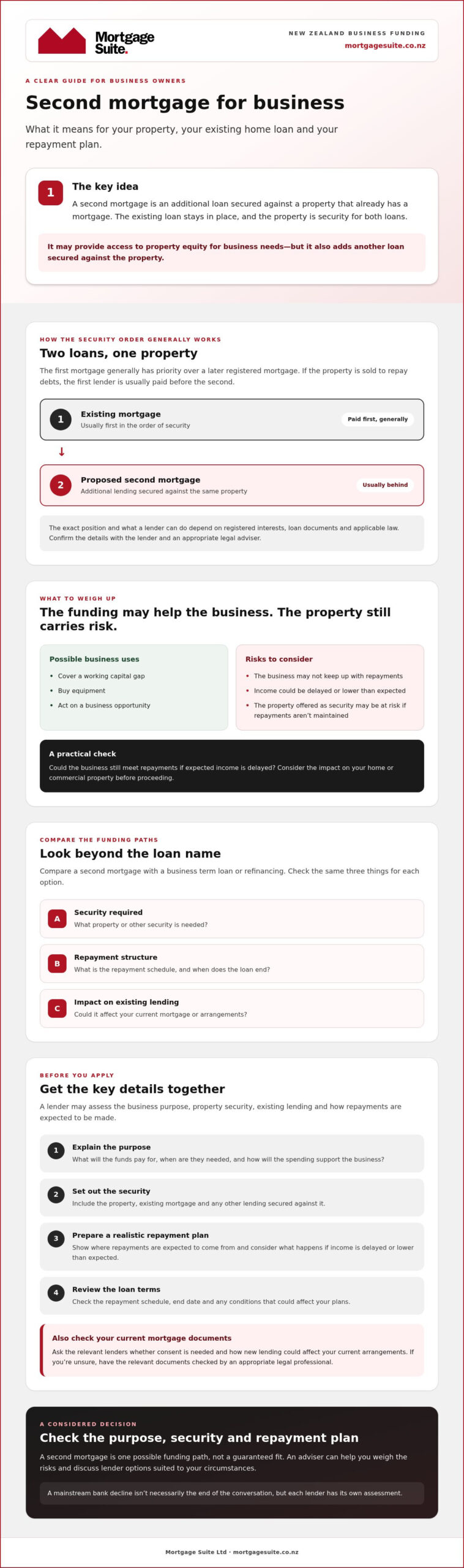
A second mortgage for business is an additional loan secured against property that already has a mortgage. The property could be a home or business property, and the funds are intended for business needs. The second mortgage sits behind the existing mortgage in the order of security. You can read a neutral overview of what a second mortgage is, then check how a particular lender would structure and secure the loan.

In general, the first mortgage has priority over a later registered mortgage. If the property had to be sold to repay debts, the first lender would usually be paid before the second mortgage lender. The exact position can depend on registered interests and the loan documents, so confirm the details with the lender and an appropriate legal adviser before proceeding.

Using the funds for a business doesn’t change the fact that the property is security for the loan. If repayments aren’t maintained, the property offered as security could be at risk. Weigh the business purpose against the possible impact on your home or commercial property, and consider whether the business could still meet repayments if expected income is delayed.

How does a second mortgage differ from a first mortgage?

A first mortgage is usually the main loan secured against a property. A second mortgage is separate lending added while that first mortgage remains in place. The second lender’s position behind the first may affect how it assesses the property, existing lending and available security. Ask how the proposed loan would be recorded and what could happen if repayments fall behind.

Don’t assume the order or enforcement process based on a general explanation alone. Ask the lender to explain its terms and have the relevant documents checked if you’re unsure.

What business needs might prompt this type of lending?

A business owner might explore a second mortgage to cover a working capital gap, buy equipment or act on a business opportunity. These are examples of possible purposes, not a promise that a lender will approve the application. The lender will consider what the funds are for alongside the property security and the borrower’s wider circumstances.

Business-purpose borrowing is different from a home loan taken out to buy or refinance a home, even if the home is offered as security. Be specific about how the funds will be used and where repayments are expected to come from. If a mainstream bank has declined, that isn’t necessarily the end of the conversation. Other lender pathways may be worth discussing, though each has its own assessment.

How does a business second mortgage work, and what is at risk?

Taking out a second mortgage involves more than showing that a property has equity. The lender needs to understand what the business will use the funds for, what property will secure the loan, how existing lending affects that security, and how repayments are expected to be made. Review the proposed terms carefully, including the repayment schedule and what happens if payments are missed.

When property secures business borrowing, the borrower remains responsible for repayments and the property may be at risk if they aren’t made. That’s true even when the loan is intended to support business growth rather than a personal purchase.

  • Explain the purpose: Be ready to describe what the funds will pay for, when they are needed and how the spending supports the business.
  • Review the security: Discuss the property, existing mortgage and any other lending secured against it.
  • Test the repayment plan: Consider how the business will meet repayments if income is delayed or lower than expected.
  • Check the terms: Ask about the repayment schedule, the loan’s end date and any conditions that could affect your plans.

How does the second mortgage sit alongside existing lending?

More than one loan can be secured against the same property. As a general guide, the first registered mortgage has priority over a later one. If the property is sold to repay debts, the first lender is generally paid before the second. The exact position and any steps a lender can take depend on the registered interests, loan documents and applicable law.

Check your existing mortgage documents and ask the relevant lenders whether consent is needed and how the new loan could affect your current arrangements. A qualified legal professional can explain the implications for your particular circumstances. Don’t rely on a general article to settle those details.

What happens if the business cannot keep up with repayments?

If repayments fall behind, arrears can build and the lender may take steps under the loan terms and applicable law. The outcome depends on the circumstances, so don’t assume every lender will respond in the same way. Because the property secures the borrowing, it could ultimately be at risk.

If repayment pressure appears, contact the lender or your adviser early to discuss the situation and possible next steps. For consumer credit, the Commerce Commission explains the transfer of responsibility for regulation of consumer credit. Whether a business-purpose loan falls under consumer credit rules depends on the circumstances, so confirm what applies to your loan.

If you’re weighing up a second mortgage for business NZ, Mortgage Suite can help you discuss the funding need and possible lender pathways. Its mortgage learning resources explain lending terms to help you prepare for a conversation.

Second mortgage vs business loan or refinance: which path fits?

The right option depends on what the business needs, whether property can be offered as security, your existing lending and how repayments could fit your cash flow. A second mortgage for business NZ is one path to discuss, but it isn’t automatically the best fit. Compare the security and repayment structure, the impact on current lending and the consequences of missed payments, not just the amount you may be able to borrow.

Option Security Common use Questions to ask
Second mortgage Property that already secures an existing mortgage. Seeking further business funds while keeping existing lending in place. How does it sit alongside the current mortgage? What property is at risk, and how will repayments work?
Business term loan Depends on the lender and loan terms. Ask whether property or other security is required. A business funding need with a lump sum and a defined repayment schedule and end date. What security is required? How often are repayments due, and when must the loan be repaid?
Refinance Usually involves new lending secured against property or other agreed security; confirm the proposed arrangement. Replacing or restructuring existing lending, often with a different deal or lender. What happens to the existing loan terms? Will the new structure meet the business need and repayment plan?

When might a second mortgage be worth exploring?

You might raise this option if you want to seek extra funds while keeping your current mortgage in place. That’s a discussion point, not a recommendation or a sign that you’ll qualify. Ask the lender to explain how the existing loan affects its assessment, and compare proposed repayments with the business’s expected cash flow. If a mainstream lender’s criteria don’t fit, the Mortgage School guide to lending options may provide further context.

When should you compare a business loan or Refinance instead?

Compare a business loan if you want to understand whether its security and repayment structure could suit your business without adding another mortgage to a property. Terms vary between lenders, so check the details rather than assuming the loan is unsecured. Refinance means replacing or restructuring existing lending, often with a different deal or lender. It may be worth comparing if you’re open to changing your current arrangement. Mortgage Suite can help you discuss business and commercial finance pathways, but the lender will assess your circumstances.

Before choosing, ask each lender to set out the security, repayment schedule, loan end date and implications for existing lending. Mortgage Suite’s Mortgage School learning resources offer plain-English explanations of lending terms to help you prepare those questions.
Second mortgage for business in NZ: how it works in 2026

How to prepare before applying for a business second mortgage

A clear application starts with a clear picture of the business need and how the loan could be repaid. Before discussing a second mortgage for business NZ, work through these steps:

  • Define the purpose: Set out what the funds would pay for and how the spending supports the business.
  • Gather your records: Collect current business accounts and income information, along with details of existing loans.
  • Review the property: Note which property may be offered as security and share relevant ownership or mortgage details.
  • Plan repayments: Map likely repayments against realistic business cash flow and consider how you’d manage if income changed.

Preparation helps a lender understand your request, but it doesn’t guarantee approval. The property, business income and lender criteria all need individual assessment. Accurate records make the discussion clearer, particularly if your income or business circumstances don’t fit a straightforward pattern.

What information should a business owner gather?

Start with up-to-date business accounts, income records and a short explanation of the funding purpose. Add details of current loans, repayments and any property you may offer as security. Be ready to explain how the business expects to use the funds and where repayments will come from. Requirements vary, so ask the lender or adviser for the exact document list before you apply.

Accuracy matters. If figures have changed or trading has been uneven, explain that rather than leaving gaps for the lender to interpret. A broker may help organise the information and discuss which lender pathways could suit your circumstances, though the lender makes its own assessment.

How can you test whether repayments are manageable?

Set out expected repayments alongside the business’s regular income and commitments. Allow for ordinary business needs, existing debt repayments and household commitments where relevant. Then test a less favourable scenario: what if a customer pays late, sales fall or an unexpected business expense arrives? If the plan only works when everything goes smoothly, revisit the amount or structure before proceeding.

The Mortgage Suite calculator may help with general repayment planning. It isn’t a quote or assessment for a business loan, so confirm actual terms and repayments with the lender.

For help discussing business funding needs and possible lending pathways, contact Mortgage Suite about business finance.

Choosing your next step with a New Zealand business finance adviser

Before moving ahead, check that the proposed borrowing matches a real business need and a repayment plan you can explain. Weigh up the security being offered, the risk to the property and alternatives such as a business loan or changing existing lending. A second mortgage for business NZ may be worth discussing, but the right path depends on your circumstances and the lender’s assessment.

An adviser can help organise the facts, present your situation clearly and discuss possible lender options. That support can be useful if your income or business history doesn’t fit a mainstream bank’s usual approach. But advice can’t guarantee a lender will make an offer, set particular terms or approve an application.

What should you ask before accepting an offer?

Take time to understand the offer before you commit. Ask which property secures the borrowing, how repayments are scheduled and when the loan ends. Make sure you understand the conditions and what the lender may do if repayments are missed. If any legal wording or implications are unclear, consider getting independent legal advice before signing.

Then compare the proposed structure with your business plan and other funding paths. Would the repayment plan still make sense if income is delayed? Does the loan solve the need you identified, or could another arrangement better fit your longer-term plans? Ask the lender to explain anything you’re unsure about.

How can Mortgage Suite help you assess possible pathways?

Mortgage Suite arranges business and commercial finance, as well as second-tier lending for situations that may not fit mainstream bank criteria. Its founder, Krish Krishna, has more than two decades of banking experience. A discussion can help you set out the funding purpose, existing lending and repayment plan, then consider which lender pathways may be worth exploring. Each lender makes its own assessment, so there’s no guaranteed outcome.

You can learn more about Mortgage Suite’s background and approach and read client reviews of Mortgage Suite as part of your research.

Before speaking with an adviser, it may help to have your funding purpose, current loan details and repayment plan to hand. You can then use the discussion to consider possible next steps without committing to proceed.

Make your next business funding decision with care

A second mortgage for business NZ may be one way to seek business funds, but it also puts property security and repayment commitments in the picture. Before proceeding, be clear about what the funds are for, how repayments could fit your business cash flow, and whether a business loan or refinance might better suit your needs.

Mortgage Suite facilitates business, commercial property and second-tier lending solutions, including for borrowers whose circumstances may not fit mainstream bank criteria. Founder Krish Krishna brings more than two decades of banking experience to lending conversations. That experience can help you discuss your circumstances and possible lender pathways, but it can’t guarantee an offer, particular terms or approval.

If you’re ready to explore your options, talk through your business lending options with Mortgage Suite. A clear conversation can help you decide what to consider next, at a pace that feels right for you.

Frequently Asked Questions

What is a second mortgage for business in New Zealand?

A second mortgage for business in New Zealand is an additional loan secured against property that already has a mortgage. The property could be a home or business property, depending on the lender’s requirements. The existing mortgage generally has priority over the later one, but the details can depend on registered interests and loan documents. A second mortgage for business NZ still puts the property at risk if repayments aren’t maintained.

Can I use a second mortgage to fund my business?

Yes, a second mortgage may be used to fund a business purpose, such as working capital or a business opportunity, if a lender is willing to offer that structure. The lender will assess the purpose of the borrowing, the property offered as security and your circumstances, including how repayments are expected to be made. Using a home as security doesn’t make the borrowing a home loan, so ask the lender to explain the proposed terms.

Can I get a second mortgage if my bank has declined my business loan?

Possibly, but a bank decline doesn’t mean another lender will approve a second mortgage. Lenders may assess applications differently, and some specialist or second-tier lenders consider situations that don’t fit mainstream bank criteria. They’ll still assess the security, business purpose, repayment plan and your wider circumstances. A finance adviser can help you understand potential lender pathways, but can’t promise an offer or approval.

What property can be used as security for a business second mortgage?

A lender may consider residential or business property, but the type of property it accepts depends on its criteria and the details of the application. Existing mortgages and other claims registered against the property can affect the assessment. Before applying, gather information about the property and current lending, then ask the lender whether it may be acceptable security and whether any existing lender’s consent is needed.

Is a second mortgage riskier than a business loan?

It depends on the security and terms of each option. A second mortgage is secured against property, so missed repayments could put that property at risk. A business loan may have a different security arrangement, but it isn’t automatically unsecured or lower-risk. Compare the repayment schedule, loan end date, security and consequences of missed payments for each offer, and consider how the structure fits your business plan.

How much can I borrow with a second mortgage for business?

There’s no set amount that applies to every borrower. A lender will assess the property and existing lending, the business’s financial position, the requested purpose and its own criteria. The amount offered, if any, will depend on that individual assessment. Prepare accurate business income records and details of current loans, then ask the lender to explain how it arrived at any proposed amount and repayment terms.

What happens if I cannot repay a business second mortgage?

If you can’t make repayments, contact the lender as early as possible and explain what’s changed. Missed payments may lead to arrears and other steps under the loan terms and applicable rules. Because the loan is secured against property, that property could ultimately be at risk. Ask the lender or an adviser about your options and seek independent legal advice if you’re unsure what the loan documents mean.

Article by

Krish Krishna

Experienced Financial Adviser with over 46 years of Banking and Mortgage broking experience and over $2.0 Billion in loan settlements.

Equity Release Home Loan NZ: A Comprehensive Guide for 2026

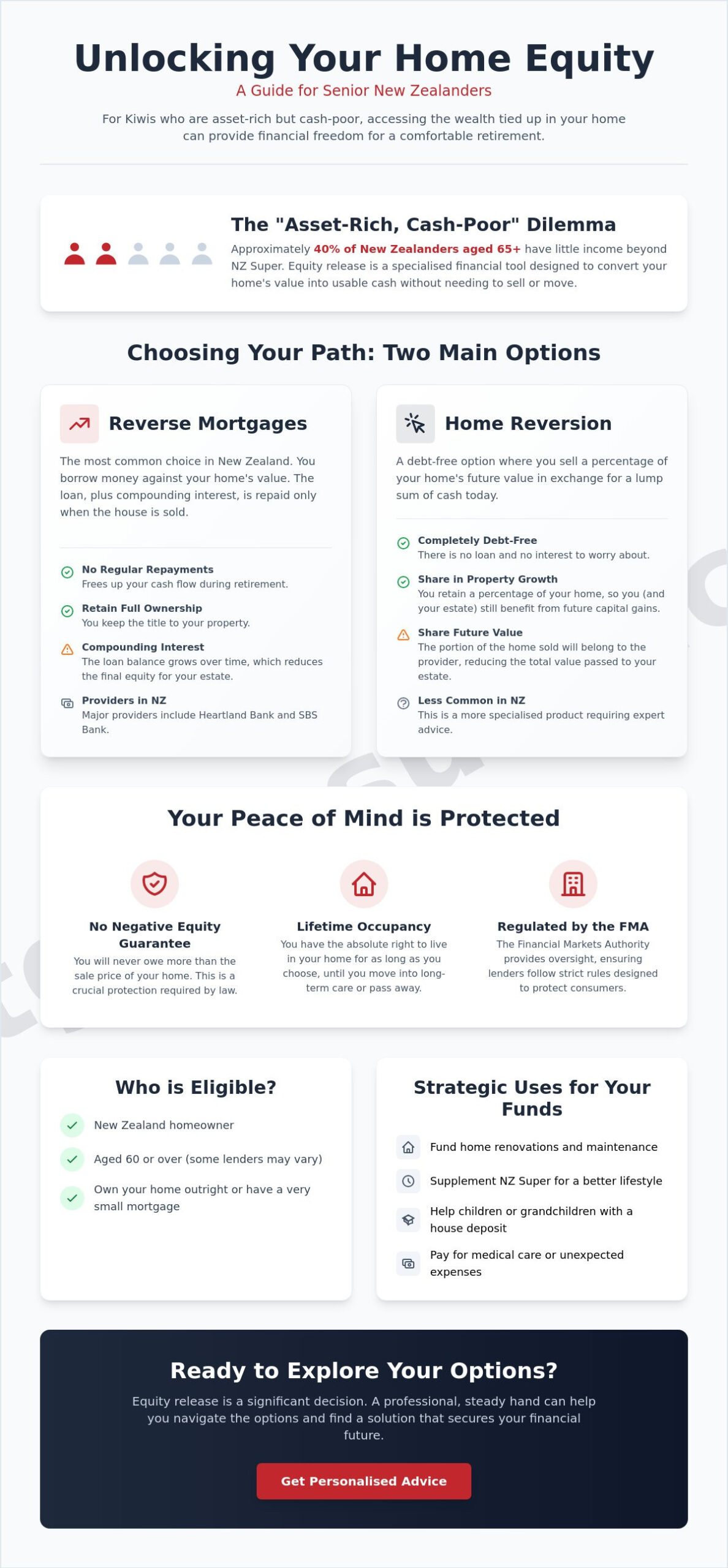
Approximately 40% of New Zealanders aged 65 and over have almost no other income besides NZ Super, which often leaves homeowners in the stressful position of being asset-rich but cash-poor. If you’ve spent decades paying off your mortgage only to feel the pinch of rising rates and insurance premiums, you’re certainly not alone. It’s a common frustration to see your wealth locked behind the front door while your daily budget feels increasingly tight. Many Kiwis are now exploring how a Home Equity Loan can bridge that gap, providing the financial breathing room needed for a truly comfortable retirement.

I understand that the thought of complex financial contracts can be daunting, but equity release is a strategic lifestyle choice that deserves a professional, steady hand. This guide will show you how to safely unlock your property’s value to fund medical care, home renovations, or even a house deposit for your grandchildren while you are still around to see them enjoy it. We’ll walk through the 2026 market landscape, including current interest rates from providers like Heartland and SBS Bank, the crucial no negative equity guarantees, and the latest FMA regulations designed to protect your legacy.

Key Takeaways

  • Understand how to access the “dead money” tied up in your property to support a comfortable lifestyle without the need to relocate or sell.
  • Compare the mechanics of reverse mortgages and home reversion to see how interest compounds versus selling a portion of your future equity.
  • Identify the specific eligibility requirements and age-based lending limits for a Home Equity Loan to ensure your financial plan is realistic and secure.
  • Learn about the “no negative equity” guarantee and other legislative safeguards that protect your home ownership and long-term peace of mind.
  • Discover how 2nd tier lending solutions can offer alternative pathways for homeowners who fall outside the rigid requirements of mainstream banks.

What is an Equity Release Home Loan in New Zealand?

For many Kiwis in 2026, the family home isn’t just a place of memories; it’s the largest financial asset they own. Equity release allows you to tap into what’s often called ‘dead money’, which is the wealth tied up in your bricks and mortar, and convert it into useable cash. This financial strategy has become a vital tool for New Zealanders who find themselves asset-rich but cash-poor, especially as the cost of living continues to climb.

The defining feature of this arrangement is how it differs from a standard Home Equity Loan. With a traditional mortgage, you’re required to make regular monthly principal and interest repayments. In contrast, an equity release product typically requires no monthly payments at all. Instead, the interest is added to the loan balance over time, and the total amount is only repaid when you eventually sell the property, move into long-term care, or pass away. You retain full ownership of your title and the absolute right to live in your home for as long as you wish.

Deciding which mechanism suits your family requires a clear understanding of the market. Most people choose between Reverse Mortgages vs. Home Reversion schemes. While a reverse mortgage is a loan that grows over time, home reversion involves selling a percentage of your property’s future value in exchange for a lump sum or income stream today. Both options are designed to provide financial freedom without the stress of meeting bank deadlines every month.

Who is Equity Release Designed For?

This path is generally tailored for homeowners aged 60 or older. While some 2nd tier lenders might offer flexibility, most mainstream providers in New Zealand, such as Heartland and SBS Bank, set their entry point at 60. It’s an ideal solution for those who are mortgage-free or have a very small remaining balance. If you’re looking to supplement your NZ Super or fund a specific life goal, a Home Equity Loan structured for equity release provides a steady hand in a fluctuating economy.

The Core Benefit: Ageing in Place

There is profound emotional and financial value in staying within your familiar neighbourhood and community. Downsizing is often touted as the only solution for retirees, yet it comes with significant baggage. Between real estate commissions, legal fees, and the physical stress of moving, you can lose a substantial portion of your wealth just by changing addresses. Equity release acts as a partnership with a lender, allowing you to stay put while managing your retirement cash flow effectively. It removes the obstacle of relocation and lets you enjoy the home you’ve worked so hard to pay off.

Reverse Mortgages vs. Home Reversion: Choosing Your Path

Selecting the right mechanism to unlock your property’s value is a pivotal decision that shapes your financial landscape for years to come. In New Zealand, the market has matured to offer two distinct paths: reverse mortgages and home reversion. While both allow you to stay in your home, they treat your property’s value in very different ways. One involves taking on a specialized Home Equity Loan where the debt grows over time, while the other involves selling a portion of your home’s future ownership today. The “best” choice isn’t universal; it depends entirely on your personal comfort with debt and how much of your home’s future capital gains you wish to protect for your estate.

If you’re feeling overwhelmed by these options, it’s helpful to view them as a strategic partnership between you and your lender. Taking the time to explore tailored home loan options can help clarify which path aligns with your long-term goals. Every homeowner’s situation is unique, and a veteran perspective is often the difference between a stressful contract and a secure retirement plan.

How Reverse Mortgages Work

A reverse mortgage is the most common form of equity release in the NZ market. Major providers like Heartland Bank and SBS Bank offer these products with variable interest rates, which sat around 7.75% to 7.99% in early 2026. The defining characteristic here is the lack of monthly repayments. Instead, the lender adds the interest to your loan balance each month. Compounding interest is interest charged on interest that causes the debt to grow over time. This means that while you enjoy the cash today, the total amount you owe increases as the years pass. The loan is eventually settled when the house is sold, typically when you move into a retirement village or pass away.

Understanding Home Reversion (The Debt-Free Option)

Home reversion, offered by providers like Lifetime Home, is often described as the debt-free alternative. Rather than borrowing money, you sell a fixed percentage of your home’s value to the provider. In exchange, you receive a lump sum or a regular income stream. The catch is that you sell this share at a discount to its current market value. For example, you might sell 25% of your home but receive less than 25% of its current worth in cash. The provider then receives their full percentage share of the final sale price whenever the home is sold. This provides total certainty because you don’t have to worry about fluctuating interest rates on a Home Equity Loan, but you do give up the potential for future capital gains on the portion you’ve sold.

Eligibility and Key Safeguards: What Kiwis Need to Know

To qualify for equity release in New Zealand, you generally need to be at least 60 years old, though some specific products like home reversion require you to be 70 or older. Your property typically needs to be a freehold title of a standard construction type. Lenders are often cautious with retirement village units or leasehold land due to the complex legal structures involved. If you’re considering a Home Equity Loan to fund your retirement, it’s vital to understand that the amount you can borrow is strictly tied to your age. This is a deliberate safety measure designed to protect your long term interests.

Lenders use a sliding scale for Loan-to-Value Ratios (LVRs) because they need to account for how long the interest might compound. At age 60, you might only be eligible to release 15% to 20% of your home’s value. By the time you reach 80, this limit often increases to 40% or 50%. This conservative approach ensures that even with the rising cost of living, you’re unlikely to exhaust your equity too early. I always recommend involving family members in these discussions. Transparency prevents future misunderstandings and ensures your heirs understand how the Home Equity Loan will eventually be settled.

Kiwis can take heart in the fact that from July 1, 2026, the Financial Markets Authority (FMA) has taken over regulatory responsibility for the Credit Contracts and Consumer Finance Act (CCCFA). This shift reinforces the high standards of responsible lending that protect your home and your legacy.

The No Negative Equity Guarantee

The most significant protection in the New Zealand market is the “No Negative Equity” guarantee. This industry standard ensures that you, or your estate, will never owe the lender more than the net sale price of your home. If the property market experiences a significant dip and the loan balance grows larger than the home’s value, the lender absorbs that loss. It’s a robust safety net that ensures no debt is ever passed on to your children or heirs.

Lifetime Occupancy and Spouse Protections

You have a legal guarantee of lifetime occupancy, meaning you cannot be evicted as long as you live in the home and meet basic obligations like paying your rates and insurance. It’s essential that both partners are named on the loan contract. This ensures the surviving spouse retains the right to live in the property if the other passes away or moves into care. To make these clauses ironclad, New Zealand law requires you to seek independent legal advice before signing any equity release agreement. This ensures you fully grasp the long term implications of the contract from a neutral professional perspective.

Equity Release Home Loan NZ: A Comprehensive Guide for 2026

Strategic Uses for Equity Release in 2026

In the current economic climate, equity release has evolved from a last resort into a sophisticated tool for lifestyle management. With approximately 25% of older New Zealand households sitting on an average of over $600,000 in home equity while struggling on a limited income, the shift toward active wealth management is clear. A Home Equity Loan allows you to convert that stagnant value into a liquid resource, ensuring your retirement years are defined by comfort rather than compromise. Whether you’re looking to fund a dream trip or simply want to ensure your daily budget isn’t dictated by the next rates increase, the strategic use of your home’s value provides a steady path forward.

For those who view their property as part of a broader wealth strategy, it’s also worth exploring non-bank investment property loans NZ. This can be particularly relevant if you’re considering using released funds to diversify your portfolio or support a family member’s investment goals. Some Kiwis also find value in using home equity for investment NZ as a way to put their property’s unlocked value to work in the broader market, rather than letting it sit idle. Taking a proactive approach to your assets ensures that your hard-earned wealth serves your current needs while still respecting your long term legacy.

Helping the Next Generation

One of the most rewarding uses of equity release is the concept of a ‘living inheritance’. Instead of leaving your wealth in a will, you can provide a tax-free gift to your children or grandchildren now. This is frequently used to help the younger generation secure a deposit for their first home, which has become increasingly difficult in the 2026 market. You can read more about the challenges they face in our home loans for first home buyers New Zealand guide. By acting now, you get to see the impact of your support while you’re still around to enjoy it, all without the tax implications that often accompany other forms of income.

Home Improvements and Health

Maintaining independence often requires practical ‘age-friendly’ modifications to your property. Funding bathroom refits, ramps, or kitchen adjustments through a Home Equity Loan ensures you can remain in your community for longer. Beyond the home, many Kiwis use these funds to cover the ‘gap’ in healthcare costs. While the public system is robust, waiting lists for elective procedures like hip replacements or specialist dental work can be long. Releasing equity lets you bypass these queues and access private care immediately.

Debt consolidation remains another powerful use of these products. Clearing high-interest credit cards or car loans by rolling them into a low-pressure equity release structure can significantly improve your monthly cash flow. If family members are looking to grow their own property portfolios, an interest only investment property loan NZ can be a smart way to maximise cash flow while building long-term wealth. If you’re ready to see how your property could work harder for your family, contact us to discuss your options today. We take pride in helping you navigate these choices with the care and expertise your situation deserves.

Beyond the Big Banks: Navigating 2nd Tier Solutions

While Heartland and SBS Bank are the most visible names in the New Zealand equity release market, they aren’t the only options available to you. For many Kiwis, the rigid criteria of mainstream institutions can become a frustrating roadblock. This is where 2nd tier solutions become essential. At Mortgage Suite Ltd, we leverage over two decades of industry experience to help you find alternative capital that fits your specific circumstances. Choosing a non-standard Home Equity Loan doesn’t mean you’re compromising on safety or security. It simply means you’re working with a veteran who knows how to navigate the complexities of the lending landscape to find a solution that works.

Working with a veteran expert negotiator like Krish Krishna provides you with a steady hand in a fluctuating market. We don’t just process applications; we advocate for your best interests throughout the entire journey. This proactive attitude is often the difference between a declined request and a successful outcome that provides the financial freedom you’ve been searching for. Our reputation is built on being a dedicated partner who values long term relationships over simple transactions.

When a Mainstream Bank Says No

Mainstream banks often struggle with “out of the box” scenarios. If your home is held in a family trust or is a unique property type, you might find the big lenders hesitant to move forward. Similarly, if your retirement income is non-traditional, a standard bank might decline your application based on their internal algorithms. A professional negotiator understands how to present your case to 2nd tier lenders who offer more flexible terms for older borrowers. We bridge the gap between the rigid world of institutional banking and the personal needs of the individual borrower, ensuring your unique situation is understood and valued. Finding the right Home Equity Loan through an alternative lender can often provide the same protections as a big bank but with the flexibility you actually need to move forward with confidence.

Why a Consultative Approach Matters

This process should never feel like a simple transaction. It’s a long-term financial partnership that requires a methodical and thorough understanding of your goals. We focus on organising a plan that balances your immediate cash needs with the inheritance goals you have for your family. By taking a consultative approach, we ensure that every step is logical and transparent, removing the anxiety often associated with complex financial decisions. This structured path creates a sense of stability, mirroring the organised nature of the financial services we provide. If you’re ready to explore a path that the big banks might have missed, Book a confidential chat with the Mortgage Suite Ltd team to explore your options and secure the retirement you deserve.

Take the Next Step Toward Financial Freedom

Unlocking the wealth in your property is a significant decision that requires a clear strategy and a steady hand. By understanding the core differences between debt-based and equity-based release, you’re already better positioned than most. It is vital to remember that your path isn’t limited to the big banks; 2nd tier lenders often provide the flexibility needed for unique property types or complex family trusts. A Home Equity Loan should be a tool that serves your lifestyle, not a source of stress.

At Mortgage Suite, we bring over 20 years of banking and lending expertise to the table. We are specialists in 2nd tier and alternative finance, with a hard-earned reputation for dedicated negotiation and client advocacy. We don’t just find loans; we build partnerships that respect your legacy and your future goals. Secure your retirement future with a tailored equity release plan from Mortgage Suite. Your home has looked after you for decades, and with the right plan, it will continue to support the comfortable retirement you’ve worked so hard to achieve.

Frequently Asked Questions

Is an equity release home loan a good idea in New Zealand in 2026?

It is a strategic lifestyle choice for many Kiwis, especially given that 40% of retirees rely almost solely on NZ Super. If your property has significant value but your daily budget is tight, this tool provides a steady hand. It allows you to stay in your community and maintain your independence while accessing the capital you’ve built up over decades.

Can I still leave my house to my children if I have a reverse mortgage?

You absolutely can leave your property to your heirs. You remain the registered owner on the title throughout the life of the loan. When the house is eventually sold, the loan balance is settled first, and every cent of the remaining equity is passed on to your estate or children as per your will.

What happens if the interest on my loan becomes more than the house is worth?

You are protected by a “No Negative Equity Guarantee” which is a standard feature of reputable New Zealand providers. This means you’ll never owe more than the net sale price of your home. Even if the market dips or interest compounds significantly, the lender absorbs the difference, ensuring no debt is ever passed to your family.

Do I have to pay tax on the money I receive from an equity release loan?

No, the funds you receive are not considered taxable income in New Zealand. Because the money is a loan against your property’s value rather than earnings, it is currently tax-free. This makes a Home Equity Loan an efficient way to supplement your cash flow without increasing your tax obligations or affecting most government benefits.

What is the minimum age for equity release home loans in NZ?

The minimum age for a standard reverse mortgage in New Zealand is 60 years old. For specific debt-free products like the Lifetime Home reversion scheme, the entry age is higher at 70. Lenders set these limits to ensure the loan structure remains sustainable over the long term, protecting both the borrower and the lender’s interests.

Can I sell my house and move if I have an existing equity release loan?

You retain the freedom to sell your home and move at any time. When you sell, the equity release loan is typically repaid from the sale proceeds. In some cases, you may be able to transfer the loan to a new property, provided the new home meets the lender’s criteria for security and value.

Are there any monthly repayments required for a reverse mortgage?

There are typically no regular monthly repayments required for a reverse mortgage. Unlike a traditional Home Equity Loan, the interest is added to your loan balance each month. This compounds over time, meaning the debt is only settled in full when you move out permanently, sell the home, or pass away.

How much equity can I typically release from my home based on my age?

The amount you can release depends on your age, with limits starting at approximately 15% to 20% of your home’s value at age 60. As you get older, this percentage increases, often reaching 40% to 50% for those aged 80 and over. These conservative limits are designed to ensure you always retain a significant portion of your home’s equity.

Article by

Krish Krishna

Experienced Financial Adviser with over 46 years of Banking and Mortgage broking experience and over $2.0 Billion in loan settlements.