
What if the secret to getting your next project off the ground isn’t actually the land itself, but the story you tell about it? It’s a common frustration to feel that your plans are solid, yet find yourself hitting a wall with mainstream banks that seem more interested in ticking boxes than seeing your vision. In the current New Zealand market, where lending criteria can shift quickly, these complexities often make terms like feasibility studies or drawdowns feel like genuine barriers to your success. Learning exactly how to obain development funding is the first step toward turning those obstacles into opportunities.
We believe every developer deserves a steady hand to guide them through these financial hurdles. In this article, we explain the process of preparing your project so it’s ready for a “yes” from the right lender. You’ll gain a clear roadmap to securing capital, whether you’re looking at traditional banks or more flexible second-tier lenders. We’ll help you understand the different options available so you can lower your project risk and move forward with the confidence that your venture is supported by experts who prioritise your success.
Key Takeaways
- Understand why development loans are structured as short-term, interest-only facilities to help you manage your project’s cash flow more effectively.
- Get a clear, step-by-step guide on how to obain development funding by creating a professional feasibility study that proves your project’s value.
- Learn the differences between mainstream banks and second-tier lenders to find the right balance of competitive interest rates and flexible terms.
- Discover why choosing an experienced builder and architect is essential for giving lenders the confidence they need to approve your application.
- Gain a complete overview of the application journey, from your very first consultation through to receiving your initial funds to start the work.
What Exactly is Property Development Funding?
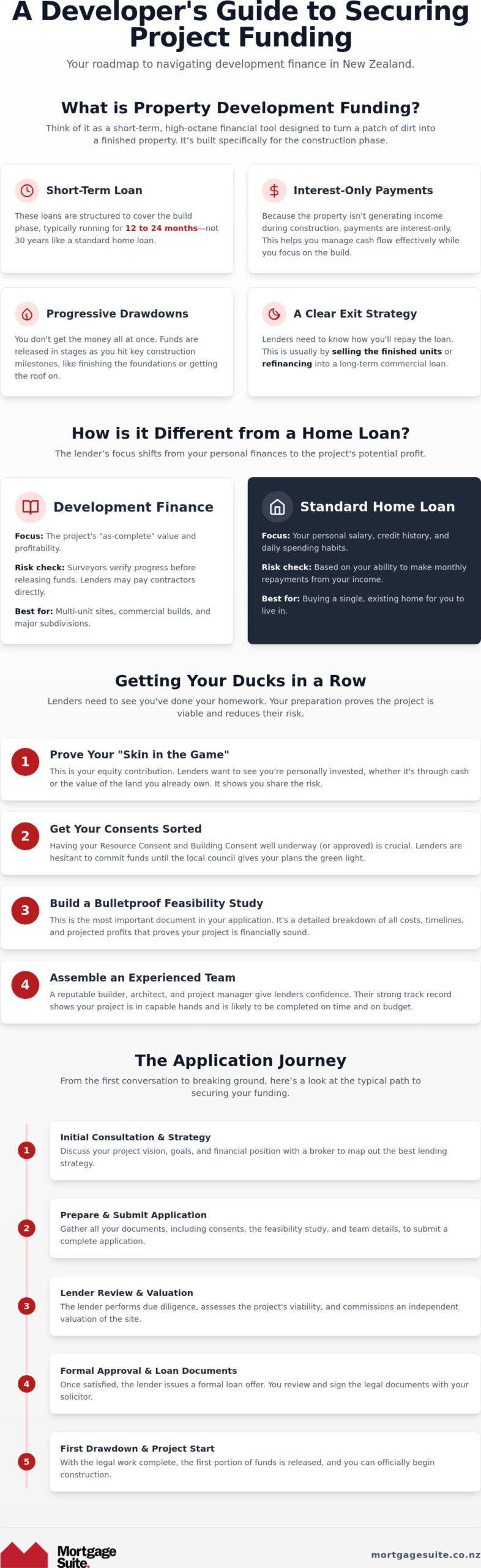
Think of property development funding as the engine room of your project. It isn’t like a standard mortgage where you buy a house and pay it off over thirty years. Instead, it’s a short-term, high-octane financial tool designed to get a project from a patch of dirt to a finished set of titles. Most of these loans run for a limited time, typically between 12 to 24 months. Because the property isn’t making any money while it’s a construction site, these loans are almost always interest-only. This structure helps you keep your cash flow steady while you focus on the actual Real estate development process.
When you are researching how to obain development funding, you’ll find that you don’t receive all the money in one lump sum. Instead, the lender releases funds through “progressive drawdowns”. This means you get chunks of capital as you hit specific milestones, such as finishing the foundations or getting the roof on. It is a system that protects both you and the lender, ensuring the budget stays on track. Before a lender even considers your application, they will want to see a rock-solid “exit strategy”. This is simply your plan for how you’ll pay the loan back, which usually involves selling the finished units or refinancing into a long-term loan once the build is complete.
The Difference Between a Home Loan and Development Finance
A standard home loan is quite personal. The bank looks closely at your salary and your daily spending to see if you can afford the monthly repayments. Development finance is different; it’s focused on the project’s profit and the “as-complete” value of the site. If you’re planning a multi-unit site, a basic construction loan NZ won’t usually work because those products are generally designed for single residential homes. Development lenders manage their risk by often paying your builders and contractors directly after a surveyor has checked the progress. This ensures the money is used exactly where it should be.
Common Projects That Require This Funding
This type of finance covers a broad range of property ambitions. You might be looking at a relatively simple subdivision finance NZ project where you’re splitting a backyard to build a minor dwelling. Other common projects include:
- Medium-density residential: Building blocks of townhouses or several units on a single title.
- Commercial builds: Constructing new warehouses, office spaces, or retail centres.
- Major renovations: Significant structural changes or repurposing of existing business premises.
Understanding how to obain development funding for these specific scenarios is the first step toward a successful build. Each project type has its own set of requirements, but the core focus remains on the profitability and the strength of your planning.
Getting Your Ducks in a Row: The Pre-Approval Checklist
Before you approach a lender, you need to show that you have done your homework. Lenders aren’t just looking at the land or the potential profit; they’re looking at your level of preparation. Knowing how to obain development funding starts with a checklist that proves your project is viable and that you have a team capable of delivering it. This isn’t just about having a good idea; it’s about having the paperwork to back it up and showing that you’ve considered every possible hurdle.
One of the first things a lender will ask for is proof of your “skin in the game”. This is your equity, which is the amount of your own capital or land value you’re bringing to the table. Lenders want to see that you’re personally invested in the outcome. While there are various property financing options available, most will require you to cover a specific percentage of the total project cost. You’ll also need to have your Resource Consents and, ideally, your Building Consents well underway. Lenders are often hesitant to commit funds until they know the local council has given the green light for your specific plans.
Building a Bulletproof Feasibility Study
The feasibility study is the most important document in your application. It’s a detailed breakdown that proves the numbers actually work. You need to account for everything: land acquisition, actual build costs, professional fees for architects and surveyors, and GST. A crucial element here is the “Contingency Fund”. This is a buffer for unexpected costs, such as a sudden rise in material prices or site delays. Finally, you must calculate the Projected Gross Realisation Value (GRV). This is what the project is worth once it’s finished and sold, which helps the lender understand their total risk.
Proving Your Experience
Lenders feel much more comfortable when they know the project is in safe hands. If this is your first development, you can strengthen your application by “borrowing” the experience of others. By partnering with an established builder who has a solid track record or hiring a professional project manager, you show the lender that the build is being handled by experts. If you’re feeling overwhelmed by the paperwork, it’s often helpful to talk to a professional advocate who can help you organise your team and your application before you present it to a bank.
Having a professional team doesn’t just help with the loan approval; it ensures the project stays on schedule. A seasoned architect and a reliable builder can help you avoid common pitfalls that lead to budget blowouts. When you show a lender that you’ve surrounded yourself with talent, you’re telling them that your project is a calculated success rather than a risky gamble.
Choosing Your Capital: Mainstream Banks vs. 2nd Tier Lenders
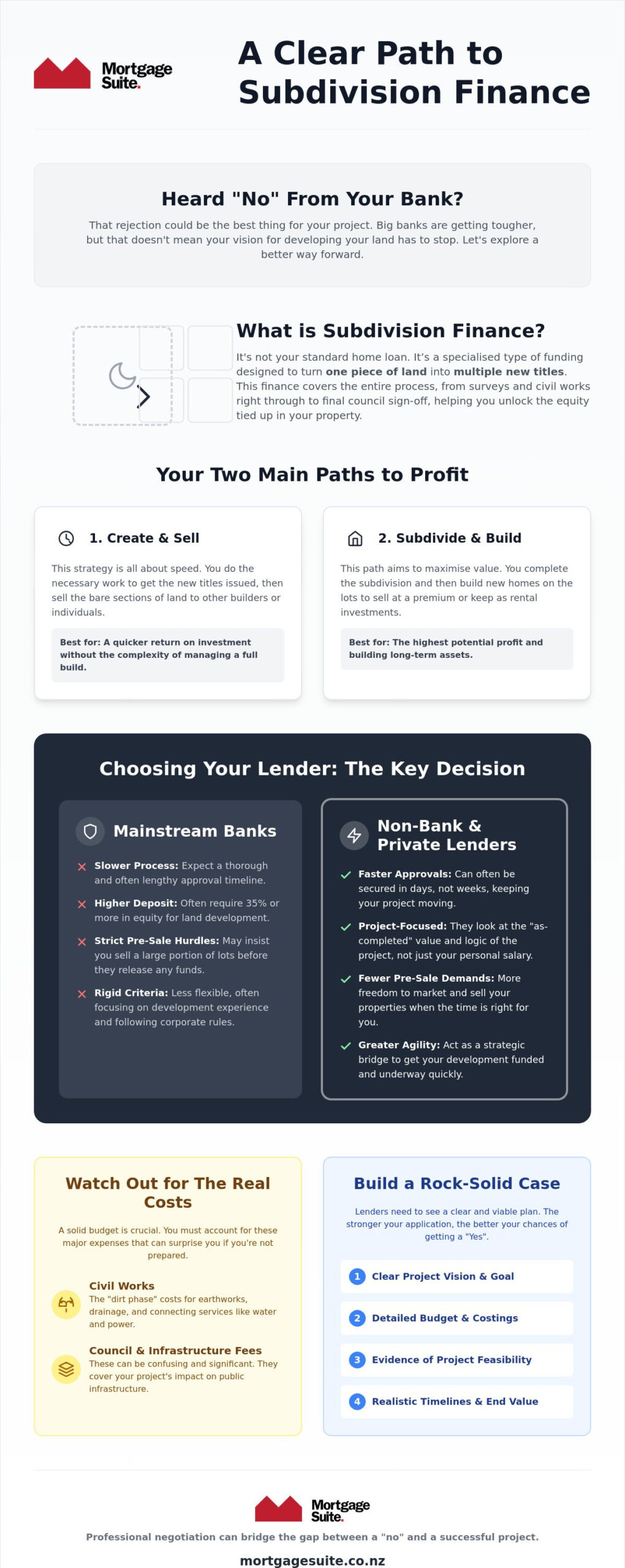
Deciding where to source your money is just as important as the design of the building itself. Most developers start by looking at mainstream banks because they offer the lowest interest rates and the most familiar terms. However, the reality of how to obain development funding through a bank is that the rules are incredibly strict. Banks are risk-averse; they want to see that you’ve already sold a significant portion of the project before they release a single dollar. If your project doesn’t meet their rigid criteria, you don’t have to give up on your plans. There are other paths to success that offer the flexibility a growing developer needs.
This is why we’ve seen a significant rise in 2nd tier lender New Zealand options. These lenders fill the gap for projects that are commercially sound but don’t quite fit the traditional bank box. While you might pay a slightly higher interest rate, the trade-off is a much faster approval process and far fewer hoops to jump through. For many, the ability to start a build months earlier is worth the extra cost in interest.
The Pros and Cons of Bank Funding
Banks are excellent if you have a massive amount of experience and plenty of time to wait for approvals. The main benefits are the lower interest rates and lower setup fees, which can help keep your total project costs down. But the challenges are real. Banks almost always demand “pre-sales”, meaning you must have signed contracts for several units before the loan is finalised. They also look closely at your personal income to ensure you can “service” the debt, which can be a major hurdle for self-employed developers or those with complex financial setups.
When to Consider a 2nd Tier or Non-Bank Loan
If you’re looking for speed and flexibility, a non-bank lender is often the better choice. These lenders focus more on the project’s value and your exit strategy than your weekly paycheck. Here is why they are becoming a popular choice:
- No Pre-sales Required: Many second-tier lenders will fund a project without you having to sell a single unit upfront, allowing you to sell at the end of the build for a potentially higher price.
- Rapid Approvals: You can often get an indicative offer in just a few days, compared to the weeks or months a mainstream bank might take.
- Flexible Terms: They are more willing to look at unique projects, such as major renovations or builds in regional areas that banks might consider too risky.
Choosing the right path depends on your timeline and your cash flow. If you have the equity and the patience for a bank, it’s a great way to save on costs. But if you need to move quickly to secure a site or want to keep your units until the market peaks, a second-tier lender provides the breathing room you need to succeed. Understanding how to obain development funding from both sides of the market ensures you aren’t left stranded if your first choice says no.
The Application Journey: From First Chat to First Drawdown
The path from your first idea to actually seeing builders on site can feel like a long road. It usually starts with a simple conversation where we sit down to discuss what you’re trying to achieve. During this initial chat, we look at your project scope and figure out which funding paths might suit your needs best. This is the stage where you really start to understand how to obain development funding that aligns with your specific goals. We focus on making the process as transparent as possible so you never feel left in the dark about the next step.
Once we have a handle on the project, the next step is getting an “indicative offer”. Think of this as a ballpark figure. It’s not a final guarantee, but it gives you a clear idea of what a lender might be willing to provide based on the numbers you’ve presented. If that ballpark figure works for you, we move into full underwriting. This is the deep dive where the lender looks at every detail of your finances and the feasibility of the project to ensure everything is above board. Learning how to obain development funding is often about navigating this deep dive with the right expert support.
Finally, we reach settlement and the “first drawdown”. This is the exciting part where the initial funds are released so you can pay for the land or start the early site works. It’s the moment your project officially moves from paper to reality. The journey from that first chat to the first drawdown is much smoother when you have a steady hand guiding the way. Start your application journey with an expert advocate today.
Navigating the Valuation Process
Valuations for developments are a bit different to a standard house appraisal. You’ll need a specialised registered valuer who understands the “as-is” value, which is what the land is worth now, and the “as-complete” value, which is what the finished project will be worth. These figures are vital because they directly impact how much you can borrow. A strong “as-complete” valuation can often be the key to unlocking the capital you need to finish the build without stress.
Managing the Build Phase
During the construction, you won’t just get a pile of cash to spend as you please. A Quantity Surveyor will visit the site each month to check the progress and approve your payments. This ensures the build stays on budget and that everyone is getting paid for the work they’ve actually done. If you hit a delay or need to move quickly between stages, you might even consider bridging finance NZ to keep the project’s momentum going.
Why an Expert Broker is Your Best Bet for Development Success
The difference between a project that stalls and one that succeeds often comes down to who is representing you in the boardroom. While you focus on the site works and managing your contractors, we act as your dedicated advocate. Negotiating with multiple lenders at once is a full-time job, and having a veteran in your corner ensures you don’t just take the first offer that comes along. We understand the nuances of the market and how to present your project so lenders see the opportunity rather than just the risk. This level of advocacy is a core part of how to obain development funding that actually fits your project’s unique needs.
One of the biggest advantages of working with an expert is the power of choice. Many of the most flexible and competitive lenders in the country do not deal directly with the public. They prefer to work through trusted brokers who can package an application correctly from the start. This gives you access to a “hidden” market of capital that you simply wouldn’t find on your own. We also take the mountain of paperwork off your desk. By handling the back-and-forth with banks and second-tier lenders, we free up your time so you can stay on the tools or manage the build phase without distraction.
Our support doesn’t end once the first drawdown is approved. We view our work as a long-term partnership. Once your project is complete and you’ve reached the “as-complete” stage, we can help you refinance. Whether you want to hold the units as long-term investments or move quickly onto your next site, we ensure your financial structure remains solid. Knowing how to obain development funding is only half the battle; having a plan for what comes after the build is just as vital for your long-term success.
Our Approach at Mortgage Suite Ltd
We bring over 20 years of banking experience to your project. This background means we know exactly how a lender’s credit team thinks and what they need to see to say “yes”. We don’t just pass on your documents; we package them into a professional proposal that highlights the strengths of your project team. At Mortgage Suite Ltd, we actually enjoy the “tough” deals that mainstream banks often turn away. If your situation is a bit complex or you’re a self-employed developer, we pride ourselves on finding a path forward. Throughout the whole process, we promise clear, jargon-free communication so you always know where you stand.
Ready to Start Your Project?
The best time to get us involved is before you sign a sale and purchase agreement. Talking to us early allows us to give you a clear idea of your borrowing capacity, which can save you months of frustration and potentially thousands in lost deposits. A quick phone call is often all it takes to get the ball rolling and give you the confidence to move forward. For a deeper look at the specific types of capital available, you can also read our parent guide on property development loans NZ. We are here to be the steady hand that guides your project from a simple plan to a successful reality.
Your Path to a Successful Build
Getting your project funded is about more than just having a great piece of land; it requires a solid feasibility study and the right team to back you up. We’ve explored how the choice between a mainstream bank and a second-tier lender can change your project timeline, especially when you need flexibility around pre-sales or quick approvals. By understanding how to obain development funding through a structured application, you can lower your risks and focus on what you do best: building.
With over 20 years of banking and lending expertise, we specialise in complex and non-standard loan applications that others might find too difficult. We give you the power of choice by accessing both mainstream banks and second-tier lenders that don’t deal with the general public. It’s our mission to ensure you have a steady hand guiding you from that first consultation to the final refinance. Book a free, no-obligation chat with our development finance experts today and let’s get your project moving. We’re excited to help you turn your vision into a reality.
Frequently Asked Questions
How much deposit do I need for a property development in NZ?
You typically need a deposit of 20% to 30% of the total project costs, though this can vary depending on the lender you choose. If you’re working with a mainstream bank, they often require a higher contribution compared to a second-tier lender. Your deposit doesn’t always have to be cash; it can often be the equity you already hold in the land or other properties you own.
Can I get development funding if I have never done a project before?
Yes, you can absolutely get funding as a first-time developer if you have a professional team around you. Lenders look for what we call “borrowed experience,” so having a registered builder and an experienced project manager on your side is vital. Showing a lender that you have experts managing the build phase makes them much more comfortable with your application even if it’s your first time.
What are pre-sales and are they always required for funding?
Pre-sales are contracts to buy the property before it’s finished, and while mainstream banks usually require them, many second-tier lenders do not. Banks often want enough pre-sales to cover the entire loan amount before they release any funds. If you want to hold your units to sell for a higher price once they’re built, looking into how to obain development funding through alternative lenders is a smart move.
What is the difference between a registered valuation and a market appraisal?
A registered valuation is a formal, legal document used by lenders, whereas a market appraisal is just an estimate from a real estate agent. Lenders will only ever base their funding on a formal valuation from a qualified professional. This document provides a deep analysis of the “as-is” and “as-complete” values to determine exactly how much you can borrow for the project.
How long does it take to get a development loan approved?
You can often get a ballpark figure within 48 hours, but the full process usually takes between six to ten weeks. This time is needed for the lender to do their due diligence, which includes reviewing your feasibility study and getting the formal valuation back. It’s best to start the conversation early so you aren’t rushing when you find the perfect site and need to move quickly.
Can I use the equity in my family home to fund a development project?
Using the equity in your family home is a very common way to get your project started. By using the value built up in your home, you can provide the “skin in the game” that lenders require without needing a massive pile of cash upfront. This is one of the most effective ways to understand how to obain development funding when you are just starting out or growing your portfolio.
What happens if my project costs more than the original budget?
If your costs go over budget, you’ll first tap into your “contingency fund,” which is a buffer usually set at 10% to 15% of the build cost. If the costs exceed that buffer, you may need to provide more of your own cash or talk to the lender about increasing the loan amount. This is why having a detailed and realistic budget from the very start is so important for your success.
Is interest on a development loan paid monthly or added to the loan?
Interest is almost always “rolled up” into the loan, meaning you don’t make monthly payments during the construction phase. The total interest is simply paid back at the very end when the project is sold or refinanced into a long-term loan. This structure is designed to help your cash flow so you can focus all your capital on getting the building finished without extra stress.