

Mortgage refixing strategy NZ: Compare rates and loan types

A mortgage refixing strategy in NZ starts with reviewing your loan six to twelve months before a key fixed term expires. Compare more than the headline rate: consider the loan structure, flexibility and how repayments fit your plans. Staggering fixed-term dates can also help avoid having all your lending refix at once.

It’s understandable to feel unsure when rates and your circumstances can change. A lower rate may look appealing, but the right choice also depends on how much certainty or flexibility you need and when you might need access to funds.

This guide explains how to compare banks and non-bank lenders, weigh fixed, floating and split options, and prepare for a review before your term expires. You’ll also learn how staggered expiry dates can spread decisions over time, helping you plan your mortgage with care.

Key Takeaways

  • Compare lenders on structure and flexibility as well as the interest rate, so the loan fits your plans.
  • Choose between fixed, floating or split lending by weighing repayment certainty against access to flexibility.
  • Start reviewing your mortgage six to twelve months before a key fixed term expires to give yourself time to consider your options.
  • Staggering fixed-term dates can prevent all your lending from needing to refix at once.
  • Compare current rates by lender and fixed term, then consider how each option affects your repayments and future plans.

1. Comparing banks and non-bank lenders

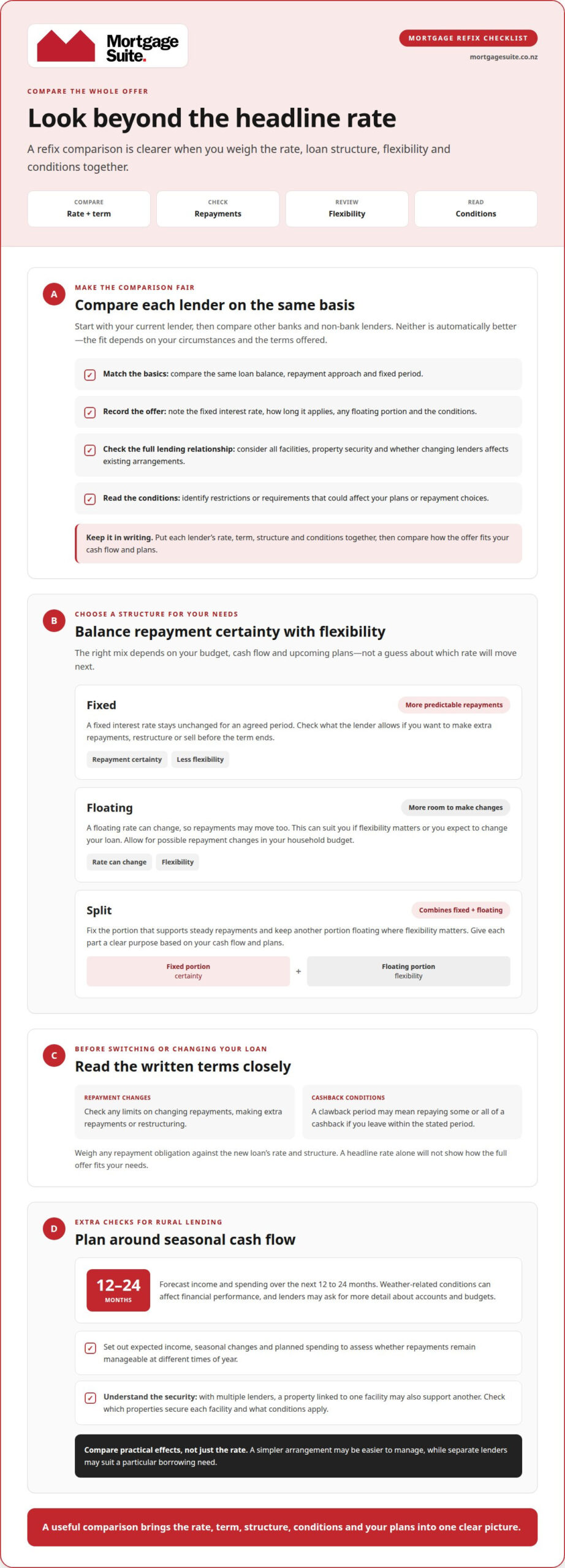
Compare your bank’s refix offer with alternatives by looking beyond the advertised rate. Assess the rate, fixed period, repayment options and conditions together. A lower rate may not suit you if the structure limits flexibility you need. Use the same loan balance and repayment approach when comparing offers, so you can make a like-for-like assessment.

Start with your current lender’s offer, then compare other banks and non-bank lenders. Ask how each option would affect your repayments and loan structure. A non-bank lender may be worth considering when mainstream bank criteria don’t fit your circumstances. Neither type of lender is automatically better: the right comparison depends on your income, security, plans and the terms available.

Use the same checklist for each lender. Record the fixed interest rate, how long it applies, any floating portion and conditions that affect how you manage the loan. Consider whether changing lenders would affect your existing lending arrangements. A headline rate won’t show the full picture if the offer changes your flexibility or requires a different security setup.

  • Compare like with like: Match the loan balance, repayment approach and fixed period across offers.
  • Read the conditions: Note restrictions or requirements that could affect your plans.
  • Review the structure: Check whether fixed and floating portions suit your need for certainty and access.
  • Consider the whole lending relationship: Look at how each lender treats all facilities and property security.

Rural borrowers have extra cash-flow factors to weigh. Forecast income and spending over the next 12 to 24 months before choosing a refix. Weather-related conditions can affect financial performance, and lenders may request more detail about accounts and budgets. Prepare a clear view of expected income, seasonal changes and planned spending. This helps you assess whether repayments remain manageable through different parts of the year.

Using multiple lenders for rural lending can also create complex security arrangements, including cross-collateralisation. This means a property linked to one facility may also support another. Before splitting lending across lenders, understand which properties secure each facility and what conditions apply. A simpler arrangement may be easier to manage, while separate lenders may suit a particular borrowing need. Compare the practical effects, not just the rate.

Keep your comparison in writing. Set out each lender’s rate, term, structure and conditions in one place, then identify the option that best fits your cash flow and plans. For rural lending, include the 12 to 24-month forecast. This turns a stressful choice into a clearer decision based on your actual circumstances.

2. Fixed, floating and split mortgage structures

Compare fixed mortgage rates and fees by matching the loan balance, fixed period and repayment type. Read each written offer for rate conditions, fee details and any limits on changing repayments. A headline rate is useful only when the surrounding terms also suit your needs.

A fixed interest rate stays unchanged for an agreed period, making repayments more predictable during that term. That certainty can help if your household budget has little room for unexpected changes. The trade-off is less flexibility: check what the lender allows if you want to make extra repayments, restructure or sell before the term ends.

A floating rate can change, so repayments may move when the lender changes its rate. This option can suit borrowers who value flexibility or expect to make changes to their loan. Factor the possibility of changing repayments into your household budget rather than assuming the current amount will stay the same.

A split structure combines fixed and floating portions. For example, you could fix the part of your loan that supports steady repayments and keep another portion floating for flexibility. Base the split on your cash flow and upcoming plans, not a guess about which rate will move next.

For rural borrowers, a split mortgage can combine a fixed portion of core term debt, a floating portion for flexibility and seasonal facilities for short-term cash-flow swings. This links different parts of the lending to different needs. Consider when income arrives, when expenses fall due and which funds need to remain accessible.

What mortgage refixing strategy suits changing interest rates and household budgets in New Zealand? Choose a fixed portion for repayment certainty and a floating portion where flexibility matters. The balance depends on your cash-flow needs and how much change your budget can absorb.

Cashbacks can affect a decision to refinance, but compare the offer with its conditions. A clawback period may require you to repay some or all of a cashback if you leave within the stated period. Read the written terms before switching, and weigh any repayment obligation against the new loan’s structure and rate.

Keep the comparison practical. Write down each portion’s purpose, rate type, repayment conditions and any relevant fee or cashback terms. Then assess the structure against your budget and plans. A suitable split gives each part of the loan a clear purpose, rather than dividing lending without a reason.

A rural mortgage refix in New Zealand can involve renegotiating the rate and loan structure with your current lender or splitting lending across multiple lenders. In either case, compare how each arrangement serves your cash-flow needs and preserves the flexibility your plans require.

3. Reviewing a mortgage before the fixed term expires

Yes, you can ask your bank to review the rate it offers for your next fixed term. Make a specific request, such as asking whether it can improve the rate or adjust the loan structure. Have your current loan details and preferred terms ready. A clear request gives the bank something practical to respond to.

Before speaking with your lender, prepare a concise snapshot of your mortgage. Include each loan portion, its balance, repayment type and current conditions. Note what you want to change, such as the repayment frequency or the amount you’d like to keep flexible. This helps keep the discussion focused on your needs.

Break fees are charges for ending or changing a fixed loan before its agreed term expires. Early repayment costs may also apply if you repay more than the loan terms allow. Read your loan documents and ask the lender for a written breakdown before making an early change. The terms and calculation determine the amount.

Use the review to check whether your current setup still reflects your circumstances. For example, a change in household income could affect what repayment amount feels manageable. List any planned property or borrowing changes, then consider how they might affect your loan structure. This gives you a practical basis for discussing options with your lender.

You can switch lenders when your fixed term expires. Compare the new lender’s written terms with your existing arrangement, including the steps needed to transfer the loan. Switching can involve charges or other costs, depending on the lending and transfer requirements. Ask for a clear breakdown before deciding, and compare the overall implications rather than focusing only on the rate.

Keep your review notes together. Record the lender’s offer, when it was provided, any conditions and questions that still need answers. If you discuss changes by phone, check the written terms afterwards. This makes it easier to compare what was discussed with the offer you’re being asked to accept.

Before agreeing to a new term, check how the proposed repayments fit your current budget. Consider whether you need the option to make extra repayments or change the structure later. A useful review ends with a clear record of the agreed rate, term, repayment arrangement and applicable conditions.

For rural borrowers in New Zealand, begin reviewing your mortgage six to twelve months before key fixed terms expire. Use that time to gather your loan details, preferred terms and planned changes, then identify what you need the lender to clarify. Setting out these points early can keep the review focused on the choices that matter to your household.

As expiry approaches, revisit the written offer alongside your notes. Check the rate, term, repayment arrangement, conditions and any costs tied to a change or transfer. If anything remains unclear, ask for an explanation in writing before deciding. Keep your decision grounded in what your budget can manage and whether the arrangement provides the flexibility you want.
Mortgage refixing strategy NZ: Compare rates and loan types

4. Staggering fixed-term expiry dates

Staggering means arranging fixed loan portions so they expire at different times. Instead of facing a single decision for the whole mortgage, you review each portion as its term ends. This can reduce the impact of a rate rise by preventing all your lending from refixing at once.

The main benefit is spreading rate changes across separate review points. If rates rise before one portion expires, that portion may refix at a higher rate while the others remain on their agreed terms. If rates fall, later expiry dates give you opportunities to consider the rates available then. Staggering spreads exposure; it doesn’t predict or prevent rate movements.

Decide how much of your mortgage to put in each portion by considering your budget and tolerance for repayment changes. A larger portion expiring at once can cause a more noticeable change to repayments. Smaller portions can spread that effect, but mean managing more individual dates and decisions. The right balance is personal, not a standard formula.

Before changing your schedule, map your existing loan portions and their expiry dates. Mark the portion that expires first, then consider whether the next expiry coincides with a planned change in household finances. For instance, if you expect a change in regular income, consider how a refix decision around that time could affect your available budget.

Staggering also has practical trade-offs. Each portion has its own rate, term and review point, so you’ll need to keep clear records. Maintain a loan schedule showing each portion, its expiry date, repayment arrangement and lender terms. A calendar reminder for each review can help you keep decisions distinct and avoid treating the mortgage as one undivided loan.

When a portion approaches expiry, assess it on its own merits. Consider the rate and terms available then, how its repayments fit your budget and whether the remaining portions still have the right schedule. A decision about one portion doesn’t have to dictate the next. Review the whole plan when circumstances change, but tie each refix choice to the portion reaching expiry.

Staggered dates are most useful when you can manage the extra administration and want to avoid concentrating every refix decision at one point. They won’t guarantee a lower rate or smoother repayments in every market. The practical aim is to make each decision manageable and keep future expiry dates visible, so you can approach them with a clear view of your mortgage.

5. What are current NZ mortgage refix rates by bank and fixed term?

Mortgage rates change, so a useful comparison needs the lender’s current offer and the fixed term you’re considering. Rather than relying on a single rate figure, compare the terms available for your loan and confirm how each offer applies to your circumstances. The rate alone won’t show whether the structure suits your budget.

Start with your bank’s current refix offer. Record the rate, fixed period, repayment conditions and date the offer applies. Then compare it with other available offers for the same loan balance and repayment approach. This keeps the comparison fair and helps you spot differences beyond the headline rate.

Fixed terms can have different rates at the same lender. Compare the options side by side using the same loan details. For example, look at the shorter and longer fixed periods available, then consider how each fits your expected budget and plans. Don’t assume a rate for one term applies to another.

A bank’s advertised rate may not be the final offer for every borrower. Your loan details and the lender’s terms affect what you’re offered. Ask for the rate and conditions that apply to your mortgage in writing. Note the date of each offer, so an older figure doesn’t distort your comparison.

Use a simple comparison record with these details:

  • Lender: Record which bank or lender made the offer.
  • Fixed period: Note the term linked to that rate.
  • Loan structure: Include any fixed and floating portions.
  • Conditions: Record repayment limits and any relevant offer terms.
  • Offer date: Write down when the lender provided the information.

For a clear decision, compare the same fixed period across lenders first, then compare other terms separately. If one offer has a lower rate but tighter repayment conditions, consider whether those limits fit your plans. A household expecting an income change may value flexibility differently from one seeking steady repayments.

Check whether your comparison includes any cashback terms or conditions associated with changing lenders. Read how long those conditions apply and what could happen if you move the loan again. Keep these details separate from the interest rate, so an upfront offer doesn’t distract from the ongoing loan terms.

Before accepting a refix, confirm that the rate, term and conditions match the lender’s written offer. If your current bank’s offer doesn’t meet your needs, use comparable written terms to discuss alternatives. A careful, dated comparison gives you a practical basis for choosing a mortgage structure that fits your budget.

Mortgage Suite: Home Loans to First Home Buyers

Mortgage Suite Ltd offers Home Loans to First Home Buyers, helping you consider your borrowing needs and mortgage structure. If reviewing your finances has raised questions about buying your first home, or you’re weighing a new loan against your household budget, this can be a useful next step.

Bring together your income, regular spending, existing lending and property plans before discussing your options. A clear picture of your finances can help you explore a loan structure suited to your circumstances, rather than focusing only on a headline rate. If a mainstream bank’s decision has left you unsure what to do next, you can explore alternative lending options.

Contact Mortgage Suite Ltd to discuss your home loan needs and possible next steps.

Make your next mortgage decision with confidence

Your next mortgage decision is a chance to make your borrowing fit the priorities ahead. A mortgage refixing strategy in NZ should reflect what you need from your loan and the changes you expect in your household plans. Take a moment to identify what matters most before deciding on your next step.

If you’d value a conversation about your options, discuss your situation and prepare for the decisions ahead. A clear discussion can help you frame the questions that matter and consider a path forward.

Talk through your mortgage options. A thoughtful next step can help you feel more prepared and in control.

Frequently Asked Questions

How does mortgage refixing work in New Zealand?

Refixing means agreeing a new fixed rate and term as your existing fixed term ends. Your lender presents the available options, and you choose a rate period and loan arrangement for the next term. For example, if your home loan has separate portions, you can decide on each as its term comes up. Check the new repayment amount and terms before accepting.

When should I refix my NZ mortgage before the fixed term expires?

Begin reviewing your mortgage six to twelve months before a key fixed term expires. Use that time to gather current loan details, note any changes to income or spending, and consider what repayment amount your budget can manage. For a rural household, include a cash-flow forecast for the next 12 to 24 months. This preparation gives you time to compare options before deciding.

Should I choose a short or long fixed term for a NZ home loan?

Choose a term based on how long you want repayment certainty and whether your plans may change. A longer term keeps the agreed rate in place for longer, while a shorter one brings the next review sooner. For example, if you expect a change in household income or property plans, consider how either term affects your flexibility and budget before choosing.

How do floating, fixed, and split mortgage strategies compare in NZ?

A fixed rate keeps the agreed rate in place for its term; a floating rate can change. A split arrangement combines both, so different loan portions serve different needs. For example, a household seeking predictable repayments could fix most of its lending while keeping a smaller portion flexible for planned changes. Compare repayment conditions and your capacity to manage changing payments before settling on a structure.

Article by

Krish Krishna

Experienced Financial Adviser with over 46 years of Banking and Mortgage broking experience and over $2.0 Billion in loan settlements.

Mortgage approval with bad credit in NZ: what lenders assess

Bad credit doesn’t automatically prevent a mortgage application in New Zealand. For mortgage approval with bad credit in NZ, lenders assess your full application, including whether the borrowing fits your financial position. A past credit issue matters, but it is not the whole story.

If you’ve been declined or feel uneasy about applying, it’s natural to wonder whether trying again is worthwhile. The uncertainty can feel heavy, especially when buying a home matters to you. Understanding how lenders assess applications can help you decide what to prepare and which questions to ask.

This guide explains the factors lenders consider and practical ways to present your circumstances clearly. You’ll learn how to prepare for a lender’s review, weigh your options and choose a sensible next step. The aim is to help you approach the process with confidence, without treating a credit setback as a personal judgement or assuming the outcome in advance.

Key Takeaways

  • Lenders assess whether your income can cover regular expenses, existing debt and likely mortgage repayments, not just your credit history.
  • A paid, older default may be viewed differently from a recent unpaid one, so explain the circumstances and show how your finances have changed.
  • Your property’s assessed value and the equity available can affect how a lender views the application and the security for the loan.
  • Review your credit report for errors, avoid unnecessary credit applications and organise clear records of your income and spending.
  • A decline from a mainstream bank doesn’t automatically close off other options; different lenders have different criteria for home loans.

Income, expenses and existing debt

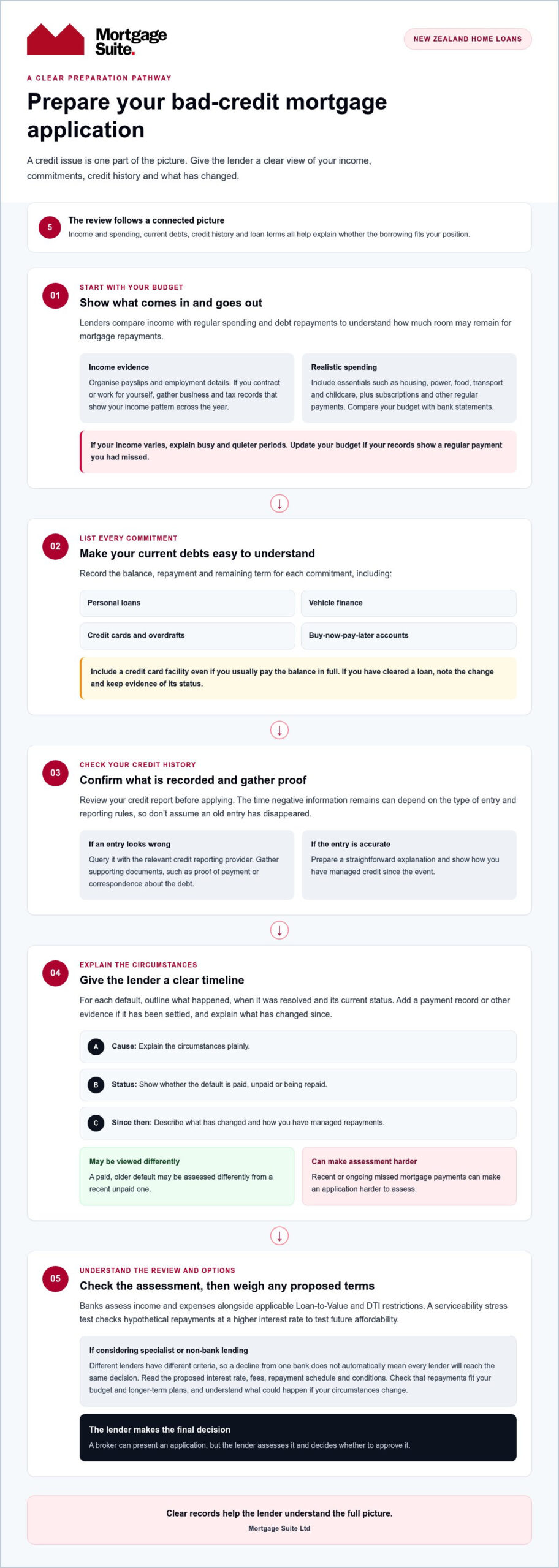
A lender compares your income with regular spending and debt repayments to assess how much room remains for a mortgage. The aim is to understand your household budget, not just your salary. For example, two applicants with similar incomes may have different borrowing capacity if one supports dependants or has higher regular commitments.

Show where your income comes from and how reliably it arrives. Employed applicants can organise payslips and employment details. If you earn through contracting or self-employment, gather business and tax records that show your income pattern across the year. A seasonal earner, for example, can distinguish a busy period from quieter months, helping the lender understand typical income rather than an unusually strong week.

Build a realistic record of household spending before applying. Include regular essentials such as housing, power, food, transport and childcare, as well as subscriptions and other recurring payments. Compare your bank statements with your budget. If your records show a sports fee or childcare payment you left out, update the budget rather than relying on an estimate that understates your commitments.

List every current credit commitment, including personal loans, vehicle finance, credit cards, overdrafts and buy-now-pay-later accounts. Record each balance, repayment and remaining term. A credit card limit can matter even if you usually pay the balance in full, so include the facility, not just the amount currently owed. If you’ve recently cleared a loan, note the change and keep evidence of its status.

The Reserve Bank’s current Loan-to-Value and DTI restrictions apply to banks’ residential lending in New Zealand. These restrictions sit alongside a bank’s assessment of your income and expenses. A serviceability stress test assesses hypothetical repayments at a higher interest rate to test future affordability. It considers how the proposed repayments fit your budget under that assessment.

Before applying, prepare a simple monthly budget and compare it with your account activity. Highlight variable income, one-off expenses and debts nearing repayment. If you’re already struggling to meet mortgage payments, contact your lender as early as possible. A clear summary of what you can afford and where you’re under pressure gives the lender useful context for discussing your position.

Lender assessment of credit history and defaults

For a bad-credit application, prepare identification, income evidence, bank statements, debt details and records showing the status of any default. How long negative information remains on a New Zealand credit report depends on the type of entry and reporting rules.

Lender options for bad-credit borrowers

Mainstream banks and non-bank lenders assess home loan applications against their own criteria. A decline from one bank doesn’t automatically mean every lender will reach the same decision. A lender may look closely at the cause of a default, whether it has been paid, your recent repayment history and the strength of the rest of your application.

A paid, older default may be assessed differently from a recent unpaid default. Recent or ongoing missed mortgage payments can make an application harder to assess. Explain clearly what happened, when you resolved it and what has changed since. Where applicable, include a payment record or other evidence that the default is settled.

Non-bank or specialist lending may provide another route when a mainstream bank’s criteria don’t fit your circumstances. Read the proposed loan terms carefully, including the interest rate, fees, repayment schedule and any conditions. Consider whether repayments remain manageable and how the loan fits your longer-term plans. A mortgage broker can present an application, but the lender makes the final decision after assessing it.

How long negative credit information remains

There isn’t one timeframe for every type of negative entry on a New Zealand credit report. The entry type and reporting rules affect how long information remains visible, while lenders may weigh an older paid default differently from a recent unpaid one. Don’t assume an old entry has disappeared; review your report before applying.

If you believe an entry on your credit report is wrong, contact the relevant credit reporting provider to query it. Gather supporting documents, such as proof of payment or correspondence about the debt. If the information is accurate, prepare a straightforward explanation and show how you’ve managed credit since the event. This gives the lender context instead of leaving a negative entry unexplained.

Organise your application documents into clear groups: identity, income, regular spending, current debts and credit history. Include a short timeline for each default, covering the original issue, any repayment arrangement and its current status. If circumstances contributed to missed payments, explain them plainly and show what has changed. Consistent records help the lender compare your explanation with the information in your application.

With specialist lending, consider the whole arrangement, not only whether an application can proceed. Check how repayments are structured, whether the terms suit your income pattern and what could happen if your circumstances change. Make sure you understand all fees and conditions before committing. Comparing proposed repayments with your household budget can help you judge whether the loan is sustainable.

Property value and home equity

There isn’t one deposit amount that suits every bad-credit home loan application. The deposit depends on the property value, the amount borrowed and the lender’s assessment of your application. A larger contribution can reduce the amount you need to borrow, but lenders also consider whether repayments fit your finances and how your credit history affects the application.

The property matters because it secures the mortgage. The lender considers its value alongside the loan amount, rather than relying only on the price you hope to pay. If the lender’s valuation is below the purchase price, you may need to reconsider your contribution or the property you’re considering.

Home equity is the property’s value minus the debt secured against it. For example, a New Zealand property worth NZ$800,000 with a NZ$500,000 mortgage has approximately NZ$300,000 in equity before other costs or secured debts. This is an estimate, not necessarily money you can freely use for another purpose.

Other lending secured against the property can reduce the equity available. If you’re relying on an existing home, list each secured debt and use current balances, not the original loan amounts. For example, a separate loan secured against the same property must be considered alongside the mortgage when assessing the overall position.

A lender’s valuation can differ from your estimate. The property’s condition, features and sale evidence may affect its assessed value. If the valuation is lower than expected, you may need to adjust the loan request. That can affect the deposit you need to contribute, so leave room to revisit your figures before committing to a purchase.

The Reserve Bank’s current Loan-to-Value restrictions apply to banks’ residential lending in New Zealand. These restrictions limit how much a bank can lend compared with a property’s value. They form one part of the assessment, alongside the bank’s own criteria and your financial position. Non-bank lenders assess applications under their own criteria.

Before applying, write down the property’s estimated value, proposed mortgage, deposit or available equity, and any debts secured against the property. Keep the figures separate and identify which funds are available for the purchase. If your credit history includes a default, explain it accurately. Equity can support the security assessment, but it doesn’t replace the lender’s review of your finances.

Mortgage approval with bad credit in NZ: what lenders assess

Steps to improve a mortgage application

A clear application helps lenders understand your finances and credit history. Focus on accurate records, manageable debt and a straightforward explanation of past issues.

Strengthening a mortgage application

Strengthening an application means making your financial position easier to assess before you apply. Complete, consistent information helps a lender understand your current repayment habits alongside earlier credit problems.

  • Avoid unnecessary credit applications, which can add new enquiries to your credit history.
  • Pay existing bills and debt repayments on time, and keep records showing your payment history.
  • List every debt and credit facility accurately, including balances and repayment commitments.
  • Explain any default clearly, including whether it has been paid and what changed afterwards.

Check that your application, bank statements and supporting documents tell the same story. If you’ve cleared a debt, for example, include evidence of its current status rather than relying on memory. If your income or spending has changed, explain when and why. A short, factual explanation is more useful than leaving a lender to interpret a gap or mismatch.

Review your recent account activity before applying. Regular unarranged overdraft use or missed payments may prompt questions about how you manage repayments. Avoid taking on new debt while preparing your application, and keep your spending records up to date. These steps won’t erase past credit events, but they can show how you manage your finances now.

Checking and correcting a credit report

Reviewing your credit report means checking the information held about your borrowing and repayment history. Before applying, look for errors, unfamiliar accounts and debts recorded with the wrong status. If you believe an entry is incorrect, contact the relevant credit reporting provider to query it.

Compare each entry with your records, such as account statements, payment confirmations and correspondence about a debt. Note the creditor, account details and what you believe is wrong. Send the provider evidence supporting your query, and keep copies of your request and any response.

If the entry is accurate, prepare a brief explanation for the lender rather than disputing it. Include the circumstances, whether the debt has been paid and any steps taken to prevent a repeat. For example, explain how a repayment arrangement brought an overdue account up to date, if applicable. Keep your explanation consistent with the dates and documents in your application.

After reviewing your report, update your application documents to reflect any corrected information. Keep the provider’s response with your records so you can explain a change if the lender asks about it. Avoid applying for several new credit facilities while you prepare. A tidy, consistent file gives a clearer picture of your current position.

Which New Zealand banks and non-bank lenders offer home loans to borrowers with bad credit?

There isn’t one fixed list of New Zealand lenders that accepts every bad-credit application. Banks and non-bank lenders assess applications using their own criteria, so the decision depends on your full financial picture, not just the type of lender.

A mainstream bank may assess your income, debts, credit history, deposit and property security together. If one bank declines, that doesn’t automatically determine how another lender will view your circumstances. For example, an older paid default and a recent unpaid default may be assessed differently.

Non-bank lenders may be another option when a bank’s criteria don’t suit your application. They still assess whether repayments are manageable and whether the property supports the lending. Their criteria and loan terms can differ, so compare the whole arrangement rather than focusing only on whether an application can proceed.

Before approaching a lender, organise a clear summary of:

  • Your income sources and regular household spending.
  • Every current debt, repayment and credit facility.
  • Any default, including its status and what has changed since.
  • The property value, deposit or available equity.

This helps show how your current position addresses the concerns behind an earlier decline. If the issue was a default, include evidence of payment where relevant. If existing debt affected affordability, show the current balances and repayments. The lender can then assess your application against its criteria using up-to-date information.

Compare the proposed interest rate, fees, repayment structure and loan conditions. A lower advertised rate doesn’t necessarily mean refinancing will reduce the overall cost. Refinancing expenses can include interest, loan fees, legal costs, valuation costs and break costs on an existing fixed-rate loan. Include these in your comparison before deciding whether a new loan suits your plans.

A non-bank or specialist loan may have different terms from a mainstream bank’s offer. Read the repayment schedule and conditions, and consider whether payments remain manageable if your income or expenses change. A repayment that fits today’s budget, for example, may feel different after a change in work hours or household costs.

To narrow your options, prepare one complete, accurate application rather than making unnecessary credit applications to several lenders. Explain the reason for the credit issue, what has improved and how the proposed repayments fit your budget. Different criteria may offer another route, but each lender makes its own assessment.

Mainstream banks and non-bank lenders may both consider home loan applications from borrowers with bad credit. Which lender may suit you depends on its criteria and your full financial picture.

Mortgage Suite: Home Loans to First Home Buyers

Mortgage Suite Ltd can help you explore Home Loans to First Home Buyers if your credit history has made the next step feel uncertain. A mainstream bank’s decision isn’t the whole picture: your income, debts, deposit and property plans all help shape an application.

Bring together your credit report, details of any defaults, income records and a clear summary of your current debts. Mortgage Suite Ltd can help you understand how these pieces fit together and discuss home loan options suited to your circumstances. The aim is to clarify your position and help you consider the lending structure, repayments and longer-term plans, rather than focusing on one headline rate.

If you’re ready to discuss your first-home application, contact Mortgage Suite Ltd to talk through your next steps.

Take your next step with a clear plan

A credit setback can make planning a home purchase feel daunting, but it doesn’t define every future lending conversation. Use your next step to understand what a lender may need to see and whether your plans fit your current financial position.

For mortgage approval with bad credit in NZ, focus on presenting your circumstances clearly and choosing a loan structure that remains workable over time. Mortgage Suite Ltd can discuss Home Loans to First Home Buyers, Residential Investment property loans and Business Loans, depending on the purpose of your borrowing.

A lender makes the final decision after assessing your application, so approval isn’t guaranteed. A thoughtful conversation can still help you identify what to prepare and which questions matter for your next move.

Contact Mortgage Suite Ltd to discuss your borrowing plans and take the next step with a clearer picture of your options.

Frequently Asked Questions

Can you get mortgage approval in New Zealand with bad credit?

Yes, it may be possible, because lenders assess applications using their own criteria and consider more than a credit entry. They may weigh the type and status of the issue alongside your current finances and the property securing the loan. A recent unpaid default differs from an older paid one. The lender makes the final decision after reviewing your application, so approval isn’t assured.

What credit score do NZ mortgage lenders require?

There isn’t one credit-score number that guarantees mortgage approval in New Zealand. Lenders use their own criteria, and a score is only one part of the information they may consider. They also assess the details behind negative entries, your current financial position and the property. If you’re unsure what appears on your file, review your credit report before applying and query any information you believe is incorrect.

How do missed payments, defaults, debt collection, and bankruptcy affect a NZ mortgage application?

Missed mortgage payments, defaults, collection activity and bankruptcy can all prompt closer scrutiny of your credit history. Recent or ongoing missed mortgage payments can make refinancing more difficult. A lender may assess an older paid default differently from a recent unpaid one. For debt collection or bankruptcy, be ready to explain the circumstances and provide accurate records of the current status. Don’t leave unresolved entries unexplained.

How can you improve your chances of mortgage approval with bad credit in New Zealand?

Prepare before applying: review your credit report, query any incorrect entry with the relevant reporting provider and avoid unnecessary credit applications. Make sure your explanation of past problems matches the dates and status in your documents. If your situation has changed, describe how, such as a debt being paid or income becoming more consistent. A complete, accurate application helps lenders assess your current position.

Article by

Krish Krishna

Experienced Financial Adviser with over 46 years of Banking and Mortgage broking experience and over $2.0 Billion in loan settlements.