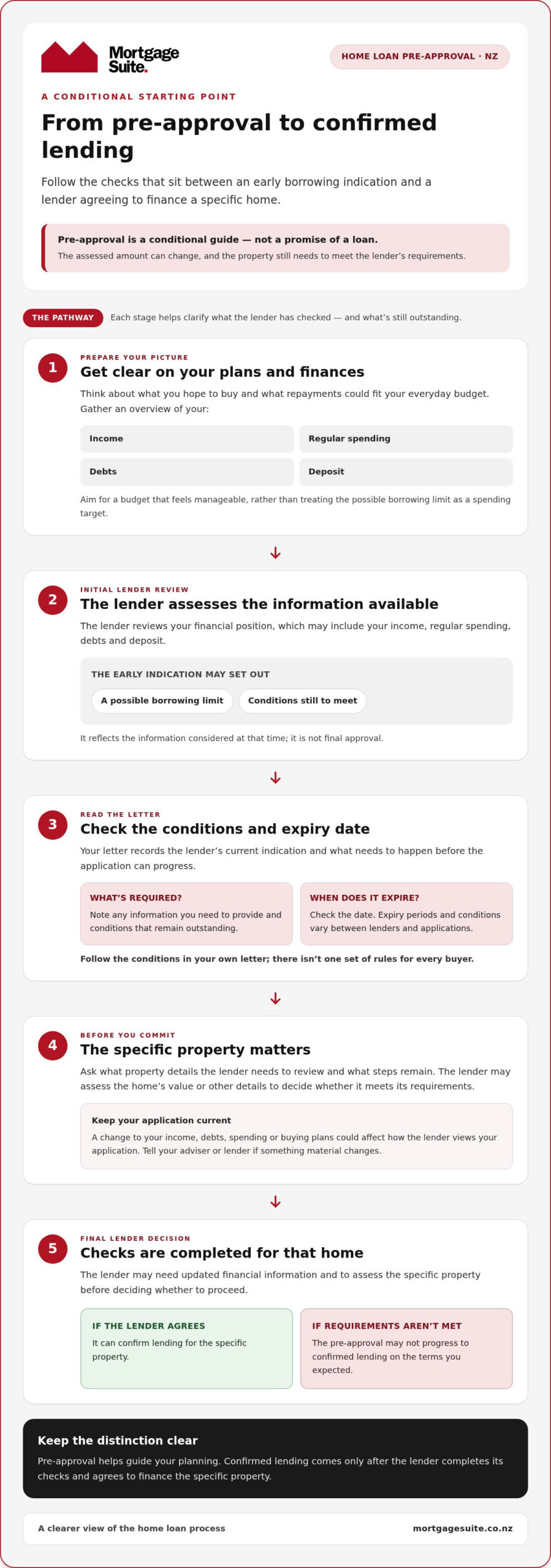

Finding a property is not the finish line. Approval in principle for a mortgage in NZ usually takes 2 to 5 working days once the lender has all the required documents, and is typically valid for 60 to 90 days, depending on the lender. It gives you a borrowing guide, but the lender still needs to assess the property and your financial situation before confirming the loan.
It’s natural to want a clear answer before making an offer, especially when buying a home already feels like a lot to manage. This guide explains what approval in principle means, what documents a lender may ask for and how long the decision can take. You’ll also learn what to do once you’ve found a property, from sharing its details with the lender to progressing towards formal approval.
Key Takeaways
- Gather at least 3 months of bank statements from all your accounts, and be ready to explain regular spending or unusual transactions.
- Prepare income records that fit your work situation, including tax records or financial statements if you’re self-employed.
- A full credit check leaves a record on your credit file, so understand the effect before making multiple applications.
- Once you find a property, share its details with the lender; they may also ask for the signed sale and purchase agreement, a valuation or a LIM report.
- Approval in principle is a useful guide, but the lender still needs to assess the property and your finances before confirming the home loan.
Bank statements and deposit evidence
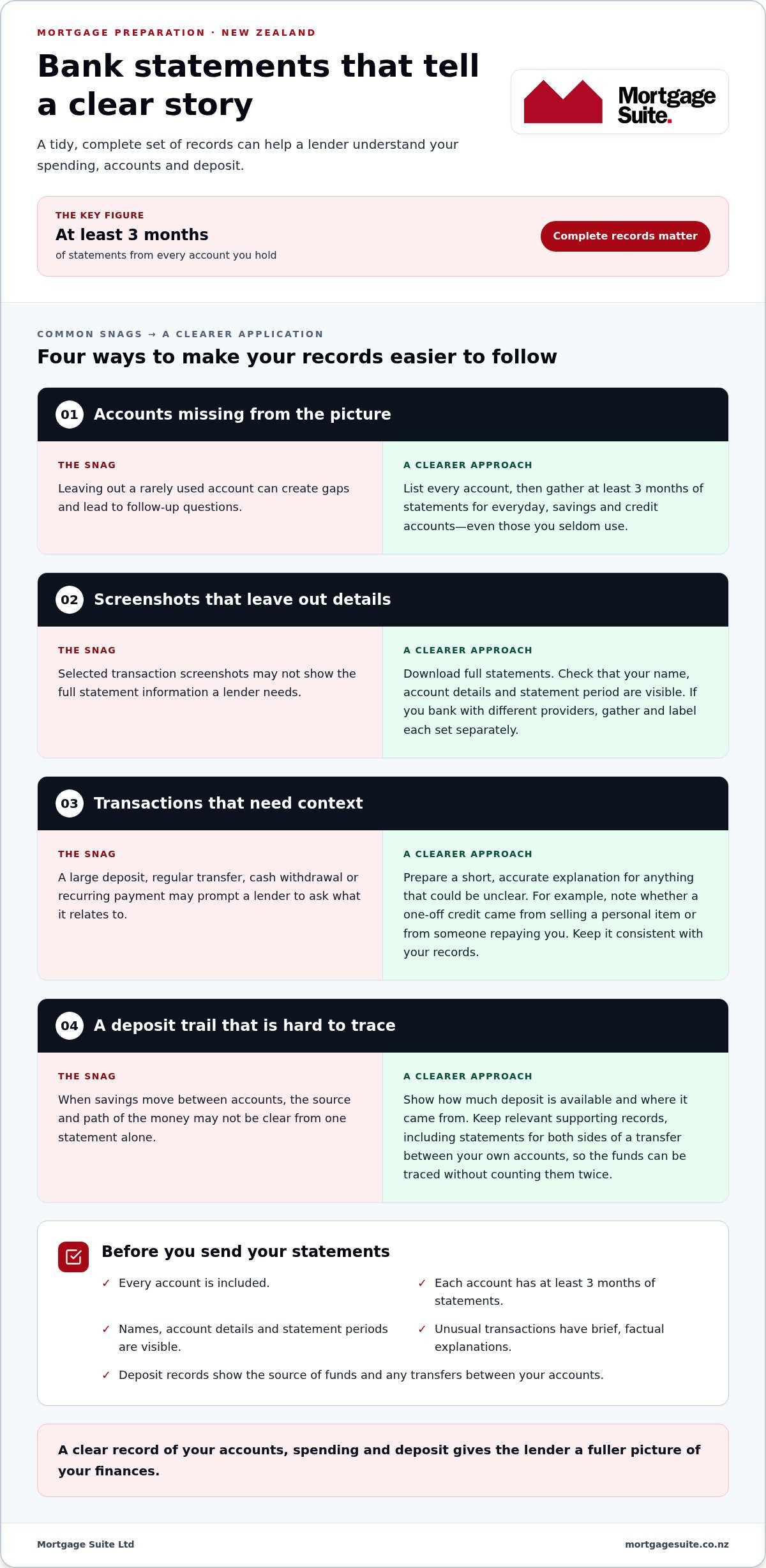
Bank statements help a lender understand how you manage money, not just what you earn. For a New Zealand home-loan application, prepare at least 3 months of statements from all your accounts. Include everyday, savings and credit accounts, even if you rarely use them. Missing accounts can leave gaps in the picture and lead to follow-up questions.
Download full bank statements instead of sending selected transaction screenshots. Check that each document shows your name, account details and statement period. If you have accounts with different banks, gather the statements separately and label them clearly. Organising files by account makes it easier to send a complete set with your application.
Transactions help explain your regular commitments and spending. A lender might ask about a large deposit, regular transfers, cash withdrawals or recurring payments. Add a short, accurate note if a transaction could be unclear. For example, explain whether a one-off credit came from selling a personal item or receiving repayment from someone you know. Keep the explanation consistent with your records.
Your deposit evidence should show how much is available and where it came from. Match account balances with supporting records where relevant, such as a savings history or documents showing a recent transfer. If money moved between your own accounts, keep statements for both sides of the transfer. This helps the lender trace the funds without counting the same money twice.
Deposit size matters. Most New Zealand lenders currently require a minimum home-loan deposit of 20%. A First Home Loan can require a deposit of at least 5% of the home’s purchase price. These are different lending pathways, so identify which one applies before relying on a deposit figure.
- List every account you hold, then download at least 3 months of statements for each.
- Check that statement dates, account names and balances are visible.
- Keep records that explain where your deposit came from and how transfers moved.
- Write brief explanations for unusual transactions before the lender asks.
For example, if your deposit is spread across two savings accounts, include both sets of statements and identify the balance in each. If a recent transfer brought the savings together, keep the statements showing the money leaving one account and arriving in the other. Clear records help the lender trace your deposit and assess your application with fewer avoidable questions.
Credit checks and multiple applications
A full credit check for mortgage pre-approval in New Zealand leaves a record on your credit file. Lenders use the application process to assess your financial position, so it helps to know when a check is being made. Before applying, ask whether the process involves a full credit check or only an initial discussion. Knowing the difference can help you plan your next steps.
Applying to several lenders at once may seem like a quick way to compare options. However, each full credit check can leave a record, so avoid submitting applications without a clear reason. First, gather details about your income, deposit and spending. Use them to consider which lending approach may suit your circumstances before deciding where to apply.
Your credit file is one part of a lender’s assessment, not a complete picture of your home-buying plans. Your application also needs to explain the loan you want and how repayments fit your budget. Include accurate details of existing debts and credit facilities rather than assuming the lender will infer them. Clear information helps keep your application consistent.
- Ask whether a lender’s first review includes a full credit check.
- Keep a record of the lenders you approach and when you apply.
- Use the same accurate details for income, debt and regular commitments.
- Read each lender’s requests carefully before sending further documents.
For example, if you’ve spoken with one lender and want to approach another, note whether the first conversation included a full credit check. If it did, mention that when discussing your next application. Keeping a clear record helps you understand what has happened and avoid duplicate applications made simply because the process feels uncertain.
Questions about credit can feel personal, but they are a practical part of assessing a mortgage application. If a lender asks about a missed payment or an existing credit facility, answer directly and provide relevant context. For instance, explain whether a payment issue was temporary or whether an account is still open. Keep your explanation factual and consistent with your documents.
Before applying, make a simple application plan. Note which lender you intend to approach, what documents are needed and whether a full credit check will take place. When comparing lending options, focus on how each proposed loan fits your budget and property plans, not on making more applications. A considered approach helps you understand decisions and respond promptly to follow-up questions.
Income documents for an application
For mortgage pre-approval, New Zealand banks assess evidence of your income. They may ask for your last 2 years of tax records, and self-employed applicants should prepare their last 2 years of financial statements.
Income document types
The right records depend on how you earn. Tax records show income over time, while financial statements help explain self-employment income. Use documents covering the periods requested, and make sure names and figures are readable. If your income comes from different sources, organise the evidence by source so the lender can follow the details.
- Gather your last 2 years of tax records as income evidence.
- If you’re self-employed, prepare your last 2 years of financial statements.
- Group records by tax year and label each file clearly.
Compare the documents before sending them. For example, if a tax record and a financial statement show different income figures, explain what each figure represents. One may show business income while another records your personal income. Clear labels and a brief explanation help the lender understand the difference without guessing.
Keep the original files together, then make a separate set for your application. This makes it easier to respond if a lender asks for a particular year or income source. Don’t alter figures or crop out surrounding details. A complete document is easier to assess than a partial image.
Bank document requirements
What documents do NZ banks require for mortgage pre-approval? Prepare your last 2 years of tax records, and, if you’re self-employed, your last 2 years of financial statements. The lender’s requests depend on how you earn and what it needs to understand your income.
- Check which income periods the application asks you to provide.
- Include all relevant pages, not just the page showing a total.
- Use clear file names, such as “tax records” and the year covered.
- Keep digital copies ready if the lender requests another document.
Before submitting, check that each file opens and its text is legible. Make sure the applicant’s name matches across the records, and arrange documents in date order. If you’re applying with another borrower, keep each person’s income documents in a separate folder. This helps show whose records support each part of the application.
Self-employed applicants can make the review clearer by keeping financial statements alongside matching tax records. For example, label both sets with the same year, then check that they cover the period requested. If a document uses business terms you find unclear, add a plain-English note instead of editing the original figures. This gives the lender context while preserving the source record.
Meaning and conditions of mortgage pre-approval
Mortgage pre-approval is a lender’s conditional view of your borrowing, based on the information available at that stage. It can guide your property search, but it isn’t final approval for a specific home.
Serviceability assessment
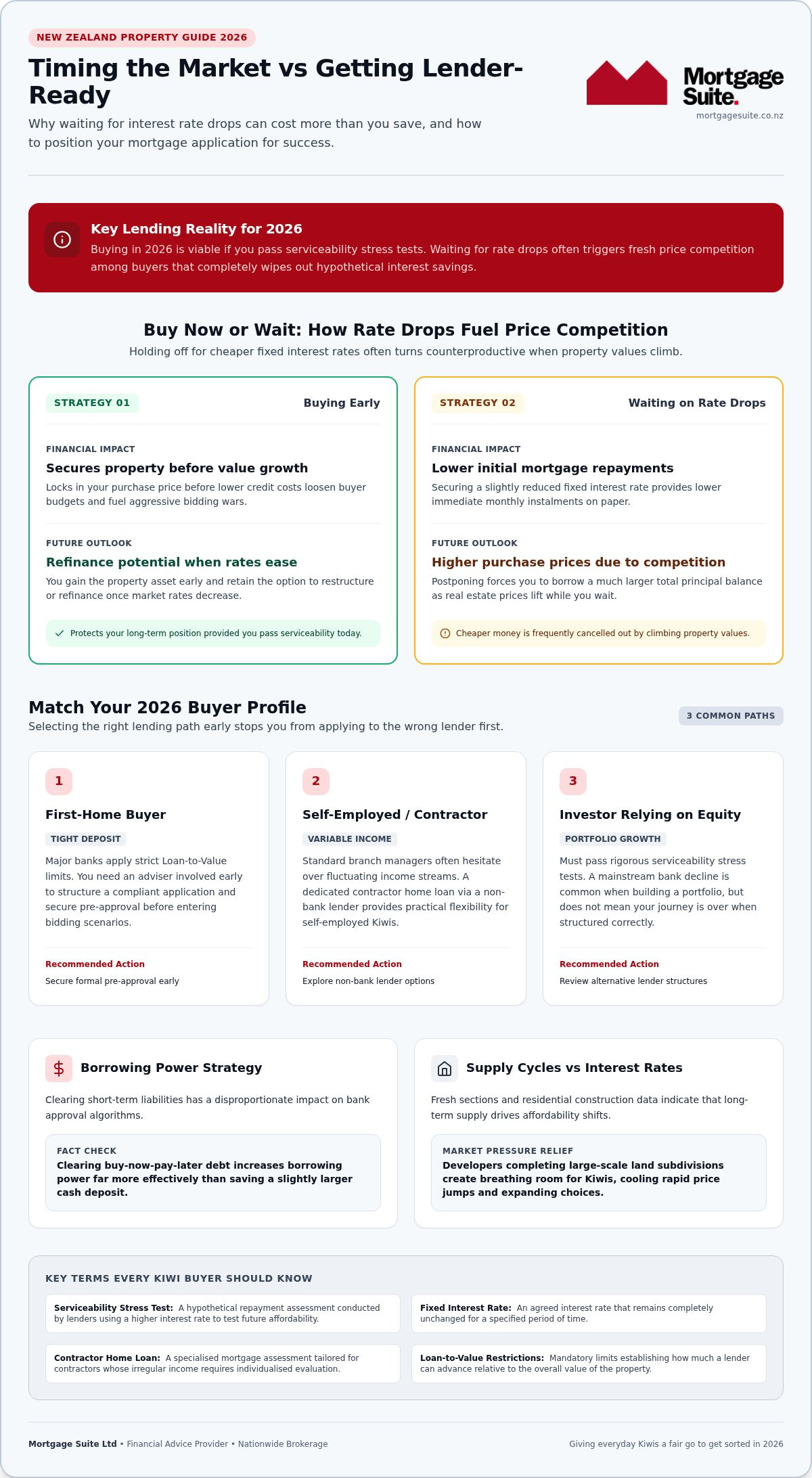
Serviceability means whether your income can support proposed repayments alongside your other financial commitments. A lender may use a serviceability stress test, assessing repayments at a higher hypothetical interest rate to test affordability if rates change.
Debt-to-income limits and stress-test rates are different assessment tools. Don’t assume the same figure applies across every New Zealand lender. Consider how a lender assesses your income, debts and regular spending together. Existing credit limits and other repayments can also affect the amount it considers affordable.
Bank and broker approval differences
A bank assesses your application under its own lending criteria and makes its own pre-approval decision. A mortgage broker can help prepare and present your application to a lender, but the lender makes the decision.
A broker’s approval in principle still depends on the lender’s assessment. Compare what the decision covers, which conditions remain and whether a specific property has been assessed. Neither a broker’s summary nor a bank’s conditional pre-approval is a binding commitment from the lender to lend. Formal unconditional approval is that commitment.
Loan-to-value ratio rules
The loan-to-value ratio compares the amount borrowed with the property’s value. A larger deposit means you borrow a smaller share of the property’s value, which can affect whether your application fits a lender’s criteria.
Use a realistic purchase range and deposit amount when discussing pre-approval. The lender may need information about a specific property before confirming the loan. If the property value or your deposit differs from the details used earlier, the lender may need to reassess your application against its criteria.
Approval process and conditions
Conditional pre-approval is an early assessment of your borrowing, not a final decision on a particular property. The next steps depend on the lender’s conditions, including its assessment of the home and whether your financial details are still current.
Read the written decision carefully and note what the lender still needs. For example, it may require property information or a signed sale and purchase agreement before proceeding. Keep your details consistent throughout the application, and tell the lender if your circumstances or purchase plans change.
Pre-approval processing time and validity
Once a lender has all required documents, a mortgage pre-approval decision commonly takes 2 to 5 working days in New Zealand. The approval is typically valid for 60 to 90 days, depending on the lender. Use those timeframes to plan your property search, while checking the expiry date and conditions stated in your decision.
Processing starts after the lender receives the information it needs, not necessarily when you first make contact. Missing documents or unanswered questions can delay the assessment. Before submitting, check that each requested item is included, readable and covers the right period. If the lender asks for clarification, provide the specific record or explanation requested.
Keep your approval letter or email somewhere easy to access. Note its expiry date in your calendar and allow time to act before it lapses. For example, if you receive approval while still searching, check the date before making an offer later. A valid approval helps guide your budget, but it doesn’t replace the lender’s assessment of a particular property.
After finding a home, give the lender the property information it requests. Lenders in New Zealand generally need details about the property before confirming a home loan, even if you have conditional pre-approval. The lender may also ask for a signed sale and purchase agreement. This property review is separate from the assessment of your borrowing position.
If you need a home loan for an auction purchase, arrange conditional pre-approval before bidding. Auctions can move quickly, so understand your borrowing range and the conditions attached before auction day. A conditional decision is not the same as unconditional approval, and it doesn’t confirm that every property will meet the lender’s requirements.
Your finances also need to remain consistent with the information used for pre-approval. A change in income, debt or other commitments may affect the lender’s assessment. If something changes during your search, tell the lender before relying on the earlier decision. This helps keep the next assessment aligned with your current circumstances.
- Record the lender’s stated expiry date and conditions.
- Send requested documents promptly and answer follow-up questions clearly.
- Once you find a property, provide the details the lender needs for its review.
- Before an auction, understand your conditional approval and borrowing limit.
Mortgage Suite: Home Loans to First Home Buyers
Mortgage Suite Ltd helps first-home buyers explore home-loan options and prepare for the steps from pre-approval to a property-specific application. If a mainstream bank’s criteria don’t fit your circumstances, a decline doesn’t automatically end the conversation. Mortgage Suite Ltd also specialises in 2nd Tier Loans for borrowers who don’t fit mainstream-bank criteria, although lending still depends on the lender’s assessment.
Bring your borrowing questions and pre-approval conditions together to discuss a path that suits your goals. For support with your home-loan plans, contact Mortgage Suite Ltd to start a conversation.
Take your next step with confidence
Your next step is to turn your borrowing estimate into a plan that fits your goals. Before speaking with a lender, decide what matters most, such as manageable repayments or flexibility if your plans change. Approval in principle can help frame that conversation, while your chosen property and circumstances shape the lending decision.
If you’d like support thinking through your options, contact Mortgage Suite Ltd about pre-approval. A clear plan can make the property search feel more manageable, one considered step at a time.
Frequently Asked Questions
What happens after you find a property?
Start by comparing the property with the assumptions behind your borrowing plan. Note the agreed price, any conditions in the sale and purchase agreement, and when you need the lender’s response. Keep copies of correspondence and send requested documents together, clearly labelled. If you’re considering an auction, remember to arrange conditional pre-approval before bidding, rather than relying on a decision made afterwards.
What is mortgage pre-approval?
Mortgage pre-approval is an early lender assessment based on your financial details, designed to help set a sensible property-search range. Use it to compare homes with your budget, not as a reason to borrow the maximum offered. Before making an offer, consider how repayments would fit your spending plans and whether the proposed loan suits your longer-term goals.
Will applying for pre-approval affect my credit score in NZ?
A full credit check leaves a record on your credit file, but that record is not the same as a credit-score result. Ask the lender whether its pre-approval process includes a full enquiry, and note the date and purpose. If you’re unsure about information on your file, review it before applying so you can accurately explain any errors or unfamiliar entries.
What is an approval in principle mortgage in NZ?
It’s a lender’s preliminary view of your borrowing based on the information supplied, not a final decision on a particular home. Read the written terms carefully, including the amount, expiry date and outstanding conditions. For instance, an approval might guide your search but still require further steps before the lender commits to the loan. Keep the letter accessible so you can refer to its specific conditions.
How long does mortgage approval in principle last in NZ?
Pre-approval is typically valid for 60 to 90 days in New Zealand, depending on the lender. Use the date in your decision letter as your reference, since the lender’s stated terms apply to your application. If your search is taking longer, plan ahead rather than relying on an expired decision. Keep a note of when it was issued and make a fresh plan with the lender if needed.
Is mortgage approval in principle legally binding in New Zealand?
No. Conditional pre-approval is not the lender’s binding commitment to provide a loan. Formal unconditional approval is the lender’s commitment to lend. Keep that distinction in mind when planning a purchase, especially if your offer depends on finance. Read the written conditions closely, and don’t treat a preliminary decision as permission to proceed without completing the lender’s required steps.
How much deposit do you need for a mortgage in NZ, including low-deposit options?
Most New Zealand lenders currently require a minimum home-loan deposit of 20%. A First Home Loan requires at least 5% of the home’s purchase price. These figures describe different lending pathways, not automatic approval thresholds. Before setting your search budget, work out how much deposit you can document and whether the relevant pathway fits your circumstances. The lender assesses the full application as well.
How do you apply for mortgage pre-approval in New Zealand, and how long does it take?
Choose a lender or discuss your application with a mortgage broker, then provide the documents requested and answer follow-up questions. Lenders commonly take 2 to 5 working days to decide after receiving all required documents. To make the process easier to manage, keep a record of what you’ve sent and what remains outstanding. That way, you can respond promptly if the lender asks for clarification.