
Non-Conforming Home Loans in New Zealand: A 2026 Guide for When the Bank Says No

What if a “no” from your bank wasn’t a dead end, but actually a signpost pointing you toward a more tailored way to buy your home? It’s incredibly disheartening to feel like you’ve failed just because you don’t fit a specific box, especially when you’ve worked hard to build a successful business or establish yourself as a contractor. You’re certainly not alone in feeling frustrated by complex lending rules that seem designed to keep you out of the market. The reality is that mainstream banks often overlook capable borrowers, which is why non-conforming home loans New Zealand have become such a vital tool for Kiwis in 2026.

In this guide, you’ll discover how these flexible loans provide a legitimate pathway to homeownership for those with non-standard income or unique financial backgrounds. We’ll show you how to move past the stress of rejection and build a clear plan to secure a property now, with a view to refinancing later as your situation evolves. You will gain the confidence to stop waiting on the sidelines and start your journey toward owning your own home today.

Key Takeaways

  • Understand that “non-conforming” simply means your situation doesn’t fit a standard bank’s checklist, and these loans are fully regulated and safe options.
  • See how non-conforming home loans New Zealand provide a vital path forward for self-employed Kiwis or those with minor credit issues.
  • Learn how to use a “bridge strategy” to buy your home now and plan for a move back to a mainstream lender in a few years.
  • Get the facts on interest rates and fees so you can weigh the cost of the loan against the long-term benefit of getting onto the property ladder.
  • Discover how working with a specialist gives you access to lenders who don’t work directly with the public, opening doors that often seem closed.

What exactly is a non-conforming home loan in New Zealand?

Think of the major banks like a high-end tailor who only makes one size of suit. If you happen to be a bit taller or broader than their standard template, you’re out of luck. Mainstream lenders like ANZ or ASB have very rigid checklists. If you miss a single tick, even for something small, they often can’t help you. This is why non-conforming home loans New Zealand have become a vital alternative for many Kiwis whose lives don’t fit a standard spreadsheet.

Essentially, “non-conforming” is just a term for a mortgage that sits outside the traditional lending rules. If you are asking, What is a non-conforming loan?, it’s a financial tool designed for people who are actually great borrowers but have non-standard circumstances. In 2026, the “big four” banks have tightened their belts even further. With debt-to-income ratios capped at 6 and a more cautious approach to self-employed income, more people are finding themselves looking for these alternative options.

It’s important to understand that these aren’t “shadowy” or unregulated products. They are perfectly legal and must comply with the Credit Contracts and Consumer Finance Act (CCCFA). You get the same level of legal protection as you would with any other mortgage. The main difference is that these lenders are willing to look at your whole story, not just the last three months of your bank statements.

The difference between “Non-Bank” and “Non-Conforming”

Many people use these terms interchangeably, but they mean different things. A “non-bank” is the type of institution, it’s a lender that isn’t a traditional registered bank. “Non-conforming” describes the type of loan criteria being used. Non-conforming loans are flexible financial solutions designed for people whose income or credit history doesn’t match the rigid templates used by traditional banks. You might even find that a non-bank lender is the best fit even if you have a perfect credit score, simply because they can be more creative with how they structure your debt.

Who are the 2nd tier lenders in NZ?

In the New Zealand market, 2nd tier lender New Zealand options include building societies, credit unions, and specialist finance companies. They are often funded by wholesale investment markets rather than customer deposits, which gives them the freedom to be more flexible with their approvals. While they have more room to say “yes,” they are still committed to responsible lending. They want to ensure you can comfortably manage your repayments, making non-conforming home loans New Zealand a safe and strategic way to enter the property market when the big banks won’t budge.

Common reasons you might not “fit the box” in 2026

It feels personal when a bank says no. You’ve worked hard, saved your deposit, and found a place you love, only to be told you don’t meet a specific requirement. Often, a rejection isn’t about your ability to pay back a loan. It’s usually because your life doesn’t align with the rigid computer models the big banks use. Since the introduction of tighter lending rules, many Kiwis have been declined for things as small as their personal spending habits or the type of house they want to buy. This is where non-conforming home loans New Zealand provide a much-needed alternative.

There are several common reasons why a mainstream bank might turn you away in 2026:

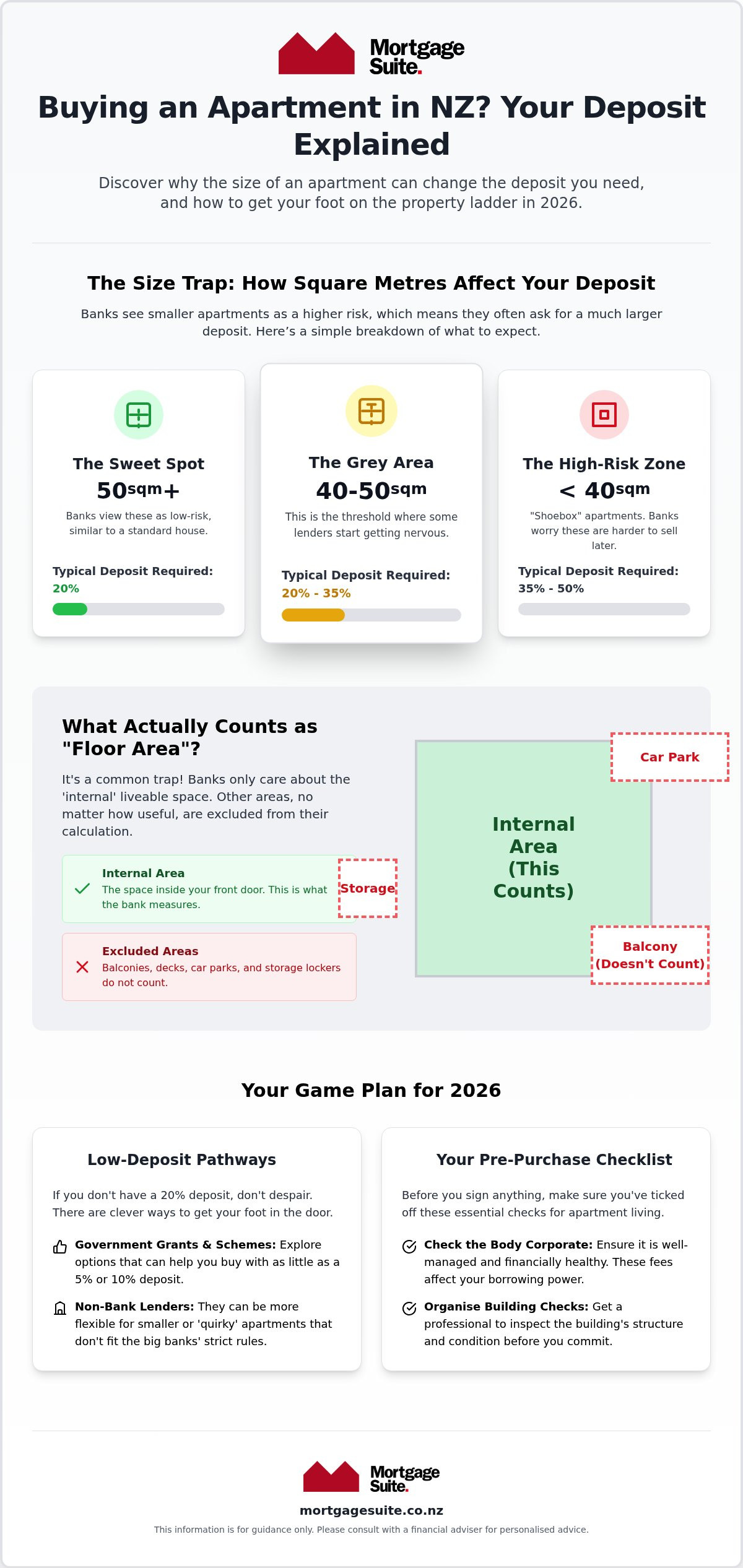
  • Unusual Properties: Banks are often wary of tiny homes, apartments smaller than 40sqm, or lifestyle blocks with complex titles.
  • Low Deposits: If you have less than a 20% deposit and don’t qualify for specific government grants, the “big four” might see you as too high a risk.
  • Employment Gaps: Even if you’re earning well now, a recent career change or a few months between jobs can trigger a “no” from traditional lenders.

The self-employed struggle

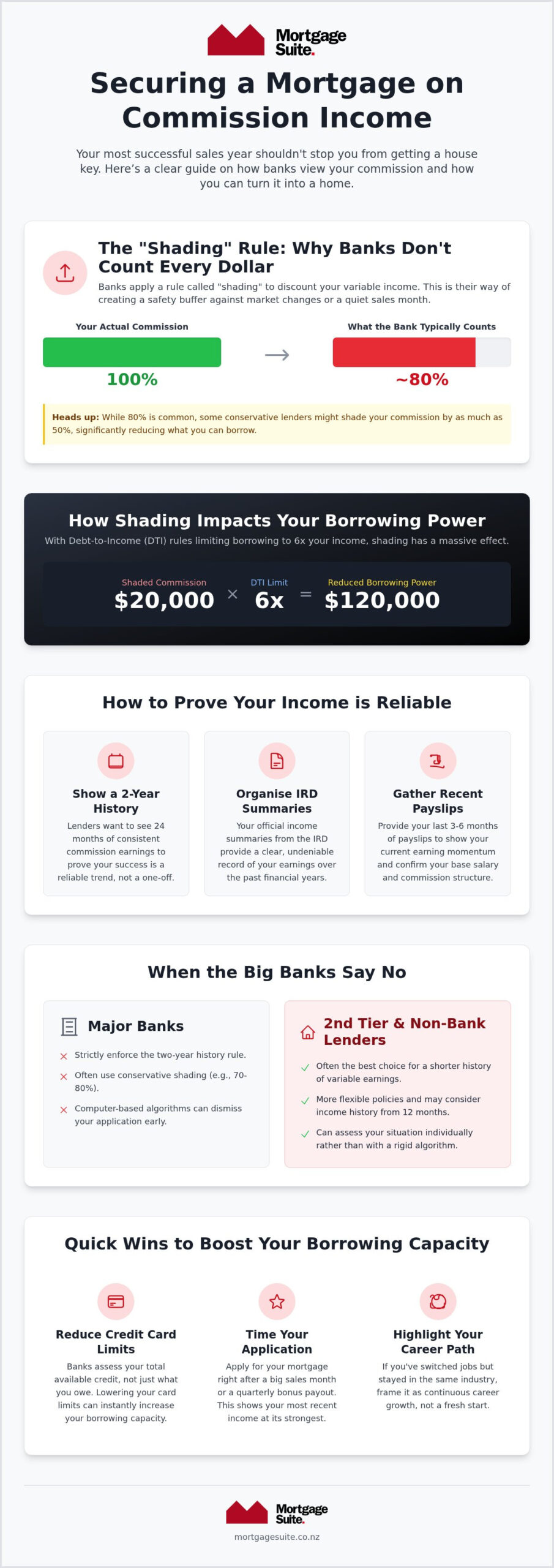
If you run your own business, you know that profit isn’t always a straight line. Banks usually demand two full years of perfect tax returns to prove your income. This requirement is a massive hurdle for new business owners or those who have recently scaled up. Many 2nd tier lenders offer “alt-doc” options instead. This means they can look at your GST returns or recent bank statements to get a real-world picture of what you can afford. If you’re a contractor or freelancer, your income is valid, and we can help you find a lender who understands your business model.

Credit history: It’s not always a deal-breaker

A forgotten power bill from three years ago or a past default shouldn’t end your home-buying dreams forever. Mainstream banks tend to see any credit “blip” as a major red flag. In contrast, 2nd tier lenders are often willing to listen to the story behind the numbers. They look at why a default happened and what you’ve done since then to stay on track. Many non-conforming home loans New Zealand are actually designed to help you repair your credit over time, acting as a bridge until you’re ready to switch back to a standard bank. It’s about looking at your future potential, not just your past mistakes.

Mainstream Banks vs. Non-Conforming Lenders: A fair comparison

When you compare mainstream banks to alternative lenders, it’s a bit like comparing a mass-market retail chain to a specialist consultant. The big banks have the lowest rates, but they also have the least flexibility. If you don’t fit their specific mould, the low rate doesn’t actually help you because you can’t get the loan. This is where non-conforming home loans New Zealand come into play. They fill the gap for people who have the income and the drive to own a home but fall outside the standard banking criteria.

Let’s look at the numbers. In June 2026, mainstream bank fixed rates are sitting around 4.65% to 4.79%. In contrast, rates for non-conforming home loans New Zealand are higher because they are risk-based. You should also expect establishment fees to be more significant than what you’d find at a big bank. While the upfront cost is higher, the value lies in getting an approval when everyone else has said no. These lenders look at the common sense of a deal rather than just following a rigid computer algorithm.

Speed is another area where alternative lenders often shine. When you’re trying to secure a property at auction, you don’t have weeks to wait for a bank’s head office to review your file. Because 2nd tier lenders have shorter chains of command, they can often provide a firm answer in a fraction of the time. This agility allows you to bid with confidence, knowing your finance is already sorted and you won’t miss out on the right property.

Understanding the “Risk Premium”

Lenders charge a higher rate because they are taking a chance on a borrower that a big bank won’t touch. We call this a risk premium. While the interest is higher, it’s often a better financial move than waiting three years to save a larger deposit. If house prices rise during that time, the cost of waiting can easily exceed the extra interest you’d pay now. Many of these loans also allow you to step down to a lower rate once you’ve proven your reliability over a year or two.

Flexibility in lending criteria

Alternative lenders look at your situation with a human eye. For instance, they might be more generous with their Loan-to-Value Ratio (LVR), allowing you to borrow more against the property’s value than a traditional bank would. They also look at your income differently, often counting more of your overtime, commissions, or bonuses. You can learn more about these differences in our non-bank lenders NZ guide. If you have a smaller deposit, you might also want to check if you qualify for the First Home Loan scheme, which helps people who don’t fit the standard 20% deposit box.

Non-Conforming Home Loans in New Zealand: A 2026 Guide for When the Bank Says No

The Bridge Strategy: Using a non-conforming loan as a stepping stone

Too many people view these mortgages as a final destination or a “last resort.” In reality, they are a powerful tool to get you across the gap between where you are now and where the bank wants you to be. This is what we call the Bridge Strategy. It’s a deliberate 2-to-3-year plan designed to get you into the property market today, rather than sitting on the sidelines for years while house prices potentially climb. By choosing non-conforming home loans New Zealand, you aren’t just getting a mortgage; you’re buying time to fix the very things that caused the bank to say no in the first place.

While you are on this bridge, your home is hopefully growing in value. Every repayment you make reduces your debt, and every month that passes helps “clean up” your financial profile. This is the time to perfect your tax returns if you’re self-employed or ensure your credit history is spotless. The goal is simple: stay with an alternative lender for a few years, build your equity, and then refinance back to a mainstream bank for those lower rates once you finally “conform” to their rules.

Step 1: Get in the door

The biggest mistake many Kiwis make is waiting for the “perfect” time to buy. They wait for interest rates to drop or for their deposit to hit exactly 20%. History shows us that time in the market almost always beats timing the market in New Zealand. By securing the property you want today, you start building equity immediately. A non-conforming loan is often a temporary solution to a long-term goal, giving you the leverage to act when the right house appears.

Step 2: Prove your reliability

Once you have the keys, the real work begins. This stage is all about demonstrating to future lenders that you are a low-risk borrower. You need to make every single repayment on time, without exception. This builds a “bank-ready” history that is far more convincing than any spreadsheet or letter of explanation. If you’re just starting out, our guide on home loans for first home buyers New Zealand can help you map out these early steps. We keep a close eye on your progress and can tell you exactly when your profile is strong enough to make the move back to a mainstream lender. If you’re ready to start building your own bridge, talk to our team about your options today.

How Mortgage Suite navigates the non-conforming market for you

Getting a “no” from a bank can feel like a personal rejection, but at Mortgage Suite Ltd, we see it as the start of a more tailored conversation. With Krish Krishna’s 20 plus years of banking experience, we know exactly how the “other side” thinks. We understand the hidden levers that mainstream lenders pull and, more importantly, we know how to present your case to the lenders who are actually willing to listen. Securing non-conforming home loans New Zealand requires more than just filling out a form; it requires a dedicated advocate who can translate your financial life into a compelling story.

We have established deep relationships with 2nd tier lender New Zealand options that simply don’t deal directly with the public. These institutions rely on trusted brokers to bring them quality borrowers who just happen to have non-standard situations. Because we’ve spent decades in the industry, our reputation carries weight. When we tell a lender that a client is reliable despite a past credit blip or a complex business structure, they listen. We handle all the paperwork and the tough conversations, removing the stress so you can focus on moving into your new home.

Tailored solutions, not “cookie-cutter” loans

Every person who walks through our door has a unique story. We don’t believe in one-size-fits-all mortgages. We take the time to sit down and truly listen to your situation before we even think about suggesting a lender. This personal connection is what sets us apart from the automated systems at the big banks. By specialising in loans that don’t fit the standard box, we can identify opportunities that others might miss. Whether you’re a new business owner or a contractor, we ensure your non-conforming home loans New Zealand are as unique as your circumstances.

Your partner for the long haul

Our job doesn’t end when you get your home loan. We are your partners for the entire journey. As we discussed earlier regarding the exit strategy, the goal is often to move back to a mainstream bank eventually. Mortgage Suite Ltd stays in touch and helps you plan that transition, ensuring you’re always on the best possible path. You’ll get friendly, jargon-free advice that treats you like a priority, not just another number in a database. Ready for a fair go? Get in touch with Mortgage Suite Ltd today.

Take the next step toward your new home

A bank rejection doesn’t have to be the end of your property dreams. As we’ve explored, non-conforming home loans New Zealand serve as a strategic bridge, allowing you to secure a property now while you work toward a mainstream mortgage. By focusing on building equity and proving your reliability, you can turn a temporary setback into a long-term win.

At Mortgage Suite Ltd, our team brings over 20 years of banking and brokerage experience to your corner. We specialise in alternative lending and act as your dedicated advocate, ensuring your story is heard by lenders who value common sense over rigid checklists. We don’t just process applications; we build partnerships focused on your success.

Book a conversational chat with Krish to explore your options and see how we can help you move forward with confidence. You deserve a fair go at owning your own home, and we’re here to help you make it happen.

Frequently Asked Questions

Are non-conforming home loans safe in New Zealand?

Yes, these loans are perfectly safe and must comply with the Credit Contracts and Consumer Finance Act (CCCFA) just like any big bank mortgage. This means you have the same legal protections and rights as any other borrower in New Zealand. These lenders are professional financial institutions that are simply more flexible with their rules than the household names you see on the high street.

How much higher are the interest rates for non-conforming loans?

Rates are typically higher than mainstream bank offers because the lender is taking on a situation that the big banks won’t touch. While a major bank might offer a rate under 5% in 2026, alternative lenders often range between 10% and 14.5% depending on your specific profile and risk level. It’s best to view this extra cost as a temporary fee for getting into the property market now rather than waiting years.

Can I get a non-conforming loan if I am self-employed with only one year of accounts?

Yes, you can often secure a loan with just one year of accounts by using alternative documentation like bank statements or GST returns. Mainstream banks usually demand two full years of perfect tax returns, but 2nd tier lenders specialise in helping new business owners who are already turning a good profit. This flexibility allows you to buy your home now rather than waiting for another financial year to pass.

What is the minimum deposit for a non-conforming home loan?

Most alternative lenders look for a deposit of at least 20%, though some may consider 10% depending on the property type and your overall income. Because these lenders aren’t always bound by the same strict speed limits as the big banks, they have more room to move on deposit requirements. We can look at your specific savings and income to see which lender’s rules fit your current situation.

How long does it take to get approval for a 2nd tier loan?

Approval for 2nd tier loans is often much faster than the big banks, sometimes taking only two to three working days once all your paperwork is submitted. These lenders have smaller teams and less red tape, which makes them an excellent option if you need to move quickly for an auction or a short settlement. Having your bank statements and ID ready to go is the best way to speed up the process even further.

Can I move back to a big bank later if I start with a non-conforming loan?

Yes, moving back to a mainstream bank is the ultimate goal for most people who start with non-conforming home loans New Zealand. Once you have built up some equity and established a clean repayment history over two or three years, your profile becomes much more attractive to traditional lenders. We specialise in helping you plan this transition so you can eventually secure those lower mainstream rates when you are ready.

What happens if I have a default on my credit record?

A credit default isn’t an automatic “no” with alternative lenders, as they are more interested in the story behind the issue than just the score itself. They will want to see that the debt has been settled and that you’ve been reliable with your other payments since that time. We help you explain these past blips to the lender so they can see your current financial strength and future potential.

Do I need a mortgage broker to access non-conforming lenders?

Yes, many 2nd tier and specialist lenders in New Zealand do not deal directly with the general public and only accept applications through accredited mortgage brokers. Working with a broker also ensures your application is presented in the best possible light to the right people. We know which lenders are currently active and which ones are most likely to say “yes” to your specific needs and financial background.

Article by

Krish Krishna

Experienced Financial Adviser with over 46 years of Banking and Mortgage broking experience and over $2.0 Billion in loan settlements.

Debt to Income Ratio NZ: What the 2026 DTI Rules Mean for Your Mortgage

What if the size of your deposit isn’t actually the biggest hurdle to your next home loan anymore? It often feels like every time you get close to the finish line, the Reserve Bank shifts the goalposts; you’ve saved the deposit and found the house, only to worry that new regulations might stop you in your tracks. Understanding the debt to income ratio nz rules is now just as vital as having a solid credit score, especially as we navigate the 2026 property market.

We know how stressful it is to feel like your financial future is being decided by a complex spreadsheet. That’s why we’re here to clear up the confusion. You’ll learn exactly how these DTI limits affect your borrowing power and how to navigate them to secure your dream home or next investment. We’ll break down the specific maths behind the 6x and 7x thresholds, identify who qualifies for a “speed limit” exemption, and look at the path forward if your current bank says no. Whether you’re a first home buyer or a seasoned investor, there is always a way through the red tape when you have the right plan and a steady hand to guide you.

Key Takeaways

  • Get a clear grip on how the debt to income ratio nz measures what you owe against what you earn, and why it’s now a top priority for lenders.
  • Discover the specific 2026 borrowing limits for owner-occupiers and investors, so you know exactly where you stand before you start house hunting.
  • Learn about the “speed limit” and new build exemptions that could help you secure a loan even if you don’t fit the standard RBNZ box.
  • Find out how simple moves, like closing unused credit cards, can significantly improve your profile and increase your chances of a successful application.
  • Explore why a rejection from a big bank doesn’t have to be the end of the road, especially when looking at 2nd tier options that offer more flexibility.

What is the Debt to Income (DTI) ratio in NZ?

Think of the debt to income ratio nz as a financial health check that lenders use to see if you’re biting off more than you can chew. While we used to focus almost entirely on the size of your deposit, the rules have changed. Now, the banks are looking just as closely at the relationship between what you earn and what you owe. It isn’t just about your mortgage either. Lenders bundle in every bit of debt you have, from that credit card you keep for emergencies to the car loan you took out last year. If you’re curious about the global concept, you can read up on what the debt-to-income ratio is, but in the local context, it’s a strict guardrail designed to keep you and the economy safe.

In 2026, this ratio has become just as vital as your deposit size when you’re applying for a mortgage. It serves as a reality check for both you and the bank, making sure that your lifestyle isn’t entirely consumed by debt repayments. Living with a high ratio can be incredibly stressful, as it leaves very little room for error if your circumstances change. By understanding this number early on, you can take control of your financial story rather than letting the bank’s spreadsheet dictate your future. It’s about ensuring that you don’t end up taking on way too much debt, which can quickly turn the excitement of a new home into a constant worry about making ends meet.

The simple maths behind the ratio

Calculating this number is actually quite straightforward. To find your ratio, divide your total debt by your annual income before tax. For a practical example, let’s say your household brings in $100,000 a year before the taxman takes his share. If you’re looking to take on a $600,000 loan, your DTI would be 6. Banks prefer using your “gross” income, which is just the amount you earn before tax, because it provides a consistent starting point. It gives them a clear, standardised view of your total earning power before other expenses come into play.

Why the Reserve Bank brought these rules in

The Reserve Bank of New Zealand (RBNZ) introduced these limits to keep the housing market stable and prevent people from getting into too much hot water. By capping how much you can borrow relative to your income, they’re trying to stop the market from overheating and prevent people from getting in over their heads with repayments. These rules work alongside the existing Loan-to-Value (LVR) settings, which look at how much deposit you have. While LVR looks at your ownership stake, the DTI rules focus on your ability to actually live your life while paying back the debt. The ultimate goal is to make sure that even if interest rates wiggle or life throws you a surprise, you still have enough cash left over to keep the lights on and the fridge full. It’s about building a bit of a buffer so that a small change in your circumstances doesn’t become a massive financial headache. Understanding how the Reserve Bank sets its benchmark rate is equally important — our guide on OCR meaning and how the Official Cash Rate shapes your mortgage in 2026 explains exactly how these decisions flow through to your repayments.

The RBNZ rules: How much can you borrow in 2026?

The Reserve Bank doesn’t apply a one-size-fits-all approach to lending. Instead, they’ve set different benchmarks based on how you intend to use the property. If you’re looking for a place to call home, the standard debt to income ratio nz limit is 6. This means that for every dollar you earn before tax, the bank generally won’t let you borrow more than six dollars in total debt. It sounds strict, but it’s designed to ensure you aren’t stretched too thin when life happens.

For those looking to grow a portfolio, the rules are slightly more flexible. Investors generally have a DTI limit of 7. This extra wiggle room exists because rental income helps service the loan, providing a bit more security for the lender. However, even these limits aren’t set in stone. Banks have what we call “speed limits.” The Reserve Bank allows banks to allocate 20% of their new lending to borrowers who sit outside these standard ratios. If your case is strong, there’s still a chance to secure a “yes” even if the numbers are a bit tight.

Owner-occupier vs Investor limits

The gap between a DTI of 6 and 7 might seem small, but it makes a massive difference to your buying power. If you’re a first home buyer with a small deposit, you’ll likely need to stick closely to that 6x limit unless you qualify for a specific exemption. We’ve put together a quick guide to show how these limits translate into actual loan amounts based on your household income.

Gross Annual Income Max Loan (Owner-Occupier, DTI 6) Max Loan (Investor, DTI 7)
$120,000 $720,000 $840,000
$160,000 $960,000 $1,120,000
$200,000 $1,200,000 $1,400,000

What counts as “Debt” in the eyes of a lender?

This is where many people get caught out. When a bank calculates your ratio, they don’t just look at the mortgage you’re asking for. They include everything. Your student loan, that car finance from last year, and even personal loans are added to the pile. One of the biggest traps is credit card limits. Even if you have a zero balance, the bank counts the entire limit as potential debt because you could spend it tomorrow. “Buy Now, Pay Later” commitments are also under the microscope now. These small weekly payments can bloat your ratio and eat into your borrowing power faster than you’d think. If you’re worried about how your current setup looks, it’s a great idea to chat with a professional who can help you tidy things up before you apply.

Exemptions and speed limits: When the rules don’t apply

It’s easy to feel a bit overwhelmed when you hear about new lending restrictions, but here is a bit of a silver lining: the debt to income ratio nz rules aren’t a brick wall for everyone. In fact, the Reserve Bank has deliberately left some doors open to ensure the housing market keeps moving and that people can still get into homes. One of the most important things to realise is that these strict RBNZ regulations primarily apply to registered banks. If you are looking at non-bank lenders or 2nd tier options, you might find a lot more flexibility than you’d get at a traditional high-street branch because they don’t always have to play by the same rigid rulebook.

Specific types of lending are also carved out of the rules to help the country grow. For example, if you are planning to build a new home, you’ll often find that the DTI limits are much more relaxed. The government wants to encourage more housing supply, so they don’t want to penalise people who are adding to the total number of houses in NZ. Similarly, if you are just looking at moving your mortgage to another bank without borrowing any extra cash, you usually won’t have to go through a fresh DTI check. Even those temporary loans to cover the gap between houses, which help you manage the time between selling one place and buying another, are treated as a special case to keep the process as smooth as possible.

First Home Loan exemptions

If you’re just starting out, there is a massive advantage available through Kāinga Ora. Loans supported under the First Home Loan scheme are officially exempt from these DTI restrictions. This is a total game-changer for young Kiwis who might have a smaller deposit or are just starting to climb the career ladder. Because these loans are designed to help people get onto the property ladder, they focus more on your potential and your ability to meet repayments rather than a rigid multiple of your current salary. For a deeper look at how to navigate your first purchase, check out our Home Loans for First Home Buyers in New Zealand: The 2026 Comprehensive Guide.

The “Speed Limit” loophole

Even for standard bank loans, there’s a bit of a safety valve known as the “speed limit.” The Reserve Bank allows banks to give 20% of their new mortgage money to people who sit outside the standard 6x or 7x limits discussed earlier. This is where having a professional in your corner really pays off. A mortgage broker knows how to present your case so you’re seen as a high-quality borrower who deserves to be part of that lucky 20%. Lenders don’t just look at the raw numbers; they look at your overall financial character, your spending habits, and your career path. If you’ve got a clean record and a solid plan, we can often help you find a way through the red tape.

Debt to Income Ratio NZ: What the 2026 DTI Rules Mean for Your Mortgage

How to tidy up your finances before you apply

If you’ve crunched the numbers and your debt to income ratio nz looks a bit higher than you’d like, don’t throw in the towel just yet. We see this all the time. The good news is that your current ratio isn’t a permanent mark; it is just a snapshot of where you are today. With a bit of a tidy-up and some smart moves, you can often shift those numbers into a much better position before you even sit down with a lender. It is all about presenting the cleanest possible version of your financial life to the bank.

One of the most effective ways to lower your ratio is by putting all your small, high-interest debts into one manageable payment. Those little store cards and personal loans might not seem like much on their own, but they add up quickly when a bank is looking at your profile. By combining these, you simplify your outgoings and show that you have a disciplined grip on your money. It is also worth looking at your income from a fresh perspective. Improving your ratio isn’t only about cutting what you owe; it’s also about making sure the bank sees every cent you earn. Once you’ve tidied up your debt profile, you’ll also want to think carefully about your loan structure — understanding whether a fixed rate mortgage or a floating rate suits your situation can make a significant difference to your monthly repayments and overall financial comfort.

The “Credit Card Cleanse”

Lenders don’t just care about what you’ve spent; they care about what you could spend. If you have a credit card with a $10,000 limit sitting in your drawer, the bank treats that as $10,000 of potential debt, even if you haven’t spent a cent. They have to assume you might go out and max it out tomorrow. Dropping that limit or closing the account entirely can give your borrowing power a massive boost. We usually recommend doing this at least three months before you apply. This gives the credit reporting systems plenty of time to update and ensures the bank sees a nice, clean slate when they run their checks.

Boosting your income figure

When we talk about income, we’re looking at more than just your base salary. If you’ve been consistently earning overtime, bonuses, or commissions, we can often work with the bank to include these in your total figure. For those looking to grow their portfolio, the bank will also factor in the potential rental income from the property you’re buying. You can see how these numbers stack up by using our Investment Property Mortgage Calculator NZ. Don’t forget about boarder income either. If you plan to have a flatmate in your new home, many lenders will let us add a portion of that expected rent to your total income, which can make a huge difference to your final ratio. If you’re unsure which debts to tackle first or how to best show off your income, reach out to our team for a bit of a strategy session.

How Mortgage Suite Ltd navigates the DTI maze for you

We reckon that getting a “no” from a main bank is often just the start of the conversation, not the final word. It’s easy to feel like the goalposts have moved permanently when you’re faced with the current debt to income ratio nz rules. However, our job at Mortgage Suite Ltd is to act as your dedicated negotiator, looking past the rigid spreadsheets of institutional banking to find a path that works for your unique situation. We don’t just see a ratio; we see your potential and your hard work.

With over two decades of industry experience, our founder Krish Krishna has seen every market cycle and regulatory shift imaginable. This deep institutional knowledge means we don’t just guess which lenders might say yes. We know exactly how to present your case to the right people. We take the weight off your shoulders by handling the complex discussions with lenders, ensuring your application highlights your financial strengths and addresses any debt concerns head-on. We focus on building a partnership with you, making sure you feel supported rather than just processed by a system.

Beyond the Big Four: The power of 2nd Tier lending

One of the biggest advantages of working with our team is our access to 2nd tier loans. These non-bank lenders are often more flexible because they don’t always have to follow the same RBNZ bank rules that restrict the major players. If your DTI ratio is a bit high for a traditional bank, an alternative lender might be the perfect solution. We often use these loans as a strategic “stepping stone.” They get you into your dream home or investment property now, and as your equity grows or your income increases, we can help you transition back to a traditional mortgage later. We take the time to match your unique profile to the lender that offers the best fit for your long-term goals.

Expert negotiation for complex cases

With 20 years in the game, we know which lenders are currently under their DTI speed limits and are looking for quality borrowers. This isn’t just about filling out forms; it’s about expert packaging. We know how to frame your application to mitigate concerns about existing debt while shining a light on your career trajectory and overall stability. Our goal is to take the anxiety out of the process, giving you the confidence to focus on finding the right property while we handle the red tape. When you partner with Mortgage Suite Ltd, you’re not just getting a loan; you’re getting a steady hand to guide you through a fluctuating market. We’re committed to removing the obstacles that stand between you and your dream home.

Securing your future in a changing market

The 2026 lending landscape might feel more restrictive, but it is certainly not impossible to navigate. While the debt to income ratio nz rules have changed how banks view your borrowing power, you now have a clear roadmap to move forward. By tidying up your existing debts and understanding how to maximise your gross income, you put yourself in the best possible position for a “yes”. Remember, the big banks are only one part of the story; flexibility often lies with alternative lenders who value your overall potential.

With over 20 years of banking and brokerage experience, we specialise in finding those 2nd tier and non-bank solutions that mainstream lenders might miss. We provide national coverage across all of New Zealand, ensuring that no matter where you are looking to buy, you have a steady hand to guide you. If you’re ready to take the next step without the stress of rigid spreadsheets, we’re here to help. Book a chat with our expert team today to see how we can help you beat the DTI blues. Your dream home is still within reach; you just need the right plan to get there.

Common Questions About the 2026 DTI Rules

Does the DTI ratio apply to new builds in 2026?

No, construction loans for new builds are officially exempt from the RBNZ’s DTI restrictions. This is a deliberate move by the government to encourage more housing supply across New Zealand. If you’re building from scratch or buying a home off the plans, you won’t have to worry about the standard 6x or 7x limits. This gives you significantly more flexibility when planning your project and choosing your finishes.

Will my student loan affect my debt to income ratio?

Yes, your student loan is absolutely included when the bank calculates your debt to income ratio nz. Lenders look at your total debt obligations, which includes student loans, car finance, and personal loans. Even though your repayments are automatically deducted from your pay, the total balance still sits on the “debt” side of the ledger. It’s a good idea to factor this in early when working out your borrowing power.

Can I get a mortgage if my DTI is over 6?

Yes, you can still secure a mortgage even if your ratio sits above the standard limit of 6 for owner-occupiers. Banks are allowed a “speed limit” where 20% of their new lending can go to borrowers with higher ratios. Alternatively, we can look at 2nd tier lenders who don’t have to follow these specific Reserve Bank rules. This provides a clear path forward even when a big bank’s spreadsheet says no.

Do non-bank lenders have to follow the RBNZ DTI rules?

No, the Reserve Bank’s DTI restrictions primarily apply to registered banks. Non-bank or 2nd tier lenders often have their own internal criteria and aren’t bound by the same 6x or 7x caps. This makes them an excellent option if your income doesn’t quite stretch far enough for a traditional bank’s requirements but you have a solid plan and the ability to manage your repayments comfortably.

How is rental income counted towards my DTI ratio?

Rental income is added to your total gross annual income, though banks usually “shade” it by about 20% to account for vacancies and maintenance costs. This boosted income figure is what allows investors to have a higher debt to income ratio nz limit of 7. It’s a vital part of the calculation that helps reflect the true servicing power of an investment property and your ability to grow a portfolio.

What is the difference between DTI and LVR?

While they work together, they measure two different things. LVR (Loan-to-Value Ratio) looks at the size of your deposit compared to the property’s value. DTI (Debt-to-Income) looks at your total debt compared to what you earn before tax. Think of LVR as your “entry ticket” to get the loan and DTI as the bank’s way of checking you have enough left over each month to live your life.

Can I use boarder income to improve my DTI ratio?

Yes, many lenders will let us include a portion of your expected boarder income to boost your total earnings figure. This can be a real lifesaver for first home buyers trying to stay under the 6x limit. We’ll just need to show the bank that the property has enough space and that the income is realistic for your area. It’s a simple way to make the numbers work in your favour.

What happens to my DTI if interest rates go up?

Your actual DTI ratio won’t change just because interest rates move, as it’s based on the total debt amount rather than the interest cost. However, the bank’s “test rates” usually get tougher when market rates rise. This means that while you might technically fit the DTI box, the bank will look even closer at your ability to manage higher weekly repayments. Choosing the right loan structure — for example, deciding between a fixed rate mortgage versus a floating rate — becomes especially important in this environment, as locking in a rate can provide certainty around your repayments. It’s all about ensuring you have a safe financial buffer. Keeping a close eye on what the OCR means for your mortgage rate will help you time these decisions wisely and protect your repayment budget.

Article by

Krish Krishna

Experienced Financial Adviser with over 46 years of Banking and Mortgage broking experience and over $2.0 Billion in loan settlements.

How to Qualify for a Home Loan in NZ: The 2026 Comprehensive Checklist

What if a "no" from a mainstream bank wasn’t a closed door, but a sign that you simply needed a more tailored approach to your finances? Many Kiwis feel a sense of dread when looking at their bank balance, especially with the 2024 debt-to-income (DTI) restrictions still making things difficult for first home buyers and investors alike. You’re likely searching for exactly how to qualify for a home loan NZ lenders will approve in 2026. With the Official Cash Rate at 2.25 percent and standard one-year rates sitting near 4.89 percent, the financial landscape requires a steady hand and a clear strategy.

It’s completely natural to feel anxious about your credit score or confused by the difference between a 5 percent and 20 percent deposit requirement. We believe that every borrower deserves a transparent path to home ownership. This comprehensive checklist will help you master the financial requirements and documentation needed to secure your New Zealand home loan with confidence. We’ll examine everything from modern servicing requirements to the 2nd tier lending options that provide a vital lifeline when mainstream banks hesitate.

Key Takeaways

  • Learn how the 2026 lending benchmarks, including the 2.25 per cent OCR and DTI restrictions, define your current borrowing power.
  • Discover how to qualify for a home loan NZ lenders will approve by mastering the “uncommitted monthly income” test and optimising your debt-to-income ratio.
  • Understand why a rejection from a mainstream bank isn’t the end of the road and how 2nd tier lenders offer flexible paths for non-conforming borrowers.
  • Secure a seamless application process by using our master checklist to gather “Golden Documents” and proactively fix credit report errors.
  • Gain the confidence of having a seasoned advocate to negotiate complex bank policies and ensure your financial readiness is presented in the best possible light.

Table of Contents

The Fundamental Pillars of Home Loan Qualification in New Zealand

Home Loan Qualification is the process of proving both financial stability and collateral security to a lender. In the 2026 market, this proof is measured against three specific benchmarks: the Official Cash Rate (OCR), Loan-to-Value Ratios (LVR), and Debt-to-Income (DTI) caps. With the OCR currently at 2.25 percent, banks have maintained a cautious approach to lending, making it essential to understand how to qualify for a home loan NZ lenders will actually approve. Understanding New_Zealand’s property market dynamics helps explain why these hurdles exist; they act as a safeguard for both the borrower and the financial system against future economic volatility.

The deposit you bring to the table remains the primary factor in determining your interest rate and lender options. While a 20 percent deposit is the gold standard for avoiding low equity margins and securing the best carded rates, many first-time buyers aim for the 10 percent or 5 percent thresholds. If you’re looking at a 5 percent deposit through the Kāinga Ora First Home Loan, you’ll need to stay within the income caps of $95,000 for a single buyer or $150,000 for couples or those with dependents. If your income exceeds these limits but your deposit is small, you aren’t necessarily out of options, but you’ll likely need to explore low deposit home loan NZ solutions through 2nd tier lenders who offer more flexibility.

Residency and Legal Status Requirements

Before you start visiting open homes, you must confirm your legal eligibility to purchase property. New Zealand citizens and permanent residents face the fewest obstacles. To be considered "ordinarily resident", you typically need to have lived in New Zealand for the preceding 12 months and held a valid residence class visa during that entire period. Australians and Singaporeans enjoy specific rights due to trade agreements, but most other visa holders will find the path more complex. If you’re on a work visa, banks often require a minimum 20 percent deposit and proof of your long-term intent to remain in the country.

The Deposit: KiwiSaver, Grants, and Savings

Your KiwiSaver account is likely to be your most significant tool for building a deposit. In 2026, you can withdraw your total balance, excluding the initial $1,000 government contribution, as long as you’ve been a member for at least three years. Don’t forget that the First Home Grant was discontinued on 22 May 2024, so it’s no longer a source of funding for new applicants. If you’re receiving financial help from family, lenders will require a formal gifting certificate. This document confirms the funds are a non-repayable gift, ensuring the bank doesn’t view the contribution as an undisclosed debt that would negatively impact your DTI ratio. Understanding the full picture of home loan deposit requirements NZ lenders apply in 2026 can help you plan your savings strategy with far greater precision.

Assessing Your Financial Fitness: Income, Expenses, and DTI

Securing a deposit is only half the battle. In 2026, understanding how to qualify for a home loan NZ lenders will sign off on requires a deep dive into your Debt-to-Income (DTI) ratio. Since the regulations introduced in mid-2024, banks are strictly limited in how much high-DTI lending they can provide. For most owner-occupiers, this means your total debt, including your new mortgage, should not exceed six times your gross annual income. If you’re looking at First Home Loan eligibility criteria, you’ll see that income caps and DTI limits work together to define your maximum borrowing ceiling.

Beyond the raw numbers of your salary, credit officers now scrutinise your "uncommitted monthly income". This is what remains after all your essential costs, existing debts, and a buffer for life’s surprises are deducted. It’s why your daily latte habit or frequent Uber Eats orders actually matter; they represent discretionary spending that could, in the bank’s eyes, be redirected toward mortgage repayments. Lenders stress-test your ability to pay at interest rates 2-3% higher than current market rates. This ensures that even if the OCR climbs further, your household budget won’t collapse under the weight of rising repayments.

Income Verification for Different Employment Types

The way you earn your living dictates the paperwork you’ll need to provide. PAYE employees usually have the simplest path, requiring three months of consecutive payslips and a summary of earnings from the IRD. If you’re self-employed, the requirements are more stringent. You’ll need at least two years of certified accounts and IRD tax summaries to prove your business is stable and profitable. Contractors and those in the gig economy often face more scrutiny due to irregular income. Lenders will look for a consistent history of contracts and a healthy "buffer" in your savings to offset periods between jobs. If your income structure is complex, speaking with a specialist can help you present your earnings in the most favourable light.

The Expense Audit: Cleaning Up Your Transaction History

Banks will typically request three to six months of transaction history to look for "red flag" behaviours. Frequent gambling transactions, heavy reliance on Buy Now Pay Later (BNPL) services, or a long list of unused subscriptions can signal poor financial discipline. We recommend "grooming" your accounts at least 90 days before you apply. This means clearing small debts and ensuring your bank statements reflect a disciplined, organised lifestyle. Existing liabilities like car loans or high credit card limits also reduce your borrowing power. Even if you don’t use your full credit limit, the bank calculates your DTI based on the total limit available to you, not just the balance you owe.

Mainstream Banks vs. 2nd Tier Lenders: Finding Your Best Path

Receiving a rejection letter from a major bank can be disheartening, but it certainly isn’t the end of your home ownership journey. The New Zealand financial market is more diverse than many realise. While mainstream banks have rigid, automated systems, 2nd tier lenders often take a more holistic, manual approach to assessing risk. If you are struggling with how to qualify for a home loan NZ banks have declined, these alternative lenders provide a vital pathway. They are often willing to look at the story behind the numbers, providing solutions for those who don’t fit the traditional "cookie-cutter" borrower profile.

The trade-off for this increased flexibility is typically a slightly higher interest rate and potentially different fee structures. However, this cost should be viewed as a strategic investment. At Mortgage Suite Ltd, we specialise in acting as the bridge between you and these alternative capital sources. We understand which lenders have an appetite for specific scenarios, ensuring you don’t waste time on applications destined for another decline. Our role is to negotiate the best possible terms, ensuring your path to property is as smooth and cost-effective as possible.

When to Consider a Non-Bank Lender

Non-bank lenders are an excellent option if your credit history has a few old marks, such as a past default that has since been resolved. They are also far more pragmatic when it comes to non-standard property types, including tiny homes, small inner-city apartments, or leasehold titles that mainstream banks often avoid. Additionally, self-employed individuals who have been trading for less than two years often find a much warmer reception here. These lenders focus on your current ability to service the debt rather than just your historical tax returns.

The Path Back to Mainstream Banking

We often recommend using 2nd tier lending as a short-term stepping stone, typically for a period of one to three years. During this time, your main goal is to build equity and maintain a flawless repayment history. This period allows you to "season" your financial profile and move past any previous credit issues. Once you have reached a stronger equity position or have established a consistent track record, we can then help you refinance back to a mainstream lender. This transition allows you to benefit from lower interest rates while having already secured the property you want.

How to Qualify for a Home Loan in NZ: The 2026 Comprehensive Checklist

Your Step-by-Step Home Loan Qualification Checklist

Securing a pre-approval is your most powerful tool when entering the 2026 property market. It transforms you from a casual browser into a serious buyer, giving you the confidence to bid at auction or make unconditional offers. Understanding how to qualify for a home loan NZ lenders will prioritise involves more than just a healthy savings account; it requires a disciplined approach to paperwork. Before you approach any lender, we strongly advise checking your credit report. You can access your report for free from major providers like Centrix or Equifax. Reviewing this early allows you to fix any administrative errors or old disputes before a credit officer sees them.

Organise your documents in a digital folder for instant access during negotiations.

This proactive step ensures that when a property catches your eye, you aren’t scrambling for old payslips while another buyer swoops in. Having your files ready also demonstrates to the bank that you are a reliable, low-risk borrower who manages their affairs with professional precision. It reflects a level of financial readiness that can often sway a lender’s decision in your favour.

The Documentation Master List

  • Identification: A current passport or New Zealand driver’s licence, along with a recent utility bill or bank statement as proof of address.

  • Financials: Three to six months of consecutive bank statements for every account you hold, including credit cards and savings.

  • Proof of Deposit: Latest KiwiSaver statements, a formal gift letter if family is assisting, or receipts for term deposits.

  • Employment Proof: Your three most recent payslips or a signed employment contract if you have recently started a new role.

The Final "Ready to Buy" Sanity Check

Before you sign a Sale and Purchase Agreement, perform a final audit of your timeline. If you are using KiwiSaver for your deposit, initiate the withdrawal process early, as it typically takes 10 to 15 working days for funds to clear. While the First Home Grant was discontinued on 22 May 2024, you should verify that any other scheme approvals, such as the First Home Loan, remain current and valid for your intended purchase. Finally, ensure you have maintained a strict "spending freeze" for at least 90 days. This means no new debt, no large luxury purchases, and no changes to your credit limits. If you’re ready to take the next step, you can apply for a home loan with our team to get your pre-approval underway.

The 2026 lending environment is a complex machine with many moving parts. Between the 2.25 percent OCR and the rigid DTI caps, simply walking into your local branch often leads to a dead end. Going direct to a single bank limits your options to their specific, often inflexible, criteria. We believe that understanding how to qualify for a home loan NZ lenders will back requires a more sophisticated approach. At Mortgage Suite Ltd, we leverage over 20 years of deep institutional banking experience to act as your dedicated advocate. We don’t just process applications; we negotiate on your behalf to find a solution that fits your unique financial reality.

Our consultative method ensures that your home loan is a foundation for long-term wealth, not just a monthly expense. We look beyond the immediate approval to see how your debt structure will perform over the next decade. Whether you are seeking a standard residential loan or require the flexibility of 2nd tier capital, our team is committed to the removal of obstacles. This seasoned perspective is particularly valuable for those who have been told "no" elsewhere. We know exactly how to present your case to the right people to get to "yes".

Why Expertise Matters in a Volatile Market

A home loan is more than just an interest rate. The fine print often contains the most significant risks and opportunities. We help you understand the long-term impact of interest-only periods, the benefits of offset accounts, and the potential sting of break fees if you need to refinance. If your situation is non-conforming, our access to 2nd tier loans ensures you aren’t left behind by the mainstream banking system. For those just starting out, our Home Loans for First Home Buyers in New Zealand: The 2026 Comprehensive Guide provides an even deeper look at the specific grants and schemes available this year.

Your Partnership for Success

Our relationship with you doesn’t end when you get the keys. We view ourselves as your long-term partners in success. As your equity grows, we can help you plan the transition from first-home buyer to property investor. We provide ongoing support, reviewing your rates and structure as the OCR shifts or your life circumstances change. This proactive management ensures you are always in the best possible position to build equity. Booking a no-obligation strategy session is the first step toward financial readiness. Contact Mortgage Suite Ltd to start your qualification journey today and take control of your property future with a steady hand by your side.

Take the Next Step Toward Your New Zealand Home

Mastering the details of your debt-to-income ratio and maintaining a disciplined expense audit are the true keys to success in today’s market. While the 2026 lending environment remains complex, you don’t have to face it alone. We’ve explored the necessity of digital document readiness and the strategic advantage of looking toward 2nd tier lenders when mainstream banks say no. Understanding how to qualify for a home loan NZ lenders will approve is about more than just numbers; it’s about presenting a story of financial reliability.

With over 20 years of banking and lending expertise, our team acts as dedicated negotiators for both first-home buyers and seasoned investors. We are specialists in 2nd tier and non-bank solutions, ensuring that every client has a viable path forward regardless of their initial bank feedback. Secure your financial future with a tailored home loan strategy from Mortgage Suite. Your property goals are within reach, and with the right advocate, you can navigate this market with absolute confidence.

Frequently Asked Questions

How much deposit do I really need for a home loan in NZ in 2026?

You generally need a 20 per cent deposit to access the best interest rates and avoid low equity margins in the current market. However, eligible first-home buyers can still secure a low deposit home loan NZ with as little as a 5 per cent deposit through the Kāinga Ora First Home Loan scheme. For those who don’t meet those specific income caps, a 10 per cent deposit is often the minimum required by mainstream banks, though lending at this level remains restricted.

Can I qualify for a home loan if I am self-employed with only one year of accounts?

Most mainstream banks require at least two years of certified accounts to prove income stability and business longevity. If you have only been trading for one year, banks can still consider your application if you can provide with a 12 months Profit & Loss projection and Cash Flow forecast. If your forecasts are consistent with your historical trading and or larger projections can be mitigated, then you are in the game. Failing, this then there are 2nd Tier Lenders that can assist you. These lenders take a more manual approach to your application, focusing on your current business performance and future potential rather than just a long historical track record.

What is the maximum Debt-to-Income (DTI) ratio NZ banks allow?

For owner-occupiers, the standard maximum DTI ratio is six, meaning your total debt cannot exceed six times your gross annual income. For property investors, the limit is slightly higher at seven. Banks are required to limit high-DTI lending to 20 per cent of their new loans, so staying below these thresholds is a critical part of how to qualify for a home loan NZ lenders will readily approve.

How does my credit score affect my ability to qualify for a mortgage?

Your credit score acts as a financial reputation check that lenders use to gauge your reliability and risk profile. A high score suggests disciplined financial habits, which can help you secure lower interest rates and faster approvals. If your score is lower due to past defaults, it won’t necessarily stop your journey, but it may mean you need to work with alternative lenders who are more comfortable with credit-impaired applications.

Can I use my KiwiSaver for a deposit if I have owned a home before?

Yes, you may be able to withdraw your KiwiSaver funds as a "second-chance" buyer if your financial position is deemed similar to that of a first-home buyer. You will need to apply to Kāinga Ora for a determination of your status before your provider can release the funds. This is a vital lifeline for those looking to re-enter the property market after a significant life change or a financial setback.

What happens if my home loan application is declined by a mainstream bank?

A decline from a mainstream bank is often just the start of a more tailored conversation about your options. We first review the specific reasons for the decline, such as a high DTI ratio or recent discretionary spending habits. From there, we can look toward 2nd tier lenders who offer more flexible criteria. This allows you to secure your property now while working on a plan to refinance back to a bank later.

How long does the home loan pre-approval process take in NZ?

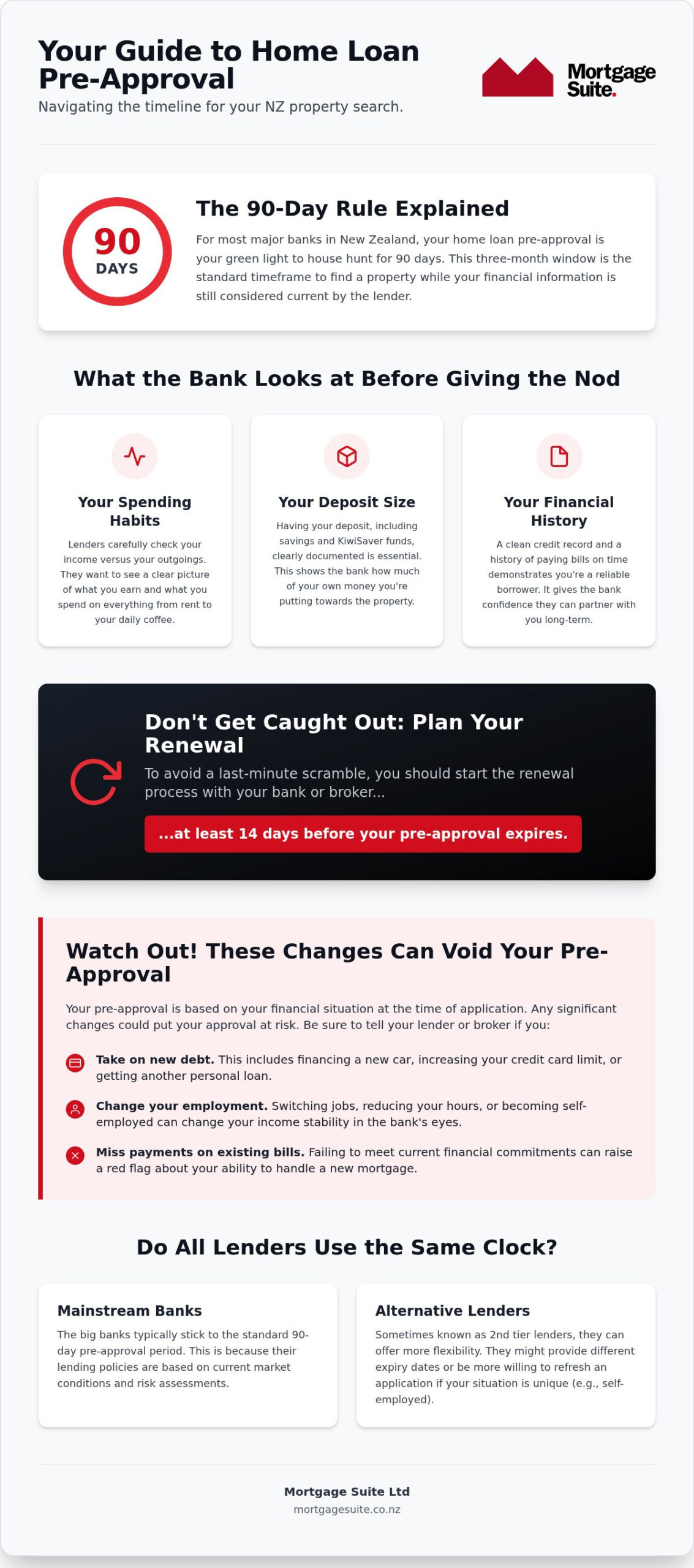
You should typically allow between two and five working days for a standard pre-approval, though complex applications can take longer. Having your "Golden Documents" organised in a digital folder beforehand is the best way to speed up this process. Once issued, a pre-approval is usually valid for 90 days, giving you the breathing room to attend auctions and negotiate with sellers with total confidence.

Do banks count student loans as debt when qualifying for a mortgage?

Banks definitely include student loans in their assessment because the mandatory repayments reduce your "uncommitted monthly income". While the loan itself is interest-free, the deductions from your salary lower your ability to service a mortgage. When we calculate how to qualify for a home loan NZ, we factor these repayments into your DTI ratio to ensure your borrowing level remains sustainable and within current regulatory limits.

Article by

Krish Krishna

Experienced Financial Adviser with over 46 years of Banking and Mortgage broking experience and over $2.0 Billion in loan settlements.

The Ultimate First Home Buyer Guide for New Zealanders in 2026

What if the biggest barrier to your first home isn’t actually the size of your deposit, but the rigid "yes or no" box of a mainstream bank? With the average New Zealand house price reaching NZ$912,406 in early 2026, it’s easy to feel like the goalposts are constantly shifting. This first home buyer guide New Zealand is designed to help you cut through that uncertainty and regain control of your property journey. You likely feel the pressure of rising interest rates and the confusion surrounding KiwiSaver withdrawal rules, especially since the First Home Grant was abolished in 2024.

We understand that the path to homeownership often feels more like a maze than a straight line. We promise to provide a clear, strategy-led roadmap that moves you from the initial savings phase to the moment you turn the key in your front door. You’ll discover how to navigate the latest debt-to-income restrictions, explore alternative lending options when the big banks decline your application, and gain the expert insights needed to bid at auction with absolute confidence. Let’s turn your homeownership goals into a practical, achievable reality through professional advocacy and seasoned expertise.

Key Takeaways

  • Master your financial foundation by understanding debt-to-income ratios and the precise timing required for a successful KiwiSaver first-home withdrawal.
  • Gain the confidence to explore 2nd tier loans and alternative lending options if your application doesn’t fit the rigid requirements of mainstream banks.
  • Use this first home buyer guide New Zealand to assemble a dedicated team of experts, including solicitors and lending specialists, who advocate for your success.
  • Navigate high-pressure auctions and the offer process with a clear strategy, including how to determine your maximum walk-away price before the bidding starts.
  • Protect your investment beyond settlement by learning how to conduct a thorough pre-move inspection and structure your loan for long-term stability.

Table of Contents

Organising Your Finances: The Foundation of Your First Home

Before you start scrolling through property listings, you need a crystal-clear picture of your financial standing. The state of the New Zealand housing market in 2026 requires a more strategic approach than simply "saving a bit extra" each month. Lenders today look closely at your debt-to-income (DTI) ratio, which became a formal restriction in July 2024. This calculation compares your total debt to your gross income, and staying within these limits is just as vital as your deposit size. This first home buyer guide New Zealand helps you understand that a healthy credit score is your most valuable asset, so pay down high-interest short-term debts like car loans or buy-now-pay-later accounts before applying.

Your KiwiSaver is likely the engine room of your deposit. To make a withdrawal, you must have been a member for at least three years and intend to live in the property as your primary residence. You’ll need to leave a minimum of NZ$1,000 in your account. Timing is everything here; you should apply for your withdrawal early in the process so the funds are ready for the deposit payment upon going unconditional. While the First Home Grant was abolished in May 2024, the Kāinga Ora First Home Loan remains a powerful tool, allowing eligible buyers with specific income caps to purchase with just a 5% deposit. If you’re unsure whether you qualify, our detailed guide on low deposit home loan NZ options in 2026 breaks down exactly how to access these pathways even without a large savings buffer.

If a mainstream bank says "no," don’t assume your homeownership dreams are over. Big banks often have rigid criteria that don’t account for self-employed income or slightly lower deposits. In many cases, a 2nd tier loan or alternative lending option can provide the bridge you need. These lenders often look at the bigger picture of your financial health rather than just ticking a box, making them a viable path for those who don’t fit the traditional banking mould.

Maximising Your Deposit Beyond Savings

Building a deposit often involves a "patchwork" strategy. You might combine your KiwiSaver withdrawal with a gifted deposit from family and your personal savings. It’s essential to budget for more than just the purchase price. You’ll need a "buffer" of at least NZ$5,000 to NZ$10,000 to cover legal fees, building inspections, and registered valuations. Serviceability is the lender’s assessment of whether your income can handle mortgage repayments if interest rates were to rise to a "stress test" level of 8% or 9%.

Getting Pre-Approved: Your Golden Ticket

Pre-approval gives you the confidence to make an offer the moment you find the right place. It typically lasts for 90 days, though it can be revoked if your financial circumstances change significantly, such as losing your job or taking on new debt. In New Zealand, most lenders perform a "hard" credit check during this stage, which leaves a footprint on your credit report. Having this "golden ticket" in hand shows vendors you’re a serious, qualified buyer who is ready to act.

Assembling Your A-Team: Why Expert Advocacy Matters

Surrounding yourself with the right professionals is the difference between a stressful ordeal and a smooth transition into your new home. While many resources offer a step-by-step guide to buying a home, they often miss the vital synergy between your experts. Think of your lending specialist as the conductor of an orchestra; they ensure your finance, legal, and insurance requirements all hit the right notes at the right time. This first home buyer guide New Zealand emphasises that your team should be advocates for your success, not just service providers ticking boxes.

You also need to consult your insurer before you sign a sale and purchase agreement. Banks won’t release funds without proof of insurance, and in a market where some older homes or those in high-risk zones face coverage challenges, getting an early "yes" from an insurer is non-negotiable. Similarly, a building inspector’s report is your best defence against structural failures. While a cheap, surface-level report might save you a few hundred dollars today, a comprehensive inspection can save you tens of thousands in future repairs. Trusting a veteran professional to crawl through the subfloor and check the roof cavity is an investment in your peace of mind.

Mainstream Banks vs. 2nd Tier Lenders

The "Big Four" banks have strict appetites that don’t always cater to the modern Kiwi worker. If you’re self-employed, have a smaller deposit, or possess a unique credit history, alternative lenders provide a fair go that mainstream institutions might decline. Many buyers worry that 2nd tier options are prohibitively expensive, but the interest rate gap is often smaller than you’d expect. These loans offer a pathway to homeownership when traditional doors are closed, providing a flexible solution tailored to your specific life scenario. If you’ve felt discouraged by a bank’s rejection, exploring tailored home loans could be your next logical step.

The Solicitor and the Fine Print

Your solicitor is your primary legal shield. They must review the Sale and Purchase Agreement before you put pen to paper, ensuring you aren’t caught out by restrictive clauses. Beyond the contract, they’ll help you understand the differences between freehold, cross-lease, and unit titles, which each carry different rights and responsibilities. A solicitor must meticulously check the "Title" of the property to ensure there are no hidden easements, land claims, or encumbrances that could restrict how you use your land. Their expertise prevents expensive legal headaches down the track, making them an indispensable part of your property journey.

The Property Hunt: Navigating Open Homes and Due Diligence

Walking into an open home is an emotional experience, but you must remain a clinical observer to protect your future. It’s easy to fall in love with a designer kitchen while overlooking a sagging roofline or a damp smell in the bedrooms. This first home buyer guide New Zealand recommends creating a strict "Must-Have" versus "Nice-to-Have" list before you step onto a single driveway. Your must-haves should focus on structural integrity, location, and the number of bedrooms, while cosmetics like carpet colour or light fittings stay firmly in the "nice-to-have" category. Staying focused prevents you from overpaying for a property that doesn’t actually meet your long-term needs.

The "sniff test" is your first line of defence during a walk-through. Pay close attention to fresh patches of paint that might hide mould, or a musty scent that suggests poor ventilation. Beyond the physical structure, remember that your bank is just as interested in the property type as they are in your income. Banks view the house as security for their loan. If a property is a "leaky" era build or located in a known flood zone, they may refuse to lend against it, regardless of how much you earn. Understanding the Land Information Memorandum (LIM) report is vital here, as it details everything the council knows about the land, including drainage issues and building permits.

For a deeper look into the technicalities of the process, the New Zealand government’s guide to buying a home provides an excellent framework for what to expect. However, a generic guide can’t replace the sharp eye of a seasoned professional who knows how to spot a "lemon" before you spend thousands on a full building report.

Due Diligence: Protecting Your Investment

A builders report is your most critical tool for uncovering "deal-breakers" like structural rot or unconsented additions. While toxicology and meth testing remain relevant in 2026 for peace of mind, the focus has shifted toward checking council files for unauthorised works. If a previous owner added a deck or converted a garage without consent, you could be liable for the costs of bringing it up to code or removing it entirely. Always verify that every structure on the site matches the official council records.

Property Types and Lending Restrictions

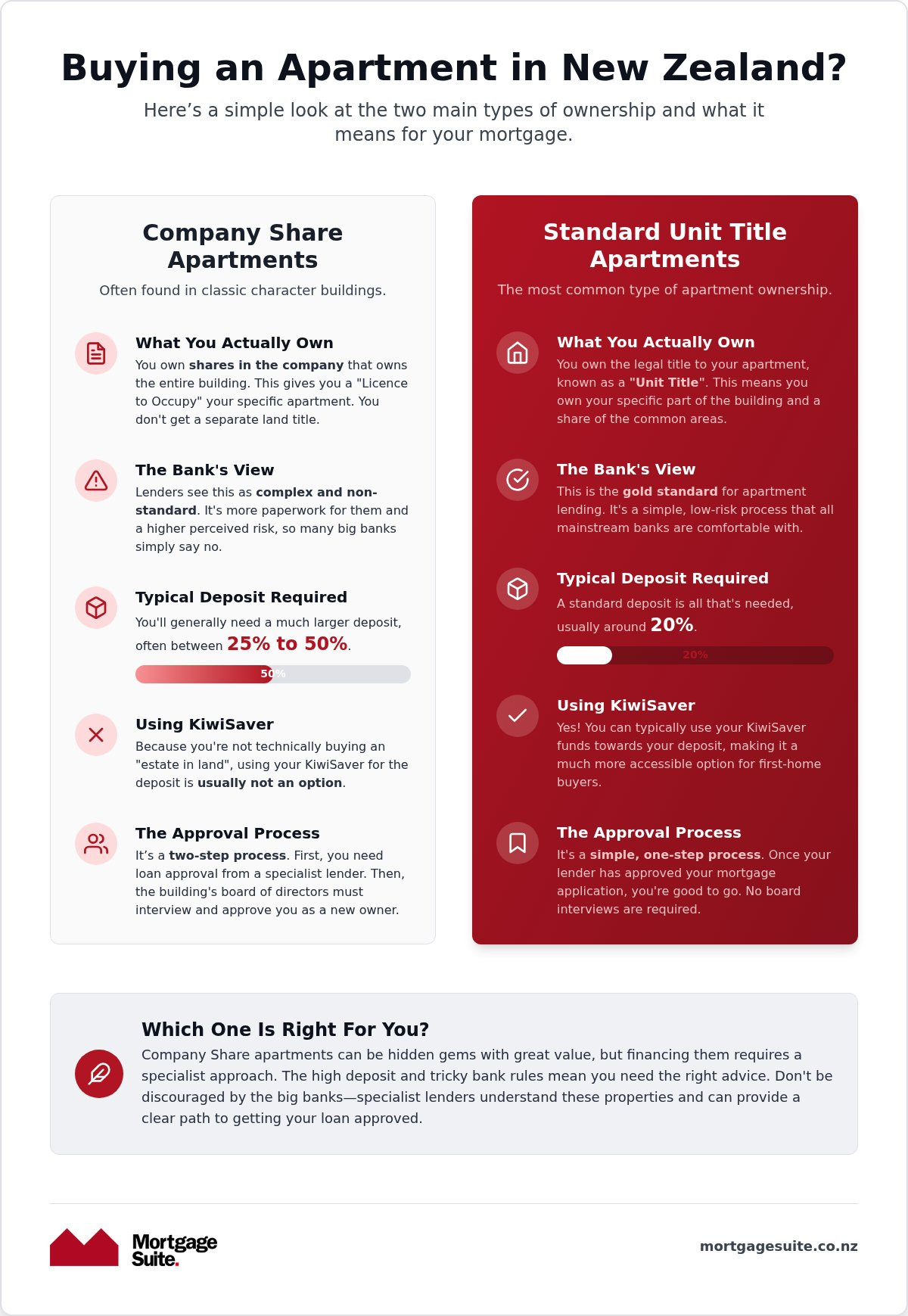
Lending rules vary significantly depending on the asset type. Apartments under 40 or 50 square metres often require a much higher deposit, sometimes up to 50%, because banks view them as higher risk. Tiny homes and off-the-plan purchases also come with unique challenges; off-the-plan buyers must be wary of sunset clauses and the risk of the property’s value dropping before completion. A lending specialist can help you vet a property’s "bankability" early, ensuring you don’t waste time on a home you can’t actually finance. For buyers working with limited savings, understanding your low deposit home loan NZ eligibility across different property types can save you significant time and heartache during your search.

The Ultimate First Home Buyer Guide for New Zealanders in 2026

Sealing the Deal: Offers, Auctions, and Negotiations

The moment you decide to put pen to paper is when the property journey truly intensifies. It’s a high-stakes environment where emotions can cloud judgement, making it essential to have a firm strategy in place. This first home buyer guide New Zealand helps you manage these final hurdles with the poise of a seasoned investor. Your first step is to determine a maximum "walk-away" price. This is the absolute limit of what you are willing, or able, to pay. Having this figure written down prevents you from being swept up in the heat of a negotiation or the adrenaline of an auction room.

Once your price is set, you must choose between a conditional or unconditional offer strategy. A conditional offer allows you time to finalise finance or review a building report, while an unconditional offer is often more attractive to vendors because it provides certainty. If you find yourself in a multi-offer situation, remember that you usually only get one chance to put your best foot forward. There is usually no back-and-forth; you submit your highest price and best terms, then wait for the vendor to choose. Signing the agreement is just the beginning; you only reach "unconditional" status once all your specific conditions are met and confirmed in writing by your solicitor.

The Art of the Negotiation

Negotiation isn’t just about the purchase price; it’s about the entire package. If your building inspector uncovered minor issues in the previous stage of your due diligence, use those findings to justify a lower offer or request that the vendor fixes the faults before settlement. You can also use the settlement date as a bargaining chip; a vendor who has already bought another home might value a quick move-in date over a slightly higher price. For those looking at new builds, a sunset clause is a vital protection that allows either the buyer or the developer to cancel the contract if the project isn’t completed by a specific date. To ensure your offer is backed by a solid financial strategy, contact our expert lending team for professional guidance.

Winning at Auction

Auctions are inherently unconditional, so your due diligence and finance must be 100% sorted before the hammer falls. When bidding, maintain a "poker face" to keep your competitors guessing about your remaining budget. If the property is "passed in" because it didn’t meet the reserve, the highest bidder usually gets the first right to negotiate with the vendor. Ensure your deposit funds, typically 10% of the purchase price, are ready for immediate payment via electronic transfer the moment the contract is signed. This level of preparation ensures you remain in control, even in the most fast-paced environments.

Settlement and Beyond: Your Long-Term Financial Health

The journey to homeownership doesn’t end when the hammer falls; it simply shifts into a new phase of strategic management. While previous chapters of this first home buyer guide New Zealand focused on the acquisition, this final stage is about protecting your equity and ensuring your debt works for you. We believe in a partnership that extends far beyond the initial transaction. The Mortgage Suite Ltd commitment means providing advocacy that lasts the entire life of your loan, ensuring you’re never left to navigate the complexities of interest rate cycles or refinancing alone.

The Final Handover

Your pre-settlement inspection, typically conducted 48 hours before you move, is your last line of defence. This is when you verify that the vendor has met all their obligations. Check every light switch, run the taps to ensure no new leaks have developed, and confirm that all chattels, from the garage door remotes to the dishwasher, are exactly as described in the contract. Your solicitor will coordinate the transfer of funds on settlement day, usually via a secure electronic bank transfer. If the property isn’t in the agreed-upon state, your solicitor can negotiate a retention of funds to ensure repairs or cleaning are completed before the money is fully released. Ensure your insurance is active from the very start of this day to meet your lender’s requirements.

Refinancing and Future Planning

Structuring your loan is where you truly start building long-term wealth. Rather than fixing your entire balance at a single rate, consider a split structure that offers both stability and flexibility. You might fix a large portion for two years to provide budget certainty, while keeping a smaller amount in an offset account. An offset account is a powerful tool where every dollar in your linked savings account reduces the interest charged on your mortgage, effectively "paying yourself" rather than the bank. This first home buyer guide New Zealand highlights that your first house is often the springboard for a larger portfolio. By reviewing your structure annually with a professional, you can harness equity for future renovations or even your first residential investment property.

If you’re ready to move from the planning phase to a successful purchase, Talk to our experts at Mortgage Suite Ltd today. We are here to ensure your transition into homeownership is as rewarding as it is seamless, providing the steady hand you need in a fluctuating market.

Your Path to Homeownership Starts Here

Entering the property market in 2026 requires more than just a deposit; it demands a shift in mindset from fitting into a bank’s box to building a strategy around your life. This first home buyer guide New Zealand has mapped the journey from those first financial health checks to the final pre-settlement inspection. By assembling a dedicated A-team and mastering the nuances of property vetting and negotiation, you’ve moved from uncertainty to empowerment. You now understand that a "no" from a mainstream lender is often just the beginning of a more creative, 2nd tier solution tailored to your unique profile.

At Mortgage Suite Ltd, we bring over 20 years of banking and negotiation experience to your corner. As specialists in alternative lending and nationwide advocates for Kiwi buyers, we ensure your interests are protected at every turn. Secure your first home with a tailored lending strategy from Mortgage Suite Ltd. The door to your first home is waiting to be opened; let’s work together to turn that key and begin your property journey with confidence.

Frequently Asked Questions

Can I buy a house in NZ with a 5% or 10% deposit?

Yes, you can certainly purchase a home with a 5% deposit if you qualify for the Kāinga Ora First Home Loan, which is designed for eligible buyers within specific income caps. If you don’t meet those criteria, a 10% deposit is often acceptable through various 2nd tier lenders or specific bank windows. These options allow you to enter the market sooner, though you should factor in the cost of Lender’s Mortgage Insurance or low equity premiums.

How long does the KiwiSaver first-home withdrawal process take?

The KiwiSaver first-home withdrawal process typically takes between 10 and 15 working days from the moment your provider receives your completed application. It’s vital to get your paperwork in order as soon as you start looking at properties. You must ensure the funds are requested well before your settlement date, as your solicitor will need the cleared funds to complete the transaction on your behalf.

What is the difference between a mortgage broker and a lending specialist?

A lending specialist provides a direct approach to securing your home
loan offered by its lender. While both professionals help you find finance, a Mortgage
Broker often has deeper expertise in navigating complex lending options for
unique borrower profiles. They also have access to multiple lenders that your
lending specialists doesn’t have. This partnership focuses on long-term
financial health and professional negotiation rather than just a simple
transactional interaction.

What happens if my home loan application is declined by a mainstream bank?

If a mainstream bank declines your application, it’s often a sign that you need to look beyond traditional lending criteria rather than a final "no" to your homeownership dreams. We specialise in 2nd tier loans that offer a fair go for self-employed individuals or those with smaller deposits. These alternative lenders are fully regulated and provide the flexibility needed to bridge the gap when big banks’ rigid boxes don’t fit your situation.

How much do I need to budget for legal and inspection fees in NZ?

You should budget between NZ$1,500 and NZ$2,500 for legal fees and approximately NZ$500 to NZ$800 for a professional building inspection. This first home buyer guide New Zealand also recommends setting aside NZ$600 to NZ$900 for a registered valuation if your lender requires one. Having a total "purchase buffer" of at least NZ$5,000 ensures you can cover these essential due diligence costs without dipping into your actual deposit funds.

Is it better to have a fixed or floating mortgage rate as a first home buyer?

Most first-home buyers find that a fixed mortgage rate is better for the majority of their loan because it provides certainty for their weekly or fortnightly budget. However, a "split" structure that keeps a small portion on a floating or offset account can be highly effective. This allows you to make extra repayments without penalties while protecting you from the immediate stress of fluctuating interest rates on your main balance.

Can I use the First Home Grant for an existing house or only new builds?

The First Home Grant was officially abolished in May 2024, so it’s no longer available for either existing houses or new builds. While this cash grant is gone, you can still utilise the Kāinga Ora First Home Loan and your KiwiSaver withdrawal to reach your goals. These remaining tools are the primary ways the government supports Kiwis in overcoming the deposit barrier in the current property market.

What is a 2nd tier lender and are they safe to use in New Zealand?

2nd tier lenders are non-bank financial institutions that are safe, reputable, and strictly regulated under New Zealand law. They’re an excellent alternative for borrowers who don’t fit the standard "PAYE employee" mould or those who have been declined by mainstream banks. Because they have different appetites for risk, they can often provide a pathway to homeownership through more personalised assessment and flexible lending terms.

Article by

Krish Krishna

Experienced Financial Adviser with over 46 years of Banking and Mortgage broking experience and over $2.0 Billion in loan settlements.

Home Loans for First Home Buyers in New Zealand: The 2026 Comprehensive Guide

What if the traditional 20% deposit isn’t the immovable barrier you’ve been led to believe? For many Kiwis, the path to home ownership feels like a maze of shifting interest rates and rigid bank policies that often seem designed to keep you out. It’s frustrating to watch your savings grow while the goalposts move, especially when you’re trying to secure home loans for first home buyers New Zealand in a market that demands both precision and persistence. We understand that the fear of being declined by a mainstream bank is real, and the confusion surrounding KiwiSaver rules only adds to the pressure.

You deserve a clear, professional roadmap that turns that uncertainty into a concrete plan. This guide provides the seasoned expertise you need to navigate the 2026 lending landscape with confidence. We’ll break down the current income caps for the First Home Loan scheme, explain the mid-2026 KiwiSaver legislation changes, and show you how alternative lenders can offer the flexibility that big banks often lack. By the end of this article, you’ll have a thorough understanding of the support schemes available and the strategic steps required to finally unlock your own front door.

Key Takeaways

  • Gain a professional perspective on the 2026 property market to help alleviate anxiety and approach your purchase with seasoned confidence.
  • Navigate the updated 2026 criteria for KiwiSaver withdrawals and government-backed home loans for first home buyers New Zealand to maximise your available deposit.
  • Explore the benefits of 2nd tier lenders as a viable, flexible alternative to the rigid lending criteria often found at mainstream banks.
  • Learn how to accurately calculate your uncommitted monthly income and organise your financial history to present the strongest possible case to lenders.
  • Understand the value of having a dedicated negotiator with deep institutional knowledge to advocate for your success and remove common obstacles.

Entering the 2026 property market requires a steady hand and a clear head. It’s perfectly natural to feel a sense of “ladder anxiety” when you see interest rates like ANZ’s 4.79% for a one-year fixed term or Kiwibank’s 4.49% for six months. While the market has shifted significantly since 2024, the fundamental challenge remains the same: finding a way in. Navigating the New Zealand Property Market involves understanding that the headlines don’t always tell the full story of your personal borrowing potential. You aren’t just a number in a spreadsheet. You’re a future homeowner who needs a partner to translate complex banking jargon into a successful application. The standard bank path is often narrow, but it isn’t the only route available to you.

The Reality of Deposits in 2026

The old rule of a 20% deposit still exists, but it isn’t the only gatekeeper. Many buyers now aim for 10% or even 5% through specific schemes. If you’re looking at home loans for first home buyers New Zealand, you need to account for the Lender’s Mortgage Insurance (LMI). As of July 2025, the premium for the First Home Loan scheme sits at 1.2% of the loan amount. This is a cost for the lender’s security, but it’s often the key that unlocks the door when you haven’t yet built up massive equity. Equity is simply the difference between what your home is worth and what you owe the bank. Starting from scratch is hard, but it’s achievable with the right structure. For a comprehensive overview of every step involved, our first home buyer guide New Zealand walks you through the entire journey from savings to settlement.

Why a “No” from a Mainstream Bank Isn’t the End

Mainstream banks rely on rigid algorithms. If your profile doesn’t fit their specific “box” for risk appetite, their system triggers an automatic decline. This doesn’t mean you’re a bad borrower. It just means that particular institution isn’t the right fit for your current financial snapshot. Different lenders have different appetites for risk. Where a big bank might see a hurdle in your deposit structure or employment history, a 2nd tier lender might see a viable opportunity. We specialise in finding these openings, acting as a bridge between the institutional “no” and your eventual “yes.” Specialised financing can often provide the necessary bridge to get you into your first home when the traditional path feels blocked.

Maximising Government Assistance: KiwiSaver and First Home Loans

While the landscape for government support shifted when the First Home Grant closed in May 2024, several powerful tools remain available to help you bridge the gap. Understanding these first home buyer assistance schemes is vital for anyone looking to secure home loans for first home buyers New Zealand. We see many clients who feel discouraged by the loss of direct grants, but the reality is that your own savings and government-backed lending criteria can still provide a significant advantage if managed correctly. It’s about knowing which levers to pull and when to pull them to ensure your application is as strong as possible.

KiwiSaver: Your Secret Weapon

Your KiwiSaver is likely your most substantial asset in this journey. To utilise it for a withdrawal, you must have been a member for at least three years. You’re permitted to withdraw almost your entire balance, provided you leave a minimum of NZ$1,000 in your account. It’s a common misconception that you can take everything; the “kickstart” or its equivalent must stay behind. Additionally, funds transferred from an Australian superannuation scheme aren’t eligible for withdrawal. Mid-2026 brings even more flexibility, with new legislation allowing those in service tenancies to buy their first home without the immediate requirement to occupy it. This is a game-changer for workers in employer-provided housing. Getting a “letter of entitlement” from your provider early in the process ensures you know exactly what you’re working with before you start making offers.

The Kāinga Ora First Home Loan Advantage

The First Home Loan scheme remains a cornerstone for those with a smaller deposit. Underwritten by Kāinga Ora, it allows eligible buyers to purchase with just a 5% deposit. While some major institutions don’t participate, the options have expanded significantly. ASB joined the programme in February 2026, joining Westpac, Kiwibank, and several building societies. This scheme is particularly effective because house price caps were removed back in 2022, meaning you aren’t restricted by the price of the property, only by your ability to service the debt. However, income caps do apply:

  • Single buyers without dependents: NZ$95,000 or less (before tax) over the last 12 months.
  • Single buyers with dependents: NZ$150,000 or less.
  • Two or more buyers: A combined income of NZ$150,000 or less.

For those looking to build on Māori land, the Kāinga Whenua Loan provides a specific pathway that doesn’t require a traditional land mortgage, acknowledging the unique legal structures involved. Navigating these requirements can feel like a full-time job, but you don’t have to do it alone. If you’re feeling overwhelmed by the criteria, reaching out to the team at Mortgage Suite Ltd can help you determine exactly which scheme fits your financial profile.

Mainstream Banks vs. 2nd Tier Lenders: Finding Your Best Fit

In the New Zealand mortgage market, the “Big Four” often dominate the conversation. However, for many seeking home loans for first home buyers New Zealand, these institutions aren’t always the most accommodating partners. This is where 2nd tier lenders come in. These are non-bank financial institutions that provide residential loans but don’t hold a full banking license. They operate with different funding structures and, crucially, different sets of rules. While a mainstream bank might rely on a rigid “black or white” credit score, a 2nd tier lender often takes a more holistic view of your financial situation.

The core difference lies in flexibility. Mainstream banks are built for volume and speed, which means they use automated systems to filter out anything that looks slightly unusual. If you don’t fit their pre-defined box, you’re out. 2nd tier lenders are generally more human-centric. They’re willing to listen to the story behind a credit blemish or look at the potential of a property that a bank might deem too small or too unique. It’s a partnership based on individual merit rather than a cold algorithm.

When Mainstream Banks Make Sense

Mainstream banks are ideal if you have a “clean” application. This usually means a 20% deposit, stable PAYE income, and a flawless credit history. They offer the most competitive interest rates, such as ANZ’s 4.79% one-year fixed rate as of June 2026. You’ll also find enticing cash-back offers that can assist with moving costs or legal fees. If you fit their narrow criteria, the convenience of having your everyday accounts and mortgage in one place is a significant drawcard.

When to Consider a 2nd Tier Lender

If you’re self-employed with only a year of accounts, or if you’re looking at a small apartment, 2nd tier lenders are often your only path forward. They are also a lifeline for those with a minor credit blemish that triggers a “no” from mainstream institutions. While the interest rate might be higher than the 4.49% to 4.79% range currently offered by major banks, the trade-off is property ownership. We often view these loans as a strategic, short-term move. You pay a slightly higher rate for 12 to 24 months to get into the market, build equity, and then we execute a “pathway back to mainstream” strategy. Once your equity reaches the 20% threshold mentioned earlier, we can look to refinance you back to a bank for long-term savings.

Home Loans for First Home Buyers in New Zealand: The 2026 Comprehensive Guide

Preparing Your Application: A Step-by-Step Guide to Approval

Securing a mortgage isn’t just about having the money; it’s about proving to a lender that you’re a safe bet. In the current 2026 environment, where banks are scrutinising every dollar, your preparation needs to be flawless. We often see eager buyers rush into open homes before they’ve even looked at their own bank statements through a lender’s eyes. This leads to heartbreak when a “dream home” is snatched away because the finance wasn’t ready. To avoid this, you need a methodical approach that addresses the five pillars of a successful application.

  • Step 1: Organise your financial history. Lenders typically require three to six months of bank statements. They’re looking for consistent savings and “clean” spending habits.
  • Step 2: Calculate your true uncommitted monthly income. This is the surplus cash you have left after all fixed expenses, tax, and living costs are deducted from your pay.
  • Step 3: Understand the DTI (Debt-to-Income) ratios. By June 2026, DTI limits have become a standard tool for the Reserve Bank to manage risk. If your total debt is too high relative to your gross income, even a large deposit might not save the deal.
  • Step 4: Get your “Pre-Approval” sorted. This is your license to hunt. It tells real estate agents you’re a serious buyer with the backing of a lender.
  • Step 5: Engage a negotiator. Don’t just walk into your local branch. A professional negotiator presents your case to multiple lenders simultaneously to find the best fit for your goals.

The “Paperwork” Heavy Lifting

Clean spending habits for at least 90 days are non-negotiable. Banks look for red flags like excessive “Buy Now Pay Later” (BNPL) transactions or unarranged overdrafts. Even if you pay your Afterpay off on time, the total credit limit is often viewed as a potential debt by the bank’s algorithm. If you’re a contractor or business owner, the burden of proof is higher. You’ll need at least two years of certified accounts or tax summaries to prove your income is stable. Disclosing all credit card limits, even those with a zero balance, is essential because the bank calculates your borrowing power based on the limit, not what you currently owe.

Understanding Your Borrowing Power

Your borrowing power isn’t determined by the current interest rates you see advertised, such as ANZ’s 4.69% six-month special. Instead, banks use a “stress test” rate, which is often 2% to 3% higher than the market rate. This ensures you can still afford the property if rates rise in the future. Dependants also play a massive role; the bank allocates a fixed “cost per child” that reduces your uncommitted income. Remember, the cheapest rate isn’t always the best loan for your goals. A slightly higher rate with a lender who allows for a smaller deposit or offers more flexible terms might be the strategic choice that actually gets you the keys. If you’re ready to see how your profile stacks up against current criteria, the experts at Mortgage Suite Ltd can review your position before you talk to the banks.

How Mortgage Suite Negotiates Your Way into a First Home

Negotiation is the often-overlooked stage of the mortgage process. While many buyers assume their application is simply a matter of data entry, the way your financial story is presented to a lender matters immensely. Krish Krishna brings more than 20 years of seasoned banking experience to every negotiation, acting as a bridge between your personal goals and the rigid requirements of institutional lending. We don’t just process paperwork; we advocate for your success by speaking the “banker’s language” to credit managers who are looking for reasons to say no. Having an expert who knows the internal credit policies of various institutions is essential when you’re searching for home loans for first home buyers New Zealand.

This level of advocacy is particularly vital for “out of the box” clients. If you’re self-employed, have a non-standard income stream, or are working with a smaller deposit, a standard application might trigger an automatic decline. We specialise in identifying the strengths in your profile that an algorithm might miss. Our reputation for tenacity and industry knowledge allows us to secure home loans for first home buyers New Zealand even when the path seems blocked. Wherever you are in New Zealand, our national service scope ensures every Kiwi has access to high-level negotiation expertise.

A Personalised Approach to Lending

We’ve moved away from the cold, transactional nature of modern banking to a relationship-based model. Every application we handle is structured to highlight your specific financial strengths. This might involve explaining a temporary dip in income or detailing the growth potential of your business. The Mortgage Suite Ltd difference is built on a foundation of reliability and trust; we treat your first home purchase with the same priority and passion as if it were our own. We understand that this isn’t just a loan; it’s the foundation of your future.

Your Long-Term Property Partner

Our commitment to you doesn’t end when you get the keys to your first home. We view ourselves as your long-term property partner. As your equity grows and market conditions shift, we provide ongoing support to help you manage interest rate changes or plan for your first residential investment property. We’re here to ensure your mortgage remains a tool for wealth creation rather than just a monthly expense. If you’re ready to move beyond automated calculators and experience a professional, hands-on approach, Speak with Krish and the team about your first home today and let us start the negotiation for you.

Taking the First Step Toward Your New Front Door

Owning your first home in 2026 is an achievable reality when you have the right strategy and a seasoned advocate in your corner. We’ve explored how to leverage KiwiSaver, navigate updated income caps, and use 2nd tier lenders as a vital bridge to property ownership. Success in this market isn’t just about finding the lowest interest rate; it’s about professional preparation and expert negotiation that speaks the language of the banks. By organising your financial history and understanding your true borrowing power, you position yourself as a priority candidate for lenders.

With over two decades of banking and negotiation experience, our team specialises in finding solutions for “out of the box” profiles and navigating the complex world of non-bank lending. We provide a dedicated, national service that supports Kiwis across all of New Zealand, ensuring you’re never just a number in a system. If you’re ready to move past the automated calculators and secure a partnership built on trust and results, it’s time to act. Secure your first home loan with Mortgage Suite and let us help you find the right home loans for first home buyers New Zealand. Your journey to home ownership starts with a single, confident conversation.

Frequently Asked Questions

How much deposit do I really need for a first home in New Zealand in 2026?

You need as little as a 5% deposit if you qualify for the First Home Loan scheme underwritten by Kāinga Ora. While mainstream banks typically prefer a 20% deposit to avoid low equity margins, many buyers successfully enter the market with 10% by using a 2nd tier lender. If you have less than 20%, you should account for the Lender’s Mortgage Insurance (LMI) premium, which currently sits at 1.2% for government-backed loans.

Can I use my KiwiSaver for a deposit if I have owned a home before?

Yes, you can potentially use your KiwiSaver as a “previous home owner” if Kāinga Ora determines you are in a similar financial position to a first-home buyer. You must still meet the standard withdrawal criteria, such as being a member for at least three years and leaving a minimum balance of NZ$1,000 in your account. This is a vital pathway for those looking to re-enter the market after a significant life change or financial setback.

What is the difference between a bank and a 2nd tier lender?

A mainstream bank is a large institution with rigid, automated criteria, whereas a 2nd tier lender is a non-bank provider that often offers more human-centric flexibility. 2nd tier lenders are a strategic choice for self-employed Kiwis or those with “non-standard” income who don’t fit the narrow algorithms of the major banks. They provide an essential alternative when securing home loans for first home buyers New Zealand in a tight credit environment.

How does the First Home Grant work and am I eligible?

The First Home Grant is no longer available as the government closed the scheme to new applicants in May 2024. Instead, you should focus on the First Home Loan scheme, which still provides a pathway to ownership with a 5% deposit for eligible buyers. We recommend focusing on your KiwiSaver withdrawal and exploring alternative lending structures to bridge any remaining gap in your deposit requirements.

What happens if the bank declines my home loan application?

A decline from a mainstream bank is simply a sign that your profile didn’t fit their specific risk “box,” not the end of your home-owning dreams. We often review these declined applications and find solutions through 2nd tier lenders who take a more holistic view of your financial situation. It’s about finding a lender whose appetite for risk matches your current profile and restructuring your debt to meet modern DTI requirements.

Is it better to have a fixed or floating interest rate as a first-home buyer?

Most first-home buyers opt for a fixed rate to gain certainty over their repayments, especially with 2026 rates like ANZ’s 4.79% for a one-year term. Floating rates are currently higher, often around 5.79%, but they offer the flexibility to make unlimited extra repayments without penalty. Many of our clients choose a “split” mortgage, fixing the bulk of the loan for stability while keeping a small portion floating to pay down faster.

Do I need to pay for the services of a lending expert?

In the majority of standard residential applications, the lender pays a commission to the expert for presenting a high-quality application, meaning there is no direct cost to you. If your situation is particularly complex or requires a specialised 2nd tier lending structure that involves a fee, this will always be discussed with total transparency upfront. Our goal is to act as your advocate and ensure the process is as cost-effective as possible.

How long does the pre-approval process usually take in NZ?

A standard pre-approval usually takes between three to five working days once your full documentation is submitted to the lender. This timeframe can stretch slightly longer for complex applications involving self-employment or 2nd tier lenders that require manual assessment by a credit manager. Having your financial history and income proof organised before you start the process is the most effective way to secure home loans for first home buyers New Zealand quickly.

Article by

Krish Krishna

Experienced Financial Adviser with over 46 years of Banking and Mortgage broking experience and over $2.0 Billion in loan settlements.