
Borrowing Power Calculator NZ: How Much Can You Really Afford in 2026?

What if the number you see on a standard borrowing power calculator nz is actually underselling your potential to buy a home? It is completely normal to feel a bit anxious about your mortgage prospects right now, especially with the Reserve Bank’s Debt-to-Income (DTI) rules and the rising cost of living making every dollar feel smaller. You might even worry that a “no” from a big bank means your home-ownership dreams are on ice for good.

I understand how frustrating it is to feel like you are doing everything right but still coming up short. That is why this guide is designed to help you discover how to accurately estimate your mortgage potential and the practical steps you can take to boost your borrowing limit before you submit an application. We will explore how to navigate the current 2026 lending landscape, including the impact of the OCR sitting at 2.50 per cent and why looking beyond mainstream lenders might be the key to your success. By the end, you will have a clear path toward finding a loan that actually fits your unique financial situation and goals.

Key Takeaways

  • Using a borrowing power calculator nz is the best way to set a realistic budget and avoid the heartbreak of falling in love with a home you cannot afford.
  • Lenders focus heavily on your “uncommitted income,” which is the amount of cash you have left over every month after all your bills and debts are paid.
  • A rejection from a mainstream bank does not mean your journey is over, as 2nd tier lenders often offer more flexible rules for different types of income.
  • You can often increase your loan limit by thousands of dollars just by closing unused credit cards and organising your spending three months before you apply.
  • While online tools provide a great starting point, a mortgage expert can often find extra borrowing potential through direct negotiation with lenders.

What is a Borrowing Power Calculator and Why Should You Use One?

A borrowing power calculator nz is essentially a digital health check for your finances. It takes a look at your income, your regular bills, and any debts you currently have to give you a rough idea of what a bank might be willing to lend you. Think of it as a helpful warm-up before you start the actual race of buying a home. Before you dive into the details, it helps to understand the basics of What is a mortgage and how these loans function as a long-term commitment. Using a tool like this early in the piece allows you to identify any spending habits that might look like red flags to a bank, such as high credit card limits or too many small “buy now, pay later” debts.

The main reason to use a calculator is to set a realistic budget for your property search. There is nothing more heartbreaking than falling in love with a beautiful home, only to find out later that your bank won’t even consider lending you that much. By getting an estimate first, you can narrow your search to houses you can actually afford. Fundamentally, your borrowing power is the balance between your gross income and your ability to service a loan comfortably. It is a measurement of how much breathing room you have in your budget after the mortgage is paid.

The Difference Between Borrowing Power and Affordability

It is vital to remember that there is a big difference between what a bank could give you and what you should take. Borrowing power is the maximum limit a lender sets based on their internal rules. Affordability, on the other hand, is about your daily life. Can you still afford a holiday, a new car, or even just the weekly grocery shop if you take that maximum loan? You should never aim for the absolute ceiling the calculator shows. Lenders also use interest rate “stress tests,” calculating your repayments at a much higher rate than the current market to ensure you can handle future changes without stress.

Why 2026 is a Unique Year for NZ Borrowers

This year has brought some specific challenges and opportunities for Kiwis. With the Official Cash Rate (OCR) sitting at 2.50 per cent as of July 2026, mortgage rates have shifted, directly impacting how much you can borrow. Before you start crunching numbers, take a look at the current Mortgage Rates NZ to see where the market stands. We are also seeing the full effect of Debt-to-Income (DTI) rules, which limit your total debt based on your yearly earnings. These changes mean the goalposts have shifted, making it more important than ever to have an accurate picture of your financial standing before you apply.

How the Math Works: The Key Factors Lenders Look At

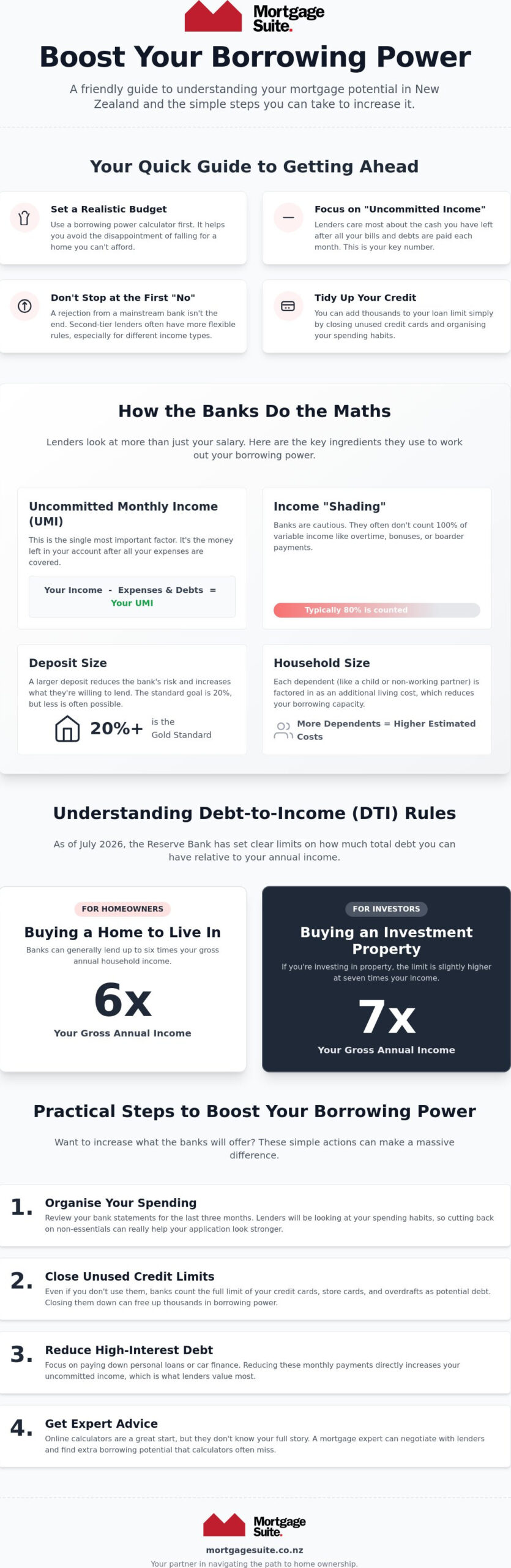
Lenders don’t just look at your total salary and call it a day. They are far more interested in what we call “uncommitted income.” This is the actual cash you have left over once every single bill, grocery shop, and debt repayment is settled. When you play around with a borrowing power calculator nz, it tries to mirror this logic, but banks add their own layers of caution. For example, lenders often “shade” certain types of income, such as boarder payments or overtime, by typically counting only 80 per cent of the total to stay on the safe side. This buffer protects the bank if your extra shifts dry up or a flatmate decides to move out unexpectedly.

Your deposit size is another heavy hitter in the calculation, especially for first-home buyers. While a 20 per cent deposit is the standard goal, banks can still lend to those with less, though they will usually add a “low equity margin” to your interest rate to cover the extra risk. You also need to account for your household size and your deposit-to-loan ratios. Each dependent, whether it is a child or a non-working adult, is seen as an additional cost. This naturally reduces the amount of money the bank believes you have available to pay back a loan each month.

Understanding Income-to-Debt Limits

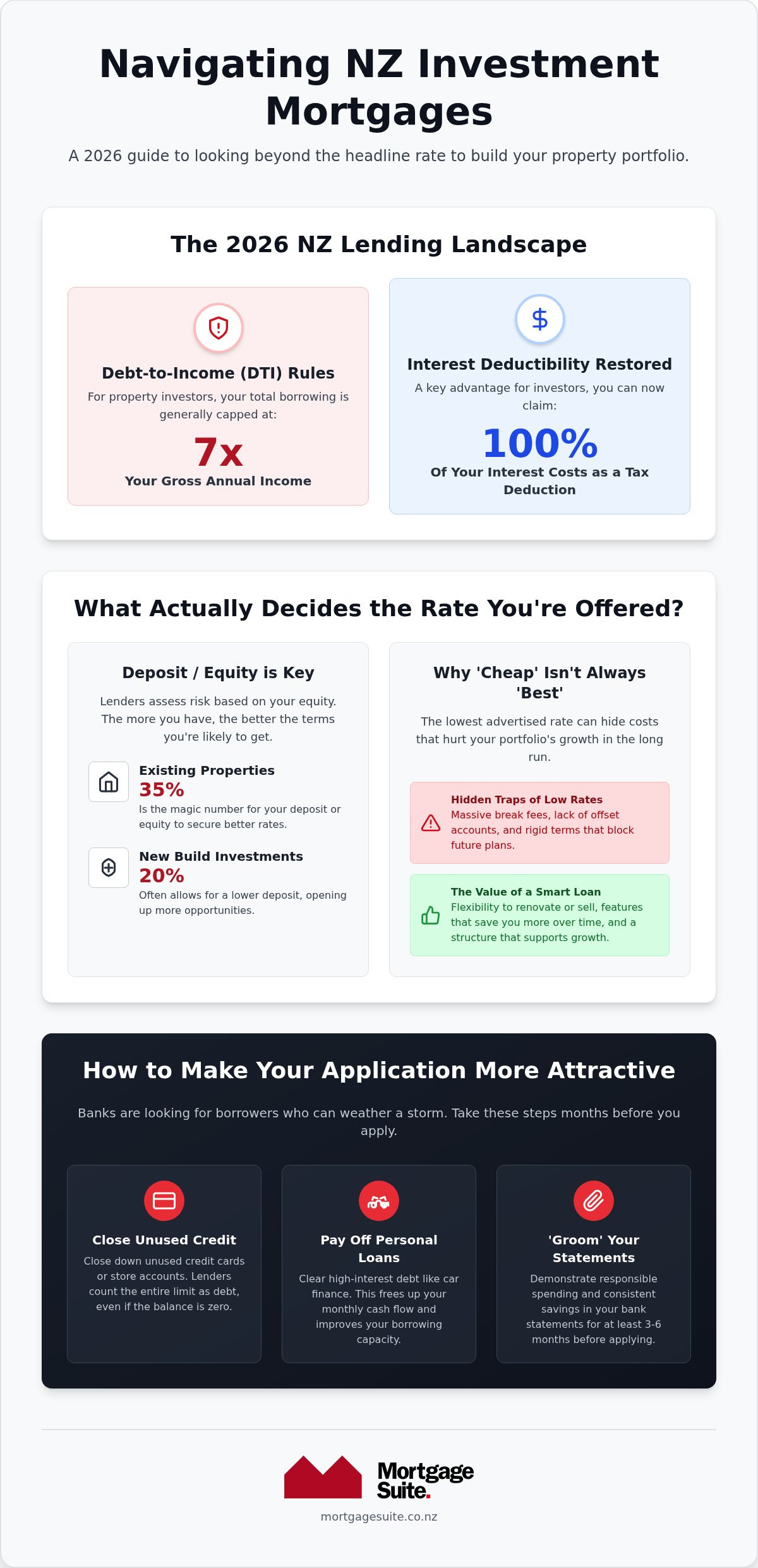
As of July 2026, the Reserve Bank has set firm boundaries that every borrower needs to understand. For people buying a home to live in, banks generally limit new lending to six times your gross annual income. If you are a residential investor, that limit shifts to seven times your income. This means even a high salary won’t help you borrow more if you are already carrying significant debt from car loans or personal finance. To get a better feel for how these numbers fit into the wider home buying and selling process, it is worth checking out government resources that break down the practical steps of the journey. If you are finding that the standard tools aren’t giving you the full picture, a professional review of your numbers can often reveal options you might have missed.

The Impact of “Hidden” Expenses

Small habits can have a surprisingly large impact on your final loan offer. Lenders now look closely at buy now, pay later schemes, often treating your total available limit as an active debt, even if you don’t owe a cent at the moment. Your regular subscriptions, from Netflix to your local gym, also get added to your living cost declaration. Being accurate and honest about these costs is essential. If a bank spots a pattern of high spending that contradicts your application, it can lead to a quick decline. Taking the time to tidy up these small leaks in your budget three months before you apply can significantly boost your standing in the eyes of a lender.

Why Different Lenders Give You Different Numbers

It is a common source of frustration for many Kiwis. You sit down at night, open a borrowing power calculator nz on one bank’s website, and get a number that feels great. Then, you try another, and the limit drops by fifty thousand dollars. This happens because every lender in New Zealand has its own internal “risk appetite.” They don’t all use the same math to decide what you can afford. Some might be more generous with how they view your bonuses, while others might be much stricter about your childcare costs. Each bank has its own set of rules that act like a filter for your application.

Using a neutral tool like the Sorted mortgage calculator is a fantastic way to get a baseline. It gives you a clear, unbiased look at what your repayments might look like without the slant of a specific bank’s policy. However, even a great tool cannot tell you which lender is currently looking to grow its mortgage book by being more flexible with its criteria. A broker can compare multiple calculators at once to find the most generous offer, ensuring you don’t miss out on a property just because one bank’s “cookie-cutter” rules didn’t fit your life.

Mainstream Banks vs. Non-Bank Lenders

Mainstream banks are designed for regular salary earners. If you have been in your job for years and have a tidy 20 per cent deposit, they are usually your first port of call. But life isn’t always that tidy. If you are self-employed, working as a contractor, or trying to buy with a smaller deposit, you might find the big banks are quite quick to say no. This is when looking at a 2nd Tier Lender New Zealand becomes essential. These non-bank lenders often provide alternative paths for people with unique financial profiles. We focus on bridging this gap, using our 20 years of banking experience to find the options that a standard bank tool simply cannot see.

The Role of Credit Scores in Your Calculation

Your credit score is essentially your financial reputation. While a calculator asks for your income and expenses, it often doesn’t account for your credit history until you actually apply. A poor score can “lock” you out of certain tiers of lending, even if you earn a high salary. Some lenders will decline an application over a single minor credit hiccup from years ago; others are more pragmatic and will look at why it happened and how you have managed your money since. It is a smart move to check your credit report before you get too deep into the house-hunting process. Knowing your score allows us to target the right lenders from the start, saving you from unnecessary declines.

Borrowing Power Calculator NZ: How Much Can You Really Afford in 2026?

How to Boost Your Borrowing Power Before You Apply

The number you get from a borrowing power calculator nz is just the starting line. You actually have a lot of control over that final figure. To get the best result, you should start organising your finances at least three months before you plan to buy. Banks usually want to see your last 90 days of bank statements, so this is your window to show them you are a reliable borrower. If you can prove that you are disciplined with your cash, lenders are much more likely to trust you with a larger loan.

Presenting “clean” bank statements is one of the most effective things you can do. It requires a bit of planning, but it is a simple fix. Follow these steps to tidy up your records:

  • Cut back on the extras: You don’t need to live on bread and water, but reducing high-frequency spending like takeout or luxury subscriptions makes your living costs look much better on paper.
  • Avoid unarranged overdrafts: Even a small dip into the red can signal to a lender that you aren’t quite on top of your cash flow.
  • Clear your buy now, pay later services: Try to have all accounts for these services closed and cleared so they don’t appear as active credit limits.
  • Label your transfers: If you are moving money to savings, label it clearly so the bank sees it as a positive habit rather than a mystery expense.

Managing Your Income-to-Debt Ratio

Many Kiwis fall into the “credit card trap” without realising it. Even if you have a zero balance, a $10,000 credit card limit can slash your borrowing power by a massive amount. The bank assumes the worst. They calculate your ability to pay based on the possibility that you might max out that card tomorrow. Closing unused cards or lowering the limits is one of the fastest ways to see a jump in your potential loan amount. Often, focusing on increasing your deposit is more effective than trying to squeeze out a small pay rise, as it lowers the bank’s risk and improves your overall position.

Proving Your Income for Complex Situations

Self-employed Kiwis often struggle with standard applications because their income can look less predictable to a bank’s computer. You will generally need to show stability through at least two years of financial accounts, but we can help you present these in the best light. If you are a first-time buyer, you might also consider using rental income from a flatmate or boarder to tip the scales. This extra cash can be added to your ability to pay back the loan, which makes a significant difference to the final offer. For more specific tips on getting started, check out our Home Loans for First Home Buyers guide. If you want to know exactly how much these changes will help your specific case, you can request a professional review of your finances to see where you stand.

Moving Beyond the Tool: Why a Mortgage Broker is Essential

While a borrowing power calculator nz provides a useful snapshot, it is essentially a static tool. It cannot account for the fact that the lending market moves every single week. Banks change their internal policies, interest rates fluctuate, and new rules from the Reserve Bank can shift your potential loan limit overnight. This is where having a seasoned advocate like Krish Krishna makes the difference. With over 20 years of banking experience, we don’t just look at the numbers; we look at the story behind them. We know which lenders are currently open to negotiation and how to present your case to get exceptions that a computer program would simply ignore. Having a veteran industry expert on your side means you have someone who has seen every possible scenario and knows exactly how to navigate the hurdles.

Beyond just finding the maximum amount, we help you decide on the right structure for your loan. Choosing between fixed and floating rates is not just about the lowest number today. It is about your long-term goals and your comfort with risk. If you plan to pay off your debt quickly or if you need the stability of knowing exactly what your bills will be for the next few years, the right structure is vital. We act as your dedicated negotiator, bridging the gap between the rigid world of big banks and your personal needs as a borrower. This hands-on approach ensures that you aren’t just another file in a system, but a priority.

Personalised Strategy vs. Online Estimates

If an online tool gives you a “no,” it is not necessarily the end of the road. Online estimates are often based on the most conservative settings and “cookie-cutter” rules that don’t account for your unique situation. We take a different approach by tailoring your application to highlight your specific financial strengths, whether that is a solid career path or a history of disciplined saving. We also conduct a professional “stress test” of your budget. This gives you genuine peace of mind, knowing that you can comfortably afford your home even if life throws a curveball or interest rates rise in the future.

Your Next Steps to Home Ownership

Moving from an estimate to a real-world offer is a straightforward process when you have the right support. To get started, gather your last three months of bank statements and your most recent payslips. These documents tell the story of your financial health and are the first things any lender will want to see. Once you have those ready, reach out for a no-obligation chat. We can look at your real-world options and help you find a lender that fits your specific financial profile. Ready to see your true borrowing power? Contact Mortgage Suite today.

Take the Next Step Toward Your New Home

A borrowing power calculator nz is a fantastic first step, but it only tells part of the story. Your true potential depends on how you present your finances and which lender you choose to partner with. Whether you are a first-home buyer navigating the 2026 market or an investor looking for more flexible 2nd tier options, the right strategy can turn a “no” into a “yes.”

You don’t have to figure this out on your own. With over 20 years of banking and brokerage experience, we specialise in finding the “hidden” potential that standard tools often miss. We provide personalised advocacy for first-home buyers and expert guidance for those who don’t fit the standard bank criteria. If you are ready to move beyond estimates and get a real-world plan, book a free consultation with Krish to find your true borrowing power. Your home-ownership goals are within reach, and we are here to help you navigate every hurdle with confidence.

Frequently Asked Questions

How much can I borrow for a home loan in NZ?

You can generally borrow between five to six times your gross annual income, though this depends on your specific debts and expenses. A borrowing power calculator nz will give you a rough estimate, but lenders also apply “stress tests” using interest rates higher than the current market. These tests ensure you can still manage repayments if rates rise, which is why your final offer might be lower than your gross income suggests.

Does a student loan affect my borrowing power?

Yes, your student loan definitely has an impact because it reduces your take-home pay every fortnight. Lenders look at your “net” income to see what is left for mortgage repayments, so the 12 per cent deduction for student loan repayments lowers your servicing capacity. Clearing this debt before you apply can often boost the amount a bank is willing to lend you.

Can I use my KiwiSaver as part of my deposit calculation?

You certainly can use your KiwiSaver savings as part of your deposit, provided you have been a member for at least three years. This extra cash increases your total deposit, which improves your Loan-to-Value Ratio (LVR). A larger deposit often makes you a more attractive borrower to the banks and can sometimes help you avoid the extra costs associated with low-equity loans.

What is the current DTI limit for NZ mortgages in 2026?

As of July 2026, the Reserve Bank has set the Debt-to-Income (DTI) limit at six times your gross income for owner-occupiers. For residential investors, the limit is slightly higher at seven times your income. Banks are allowed to do a small amount of lending above these levels, but most applicants will need to stay within these boundaries to get their loan approved.

How do credit card limits affect my borrowing power?

Lenders look at the total credit limit on your cards, even if you never use them and the balance is zero. They assume you could spend that entire limit tomorrow, so they factor the potential repayments into your monthly costs. Closing down unused cards or reducing your limits to a couple of thousand dollars is a quick way to see your borrowing potential jump.

Can I still borrow if I am self-employed or have a “2nd tier” profile?

Absolutely, you can still borrow if you are self-employed or don’t fit the standard bank profile. While mainstream banks might be hesitant, 2nd tier lenders specialise in looking at the bigger picture for business owners and those with unique income types. We focus on finding these alternative paths to ensure you aren’t locked out of the market just because your paperwork looks a bit different.

How often should I re-run a borrowing power calculator?

It is a good idea to re-run a borrowing power calculator nz whenever your financial situation changes or interest rates shift. If you get a pay rise, pay off a car loan, or if the Reserve Bank changes the OCR, your borrowing limit will move. Keeping an eye on these numbers helps you stay realistic about which properties you should be looking at during your search.

Will a small deposit of 5% or 10% reduce how much I can borrow?

Having a smaller deposit of 5 or 10 per cent usually means you can borrow less than someone with a full 20 per cent deposit. This is because banks have strict “speed limits” on how many low-deposit loans they can give out. You will also likely face a “low equity margin,” which is an extra interest cost that reduces the total amount you can comfortably service.

Article by

Krish Krishna

Experienced Financial Adviser with over 46 years of Banking and Mortgage broking experience and over $2.0 Billion in loan settlements.

Pre-approvals for Home Buyers

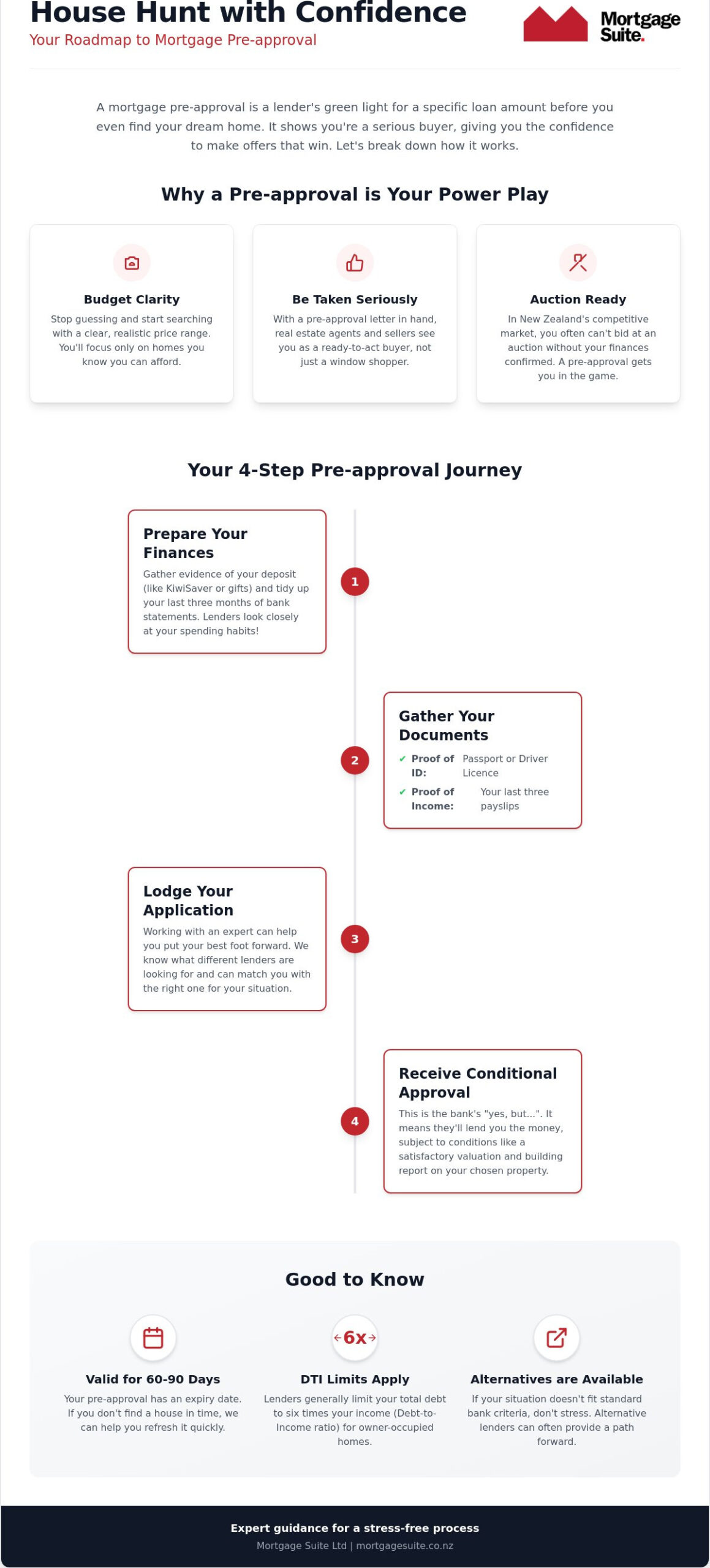
Walking into a Sunday open home without a pre-approval is like trying to win an auction with your hands tied behind your back. You find the perfect place, but the fear of missing out hangs over you because you aren’t completely sure the bank will back your offer. Between confusing jargon and the Debt-to-Income (DTI) limits of six times your income for owner-occupiers, the process of obtaining pre-approvals can feel like a massive hurdle. You might worry your deposit isn’t quite enough or that a small credit blip will stop you in your tracks.

We know you want more than just a letter; you want the confidence to shop in a price range that is realistic for your future. This article will show you exactly how to secure a mortgage pre-approval so you can house hunt with confidence and make offers that win. Mortgage Suite Ltd will walk you through the steps to get a clear “yes” from a lender, explain why these approvals typically last for 60 to 90 days, and show you how to feel like a serious buyer that real estate agents want to work with.

Key Takeaways

  • Understand why a pre-approval is your most powerful tool for being taken seriously by real estate agents and sellers in a competitive market.
  • Learn the practical steps for obtaining pre-approvals, including how to organise your deposit and the paperwork lenders actually want to see.
  • Discover how alternative lenders can offer a path forward if your financial situation doesn’t fit the standard bank criteria.
  • Find out how to get the final “thumbs up” from your lender before you bid at an auction so you can sign a contract with total peace of mind.
  • See how expert guidance can take the stress out of the process by handling the heavy lifting and negotiations with banks on your behalf.

What is a Mortgage Pre-Approval and Why Does it Matter?

If you have spent any time scrolling through property listings, you have probably seen the term pre-approval pop up. Essentially, it is a lender’s way of giving you a green light for a specific loan amount before you actually find the house you want to buy. This approval in principle means a bank or lender has looked at your finances and agreed to lend you a certain sum, provided the property you eventually pick meets their standards. Understanding What is a mortgage pre-approval? is the first step toward moving from a casual observer to a serious contender in the market.

The process of obtaining pre-approvals is about more than just paperwork; it is about strategy. When you are obtaining pre-approvals, you are building a bridge between your savings and your new front door. Having this sorted early offers several distinct advantages:

  • Budget Clarity: You stop wasting time on million-dollar homes if your limit is $800,000. It keeps your search focused and realistic.
  • Agent Credibility: Real estate agents take you far more seriously when you have a letter from a lender. It shows you are ready to act.
  • Auction Readiness: As we mentioned, auctions are a common way to sell in New Zealand. You usually cannot bid without having your finance already confirmed.

Think of it as a tool that levels the playing field. It removes the guesswork and allows you to walk into an open home knowing exactly what you can offer. This confidence is infectious; it makes sellers more likely to consider your bid over someone who still needs to talk to their bank.

The Difference Between Conditional and Unconditional Approval

It’s a common mistake to think a pre-approval is a blank cheque for any property you fancy. Most of the time, the bank gives you a conditional approval. This means they are happy to lend to you, but they still need to sign off on the specific house. Common conditions might include a registered valuation to ensure the price is fair, or a clean building report to check for structural issues. Conditional approval is the starting point of your journey, not the finish line.

How Long Does a Pre-Approval Last?

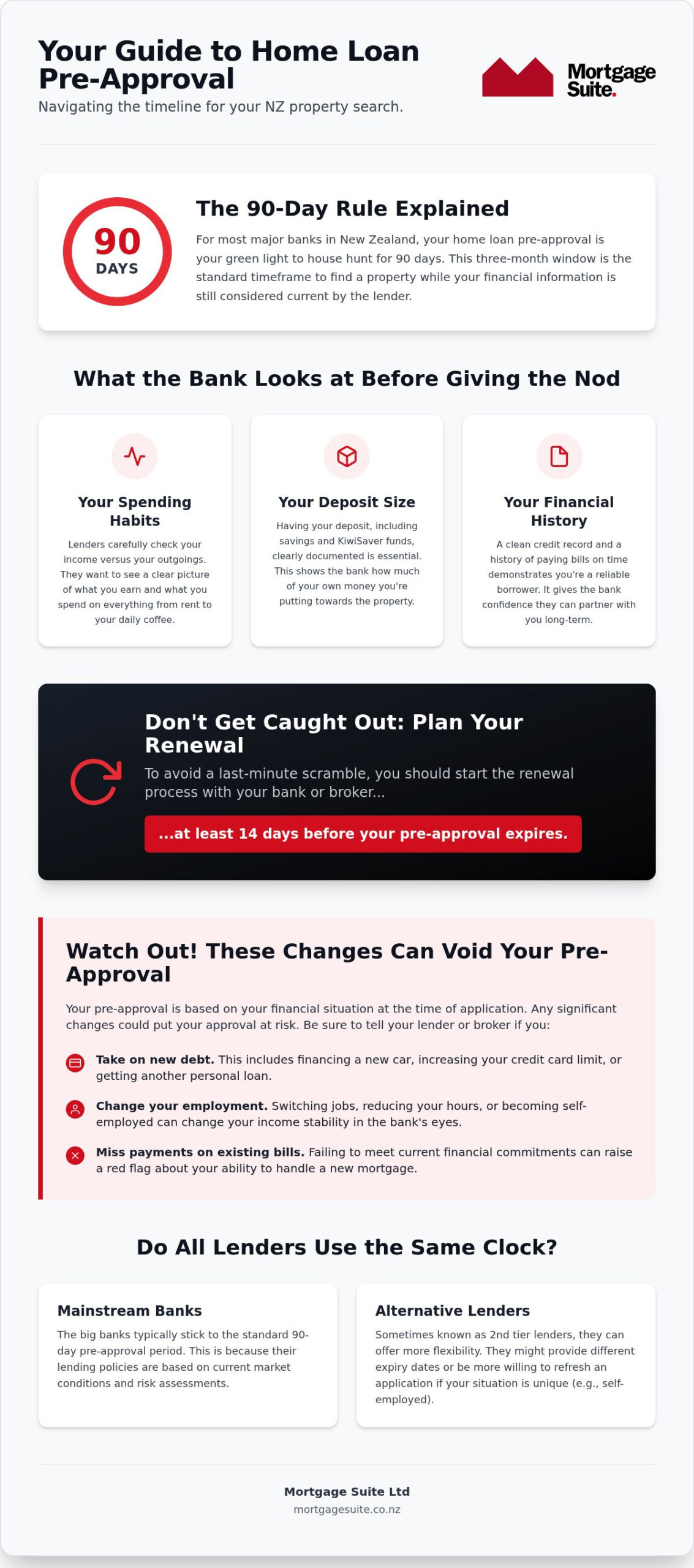
Standard validity is usually 60 to 90 days in the current NZ market. While we touched on this briefly, it’s important to understand why this window exists. Lenders need to ensure your financial situation hasn’t shifted significantly, especially with fluctuating interest rates. If your pre-approval expires before you find a home, Mortgage Suite Ltd can often refresh your application without starting from scratch. This usually involves providing updated payslips to confirm your income is still steady, allowing you to keep hunting without a long delay.

A Step-by-Step Guide to Obtaining Pre-Approvals in NZ

Getting your ducks in a row before you visit an open home is easily the smartest move you can make. The process of obtaining pre-approvals is a bit like preparing for a high-stakes job interview; you want to present the best possible version of your financial life to the lender. It starts with your deposit. Whether you are using KiwiSaver, a First Home Grant, or gifted funds from family, you will need clear, documented evidence of where that money is sitting and how it was built up.

Lenders do not just look at what you earn; they look closely at how you spend. When you are in the middle of obtaining pre-approvals, expect the bank to go through your last three months of bank statements with a fine-tooth comb. They are looking for your true expenses, which includes everything from your gym membership and Netflix subscription to how often you are hitting the local cafe. Cleaning up your discretionary spending a few months before you apply can make a massive difference to your borrowing power. If you are feeling overwhelmed by the paperwork, Mortgage Suite Ltd can help you navigate the home loan process from start to finish.

Once your numbers look tidy, it is time to submit your application. While you could walk into your local branch, working with an expert who knows the current lending criteria across multiple banks often yields a better result. We can help coordinate the application to ensure you are putting your best foot forward with the right lender for your specific situation.

The Essential Document Checklist for 2026

To keep things moving quickly, it is a good idea to have these items ready in a digital folder:

  • Proof of identity: A current NZ Passport or NZ Driver Licence.
  • Proof of income: Your last three payslips or full financial accounts if you are self-employed.
  • Deposit evidence: A KiwiSaver summary or bank statements showing your genuine savings.
  • Debt summary: Statements for credit cards, car loans, or any Buy Now Pay Later accounts.

Understanding the Lending Rules

Two main rules will largely dictate your success: your deposit-to-loan ratio and your borrowing limits based on income. The first is simply the size of your deposit compared to the house price. While a 20 per cent deposit is the standard “gold pass” for most banks, schemes like the First Home Loan only require 5 per cent. The second rule limits how much you can borrow based on your gross annual salary. As of July 2026, most people buying a home to live in are capped at a limit of six times their annual income. This means if your household earns $150,000, your total debt generally cannot exceed $900,000. These rules are strict at big banks, but some alternative lenders have more flexibility, which is why having conditional pre-approved finance is so vital before you start bidding.

When the Bank Says No: Obtaining Pre-Approvals via 2nd Tier Lenders

It is a sinking feeling when your own bank, the place where you have kept your savings for years, says no to your home loan application. Perhaps you are self-employed and your income fluctuates, or maybe your deposit is just shy of the standard requirements we discussed earlier. Whatever the reason, a “no” from a big bank does not have to be the end of your home-buying journey. For many Kiwis, obtaining pre-approvals through alternative or non-bank lenders is the key that finally opens the door.

These lenders often look at the bigger picture rather than just ticking boxes on a rigid checklist. While the mainstream banks are currently bound by very strict borrowing limits based on your income, alternative lenders frequently have more room to move. They specialise in finances that do not fit the usual boxes, providing a vital lifeline for people with unique money situations. The process of obtaining pre-approvals in this space is often faster because these lenders are designed to handle complexity and individual circumstances without the red tape.

Working with an alternative lender does not mean you are on your own. It simply means you are using a different path to reach the same goal. Mortgage Suite Ltd specialises in these situations, acting as a steady hand to guide you through the options that the big banks simply will not talk about.

Why Consider a Non-Bank Lender?

Choosing a non-bank lender is about finding a partner that understands your specific situation. They often have much more practical rules for self-employed home loans, looking at your business’s potential rather than just your latest tax returns. They can also be more lenient if you have a minor credit issue from the past or a slightly smaller deposit. If you are struggling to save the full amount, we can also check your eligibility for the First Home Loan scheme, which only requires a 5 per cent deposit. While interest rates might differ slightly from the big banks, these lenders provide a clear path to homeownership right now.

How a Broker Navigates Alternative Options

This is where experience really counts. Krish Krishna uses over 20 years of banking expertise to “pitch” your financial story to the right people. We do not just send off an application; we build a case for why you are a reliable borrower. We help you navigate the various 2nd tier lender New Zealand options to find a fit that makes sense for your long-term goals. Mortgage Suite Ltd ensures there are no surprises in the fine print and that you feel completely supported as you move toward a “yes”. We act as the bridge between the rigid world of institutional banking and your personal need to secure a home.

Pre-approvals for Home Buyers

Using Your Pre-Approval: Auctions and Making Offers

Once you have finished the hard work of obtaining pre-approvals, it is tempting to think the finish line is in sight. You have your budget sorted and your letter in hand, but it is vital to remember that a pre-approval is not a blank cheque for any property on the market. While the lender has said “yes” to you as a borrower based on your income and savings, they still need to sign off on the specific house you want to buy. The bank needs to be certain that the property is a safe investment for the money they are lending you.

If you are looking at a private sale or a deadline sale, you still have a bit of a safety net. The effort you put into obtaining pre-approvals pays off here because it allows you to act quickly, but we still recommend making your offer “subject to finance.” This gives your lender a few days to review the specific house buying contract and confirm they are happy with the property’s condition and location. It also protects you if the bank has concerns about the house that weren’t obvious at the open home. If you are ready to start making moves on a property, talk to our team at Mortgage Suite Ltd to ensure your offer strategy is solid.

One common hurdle you might see in your pre-approval letter is a requirement for a “Registered Valuation.” This is where a professional valuer gives an independent opinion on what the house is actually worth. Lenders often ask for this if you have a smaller deposit or if the house is being sold at auction. If the valuation comes back lower than what you have offered, it can affect your deposit-to-loan ratio and potentially reduce the amount the bank is willing to lend. Sorting this early with the help of Mortgage Suite Ltd prevents a lot of stress on settlement day.

The Auction Strategy

Auctions are a different beast entirely because they are usually unconditional. When the hammer falls, the contract is final; there is no backing out to check your money. This means you must do all your homework before you even step into the auction room. First, ensure your pre-approval is still valid. Next, get your lawyer to check the ownership records and the house buying contract for any red flags. Finally, you must send the property details to your lender to get a specific “thumbs up” for that address. Without this, you are taking a massive financial risk.

Conditions You Might See on Your Letter

Your pre-approval letter will likely come with a list of tasks to complete before the money is released. These are requirements that must be met to turn that conditional offer into a firm one. Common conditions include:

  • Building Report: A professional check to ensure the house is structurally sound and free from moisture or weather-tightness issues.
  • Meth Test: Some lenders require this to ensure the property has not been contaminated by past illegal activity.
  • House Insurance: You must have a certificate showing the house is fully insured from the day you take possession.
  • KiwiSaver Withdrawal: Proof that your KiwiSaver first home withdrawal has been approved and the funds are ready to be paid to your lawyer.

How Mortgage Suite Simplifies the Pre-Approval Process

Let’s face it, the administrative side of buying a home is nobody’s idea of a fun weekend. At Mortgage Suite, we see our role as taking that weight off your shoulders. The process of obtaining pre-approvals shouldn’t involve you drowning in spreadsheets or staying up late trying to decode bank emails. We handle the heavy lifting with the lenders, acting as your dedicated advocate from the first phone call to the final sign-off.

Because we work across the whole market, we aren’t limited to just one bank’s set of rules. We look at mainstream options and alternative lenders side by side to see which one actually fits your life. Whether you are a first-home buyer trying to break into the market or a seasoned investor looking to grow a portfolio, we make sure you are positioned as a serious buyer in the eyes of the people holding the keys. Our goal is to ensure you walk into every open home with the confidence that your finance is ready to go.

Sometimes, the answer isn’t a “yes” right away. If you aren’t quite ready for obtaining pre-approvals yet, we don’t just send you on your way. We provide a clear, personalised plan to help you get there. This might mean looking at your spending habits or finding ways to tidy up your debts so that when you do apply, the lender sees exactly what they want to see. We believe in being a steady hand in a fluctuating market, helping you navigate every obstacle until you reach your goal.

Expertise You Can Trust

With over two decades of experience in the banking world, Krish Krishna knows how the system works from the inside out. This isn’t just about filling in forms; it’s about negotiation and having a seasoned expert in your corner. We understand how current mortgage rates NZ wide are shifting and how those changes impact your specific borrowing power. Most importantly, we talk like real people. We avoid the confusing jargon that makes the finance world feel inaccessible, focusing instead on clear, honest advice that helps you make better decisions.

Your Next Steps to Home Ownership

Getting started is easier than you might think. We usually begin with a simple, relaxed chat to understand what you are trying to achieve and what your timeline looks like. From there, we will help you gather the right information to build a successful application. We believe in partnership over transactions, meaning we are with you for the long haul, from the initial pre-approval through to the day you get your keys.

Ready to start? Get in touch with Mortgage Suite today and let’s get your home-buying journey moving with confidence.

Step Into the Property Market with Confidence

The journey to your new front door starts long before the first auction hammer falls. We have explored how obtaining pre-approvals gives you a clear budget and makes you a serious contender in the eyes of real estate agents. Whether you are navigating the strict DTI rules of the big banks or looking for the flexibility of a 2nd tier lender, having an expert in your corner ensures you don’t miss out on the perfect home just because the finance wasn’t ready.

Mortgage Suite brings over 20 years of banking experience to your side. We specialise in complex loans and alternative lending, offering a national service across New Zealand that prioritises your success. We handle the heavy lifting so you can focus on finding a place to call home. You deserve a partner who understands the nuances of the market and acts as your dedicated advocate.

Ready to take the first step? Book a free consultation with Mortgage Suite to start your pre-approval today. You don’t have to navigate this process alone; we are here to guide you toward a clear “yes” and help you move in sooner.

Frequently Asked Questions

How long does it take to get a mortgage pre-approval in NZ?

It usually takes between two and five working days to get an answer, depending on how busy the lender is. If your situation is a bit more complex, like being self-employed, it might take a little longer for the bank to work through your details. Having all your paperwork organised and ready to go from the start is the best way to speed up the process.

Does obtaining a pre-approval cost anything?

Most lenders and brokers don’t charge a fee for the initial application. It’s a service designed to help you understand your budget before you start shopping. You might, however, need to pay for things like a registered valuation or a building report once you find a house you love, as these are often conditions the bank requires before they give the final sign-off on the loan.

Can I get a pre-approval with a 10% deposit?

Yes, you can certainly apply with a 10 per cent deposit. While many main banks prefer a 20 per cent deposit to avoid extra fees or higher interest margins, there are plenty of options for those with less. You might look into the First Home Loan scheme or alternative lenders who specialise in helping people with smaller deposits get onto the property ladder without the usual bank hurdles.

What happens if the bank declines my pre-approval application?

Getting a “no” from one bank doesn’t mean you can’t buy a house. It often just means your specific financial profile didn’t fit that particular lender’s current rules or DTI limits. We often help clients by looking at 2nd tier lenders who have more flexible criteria for income or deposit sizes, turning a decline from a main bank into a clear path forward for your home ownership goals.

Do I need a lawyer before I get pre-approved?

You don’t need a lawyer to start the application, but it’s a very good idea to have one picked out early. You’ll definitely need them to look over the Sale and Purchase Agreement or the auction terms before you commit to a property. Having your legal team ready to go means you can move quickly and safely when you find a house that fits your pre-approved budget.

Can I change lenders after I have been pre-approved?

You aren’t locked into a specific lender just because they gave you a pre-approval letter. If market conditions change or another bank offers a better deal, you can definitely switch before you finalise the loan. We help you compare different offers to make sure you’re getting the best terms for your long-term goals, ensuring you don’t feel stuck with the first “yes” you receive.

Does a pre-approval affect my credit score?

A formal application for obtaining pre-approvals usually involves a credit check, which can have a small, temporary impact on your credit score. This is why it’s a good idea to work with a broker who can identify the right lender first. This approach prevents you from applying at several different banks yourself and creating multiple hits on your record, which can look bad to future lenders.

Is a pre-approval guarantee that I will get the loan?

No, a pre-approval isn’t a 100 per cent guarantee that the money will be paid out. It is an “approval in principle,” meaning the final loan depends on the property meeting the bank’s standards and your financial situation staying the same. Obtaining pre-approvals is the best way to show you’re a serious buyer, but the bank always gets the final say on the specific house you choose.

Article by

Krish Krishna

Experienced Financial Adviser with over 46 years of Banking and Mortgage broking experience and over $2.0 Billion in loan settlements.

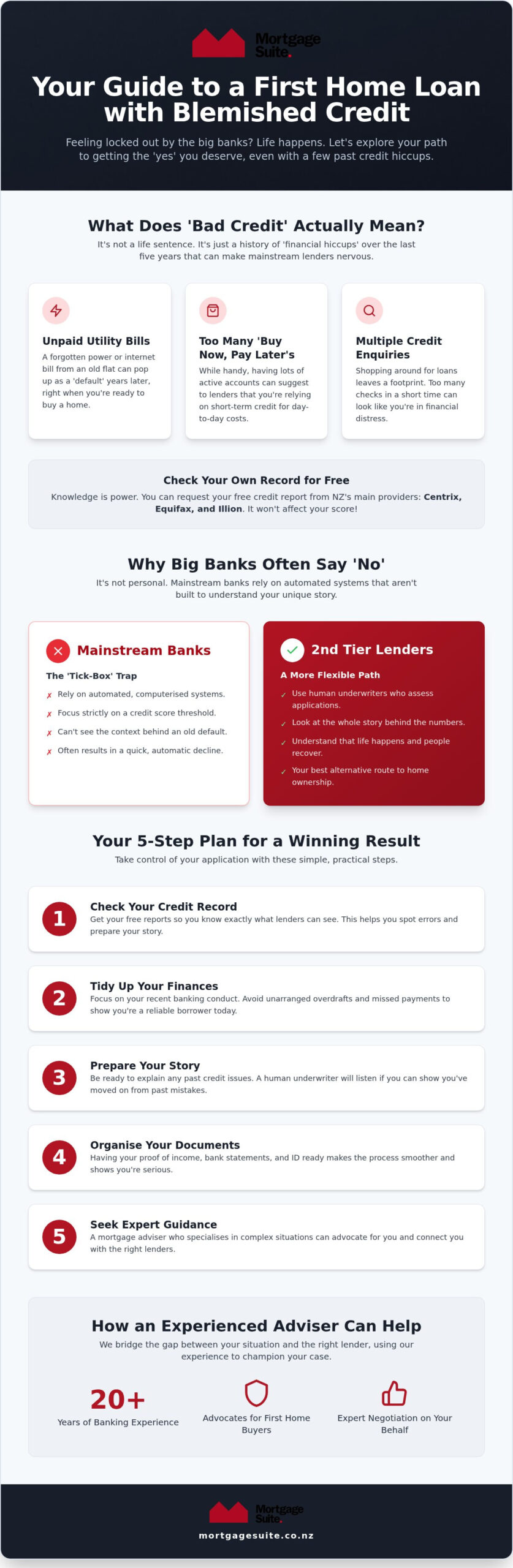
Declined by the Bank for a Home Loan in NZ? Your 2026 Recovery Guide

You’ve spent months skipping the extras and watching your savings grow, only to have a single email turn your home-buying dreams upside down. It’s a gut-wrenching moment when you realise you’ve been declined by bank home loan NZ lenders, especially when the Reserve Bank’s 2.50% OCR hike and strict debt-to-income limits make the goalposts feel like they’re constantly moving. The big banks are operating with more “computer says no” logic than ever before, leaving many great borrowers feeling stuck in the dark.

We know how confusing and unfair this feels, but a rejection from a main bank isn’t a dead end. This guide will show you exactly how to navigate the current market, from understanding why the banks are so rigid to finding alternative lenders who look at your real-life situation rather than just a spreadsheet. You’ll discover a clear path to approval and the confidence to try again with a much stronger strategy that works for the 2026 landscape.

Key Takeaways

  • Understand why automated bank systems might reject you and how to move past a “computer says no” decision.
  • Pinpoint the exact reasons why you were declined by bank home loan NZ lenders so you can fix the issues before applying again.
  • Discover how second-tier lenders provide a flexible alternative for those who don’t meet the rigid criteria of the big mainstream banks.
  • Learn the steps to perform an honest audit of your finances and credit history to build a much stronger case for your next application.
  • See how professional guidance and insider knowledge can help you re-frame your story and negotiate a better outcome with the right lender.

Understanding Why the Mainstream Banks Said No

Getting that email from your bank can feel like a personal rejection of your whole financial history. It’s heart-breaking when you’ve spent years saving and sacrificing, only to find yourself declined by bank home loan NZ lenders at the final hurdle. Most of the time, this isn’t actually about you as a person. It’s about a rigid set of rules that banks use to filter out anyone who doesn’t fit a very specific, narrow mould. In 2026, those rules have become tighter than ever.

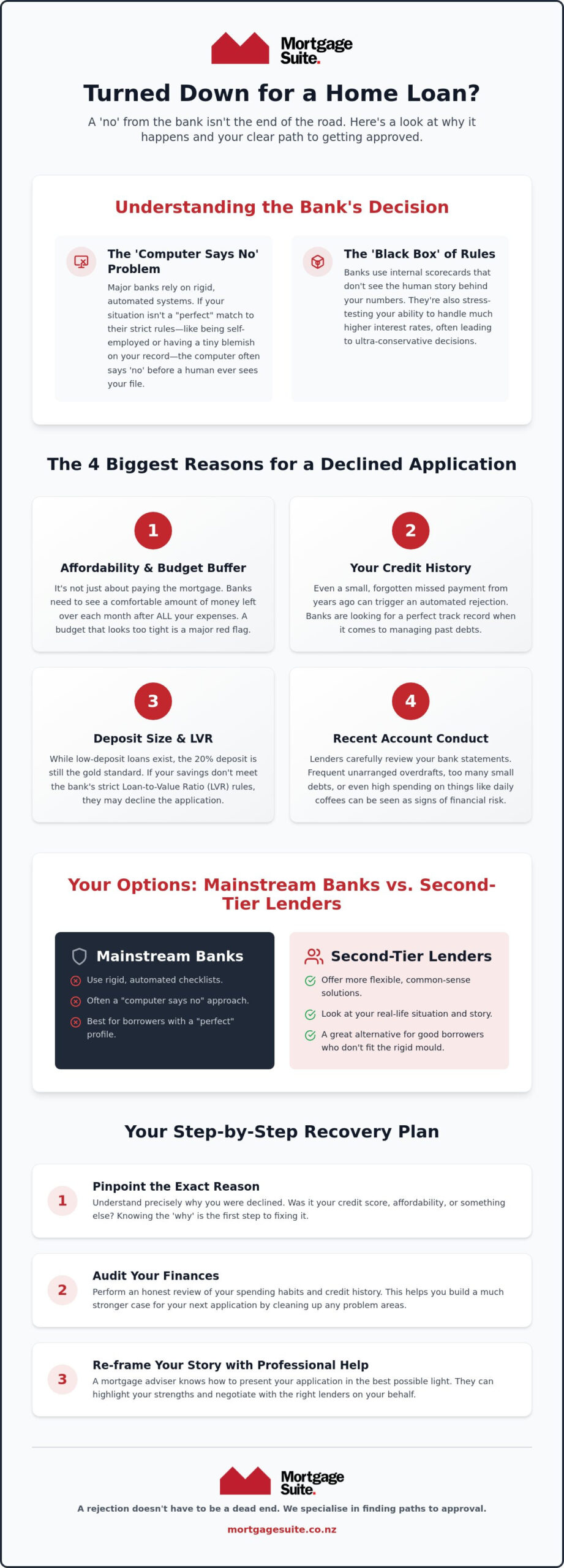
Banks today rely heavily on automated systems that make decisions in seconds. These systems are designed to find “perfect” profiles, which usually means a steady salary and zero debt. If your life is even slightly different, like being self-employed or having a small blemish on your record, the computer often triggers a “no” before a human even looks at your paperwork. When you are declined by bank home loan NZ staff, it feels like a final verdict, but it’s usually just a sign that their specific checklist doesn’t match your life.

There is also a big difference between a “Hard No” and a “Soft No.” A hard no usually comes from serious money issues in the past. A soft no is often just a mismatch with the bank’s current rules. Maybe your debt is slightly too high compared to your income, or the bank has already given out too many low-deposit loans for that month. These are hurdles, but they don’t have to be the end of the road.

The “Black Box” of Bank Rules

Banks use a “black box” approach to decide who gets a loan. They use internal scorecards that don’t account for the human story behind your bank statements. In July 2026, with the official interest rate sitting at 2.50%, banks are checking if you can handle higher payments if rates climb even further. They want to be absolutely certain you can manage if interest rates go well above the current 5% range.

Your internal scorecard is also affected by your history. If you’re wondering What is a credit score?, it’s essentially a number that tells a lender how reliable you’ve been with money in the past. Even a clean record can fail if the bank decides they have enough loans in your specific job industry or suburb. It’s not about you; it’s about their own balance sheet and their current appetite for risk.

The Impact of Strict Lending Laws

New Zealand’s lending laws have changed the game for anyone wanting a home. Even with a new regulator taking over in July 2026, the rules remain very strict. Banks are legally required to make sure you won’t struggle to pay. This is why they look at every single transaction, flagging things like your daily coffee or a gym membership. They are forced to be ultra-conservative to protect themselves.

Krish Krishna, who has spent over twenty years in the banking world, has seen this shift first-hand. Lending used to be based on your character and a handshake. Today, it’s almost entirely based on data and algorithms. The bank doesn’t see your potential; they only see the numbers on the screen. Understanding this shift is the first step to moving away from the big banks and finding a lender who will actually listen to your story.

The 4 Biggest Reasons for a Declined Home Loan Application

If you’ve been declined by bank home loan NZ lenders, it usually comes down to four specific areas where the bank feels the risk is just too high. While the bank’s decision might feel like a mystery, it almost always relates to how your current financial life fits into their strict 2026 rulebook. Understanding these reasons is the first step toward fixing them.

The first major hurdle is your affordability. This isn’t just about whether you can pay the mortgage today; it’s about whether you’ll have enough money left over after all your other expenses are paid. Banks want to see a comfortable “buffer” in your budget. Second, your past history with money plays a huge role. Even a tiny missed bill from a few years ago can be a red flag. It is well worth checking how your credit score impacts borrowing because banks often use automated systems that reject anything less than a perfect record.

The third reason involves your deposit size. While there are special programmes for first-home buyers with a 5% deposit, the standard 20% requirement is still the benchmark for most. If the property value has shifted or your savings aren’t quite enough to satisfy the bank’s “loan-to-value” rules, they may decline the application. Finally, your account conduct is under the microscope. Lenders look at your bank statements to see if you frequently go into unarranged overdraft or have too many small debts. If your statements are looking a bit messy, you might want to chat with us at Mortgage Suite Ltd to see how we can help you tidy things up.

Debt-to-Income Limits and Hidden Costs

In 2026, the debt-to-income limits set by the Reserve Bank are a primary reason for rejections. For most people buying a home to live in, banks are restricted from lending more than six times your gross yearly income. This includes all your debts, not just the new mortgage. “Hidden” costs like Buy Now Pay Later schemes or interest-free store cards can drastically reduce how much you can borrow. Even a small $50 weekly payment to one of these services can knock thousands of dollars off your total loan amount.

Property Type and Location Restrictions

Sometimes the bank says no because of the house itself rather than your money. Mainstream lenders are often wary of very small apartments, homes with potential structural risks, or properties in certain rural areas. An un-lendable property is any dwelling that doesn’t meet a bank’s security criteria. If you have your heart set on a unique home or an “as-is” sale, the big banks might not be the right fit for that specific property.

Comparing Your Options: Mainstream Banks vs. 2nd Tier Lenders

When you’ve been declined by bank home loan NZ lenders, it’s easy to feel like you’ve run out of road. But the New Zealand lending market is much broader than just the big household names you see on the high street. If the mainstream banks have said no, it’s often because your life doesn’t fit into their very specific, automated box. This is where alternative or “non-bank” lenders come into play. These are established, professional financial companies that operate with more flexibility than traditional banks.

The main trade-off here is between flexibility and cost. Mainstream banks usually offer the lowest interest rates, but they demand a perfect application. Alternative lenders might charge a slightly higher rate or a one-off fee, but they are far more willing to listen to your actual circumstances. They don’t just look at a score; they look at your potential. For a deeper look at who these providers are, check out our guide on non-bank lenders NZ.

Think of these lenders as a strategic bridge. Instead of waiting years for a small credit issue to disappear or for your business to show several years of perfect records, an alternative loan gets you into your home now. You can start building your own equity and benefit from any house price growth while you prove your reliability to the market over the next year or two.

The Human Element in Alternative Lending

The biggest benefit of these lenders is that they don’t rely on a computer to make the final call. Instead of an automated system that rejects you for one minor mistake, you benefit from having a real person review your application. They want to know the “why” behind your situation. For example, if your deposit was slightly lower than 20%, they might look at your strong career history as a way to balance that risk.

We recently helped a self-employed tradie who was in this exact position. He had plenty of work and a great income, but because he’d only been in business for 18 months, the big banks wouldn’t even open his file. By using an alternative lender, Mortgage Suite Ltd showed a human assessor his actual bank statements and current contracts. He got his approval in days, proving that being declined by bank home loan NZ lenders doesn’t have to stop you from buying a house.

Stepping Stones: The Long-Term Strategy

We usually suggest using these alternative lenders for about 12 to 24 months. During this time, you make every payment on time and build up your equity as the property value grows. Once your situation has stabilised and your records are up to date, Mortgage Suite Ltd can then help you move back to a mainstream bank at a lower interest rate. You can read more about this transition in our 2nd tier lender New Zealand guide.

Declined by the Bank for a Home Loan in NZ? Your 2026 Recovery Guide

Your Step-by-Step Recovery Plan After a Loan Rejection

Getting the news that you’ve been declined by bank home loan NZ lenders is a shock, but it’s not the end of the road. You need a calm, methodical plan to turn things around. Instead of letting frustration take over, follow these steps to rebuild your application and get back on track. The goal is to move from a “no” to a “yes” by addressing the specific hurdles the bank identified.

The first step is to get the specific reason for the decline in writing. Don’t just accept a vague explanation over the phone. You need to know if the issue was your income, your deposit, or perhaps a blemish on your credit report. Once you have this, conduct an honest audit of your finances. Look at your bank statements and credit file through the eyes of a lender. If you see frequent “buy now, pay later” payments or small overdraft fees, you’ve found your starting point for improvement.

It’s also vital to pause all new credit applications immediately. Every time you apply for a new limit or a store card, it leaves a footprint on your file that can look like credit stress to a bank. Instead, consult a specialist broker who understands the alternative lending market. They can help you organise a pivot strategy. This might involve staying with your current bank and fixing your spending habits, or it might mean switching to a lender that is more comfortable with your specific situation. If you’re ready to stop the guesswork, reach out to us today to get a clear plan for your next move.

Cleaning Up Your Financial Act

To win over a new lender, you need to prove you are a reliable borrower. This often requires a period of what we call clean spending. Clean spending is a three-month period of zero unarranged overdrafts or missed payments. It shows a lender that you are in total control of your money. You should also look at closing down any unused credit cards or “zombie” accounts. Even if you don’t use the balance, the bank counts that entire credit limit as a potential debt, which can significantly lower your borrowing power under the current DTI rules.

Protecting Your Credit File

Many people make the mistake of “shopping around” by applying at multiple banks directly after being declined by bank home loan NZ lenders. This is a recipe for disaster. Each application can lower your credit score further. A specialist broker acts as a firewall for your credit file. We only submit your application to the lender most likely to approve it, saving your score from unnecessary hits. For those who have more complex credit issues, our guide on non-conforming home loans New Zealand provides a detailed look at how to secure a mortgage even when your history isn’t perfect.

How Mortgage Suite Ltd Turns a ‘No’ Into a ‘Yes’

Rejection from a main bank doesn’t have to be the end of your property journey. It’s often just a sign that your application needs a different approach. When you’ve been declined by bank home loan NZ lenders, the team at Mortgage Suite Ltd steps in to bridge the gap between rigid bank rules and your personal goals. We don’t see you as a credit score; we see you as a partner who deserves a fair go in a tough 2026 market.

Our strength lies in Krish Krishna’s 20 plus years of insider banking experience. Krish understands the “black box” of bank credit policies because he’s spent decades on the other side of the desk. This deep institutional knowledge allows Mortgage Suite Ltd to “re-frame” your story. We know how to present your finances in a way that addresses a lender’s specific fears, turning a potential rejection into a confident approval. It’s about more than just filling out forms; it’s about high-level negotiation and advocacy.

One of the biggest advantages of working with Mortgage Suite Ltd is our access to the 2nd tier market. Many of the most flexible alternative lenders in New Zealand don’t deal with the public directly. They only work through trusted brokers. This means we can open doors that are otherwise locked, giving you access to home loans that main banks simply can’t offer. We fight for your approval by manually pitching your case to the right person, ensuring your human story isn’t lost in an automated system.

Specialist Solutions for Unique Situations

We realise that everyone’s financial path looks different. If you’re a business owner or a contractor, you might find our help with low doc home loans nz particularly useful. Mainstream banks often struggle with self-employed income, but we know which lenders appreciate your entrepreneurial drive.

Mortgage Suite Ltd also handles “Bad Credit” scenarios with zero judgement. Whether it’s an old default or a temporary setback, we focus on the solution rather than the mistake. Our expertise also extends to more complex needs, such as property development and commercial pivots. When a bank pulls back on a project, we have the connections to find alternative funding that keeps your development moving forward.

Ready to Get Your Property Dreams Back on Track?

Many people think they need to wait six or twelve months after being declined by bank home loan NZ lenders to try again. In reality, waiting can sometimes be the wrong move, especially if property prices are rising or your current living situation is costing you money. A strategic pivot to an alternative lender could get you into your home today, allowing you to build equity right now.

We offer a “No Worries” consultation where we’ll give you an honest assessment of your options. No jargon, no judgement, just a clear path forward. If you’re tired of the “computer says no” routine, it’s time to talk to a veteran who knows how to get a “yes.” Book a strategy session with Krish at Mortgage Suite Ltd today and let’s get you sorted.

Take the Next Step Toward Your New Home

Being declined by bank home loan NZ lenders is a significant hurdle, but it’s certainly not a dead end for your property dreams. You’ve now seen that a rejection is often just a sign that your financial profile doesn’t fit a specific bank’s automated rules for 2026. By tidying up your account conduct and considering the flexible options offered by second-tier lenders, you can bridge the gap and secure your property much sooner than you think.

Success in today’s complex market requires more than just a decent deposit; it needs a dedicated negotiator who understands how the system works from the inside. Mortgage Suite Ltd brings over two decades of banking and brokerage experience to your side. Krish Krishna specialises in alternative lending solutions that mainstream banks often overlook, acting as a steady hand to guide you through the process.

Don’t let a single “no” stop you from reaching your goals. Talk to Krish at Mortgage Suite Ltd—Let’s turn that “No” into a “Yes”. We are ready to help you find a clear path forward and get your plans back on track with confidence.

Frequently Asked Questions

Why did the bank decline my home loan if I have a 20% deposit?

Banks look at more than just the size of your deposit. Even with 20% equity, they need to be certain your income can cover the repayments if interest rates go up. They use a higher “test rate” to see if you have enough money left over after all your usual bills and debts are paid. If your monthly surplus is too low, the deposit size doesn’t matter to their automated systems.

How long should I wait to apply again after being declined by a bank in NZ?

There is no set rule, but waiting three months is often wise if you need to show better spending habits. If the decline was simply because that specific bank didn’t like your property type, you could potentially apply elsewhere straight away. The key is to fix the underlying issue first so you don’t end up with another rejection on your record.

Can a mortgage broker help if I’ve already been declined?

A mortgage broker is often the first person you should call after being declined by bank home loan NZ lenders. We can look at the bank’s feedback and determine if it was a “soft no” based on their internal policy or a “hard no” due to credit issues. From there, we can match you with a lender that values your specific financial profile and understands your story.

Is a 2nd tier lender safe for a New Zealand home loan?

Yes, these lenders are safe and highly regulated in New Zealand. They provide a vital service for people who don’t fit the narrow criteria of mainstream banks. While they might not have branches on every corner, they are professional organisations that must follow the same consumer protection laws as any other lender. They are a legitimate path to home ownership for many Kiwis.

Will being declined for a mortgage hurt my credit score?

A rejection doesn’t show up on your credit report, but the fact that you applied does. Each application creates a “hard enquiry,” and having too many of these in a short period can lower your score. It suggests to other lenders that you might be struggling financially. This is why it is much safer to let a broker handle the enquiries for you to protect your file.

What is the most common reason for a mortgage decline in 2026?

The introduction of Debt-to-Income (DTI) ratios is currently the biggest hurdle. As of July 2026, most banks won’t lend more than six times your gross annual income if you are buying a home to live in. When you combine this with high interest rates and strict spending checks, it’s becoming much harder for the average Kiwi to meet the mainstream bank’s rigid criteria.

Can I get a home loan if I am self-employed and have been declined?

You certainly can, as being declined by bank home loan NZ institutions is a common experience for business owners. Mainstream banks often want two years of perfect financial records. Alternative lenders are much more flexible. They can often use your recent bank statements or a shorter history of financial accounts to prove you can afford the loan. We specialise in finding these common-sense solutions.

How much more does a non-bank home loan cost compared to a bank?

Non-bank lenders generally have slightly higher interest rates and may charge an establishment fee. This reflects the fact that they are taking on more risk or doing more manual work to assess your application. Most of our clients see this as a temporary cost; it’s a way to get into a home now and build equity before eventually moving back to a bank later.

Article by

Krish Krishna

Experienced Financial Adviser with over 46 years of Banking and Mortgage broking experience and over $2.0 Billion in loan settlements.